The South splits roughly in two. Chalk runs through Hampshire, Wiltshire, the South Downs and the Dorset Downs, and it usually drains well. Where it's near the surface and the percolation results are good, a soakaway is often the first thing the engineer looks at, since the national SuDS standards put infiltration near the top of the runoff hierarchy. The chalk also feeds the groundwater behind rivers like the Test and the Itchen and much of the region's drinking water, so on some sites runoff from car parks and yards is kept out of the ground and stored instead.
Elsewhere the ground holds water. The coastal plains around the Solent and the Sussex coast carry clays, silts and made ground. The New Forest and the Poole Basin are sands, gravels and clays, with water tables that rise a long way in winter. Dorset's clay vales drain poorly, and the Somerset Levels are clay and peat with water close to the surface for much of the year. Further north, Oxfordshire and Berkshire mix Thames and Kennet gravels with Oxford Clay, the Cotswold limestone and the Chilterns.
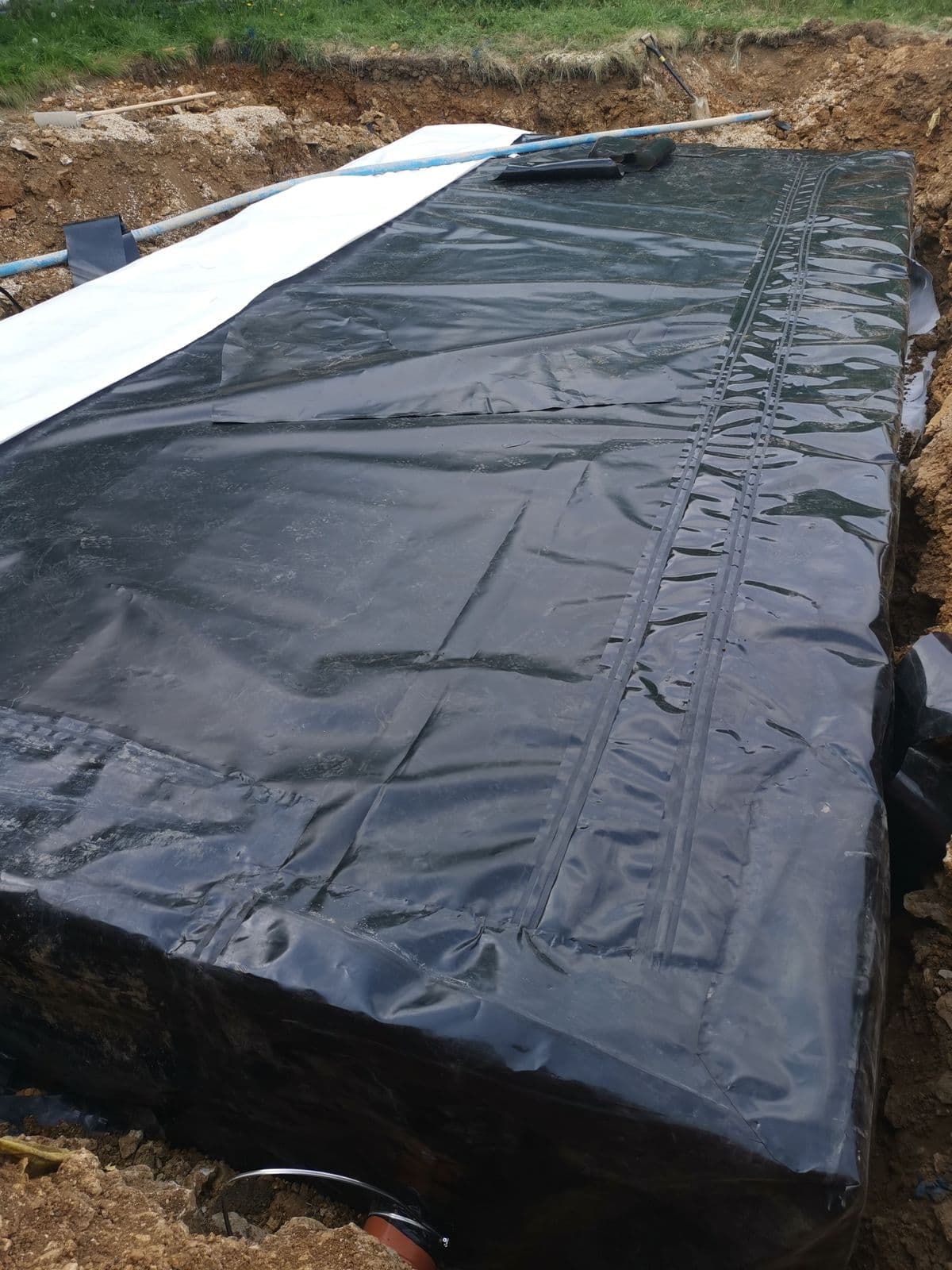
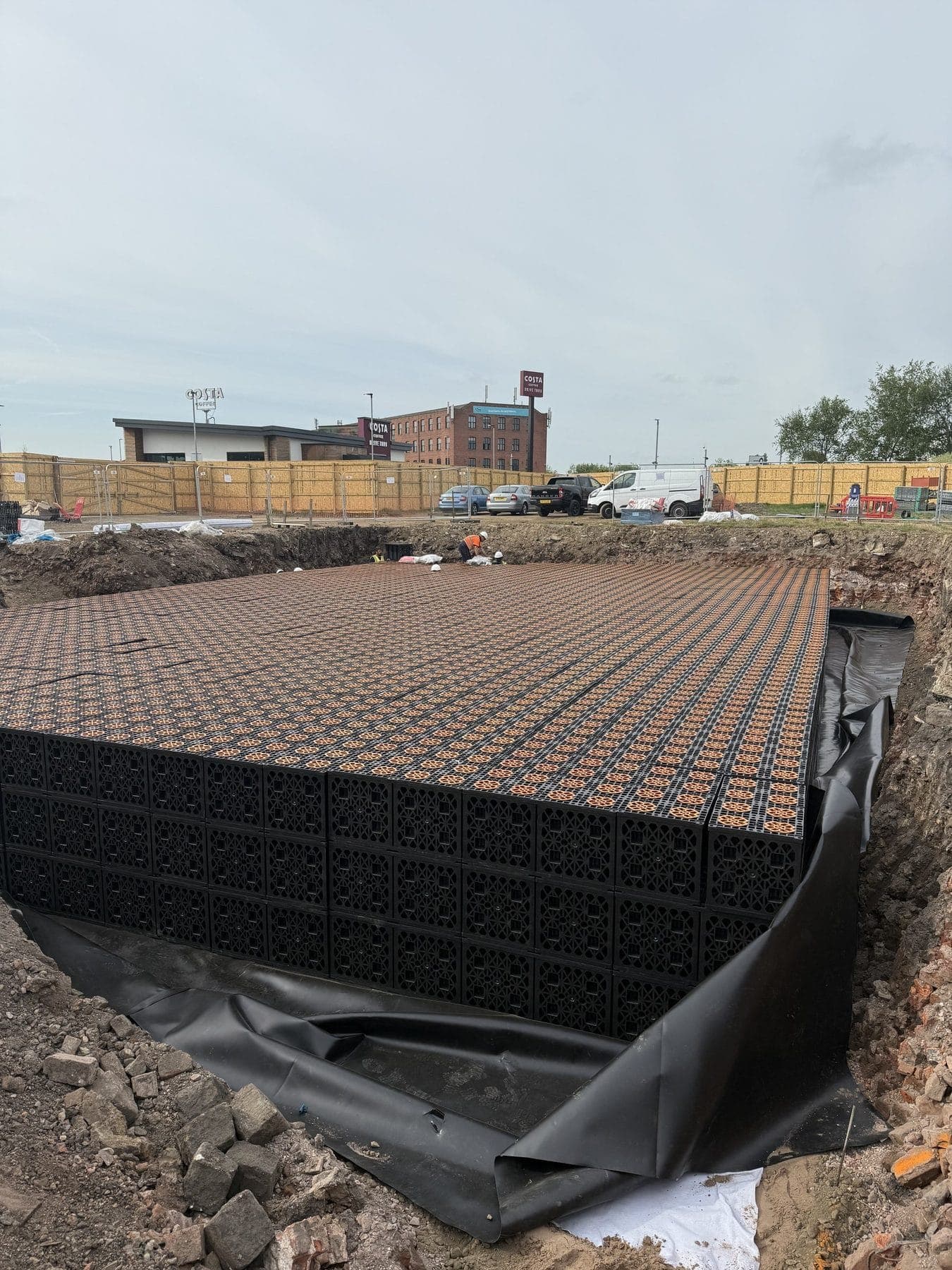
On that ground, surface water is held in a sealed attenuation tank and let out at the rate the planning conditions allow, and the tank has to keep high groundwater out as well as storm water in.
Much of the soakaway work comes from new homes, extensions and infill plots, especially on chalk and around Poole and Bournemouth. Larger housing and commercial schemes on the clays, near the harbours and on the Levels need attenuation, and mixed sites can need both: infiltration where the ground allows and storage for the rest.
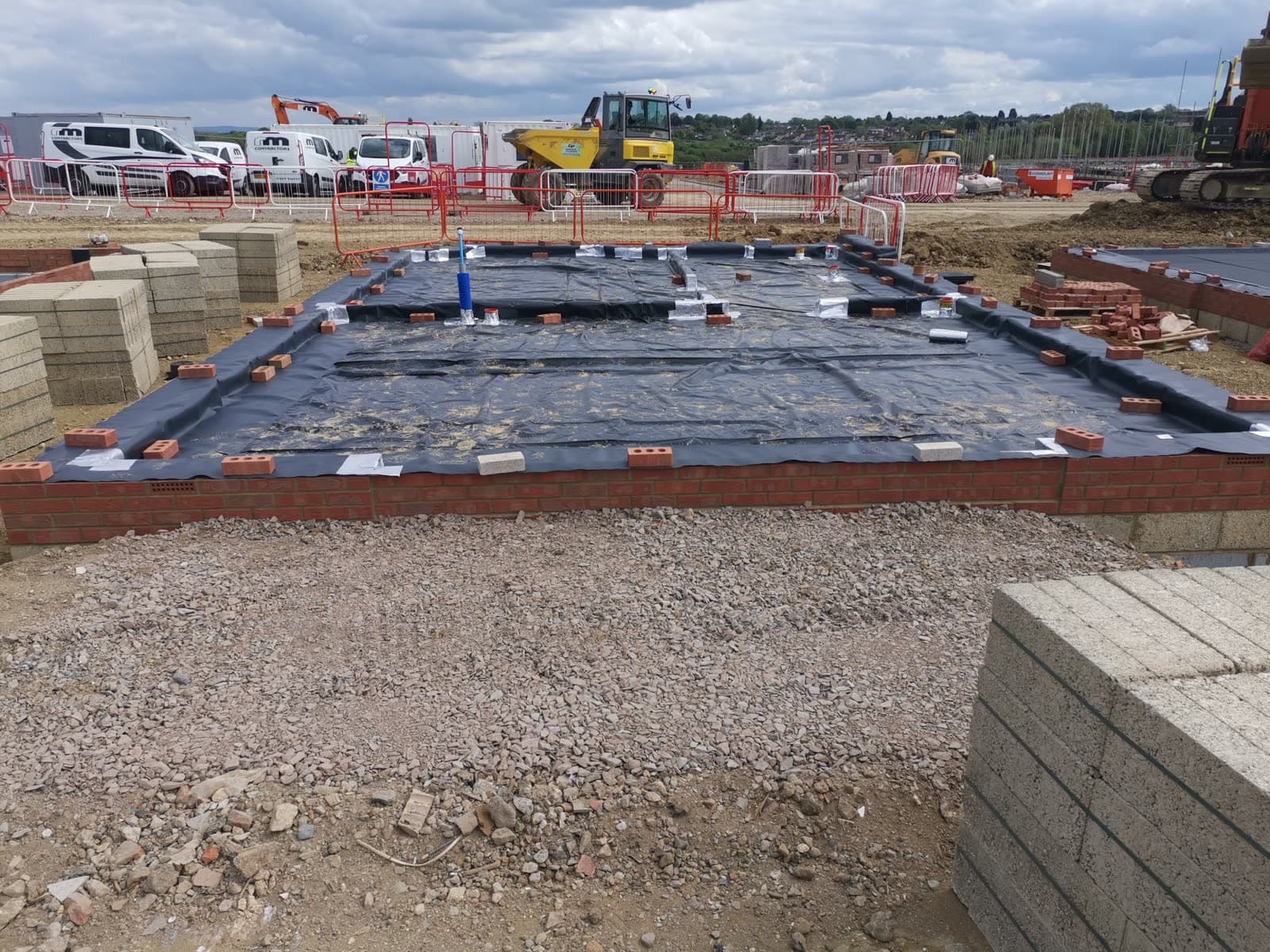
The region also has defence sites, ports and energy work. Containment bunds at anaerobic digestion plants, lined ponds and lagoons on farms and estates, and gas membranes on brownfield plots are all part of the work here.
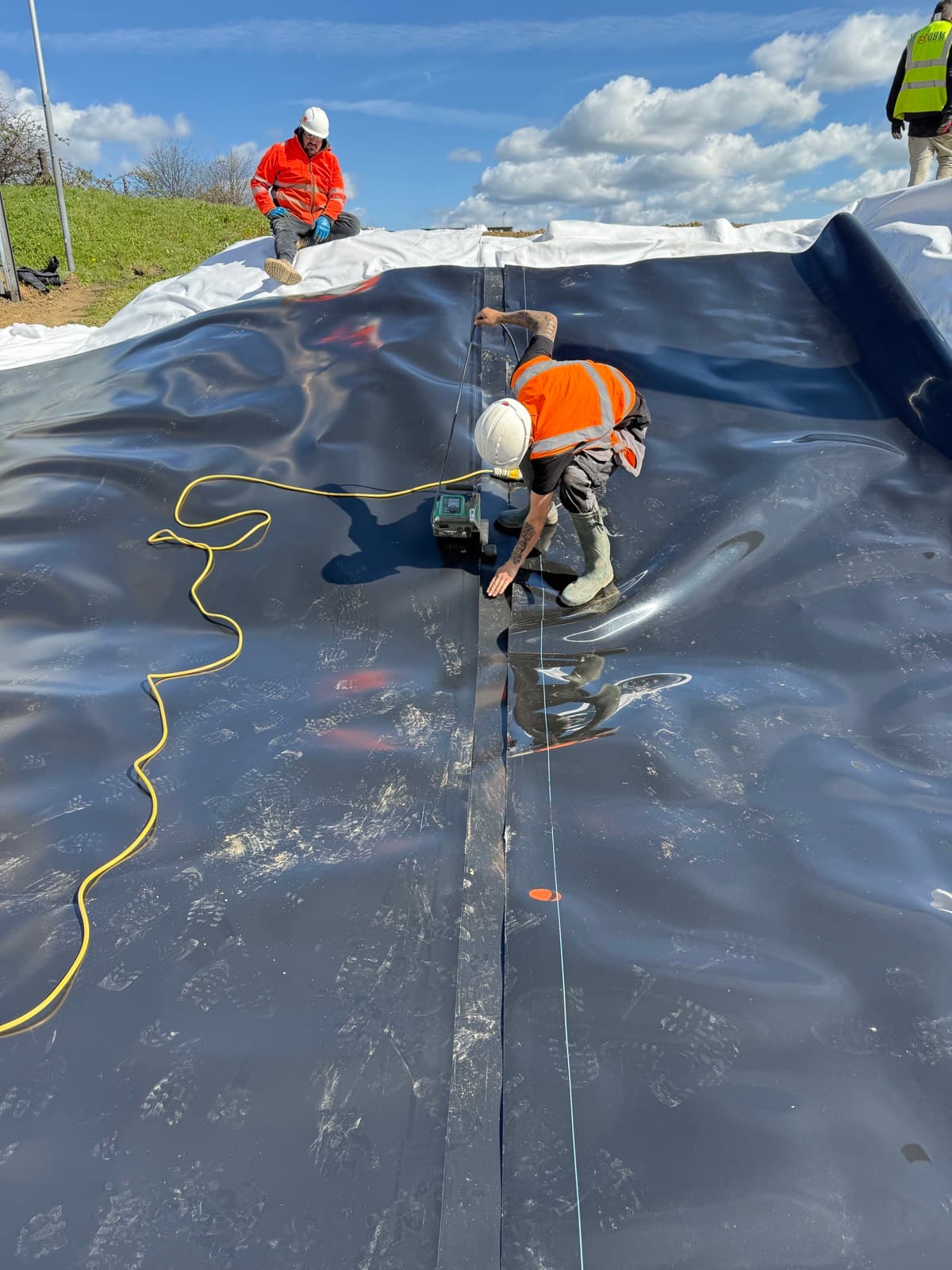
The South is part of our UK-wide coverage from our Tamworth base, with crews travelling to site and sequenced into your groundworks programme. Your engineer designs and sizes the system, your groundworker digs and backfills, and we install it, weld every seam and record a test weld before the hole is closed.
Inside the New Forest National Park, on the South Downs and on small coastal plots, space and access are often tight. We agree the layout and delivery point with your groundworker before the dig opens, so the membrane can be dressed and welded properly rather than squeezed in.
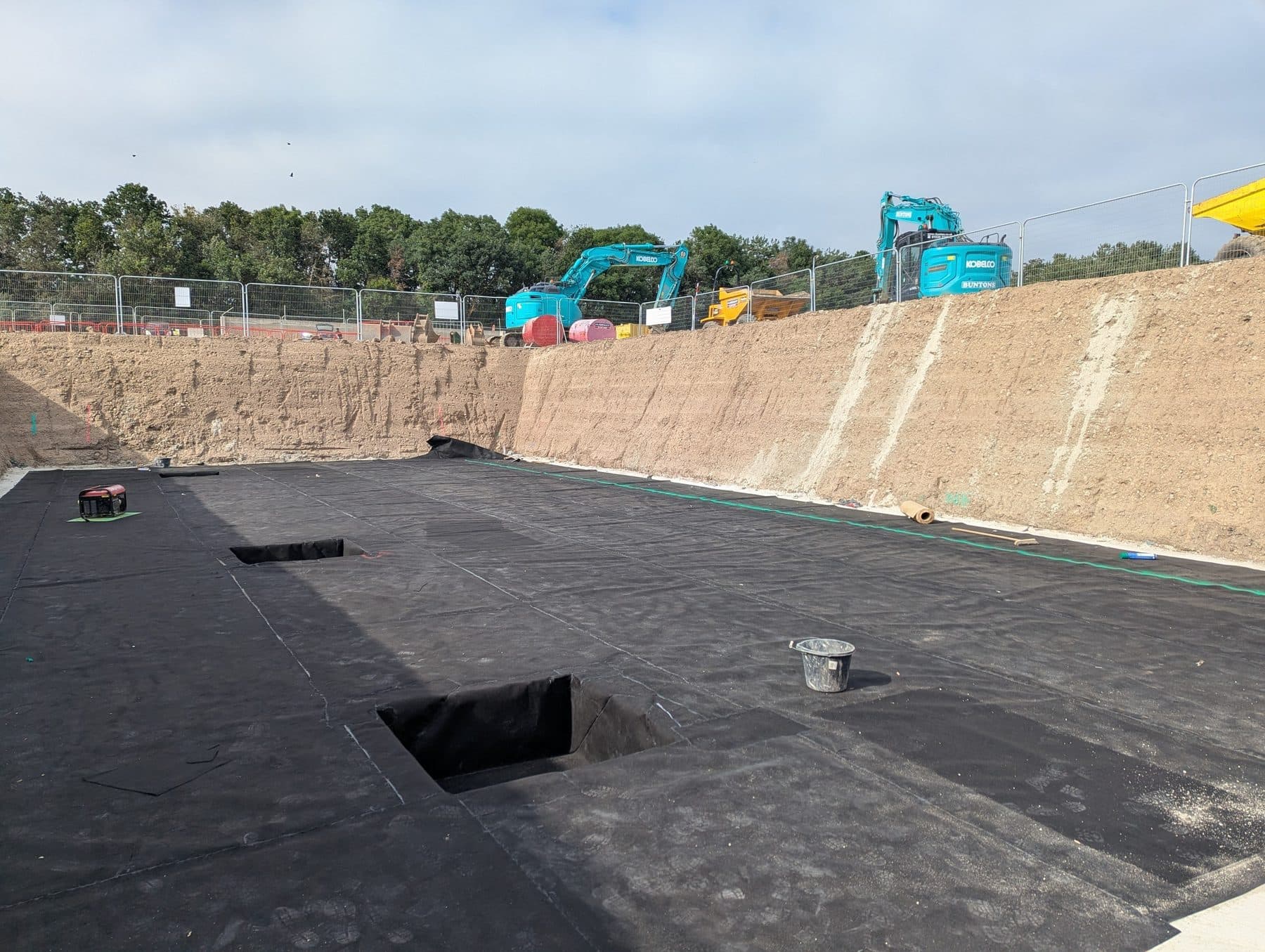
At RAF Brize Norton we lined an attenuation tank in 0.6mm HDPE, welded panel to panel on a live, secure airbase, with the base welds pressure-tested and marked up before anything was covered. At Bognor Regis we lined the containment bund at an anaerobic digestion plant, with every seam extrusion welded and each corner, wall transition and penetration formed and sealed by hand.