
Skip to content

Pond Lining · South of England

Pond lining in Somerset

Somerset ponds fail for opposite reasons: on the Mendip limestone water drains away through fissures, and on the Levels groundwater pushes up from below. We supply and install welded liners that cope with both.

Where we install
  • Taunton
  • Bridgwater
  • Wells
  • Cheddar
  • Shepton Mallet
  • Glastonbury
  • Langport
  • Ilminster
  • Yeovil

Base · Tamworth B78 2BP

Limestone hills and wet moors

Carboniferous limestone on the Mendips is riddled with joints and swallets, which is how Cheddar and Wookey Hole came to have their caves. A pond dug into that rock has nowhere to hold its water, and even a clay bed can be lost into an opening fissure. A continuous welded liner is the dependable answer on the hills around Wells, Shepton Mallet and Cheddar.

Down on the Levels and Moors the ground is wet clay and peat with water close to the surface. There the risk is groundwater lifting the liner when the pond is drawn down, and soft ground under the formation. Your designer sets the formation and any underdrainage, and we lay the lining to match it.
What Somerset ponds are for

Irrigation reservoirs for growers and orchards, fishing lakes, estate and garden ponds, and wet SuDS ponds on the housing that keeps spreading around Taunton, Bridgwater and Yeovil make up most of the work. Wildlife ponds on farms along the Quantock and Blackdown foothills are another part of it.

A SuDS pond on a new estate has a job set by the planning condition: hold a permanent pool, take the storm on top, and release it no faster than the agreed rate. Where the ground under it is permeable, or contaminated, the drainage design calls for a lining so the permanent water level stays put.

Membranes we install

The survey settles the material. For a big irrigation reservoir with long exposed banks, HDPE is normally right. LLDPE conforms better to an irregular formation and still welds well. PP handles awkward shapes and many pipe details. EPDM suits smaller ornamental and wildlife ponds. A fishing lake that sees anglers' platforms, boats or a bank-side mower may need a thicker sheet or protection over the liner on the margins, and we take that into account at survey. Where a natural clay bed and self-sealing behaviour would serve the pond better, a GCL may be the better choice, and we install those as well.

Building the lining

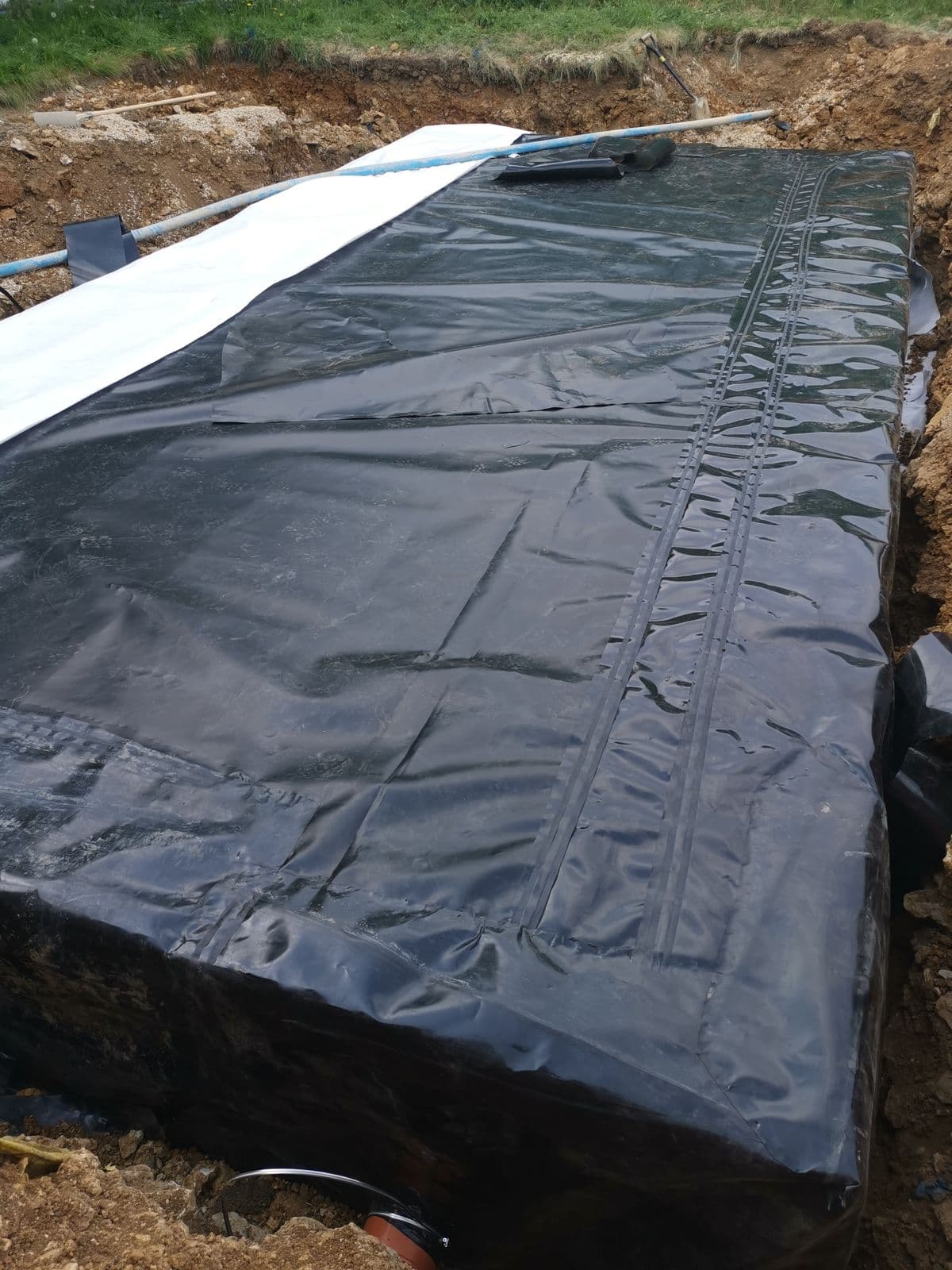
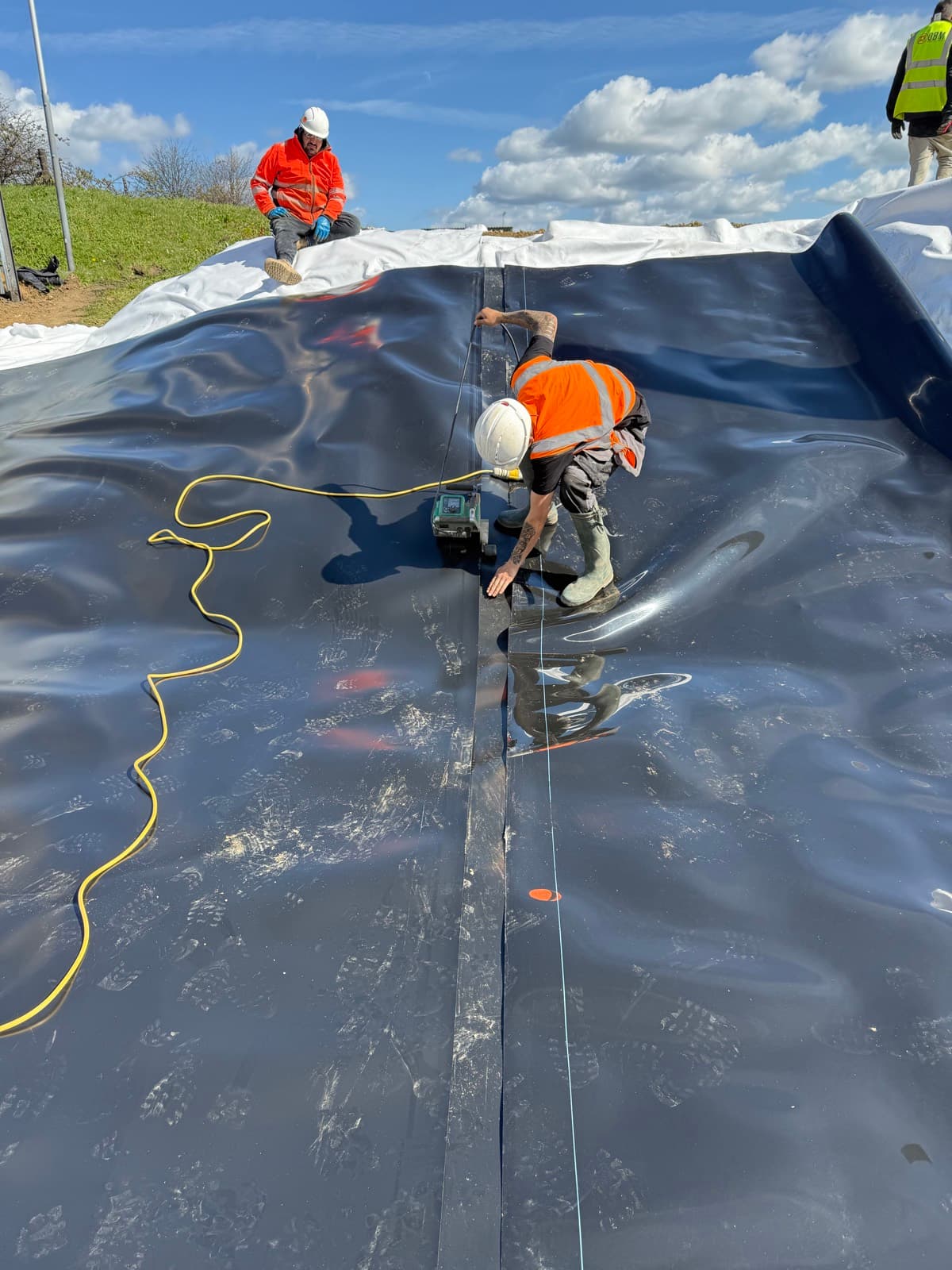
Your contractor digs and shapes the pond; we don't excavate. Once the formation is trimmed we check it, then lay a geotextile underlay to protect the liner from stones in the limestone brash or roots in the clay.

  • Wedge welds along the panel seams, extrusion welds around corners and pipes
  • A sample weld peel-tested on site and logged for every pond
  • Pipework through the membrane sealed at the inlet, outlet and overflow
  • The sheet edge buried in an anchor trench around the top of the bank
  • A final walk of the seams, then weld records and handover documents

Pond Lining Somerset

Frequently asked questions

Almost certainly, if the water is escaping into the limestone. Your contractor reshapes the bed where needed, and we lay underlay and a welded liner across the whole formation so the rock plays no part in holding water.

It can if groundwater rises beneath it while the pond is low. Your designer accounts for that in the formation and any underdrainage, and we install the lining to that design.

Usually. Once the lake is drained and the fish moved, we find where and why the old sheet failed, lay new protection fabric and weld in a fresh liner.

Tell us about your project

Quote back within one working day