Most of Yorkshire's water starts on the Pennines and ends in the Humber. The Aire, the Calder, the Wharfe and the Don come off the gritstone and the coalfield of West and South Yorkshire through steep valleys, then slow down as they reach the Vale of York and the Ouse. Runoff from the hills arrives quickly, and the towns in the valley bottoms have seen what that does in a storm.
The ground changes as you go east. Gritstone and Coal Measures under Leeds, Bradford and Sheffield give way to a narrow limestone ridge, then to the sands, gravels and clays of the Vale of York, where groundwater can sit close to the surface near the rivers. The chalk Wolds in the East Riding drain well; the boulder clay of Holderness beyond them does not.
So infiltration has a place on the limestone and chalk, but across the urban west and the low ground of the vale most new sites store their runoff and release it at a controlled rate to a beck, a river or a sewer.
Strategic housing around Leeds, Wakefield and the South Yorkshire towns, and logistics along the M1, M62, M18 and A1(M), put large hard surfaces onto open land. On housing, the tanks are often built to be adopted by the water company, and they are inspected before anyone takes them on.
The older land brings its own work: steelworks ground in the Lower Don Valley, mill sites in the Bradford and Calder valleys, and railway land where the excavation is long, narrow and hemmed in. Out in the Dales, the Moors and the East Riding there are farm reservoirs, ponds and slurry lagoons to line.
Yorkshire is part of our UK-wide coverage from our Tamworth base, a straight run up the M1. The crew brings its own calibrated welding kit and comes back for each phase as your groundworker releases the excavations.
Pennine weather is a fact of life up here. A heat weld needs a clean, dry seam, so we prepare and dry each joint before welding it and make a test weld on site that proves the settings on the day. If the conditions won't give a sound weld, we wait. We never tape a joint.
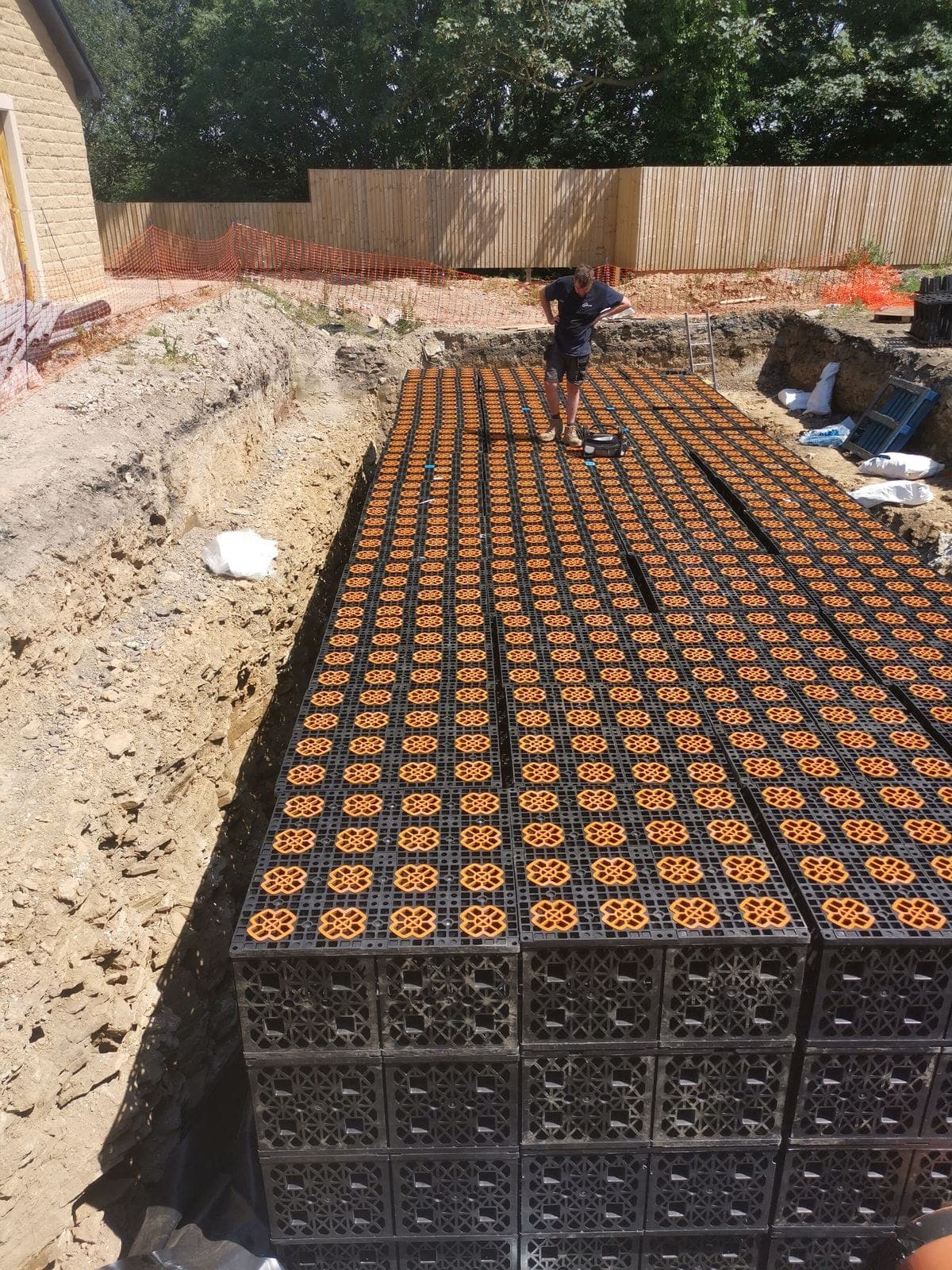
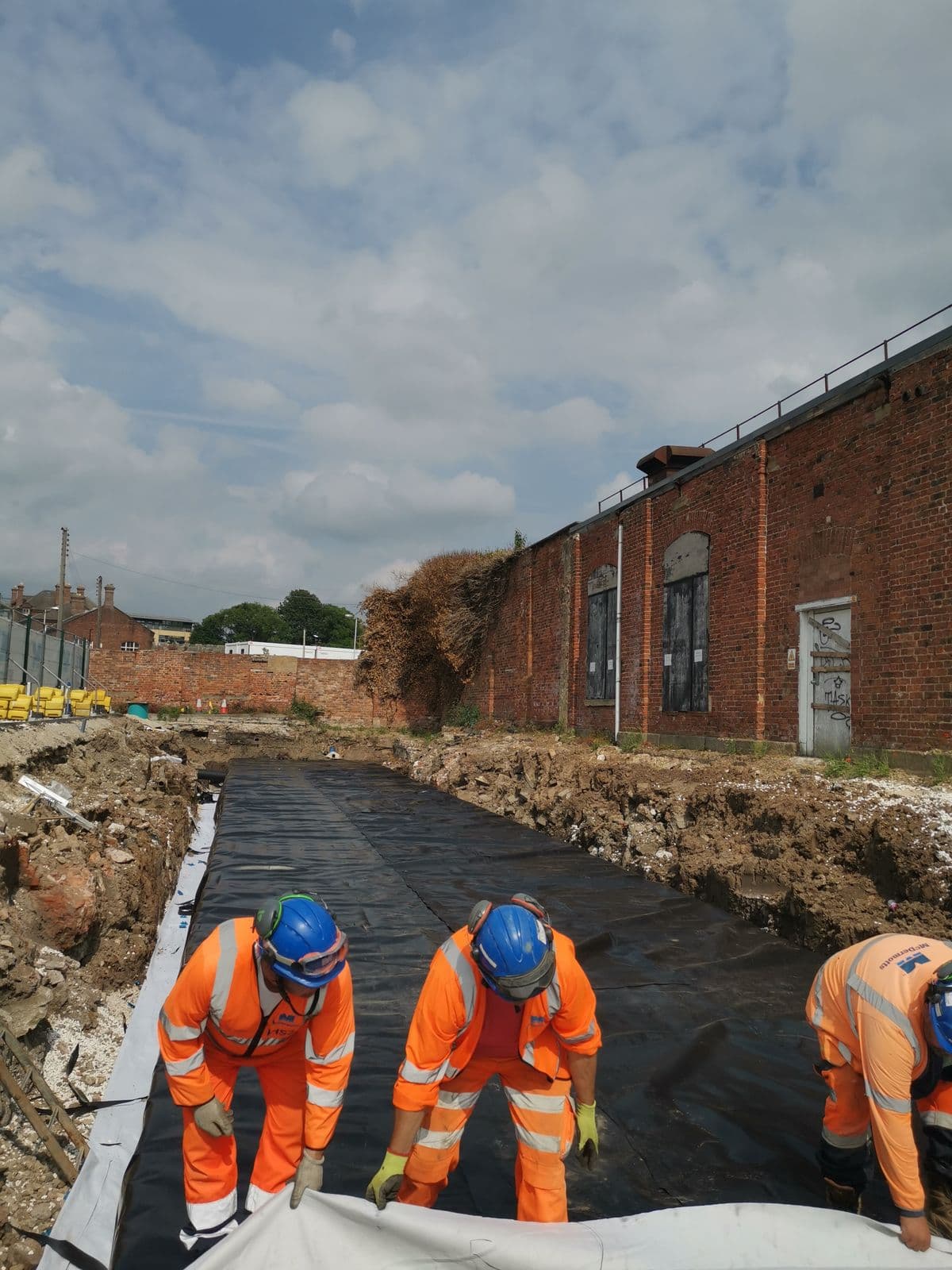
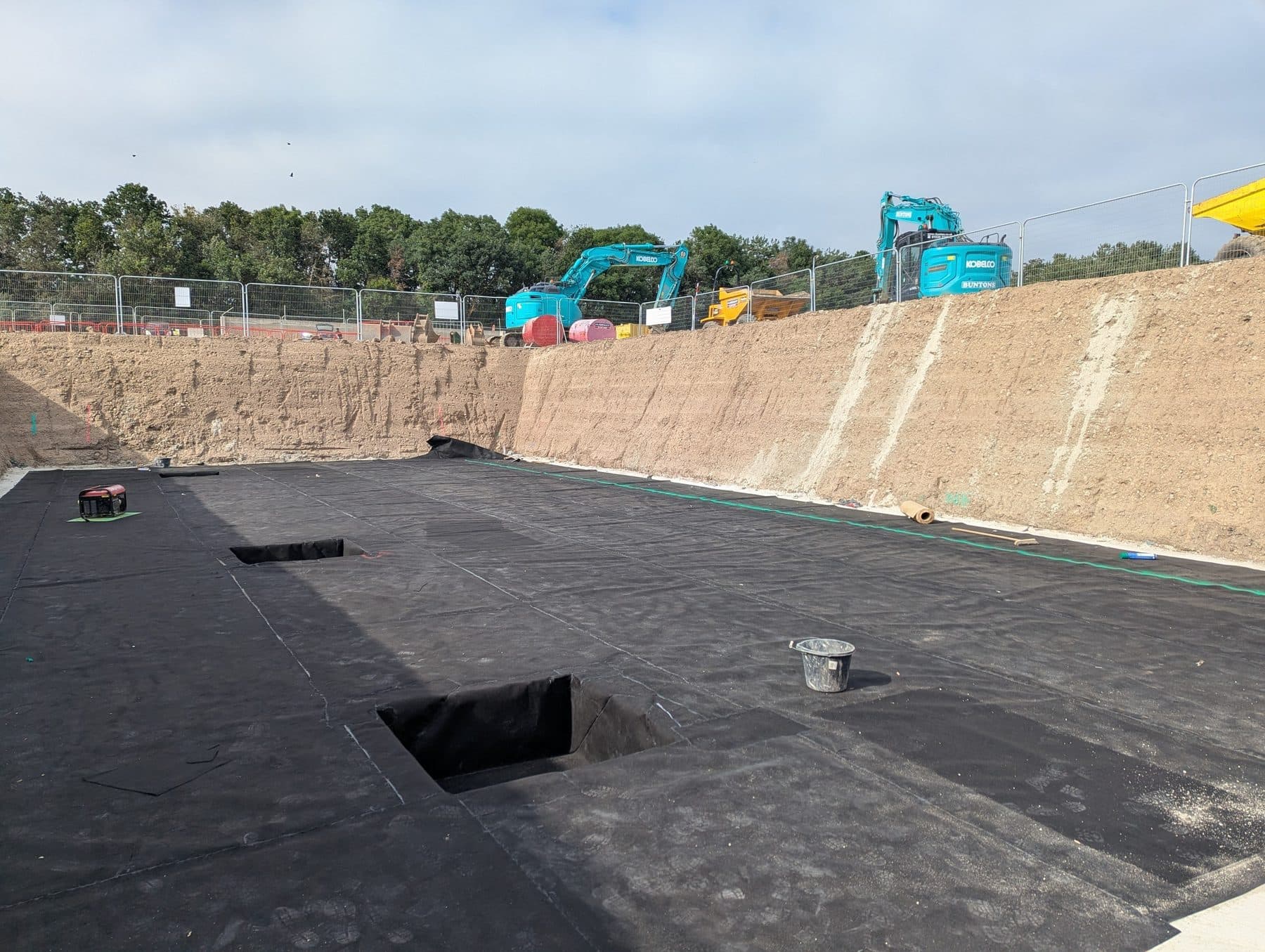
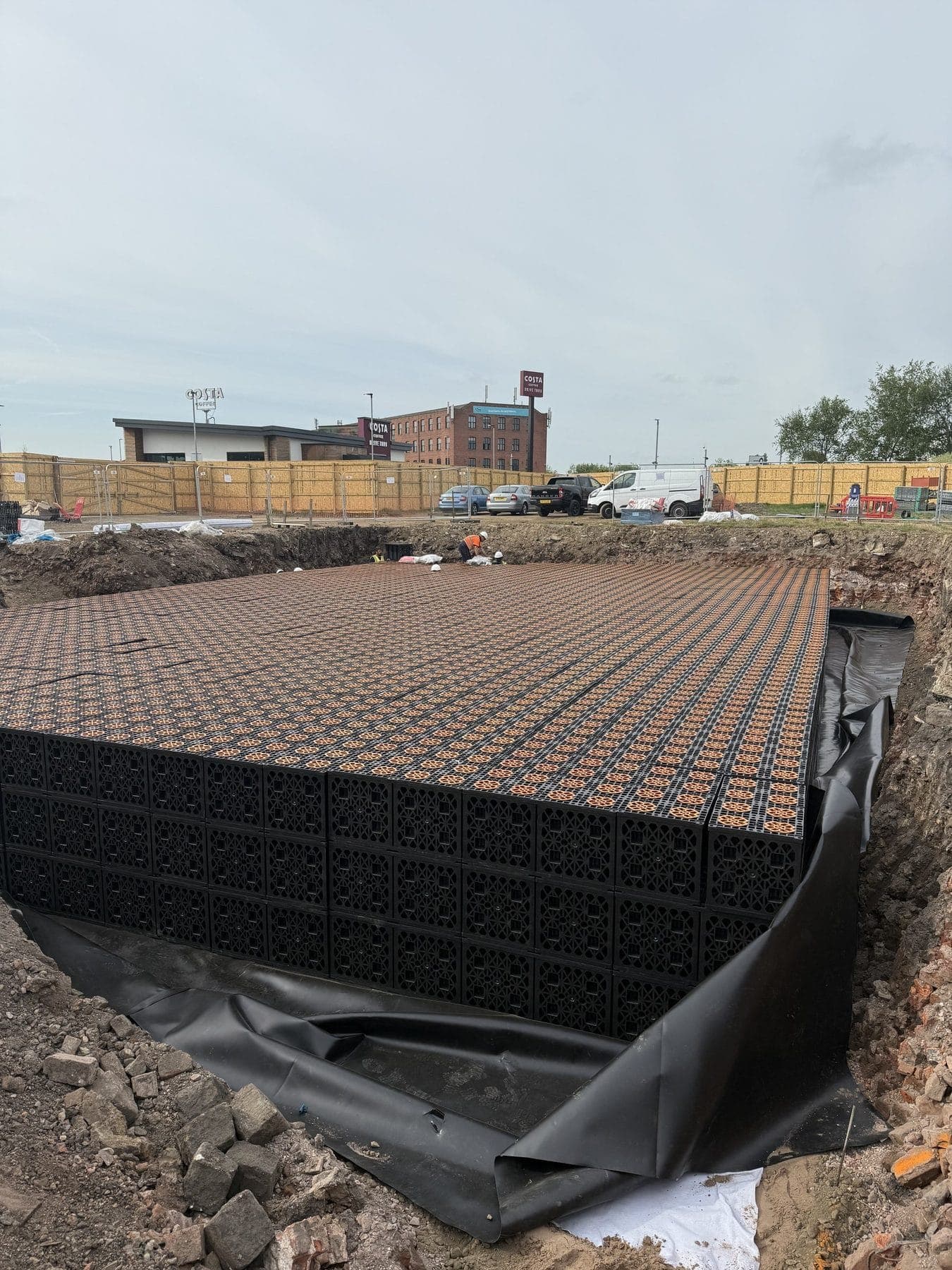
At York station we built a long attenuation tank in a narrow excavation beside the railway buildings, lined in 0.75mm geomembrane, with the base weld pressure-tested to 1 bar before the crates went in. At Oxspring, near Barnsley, we built two adoptable storage tanks on a housing development, 276m³ between them, with the base welds pressure-tested and photographed before anything was covered.