The BCP conurbation packs a lot of building into a strip between the sea, Poole Harbour, Christchurch Harbour and the lower Stour and Avon. Low-lying ground there floods, and the drainage network is already busy, so planners hold new schemes to restricted discharge rates. That applies to infill plots and small commercial units as much as to large housing sites.
Even where the heathland sands drain freely, a high water table near the harbours can leave too little depth for infiltration. The engineer then turns to a controlled outfall, and the attenuation tank holds what the outfall can't release during the storm.
Away from the coast the ground changes again. The Blackmore Vale and the other clay vales drain poorly, so schemes around Sherborne, Gillingham, Sturminster Newton and Shaftesbury often need storage from the start. The Frome valley towards Dorchester and Wareham brings its own flood-risk constraints.
On mixed sites the engineer may infiltrate what the ground will take and attenuate the rest. We install both parts, and plan the order of work with your groundworker so one excavation isn't waiting on the other.
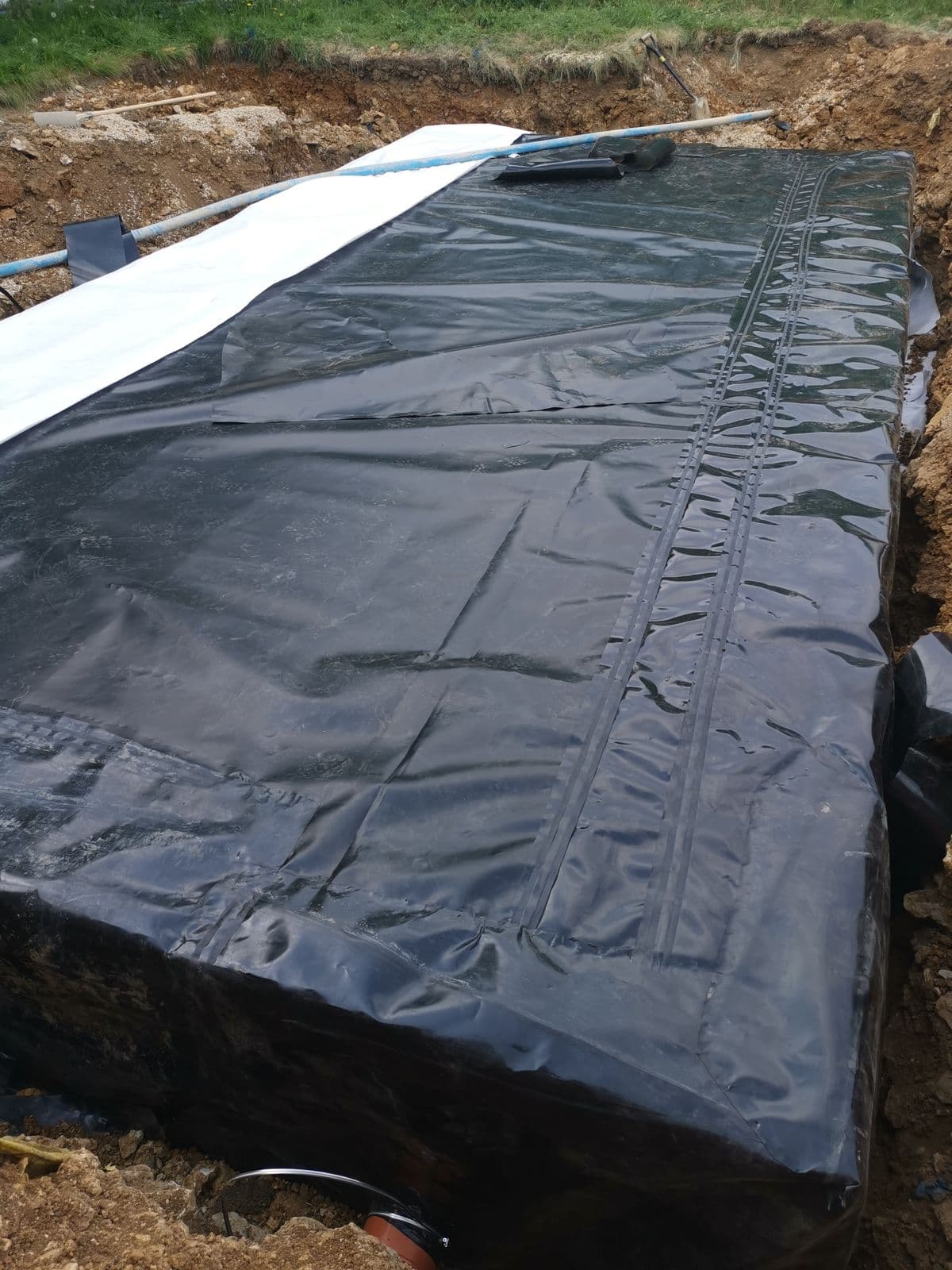
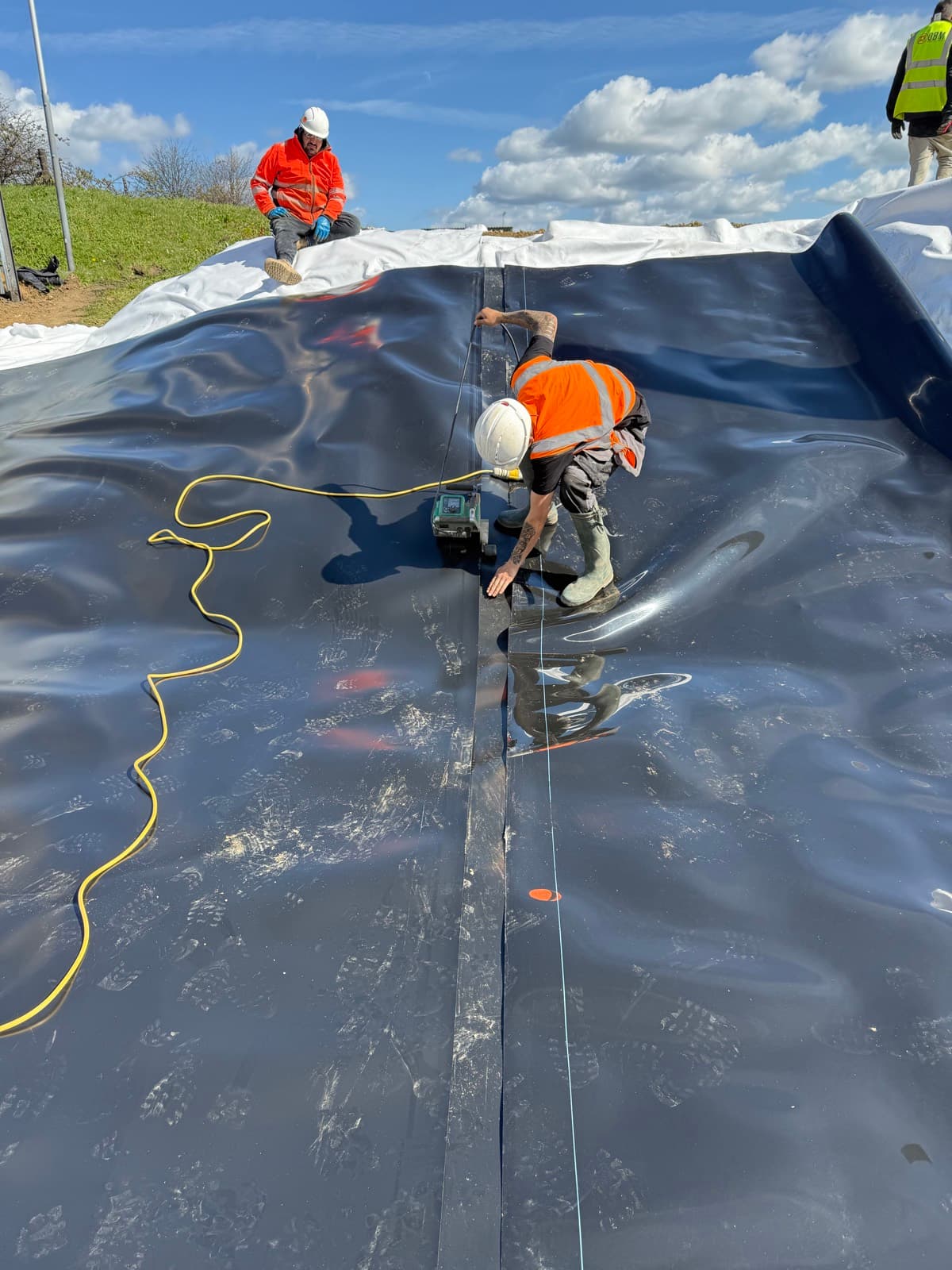
A lined tank in wet ground is only as good as its joints. Ours are heat-welded with calibrated equipment and a test weld is recorded before backfill. At RAF Brize Norton we lined a tank in 0.6mm HDPE welded panel to panel, and pressure-tested and marked up the base welds before anything was covered. The same method goes into Dorset tanks.
Close to the coast there is a second reason to get the joints right. Where groundwater is high or the made ground is contaminated, a lined tank also has to keep that water out of the storage, and a taped joint gives way over time where a welded one doesn't.
Tank design and sizing come from your engineer. Excavating, forming and later backfilling are down to your groundworker, as we don't dig. Our part runs from a formation check through fleece, membrane and the crate build at the specified loading class, to connecting the flow control and handing over the QA paperwork. We supply and install or install only, with crews travelling from our Tamworth base.
We work to the engineer's drawing and the drainage strategy that went through planning. If something on site doesn't match, such as a level, a pipe invert or a connection that has moved, we raise it before we build, not after the tank is backfilled.