The New Forest's streams run into the Avon, the Lymington River and the Beaulieu River, and through heath and valley mire that is protected for its wildlife. Planners inside the National Park and on its edge look hard at where a site's runoff goes and how quickly it gets there.
When infiltration has been ruled out, the usual answer is a tank that stores the storm and releases it through a flow control at the rate on the consent. The engineering is the same for one new house in Brockenhurst and a commercial unit near Totton: store it, slow it, and prove it was built as drawn.
The Forest is built on sands, gravels and clays, and in the valleys the water table can sit close to the surface through the winter. A tank built into that ground has to keep groundwater out as well as hold stormwater in, or it fills from below and loses the storage it was designed for. Your engineer will also check the tank against flotation.
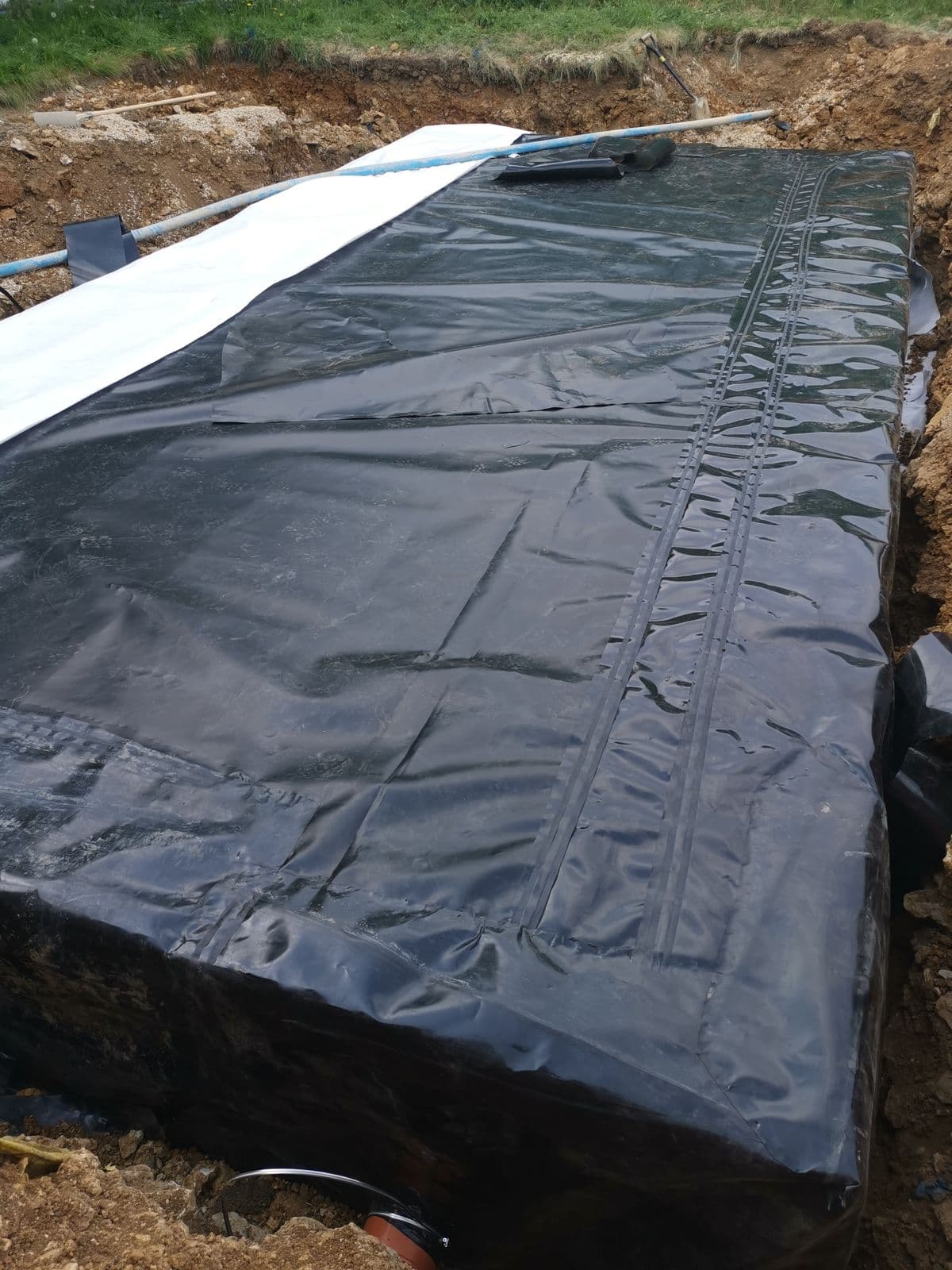
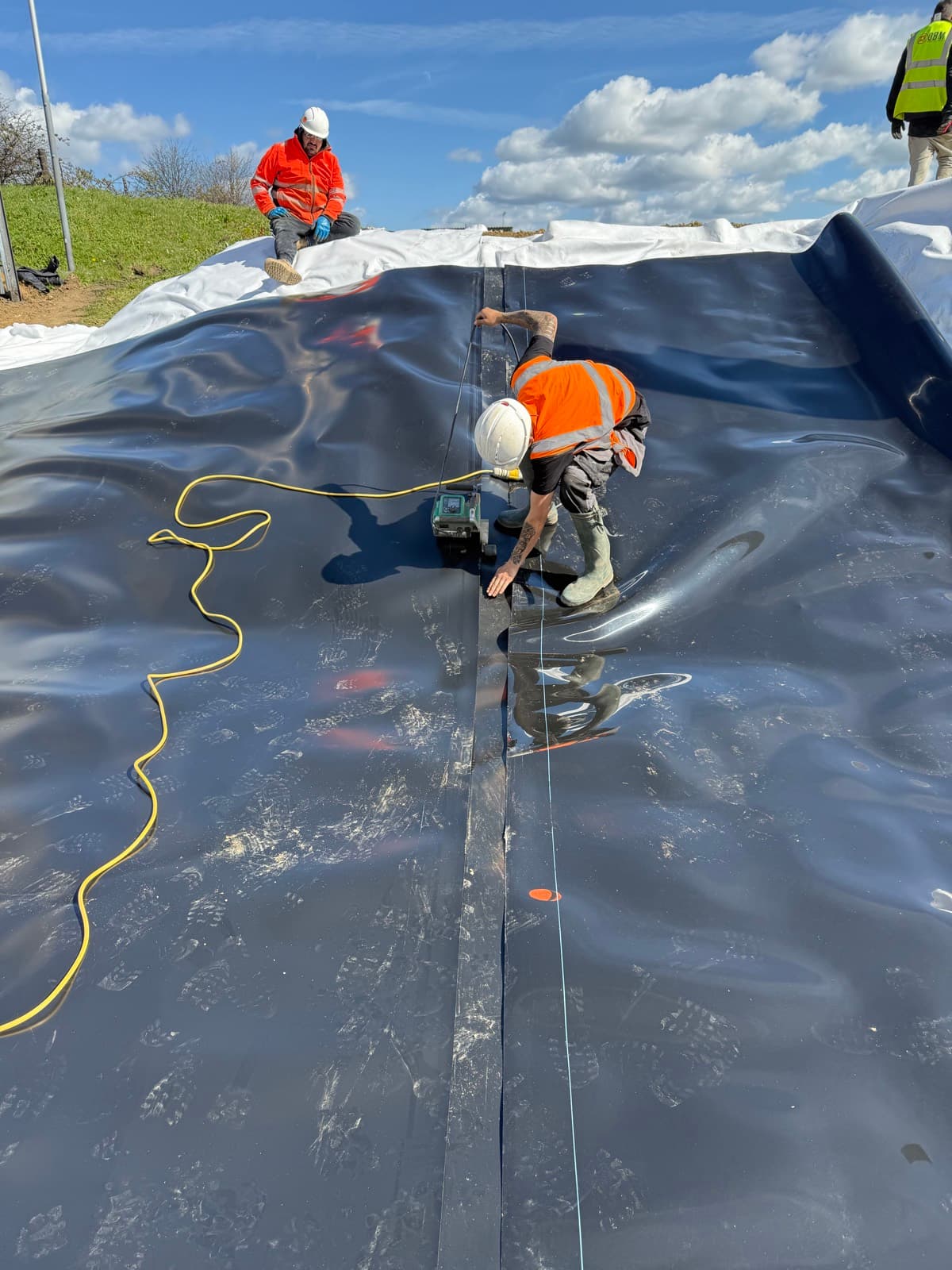
That puts the weight on the membrane. We heat-weld every joint, carry out and record a test weld before backfill, and never use tape, because adhesive can't be relied on underground and under pressure for the life of the tank.
Excavating and forming the hole is your groundworker's part; ours begins with a look at the formation. Then 300gsm fleece goes down under the impermeable membrane, the crates go up to the volume and load rating on the drawing, and we connect the inlets, outlet and flow control. Your contractor backfills once we've handed over.
We supply and install, or install only. Crews travel from our Tamworth base and work to your programme, and the QA file we hand over is what you need to discharge the drainage condition.
A lot of Forest work is small: a replacement dwelling, a barn conversion, a new access drive. A 20 or 30m³ tank still has to hold to the end of its design life, so it gets the same welding, testing and paperwork as a large one. The size of the job doesn't change the method.
Small sites also tend to have little room to work. Where the tank sits close to a house, a tree or a boundary, we agree the layout with your groundworker before the dig opens, so the membrane can be dressed and welded properly rather than squeezed in.