This is the main thing that sets Wales apart. Schedule 3 of the Flood and Water Management Act 2010 has applied to new development in Wales since 7 January 2019. Sustainable drainage is mandatory there, it has to meet the Welsh Government's statutory SuDS standards, and it needs approval from the SuDS Approving Body (SAB) before construction starts. The SAB sits with the local authority, and the requirement covers developments of more than one dwelling or with a construction area of 100m² or more.
England has no SAB. Its 2025 national SuDS standards are guidance applied through planning, so a site in Chester and a site in Wrexham, a short drive apart, run under different regimes. If you work both sides of the border, treat them separately.
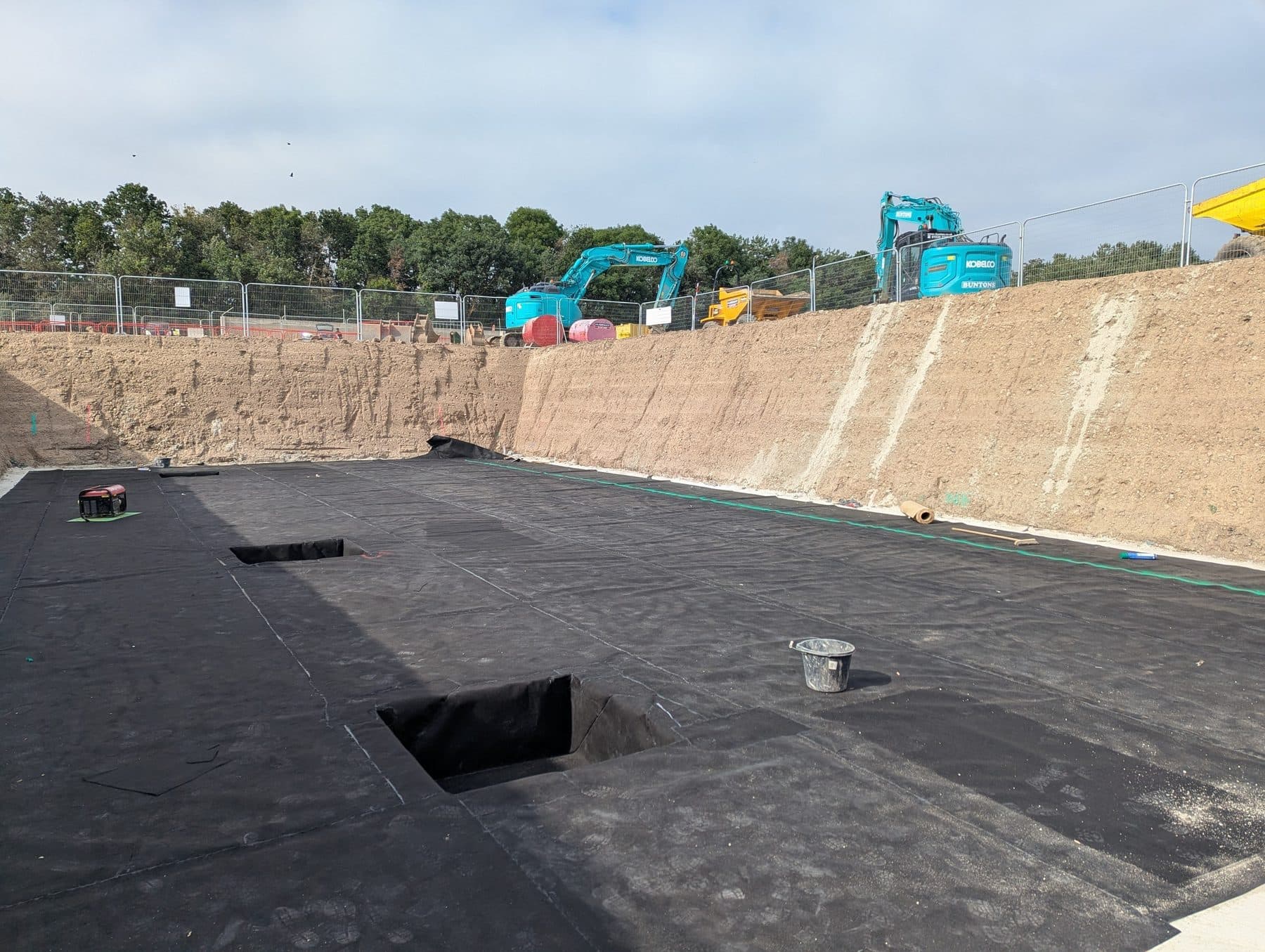
The approval itself belongs to the developer and their engineer. We build what the SAB approved, and the record of how it was built matters: the weld test, as-built details and QA pack are what the approving body or anyone adopting the system will want to see.
North-east Wales has mixed ground over short distances: glacial clay across much of the lowland, the old North Wales coalfield running through Wrexham and Flintshire, limestone on some of the higher ground, and the red sandstone of the Vale of Clwyd. The Dee, the Alyn, the Clwyd and the Conwy carry the water to the sea, and the land beside the Dee estuary and along the coast at Rhyl and Prestatyn is low and flat.
Further west, Conwy, Gwynedd and Anglesey are harder rock, wetter weather and steeper ground. Runoff arrives fast, and thin soils over rock rarely take it in. Across most of the region the answer is storage with a controlled outfall rather than infiltration.
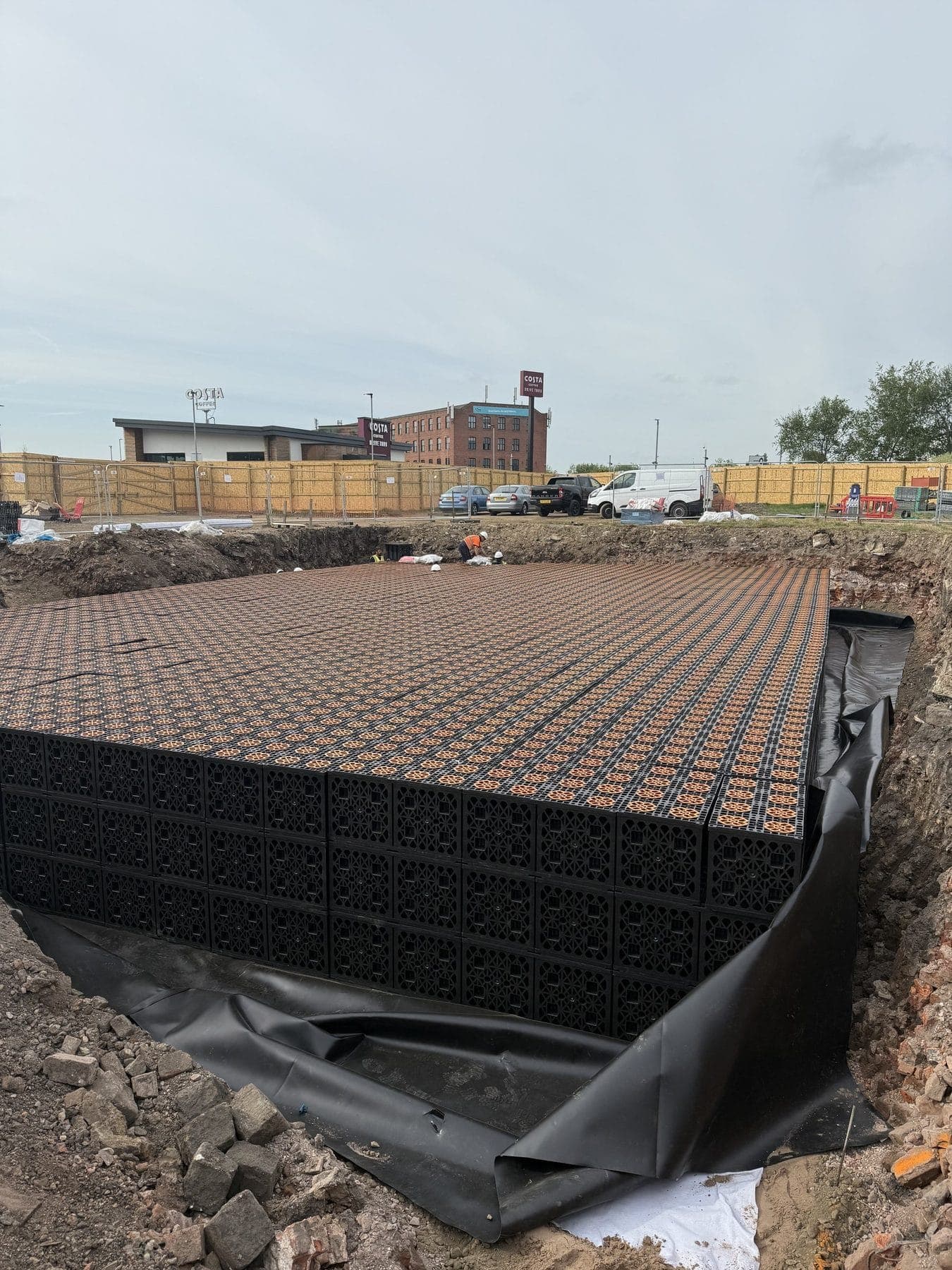
Industrial and manufacturing sites around Deeside, Wrexham and the A55 and A494 corridors have large roofs and yards, and the attenuation tanks under them are big. Housing grows out from Wrexham, Mold and the coastal towns, and the farms of the Vale of Clwyd and the uplands bring reservoirs, ponds and slurry lagoons to line.
North Wales is a regular run from our Tamworth base. The crew brings its own welding equipment and works to your groundworker's programme: they dig and backfill, we install, weld and test.
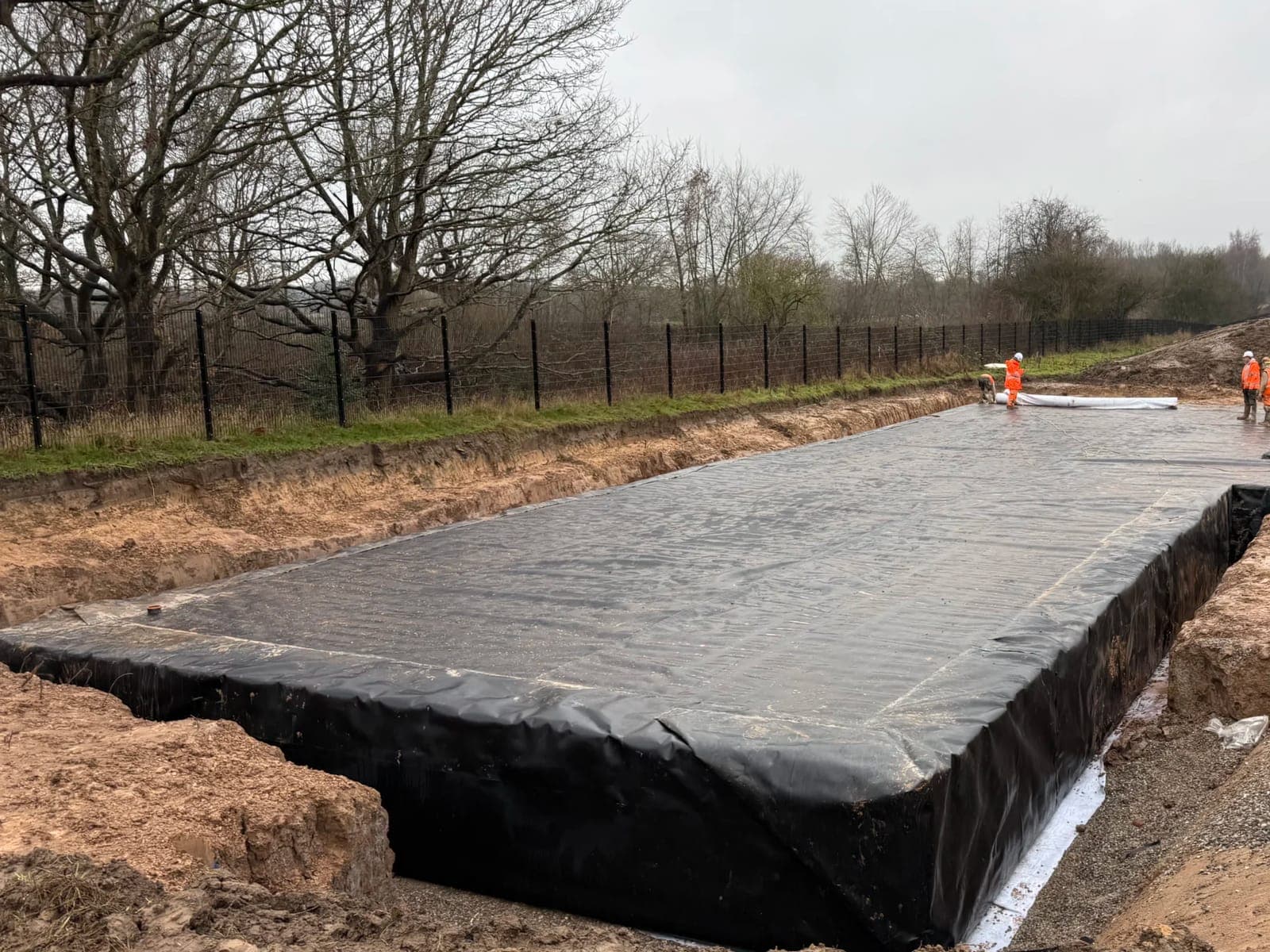
At Wrexham we installed a 650m³ attenuation tank on an industrial development, install-only, against a fixed handover date and through poor weather. We planned the work around weather windows and the trades following on, adjusted the sequence on site as conditions changed, and finished in time for the next phase to start.