
Skip to content

Pond Lining · South of England

Pond lining in Hampshire

A hole dug in Hampshire chalk empties almost as fast as you fill it, which is why ponds and reservoirs on the downs need a proper liner. We supply and weld that liner, from a wildlife pond to a farm irrigation reservoir.

Where we install
  • Winchester
  • Alresford
  • Stockbridge
  • Andover
  • Basingstoke
  • Petersfield
  • Romsey
  • Bishop's Waltham
  • Wickham

Base · Tamworth B78 2BP

Why chalk ponds leak

Chalk is fissured rock, and water finds the cracks. The old dewponds on the Hampshire downs were puddled with clay for exactly this reason, and a modern pond on the same ground needs a barrier that will last longer than a clay layer that dries and cracks in a hot summer.

South of the downs the problem changes. Around the Solent, the Hamble and Portsmouth Harbour the ground is clay and silt, which can hold water, but rarely evenly across a whole basin. A sand lens or an old field drain is enough to let a new pond drop through the summer, and a welded liner takes that guesswork away.
The ponds and reservoirs we line

Hampshire's lining work comes from a mix of estates, farms and developments. Arable and vegetable growers on the chalk store winter water for summer irrigation. Country estates in the Test and Itchen valleys restore ornamental lakes. Housing schemes include wildlife and amenity ponds in their open space, and fishing lakes need a liner that stands up to banks being walked and fished.

  • Irrigation reservoirs on arable and salad farms
  • Estate and ornamental lakes being relined or rebuilt
  • Wildlife and amenity ponds on new housing land
  • Fishing lakes and stocked ponds
  • Water features at schools, business parks and gardens

Choosing a liner for the site

Our liner advice starts with two questions: what will the pond be used for, and what has it been dug into? A large reservoir on open downland, exposed to sun and wind, usually suits HDPE. A curving garden or wildlife pond with planted margins suits EPDM or PP, which drape into shallow shelves and awkward corners. LLDPE sits between the two where you want weldable panels that follow the ground closely. Where a natural clay bed matters more than anything else, a GCL may suit better, and it has its own page.

On site in Hampshire

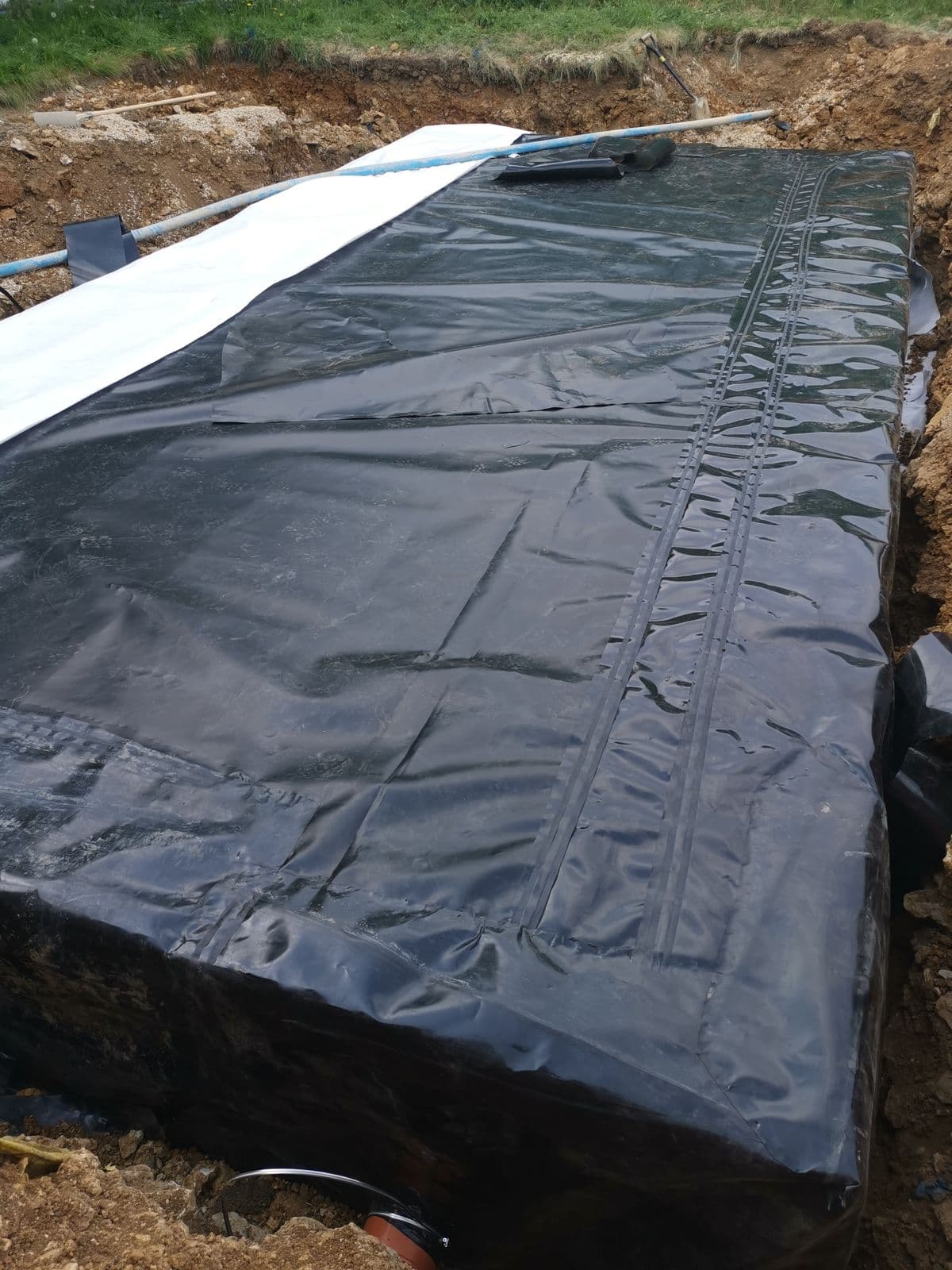
Your earthworks contractor shapes the basin and trims the formation. Chalk is full of flints, so we look hard at that surface before we unroll anything, and a protective geotextile underlay goes down first to stop a sharp flint working through the liner over time.

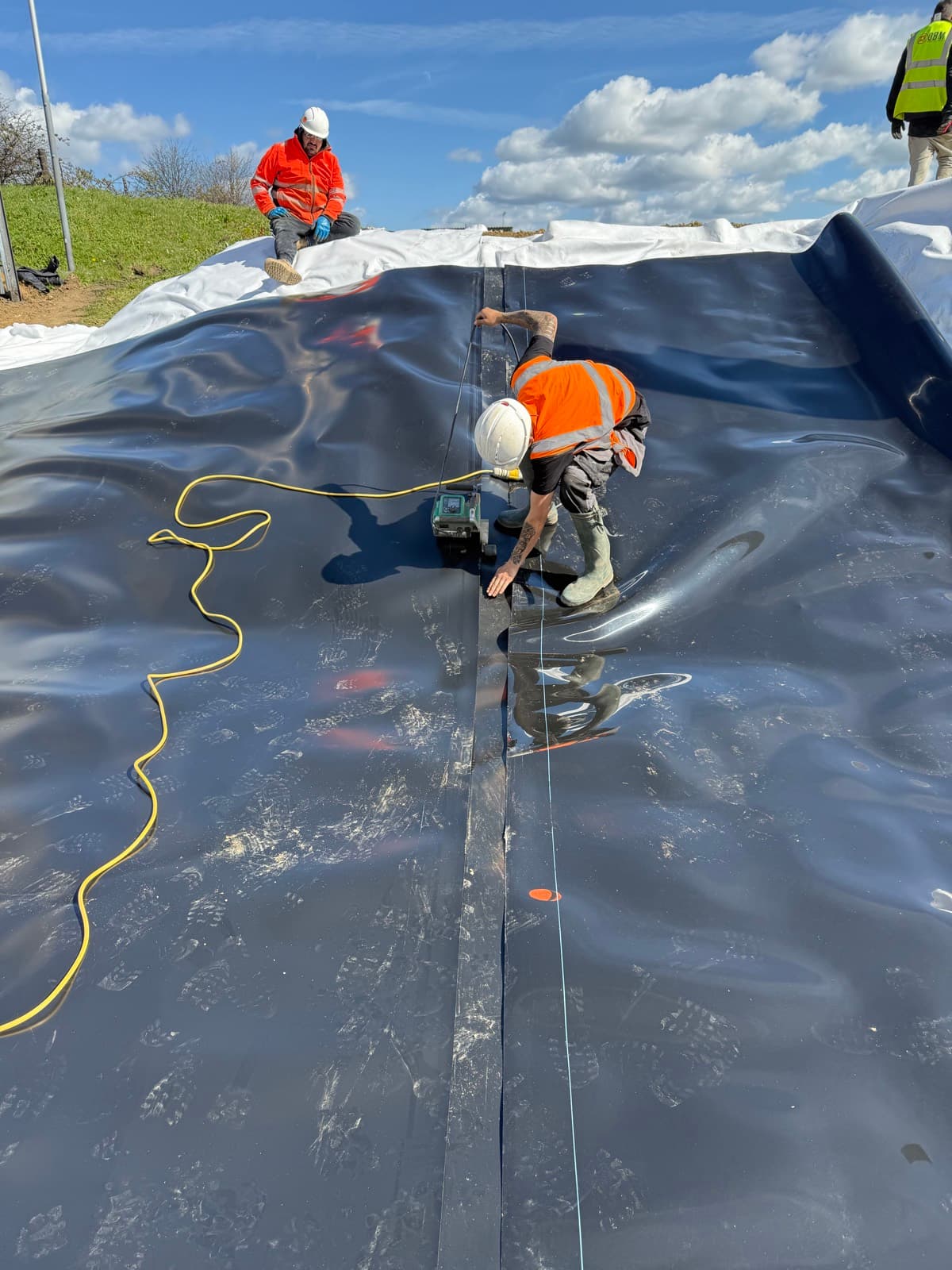
Next the sheets are rolled out and fused using wedge and extrusion welders, never taped. We make a test weld and log it, seal every outlet and pipe that passes through, and lock the edge into an anchor trench. The weld test records and handover pack are yours before the crew leaves. We come down from Tamworth to suit your earthworks timetable.

Pond Lining Hampshire

Frequently asked questions

Usually. Once the basin is reshaped and the loose flints are cleared, we can lay underlay and a welded liner into the existing hole. It is often the quickest way to turn a dry hollow into a working pond.

For a large open reservoir, HDPE is the usual choice because it copes with sunlight and weather on exposed banks. The final pick depends on the size, the slopes and how the water is drawn off.

Yes. We inspect the existing lining, find why it fails, and lay a replacement liner, welded throughout, on new underlay once the lake has been drained and the bed prepared by your contractor.

Tell us about your project

Quote back within one working day