
SVC-06 · Gas & Hydrocarbon Membranes
Gas and hydrocarbon membranes
Radon, methane, CO₂ and hydrocarbon protection, installed and verifiable.
On brownfield sites, former landfill, coalfield and radon-affected areas, the ground itself is the hazard. We install gas and hydrocarbon protection membranes to the design's specification — sealed, detailed around every penetration, and available with independent third-party validation.
- Hazards
- Radon · CH₄ · CO₂ · hydrocarbons
- Basis
- Site gas risk assessment
- Jointing
- Welded / sealed to spec
- Detailing
- Collared penetrations throughout
Gas & Hydrocarbon Membranes in short
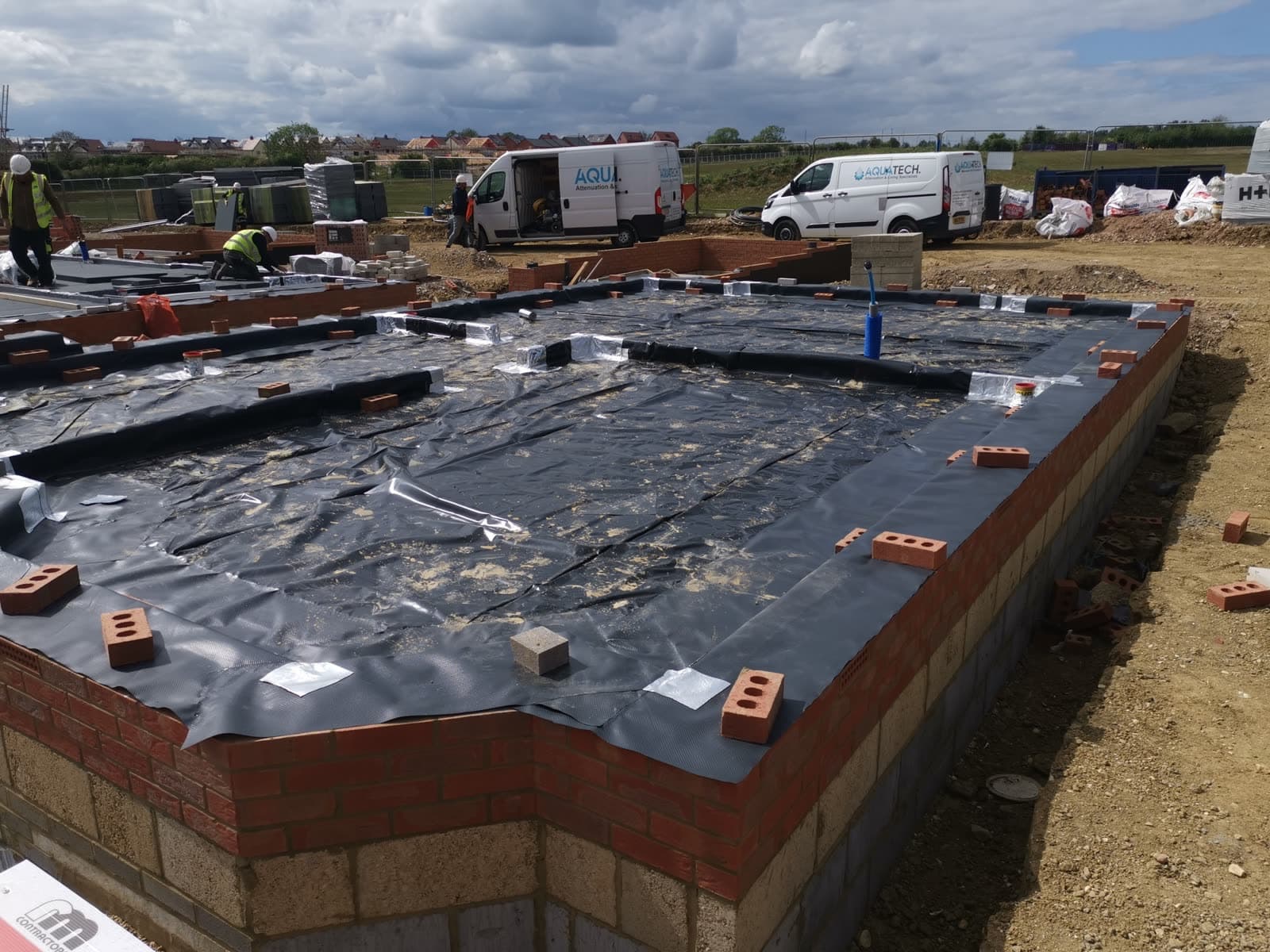
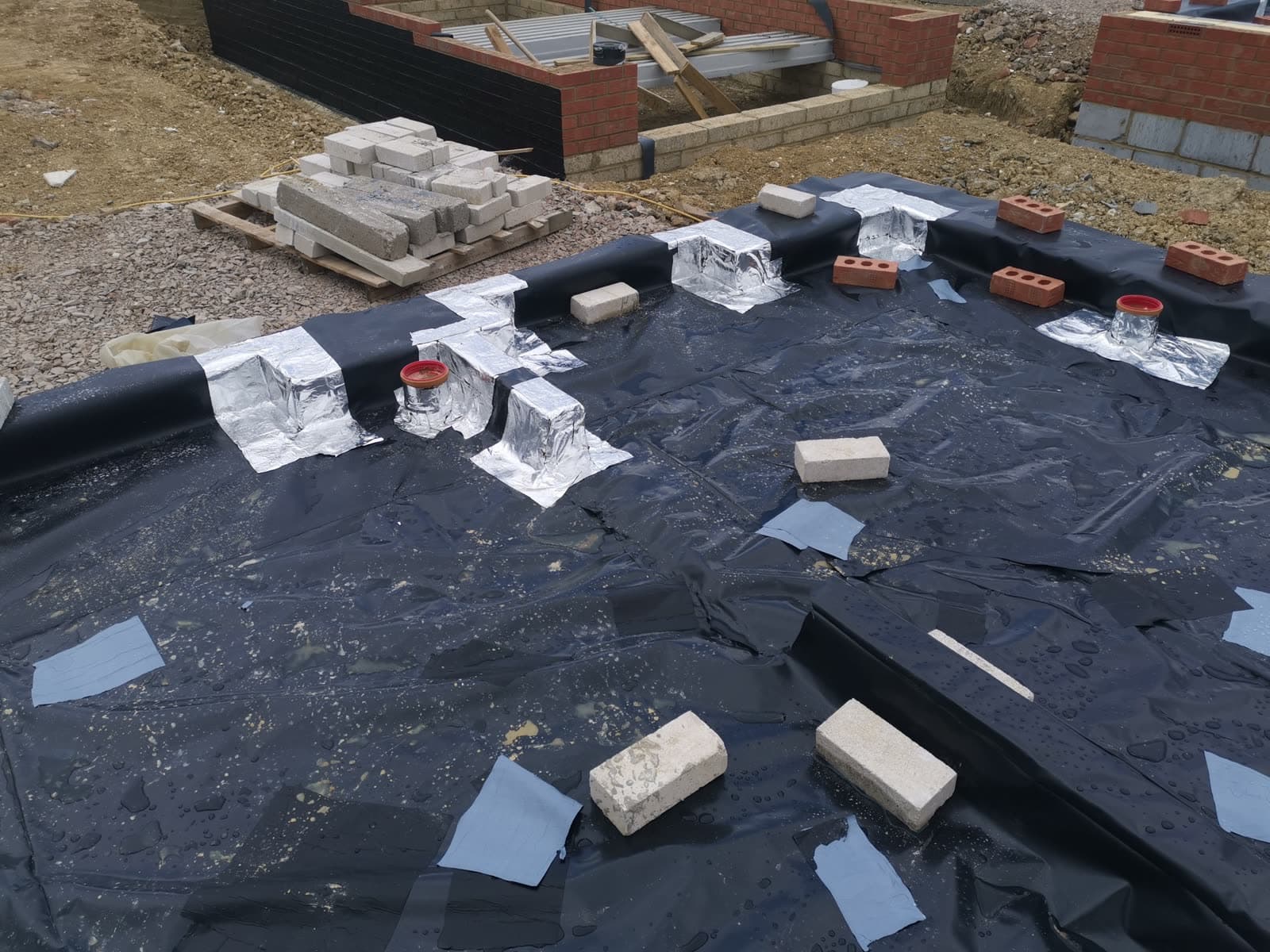
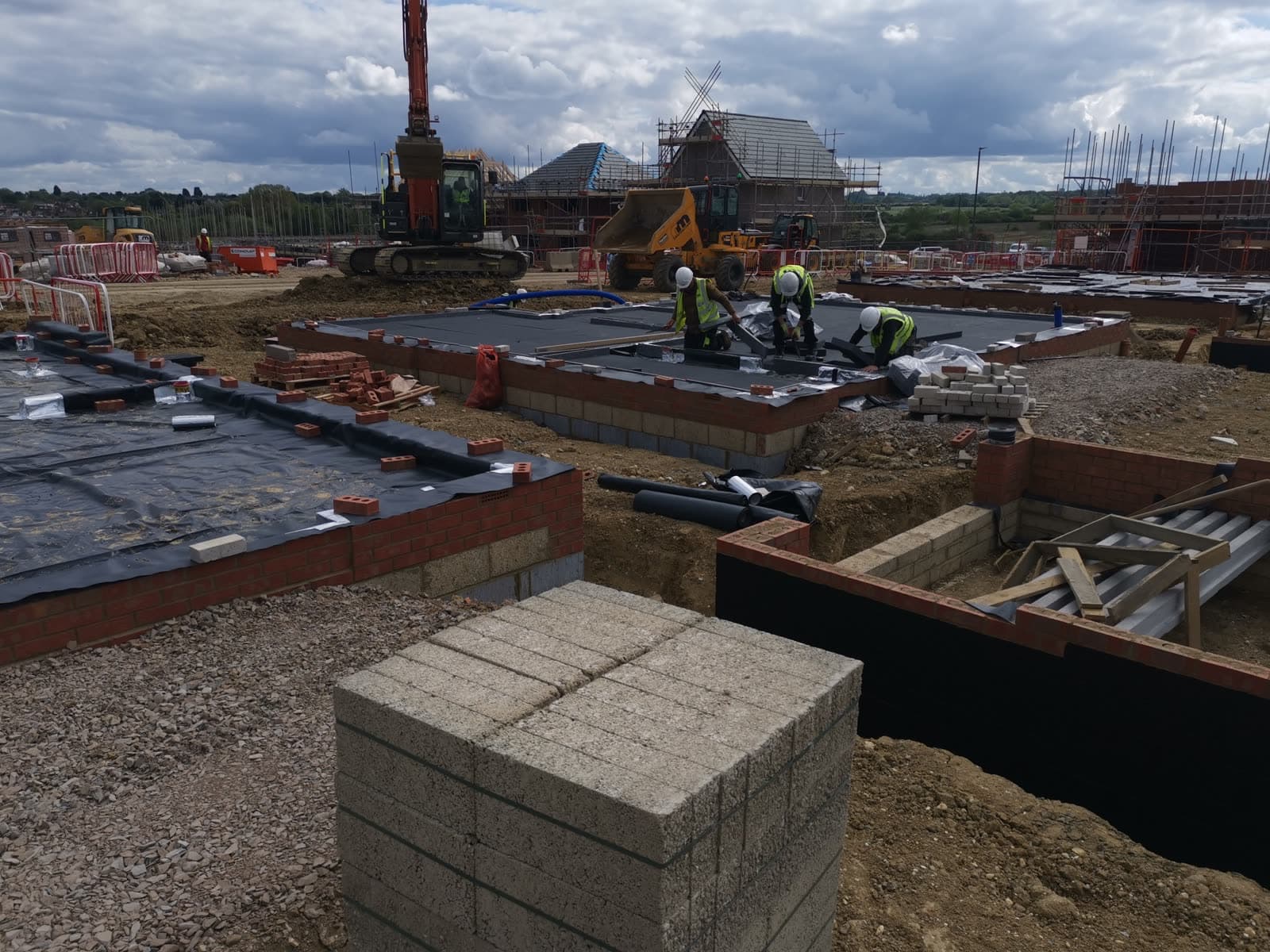
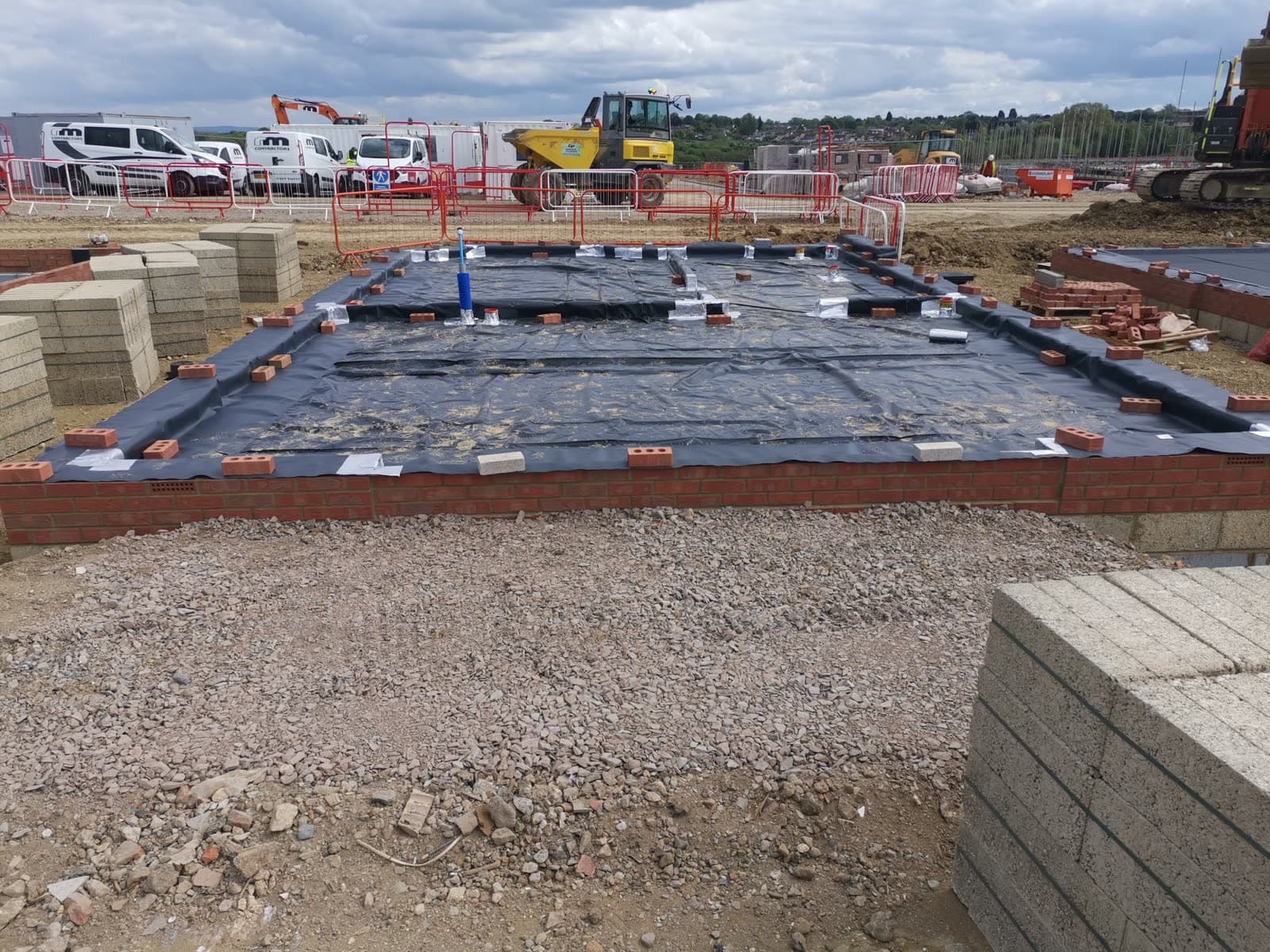
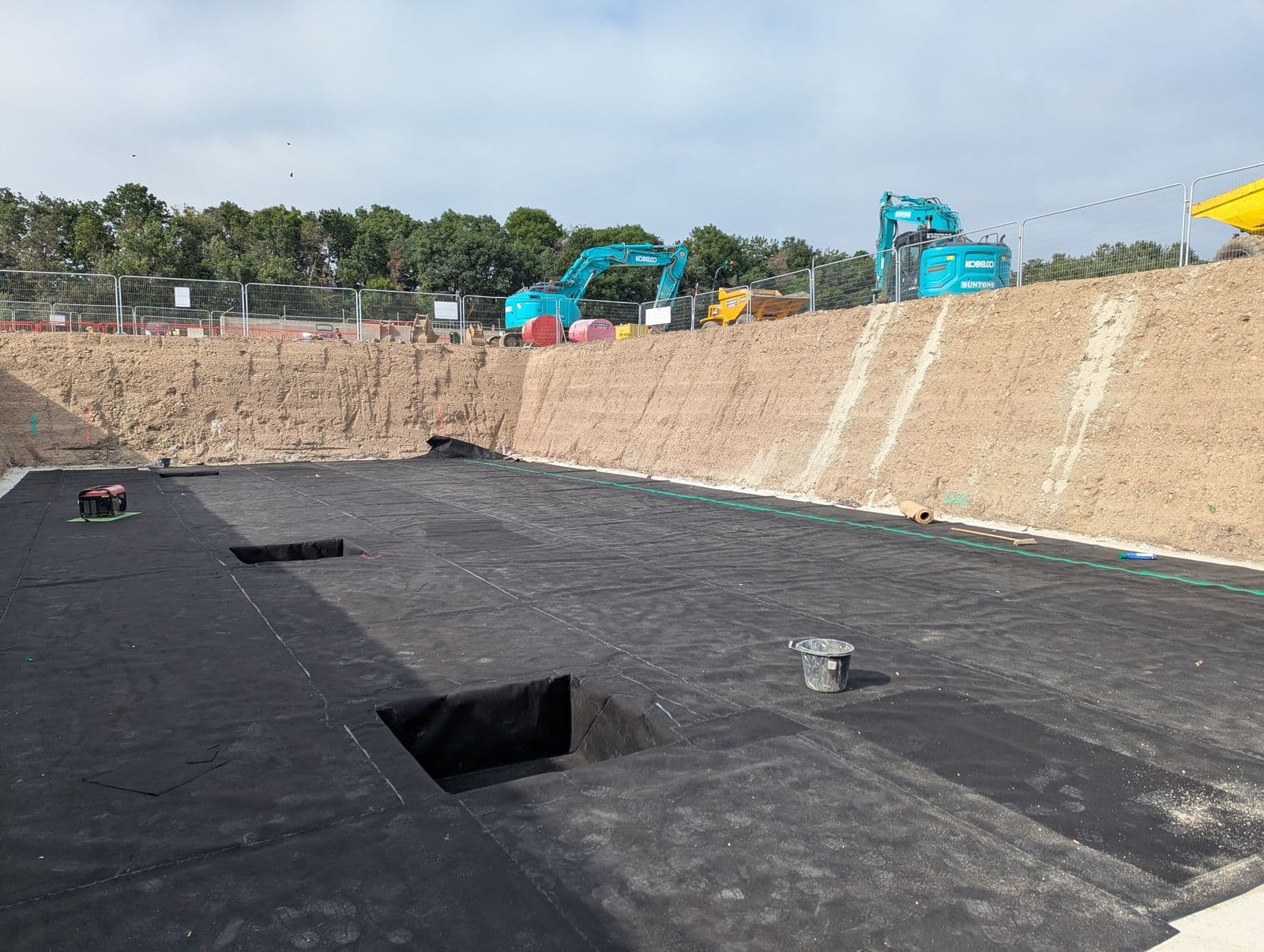
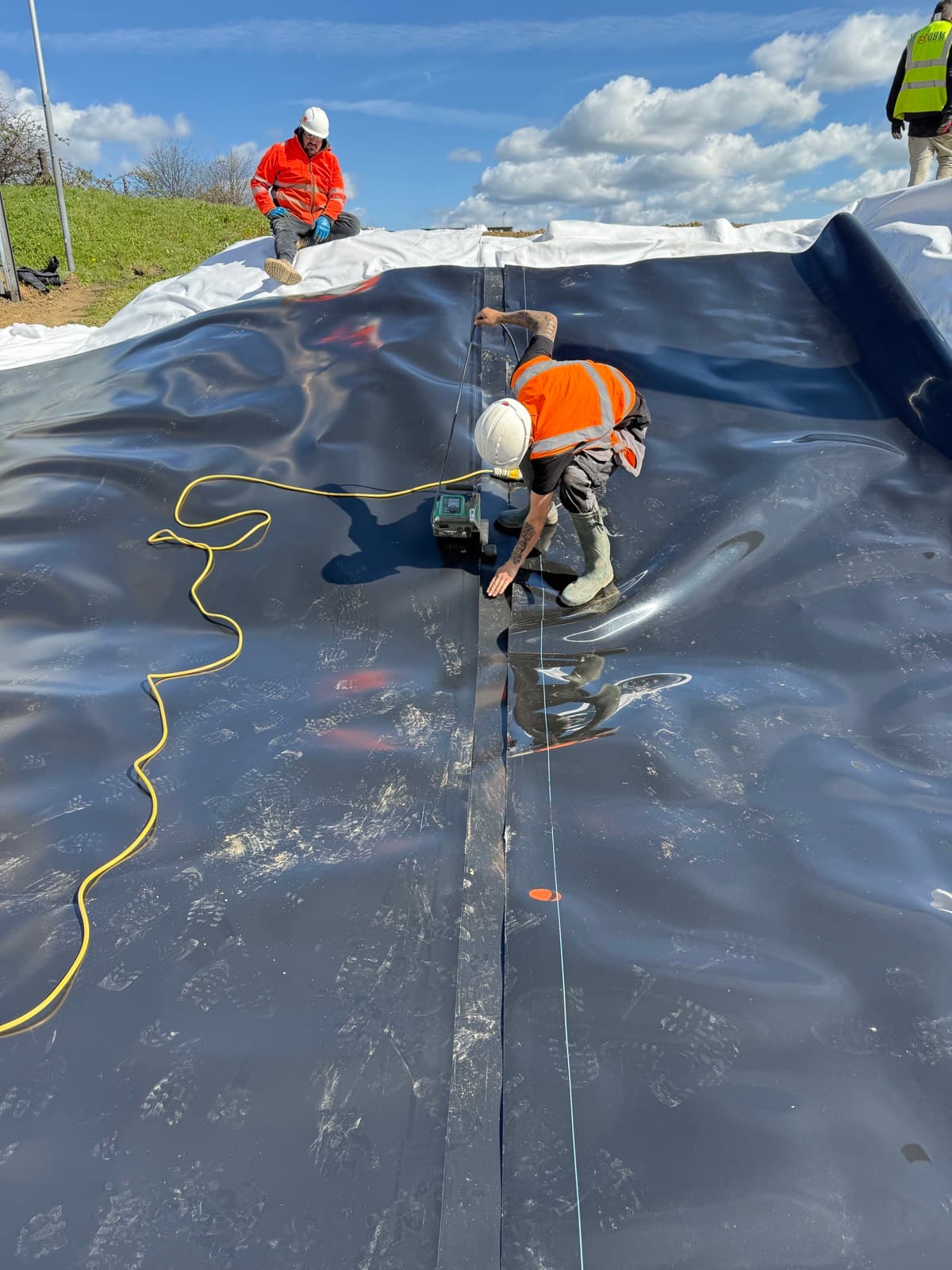
A gas and hydrocarbon membrane is a barrier installed beneath a building to stop radon, methane, CO₂ or hydrocarbons in the ground from getting in. Aquatech Civils installs these membranes to the specified protection level, with joints welded or sealed to the manufacturer's specification and every pile, service and structural penetration individually collared and sealed. Integrity testing and independent validation are available, with installation records for the warranty file.
The system
What's in the package
One team from supply to handover documentation.
- Installation to the specified protection level
- Manufacturer-compliant jointing
- Individual detailing of every penetration
- Integrity testing options
- Installation records for warranty providers
How it goes in
Installation process
- 01
PH-01
Specification review
We work from your ground investigation and gas risk assessment — the membrane and detailing follow the specified protection level.
- 02
PH-02
Substrate check
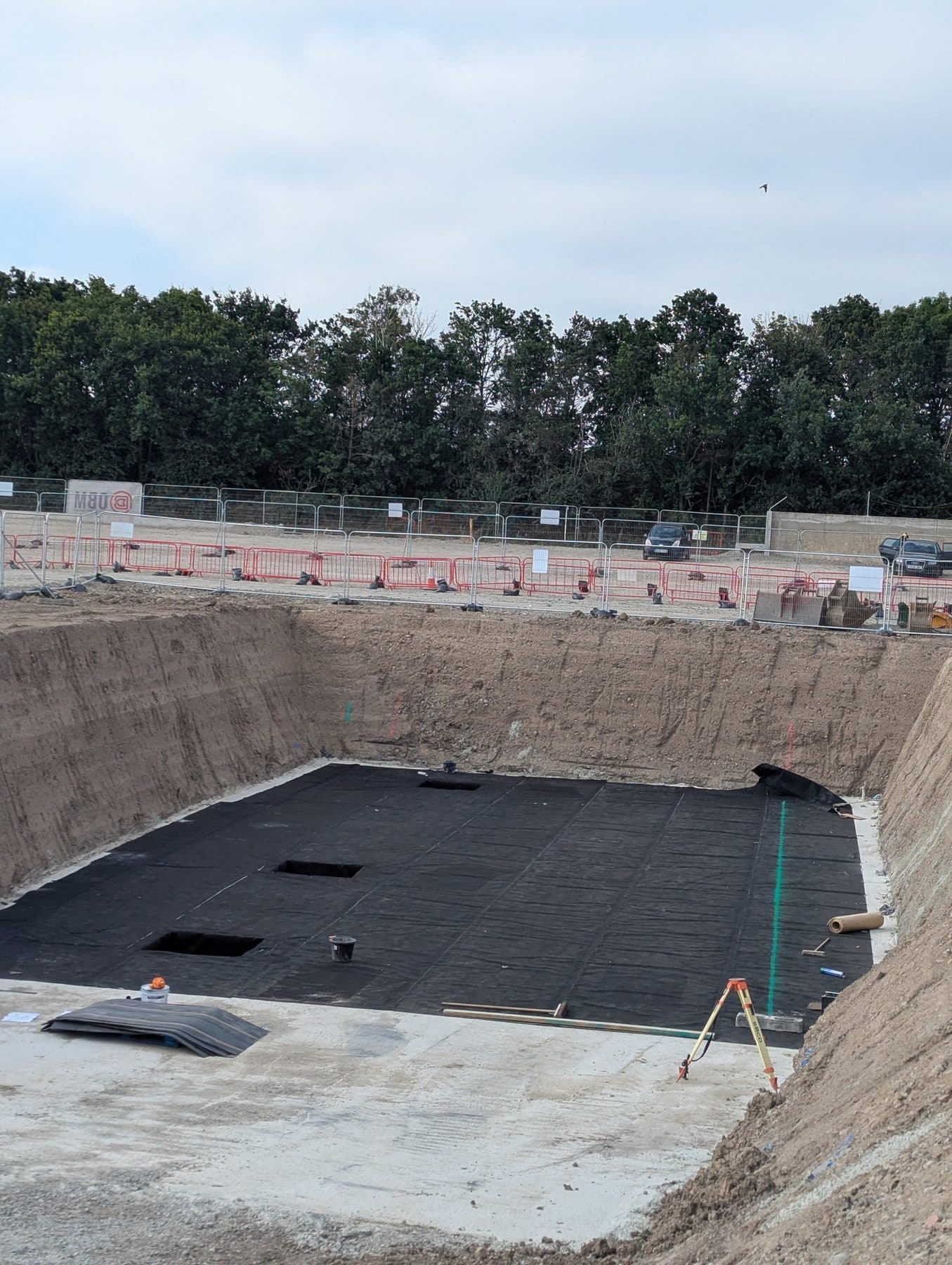
The slab or blinding is inspected before we lay — gas protection needs a surface that won't puncture the membrane, and we'll say so if it isn't there yet.
- 03
PH-03
Membrane installation
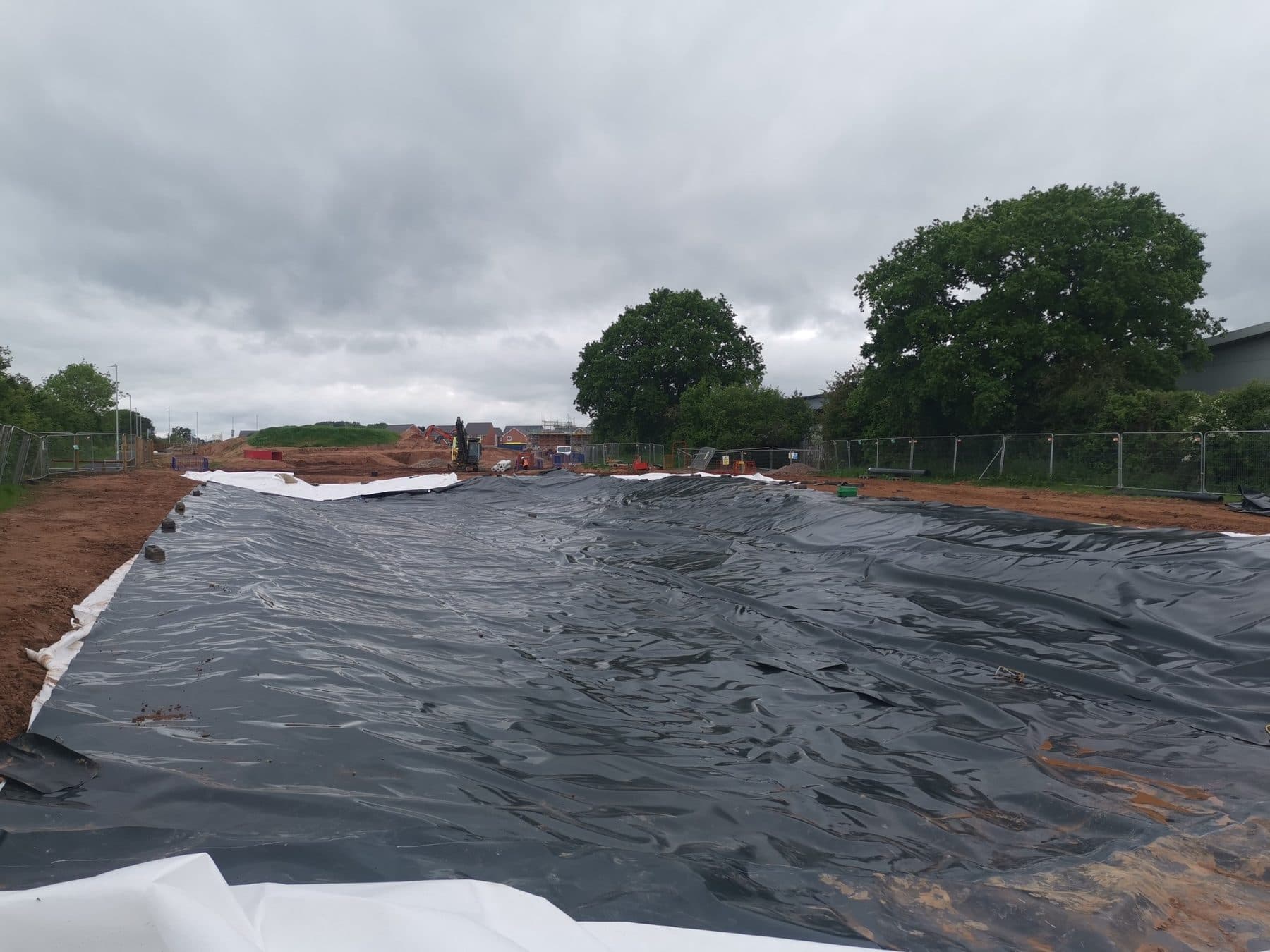
The barrier is installed with joints welded or sealed to the manufacturer's specification — no shortcuts at laps.
- 04
PH-04
Penetration detailing
Every pile, service and structural penetration is individually collared and sealed — the details are where gas protection lives or dies.
- 05
PH-05
Verification & records
Integrity testing and independent third-party validation are available, with installation records for the warranty file.
Specification
Specification
- Hazards
- Radon · CH₄ · CO₂ · hydrocarbons
- Basis
- Site gas risk assessment
- Jointing
- Welded / sealed to spec
- Detailing
- Collared penetrations throughout
- Verification
- Independent validation available
- Sectors
- Residential · commercial · industrial
Turnkey
One team from supply to handover documentation.
Welded, never taped
Every membrane joint heat-welded into a continuous barrier, with a recorded test weld on every job.
Documented to sign-off
QA and handover records as standard, covering what building control and adopting authorities ask for.
UK-wide
Midlands based and working the length of the country, with 25+ years in the ground.
Asked on site
Frequently asked questions
When the ground investigation says so — radon-affected areas, made ground, former landfill or industrial land, and coalfield sites all commonly trigger a specified protection level. The requirement comes from the risk assessment; we build to it.
A third-party inspector verifies the installed membrane — visually and with integrity testing — and certifies it. Many warranty providers and local authorities now expect it on higher-risk sites, and it protects everyone, including us.
Most gas barriers also perform as a DPM, but the reverse is not true — a standard DPM is not gas protection. The specification names the product class; we install what the risk level demands.
Poorly sealed penetrations and laps done in bad conditions. It's why our process treats every pile cap and service entry as its own detail, and why validation is worth having on any complex slab.
Adjacent systems
Related services
Tell us about your project
Quote back within one working day