Rain in the North West comes off the Pennines in the east and the Cumbrian fells in the north and runs west to the Irish Sea. The Irwell and the Mersey carry it through Greater Manchester, the Ribble through Preston, and the Weaver and the Dee drain much of Cheshire. Where those rivers meet the sea there is wide, low-lying ground around the Mersey, the Ribble and the Dee estuaries.
Much of the lowland between the hills and the coast is covered in glacial clay, which takes water slowly. Liverpool and parts of Cheshire sit on sandstone, but the city plots there rarely leave room for the clearances a soakaway needs, and near the estuaries the groundwater can be close to the surface.
Add older town centres that still run on combined sewers, and most sites in the region end up storing their runoff and releasing it slowly. That puts the weight on the tank holding its volume: watertight against storm water going out and groundwater coming in.
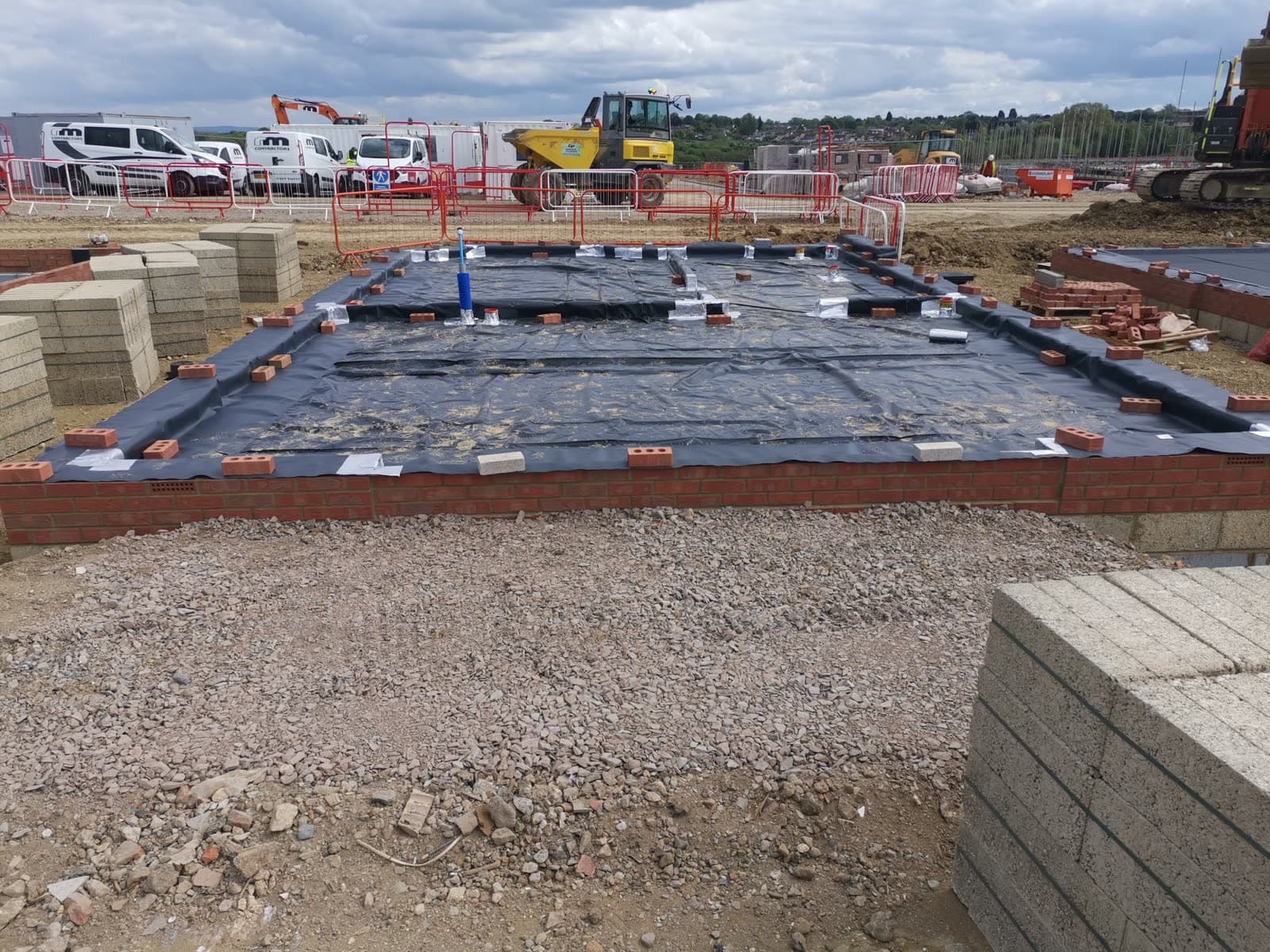
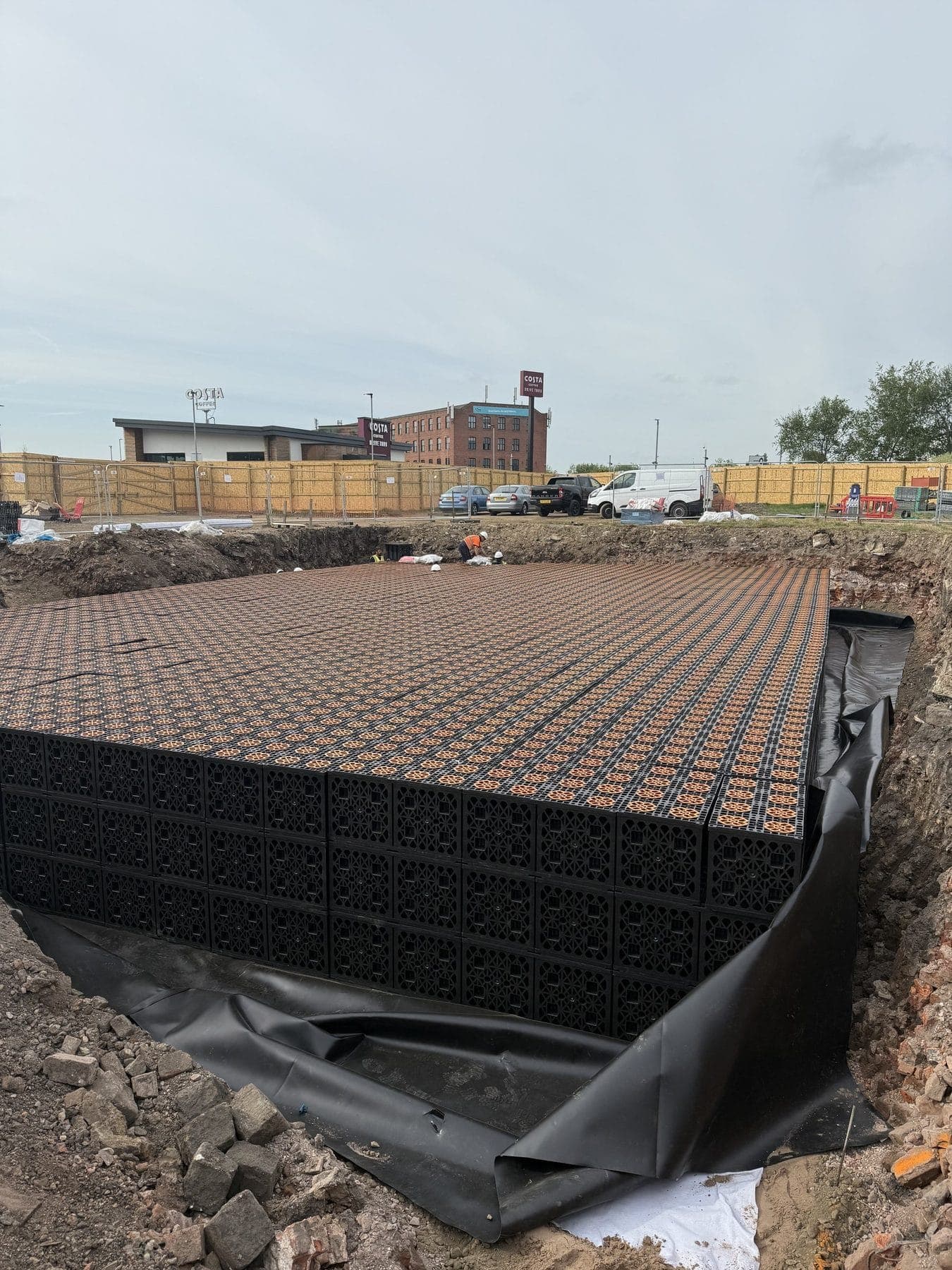
In Manchester, Salford and Liverpool most new building goes onto land that has been built on before: mills, docks, warehouses and cleared streets. Those formations turn up old brick, concrete and pipe, so we check the base before any fleece goes down. Where the site investigation finds ground gas, we can install the gas membrane too.
The M6, M62, M58 and M55 carry industrial estates and logistics parks with large roofs and HGV yards, where the crate's loading class matters as much as its volume. Further out, in the Fylde, the Ribble Valley, Cheshire and Cumbria, the work is rural: farm buildings with outfalls to a brook, lined ponds and reservoirs, and slurry lagoons on dairy farms.
We cover the North West from our Tamworth base, straight up the M6. The crew brings its own calibrated welding equipment, so a tank in Wigan or Warrington gets the same welded seams, test weld and handover pack as one down the road from the yard.
On a longer run we plan the visit tightly. We agree delivery times and the working area with the site before we set off, arrive when the excavation is formed, and leave the system sealed and documented so the groundworker can backfill without waiting on us.
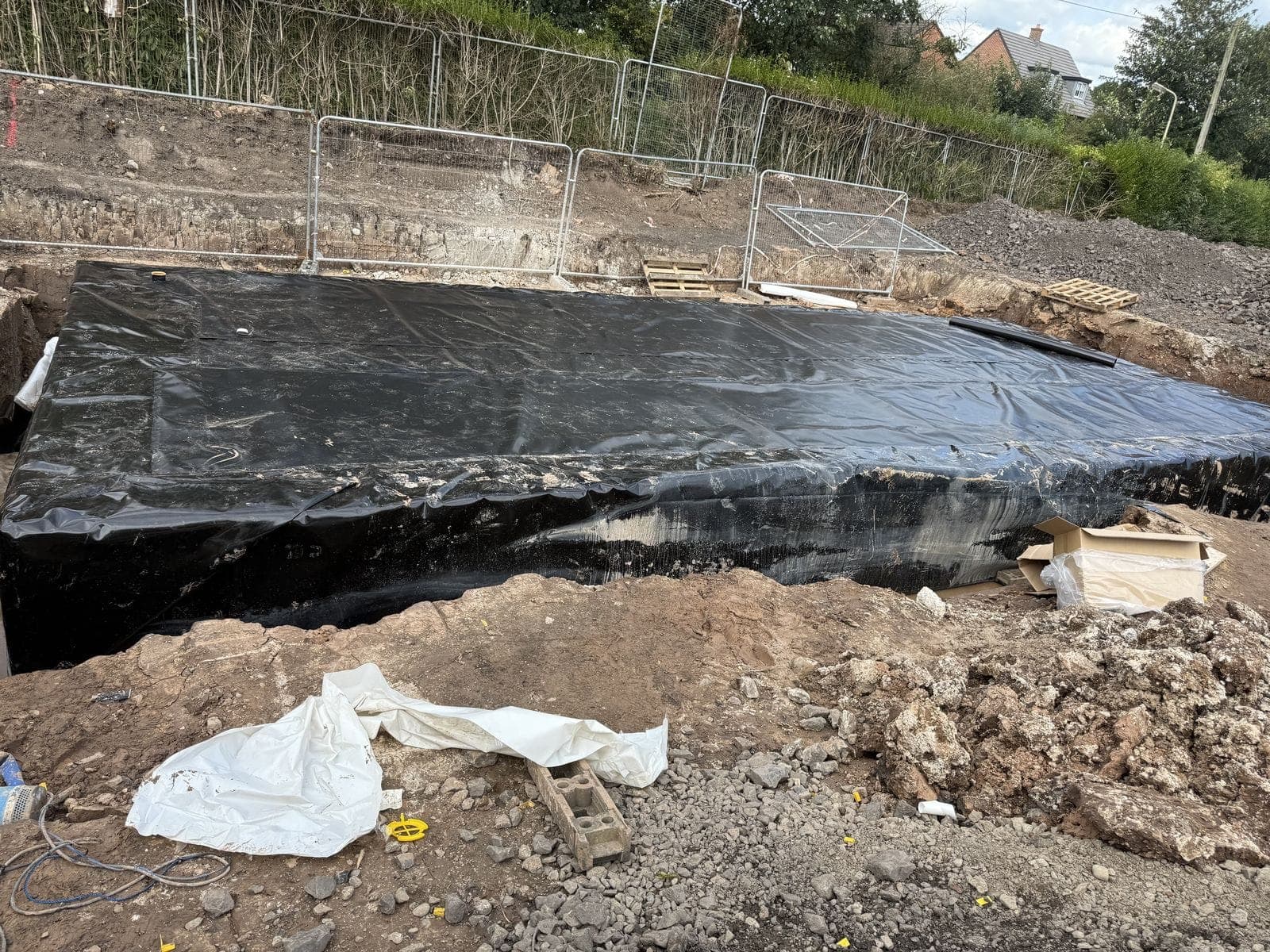
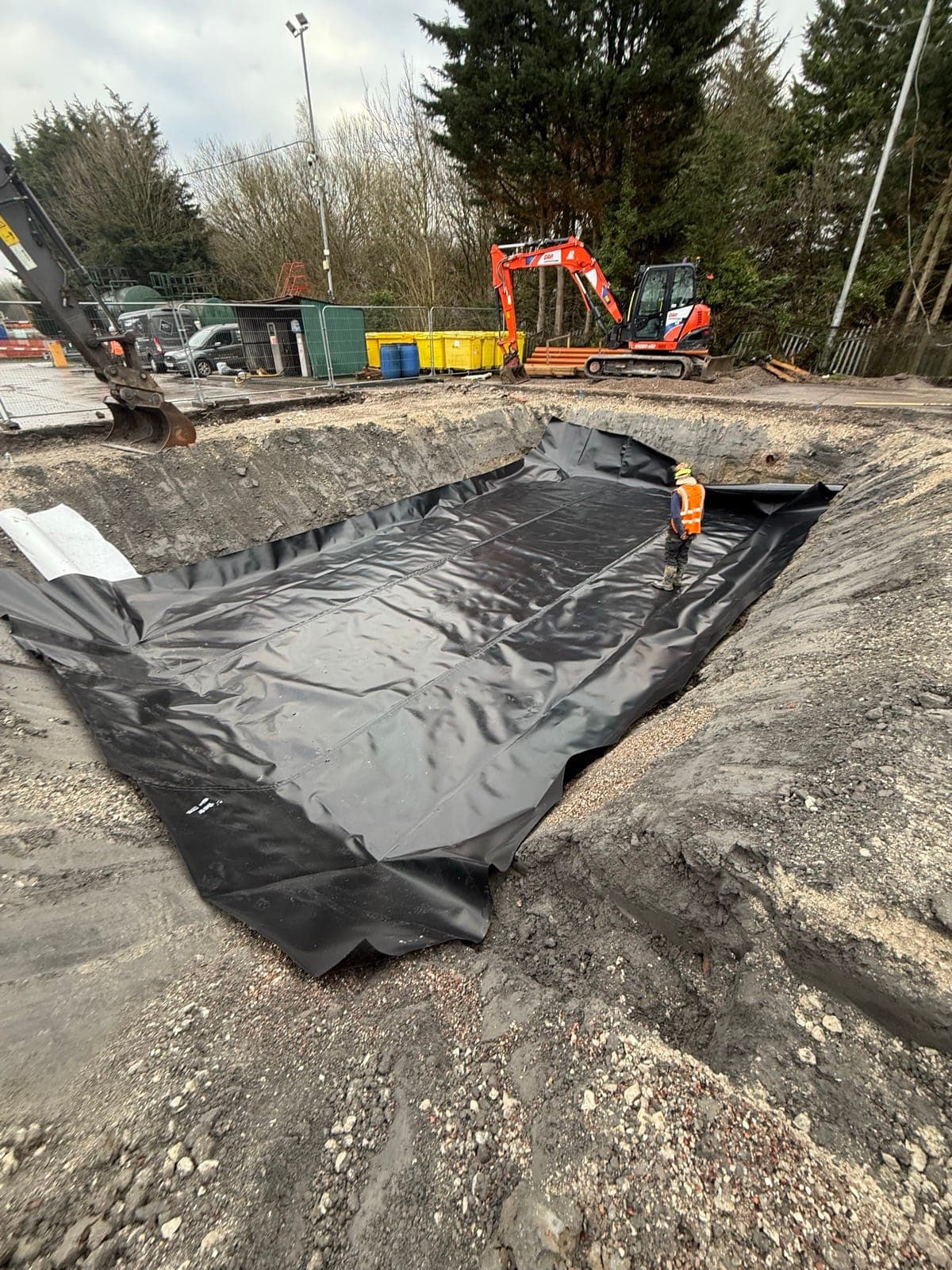
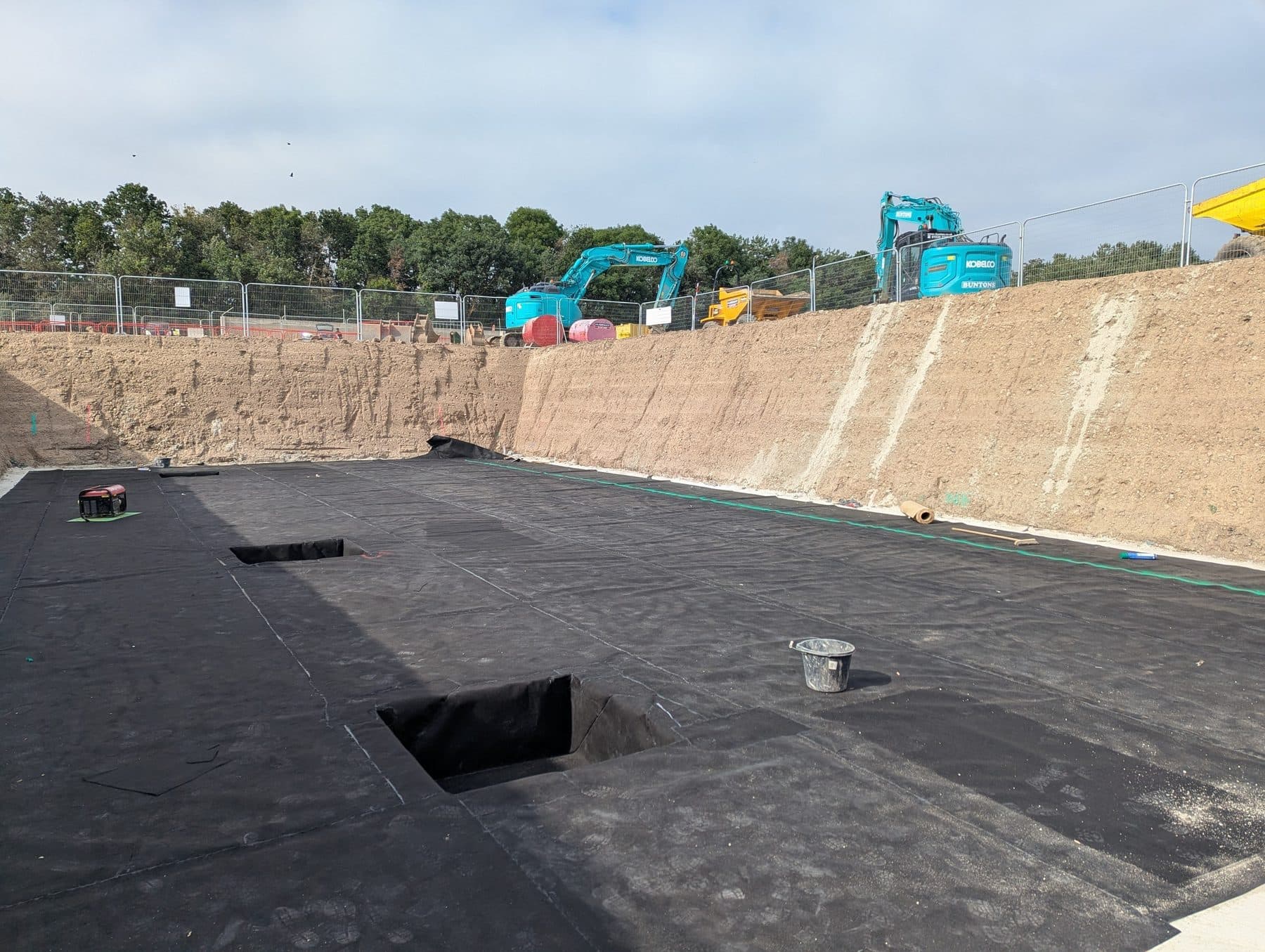
At Whittingham, near Preston, we built a 101m³ attenuation tank in heavy-loading crates, with the wrap finished tight to the block so the cover couldn't pinch it. At Knowsley we lined an attenuation tank on an operational industrial site, welding the membrane over protective fleece and detailing it around the structures while the site kept working.