
SVC-03 · Pond Lining
Pond and reservoir lining
HDPE, LLDPE, EPDM, PP and GCL lining for ponds, lakes and reservoirs.
From wildlife ponds to irrigation reservoirs, a pond only works if it holds water. We survey, select and install the right membrane for the job — welded in place with the same equipment and testing discipline we bring to every underground system. We install HDPE, LLDPE, EPDM and PP membranes, and GCL — a geosynthetic clay liner with a self-sealing bentonite core — where a clay liner suits the site better. GCL has its own page with the detail.
- Liners
- HDPE · LLDPE · EPDM · PP · GCL
- Thickness
- 1mm – 2mm to suit
- Underlay
- Protective geotextile
- Seams
- Wedge / extrusion welded
Pond Lining in short
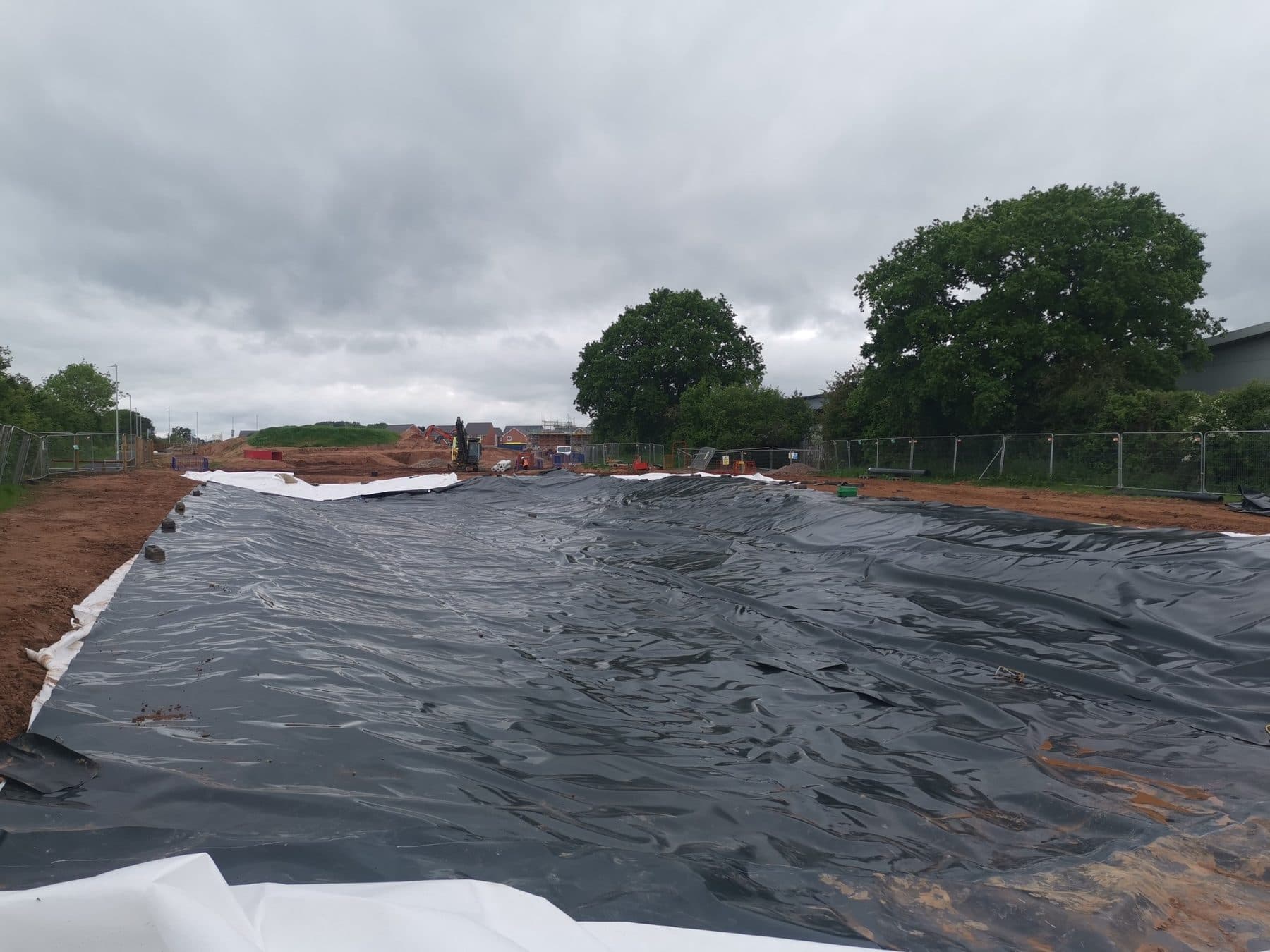
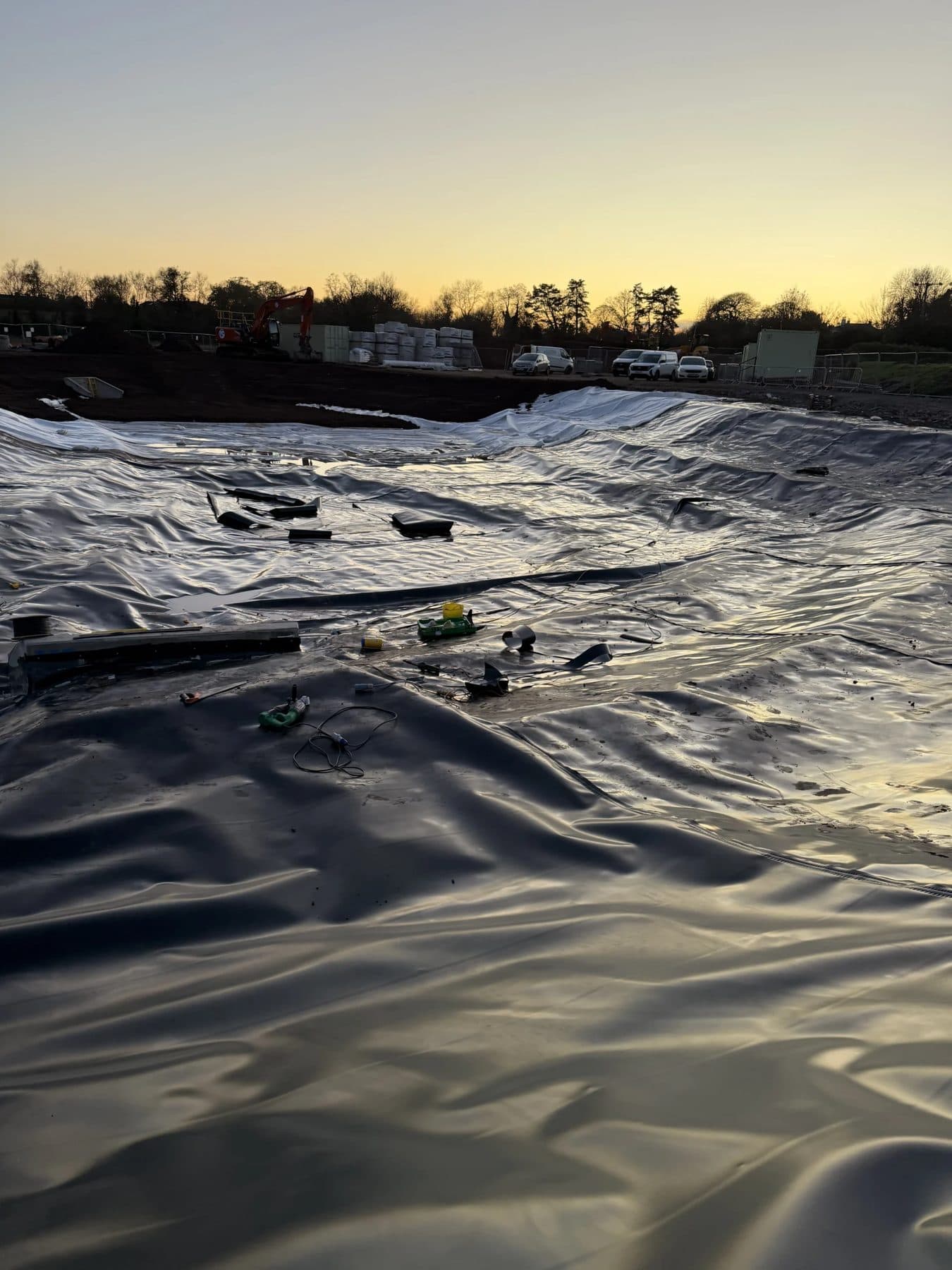
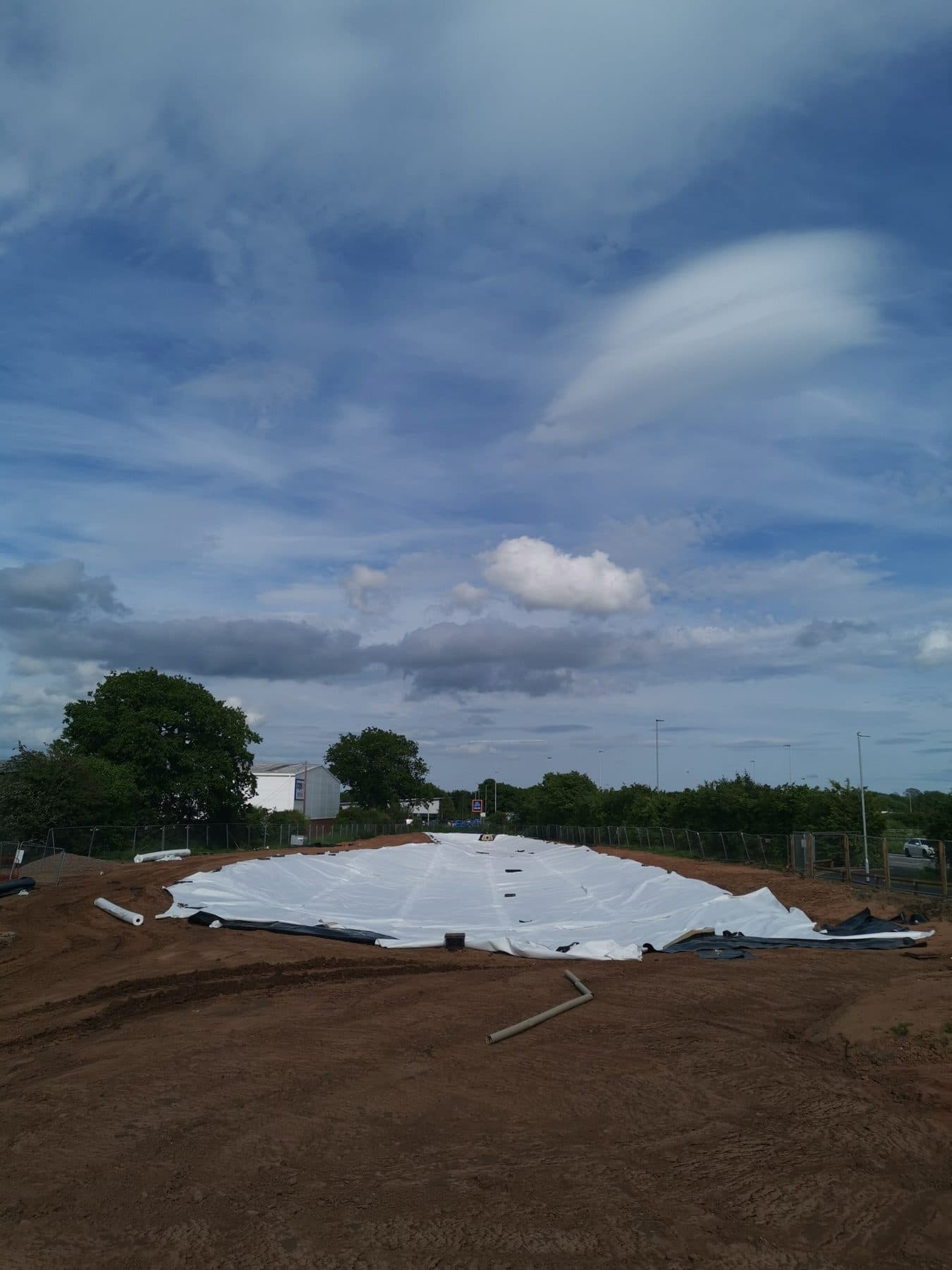
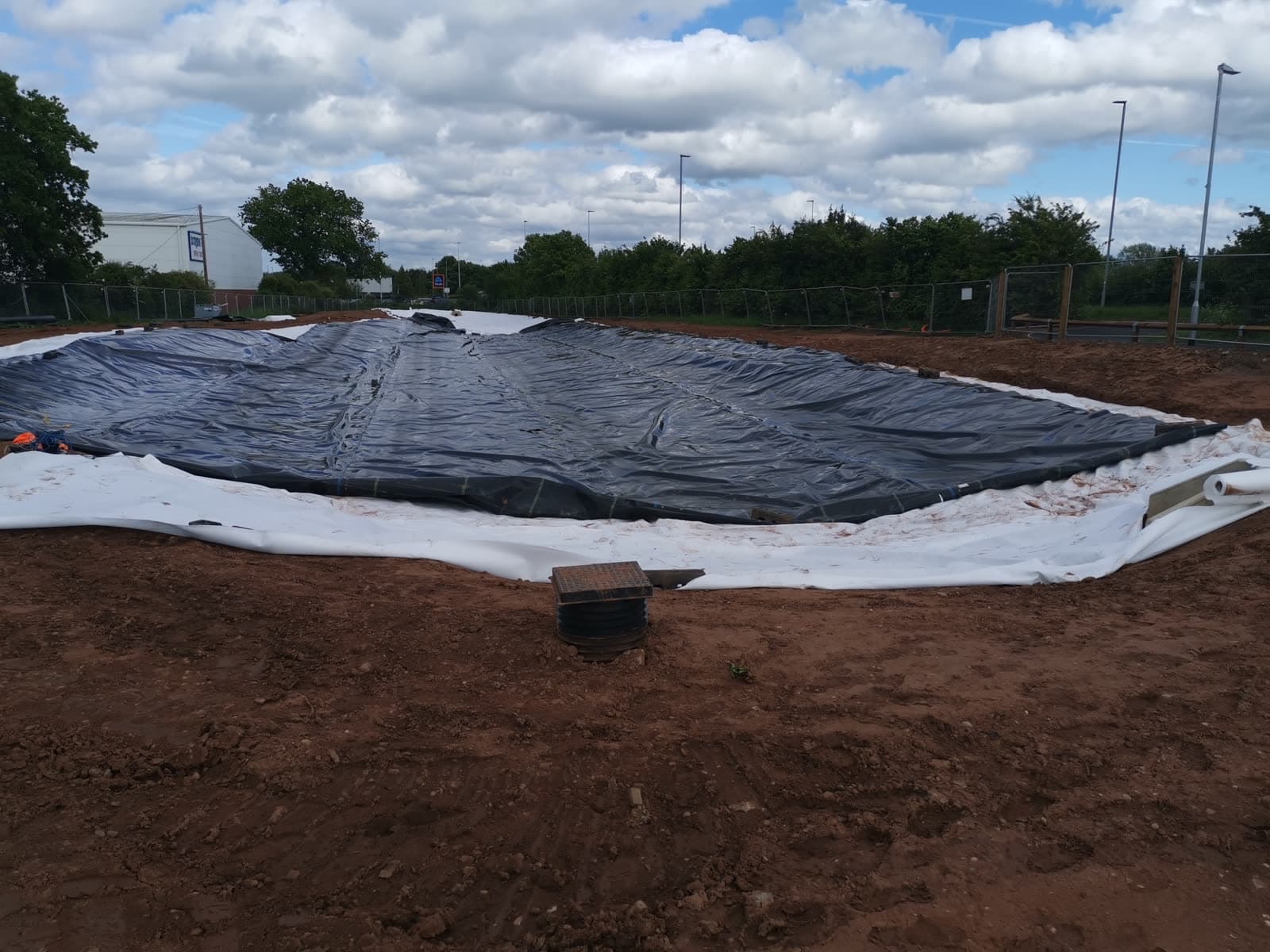
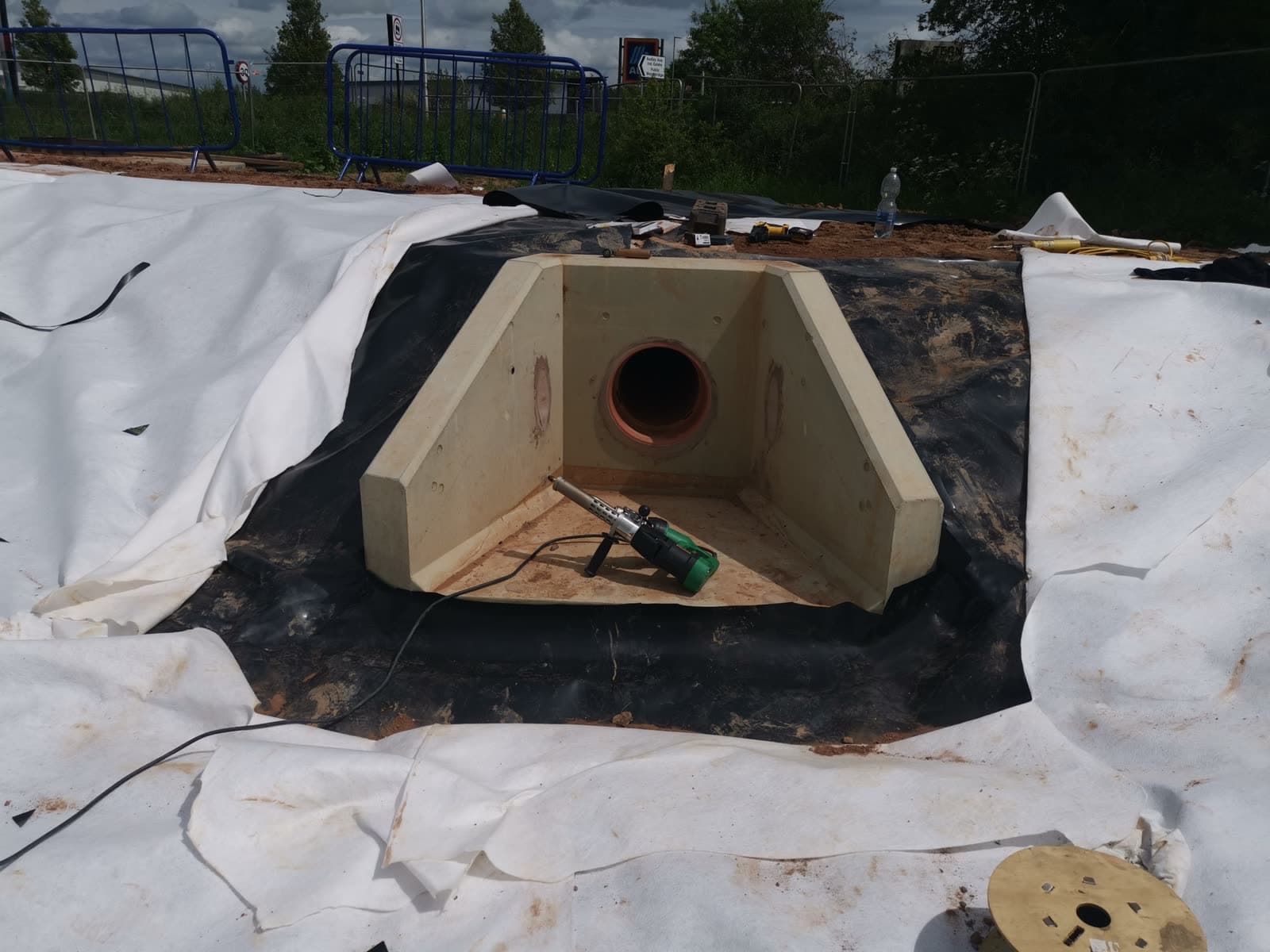
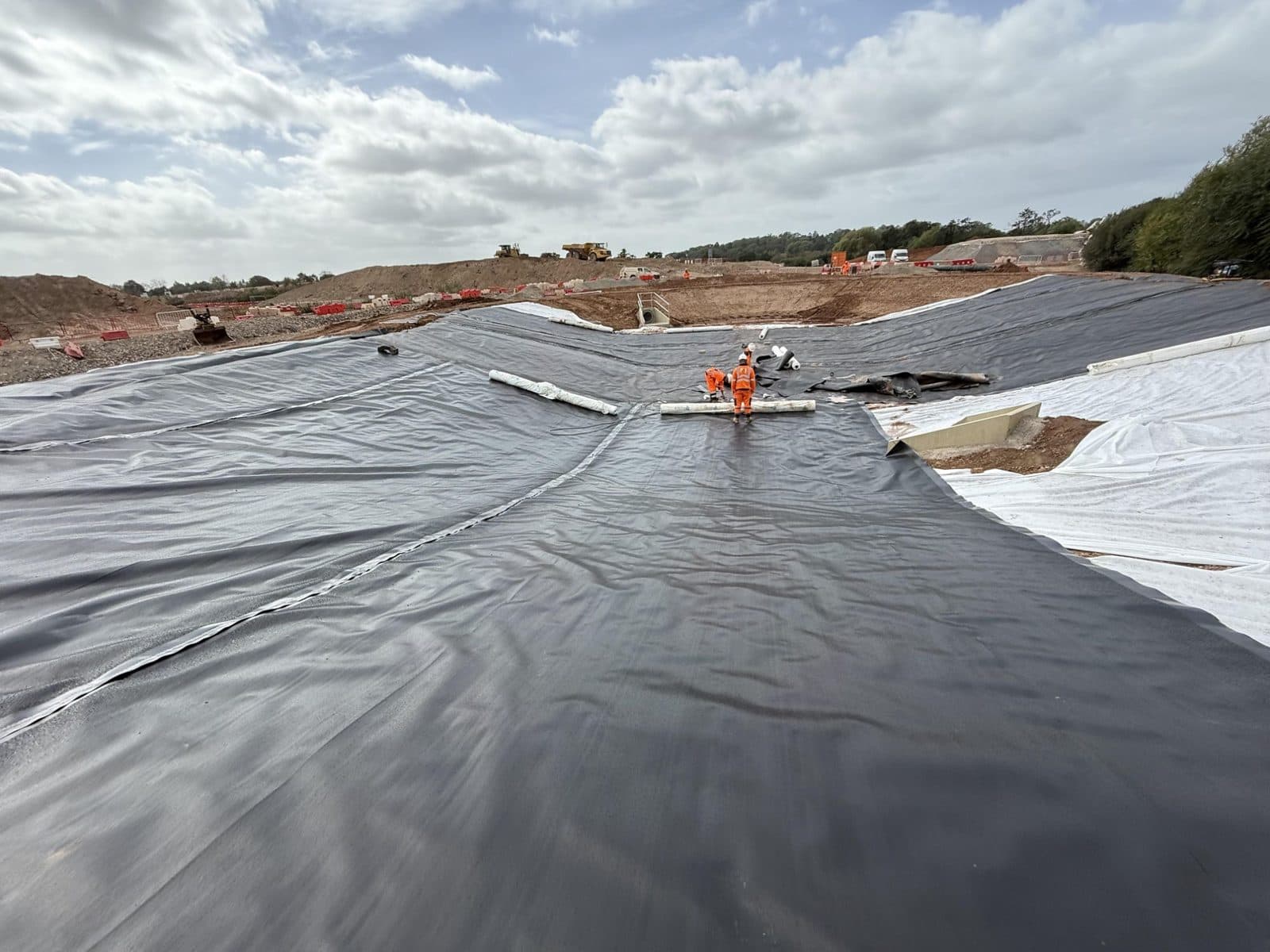
Pond lining is a membrane or clay liner laid across the formation of a pond, lake or reservoir so that it holds water. Aquatech Civils recommends and installs HDPE, LLDPE, EPDM, PP and GCL liners over a protective geotextile underlay, with seams welded on site, a recorded test weld on every job and the perimeter locked into an anchor trench. Handover includes weld test records and documentation.
The system
What's in the package
One team from supply to handover documentation.
- Liner recommendation for the specific pond — membrane or GCL
- Geotextile underlay and protection layers
- On-site seam welding and weld testing
- Penetration and edge detailing
- Weld test records and handover documentation
How it goes in
Installation process
- 01
PH-01
Survey & selection
Size, shape, substrate and use decide the membrane. We recommend HDPE, LLDPE, EPDM, PP or GCL to suit the pond.
- 02
PH-02
Underlay
You give us a clean, trimmed formation. Onto it we lay a protective geotextile underlay, so the ground can never work against the liner.
- 03
PH-03
Deployment & welding
Panels are placed and seam-welded with wedge and extrusion equipment. A test weld is carried out and recorded on every job.
- 04
PH-04
Details & anchorage
Pipe penetrations, outlets and edge details are formed and sealed; the perimeter is locked into an anchor trench.
- 05
PH-05
Inspection & handover
Seams, details and anchorage are inspected and the weld test records completed before we leave site, with handover documentation to match.
Specification
Specification
- Liners
- HDPE · LLDPE · EPDM · PP · GCL
- Thickness
- 1mm – 2mm to suit
- Underlay
- Protective geotextile
- Seams
- Wedge / extrusion welded
- Edges
- Perimeter anchor trench
- Applications
- Wildlife, amenity, irrigation, storage
Turnkey
One team from supply to handover documentation.
Welded, never taped
Every membrane joint heat-welded into a continuous barrier, with a recorded test weld on every job.
Documented to sign-off
QA and handover records as standard, covering what building control and adopting authorities ask for.
UK-wide
Midlands based and working the length of the country, with 25+ years in the ground.
Asked on site
Frequently asked questions
As a rule of thumb: EPDM for smaller ornamental and wildlife ponds where flexibility matters, LLDPE where you want weldable panels with good conformability, PP where you need a flexible, weldable sheet for awkward shapes and detailing, and HDPE for large reservoirs and the toughest chemical and UV exposure. GCL — a geosynthetic clay liner, covered on our GCL pond lining page — suits confined basins with the right water chemistry and seals its own minor punctures. The survey settles it.
Yes — the membranes we install are inert once in place and widely used in wildlife and stocked ponds. Tell us the pond's purpose at survey and the specification will reflect it.
Decades. Buried or water-covered membrane is protected from UV, and welded seams don't rely on adhesives. Most failures we're called to fix are taped or unprotected liners — which is why we weld and why we use underlay.
Usually, yes. We inspect the existing liner, identify the cause of the leak and install a new lining system over a fresh protection layer.
Adjacent systems
Related services
Tell us about your project
Quote back within one working day