
Skip to content

GCL Pond Lining · South of England

GCL pond lining around the New Forest

For a wildlife pond on Forest sand or gravel, a geosynthetic clay liner gives a natural clay bed that looks right in the landscape. First we make sure a clay liner suits the pond, then we lay it, dress every overlap with bentonite and leave it ready for its soil cover.

Where we install
  • Fordingbridge
  • Ringwood
  • Burley
  • Lyndhurst
  • Ashurst
  • Brockenhurst
  • Beaulieu
  • East Boldre

Base · Tamworth B78 2BP

A clay bed on free-draining ground

Much of the land around the Forest, from the plateau near Fordingbridge to the sandy country south of Ringwood, drains far too quickly to keep water in a hollow. What a GCL adds is the clay that the ground is missing, as a sheet of sodium bentonite carried in fabric that tightens into a seal once it is wet and held down.

Owners and land managers here often want a pond that reads as part of the heath and woodland, with soft margins, plants and no visible plastic. A covered GCL gives exactly that, and should a root or a hoof nick it, the clay expands to plug the damage.
When it isn't the right liner

A GCL needs a cover of soil or stone to seal, gentle side slopes to hold that cover, and water that suits the clay. Steep banks, a pond that will be drawn down hard, or contents that would attack the bentonite all point to a welded membrane instead.

High groundwater in the valley bottoms is the other thing to raise. Water rising from below can wet the clay before the cover is on, or push against the liner when the pond is low. Your designer decides how that is handled; we check the plan suits a clay liner before recommending one.

Wet weather matters too. A Forest winter can leave the formation soft and puddled for weeks, and a GCL laid onto standing water starts to swell unconfined. Spring and summer are usually the easier seasons to lay one here.

  • Confirm the water source and use
  • Check the slopes will carry the cover
  • Inspect and sign off the prepared formation
  • Lay, overlap and seal, then record each lap

Laying and handover

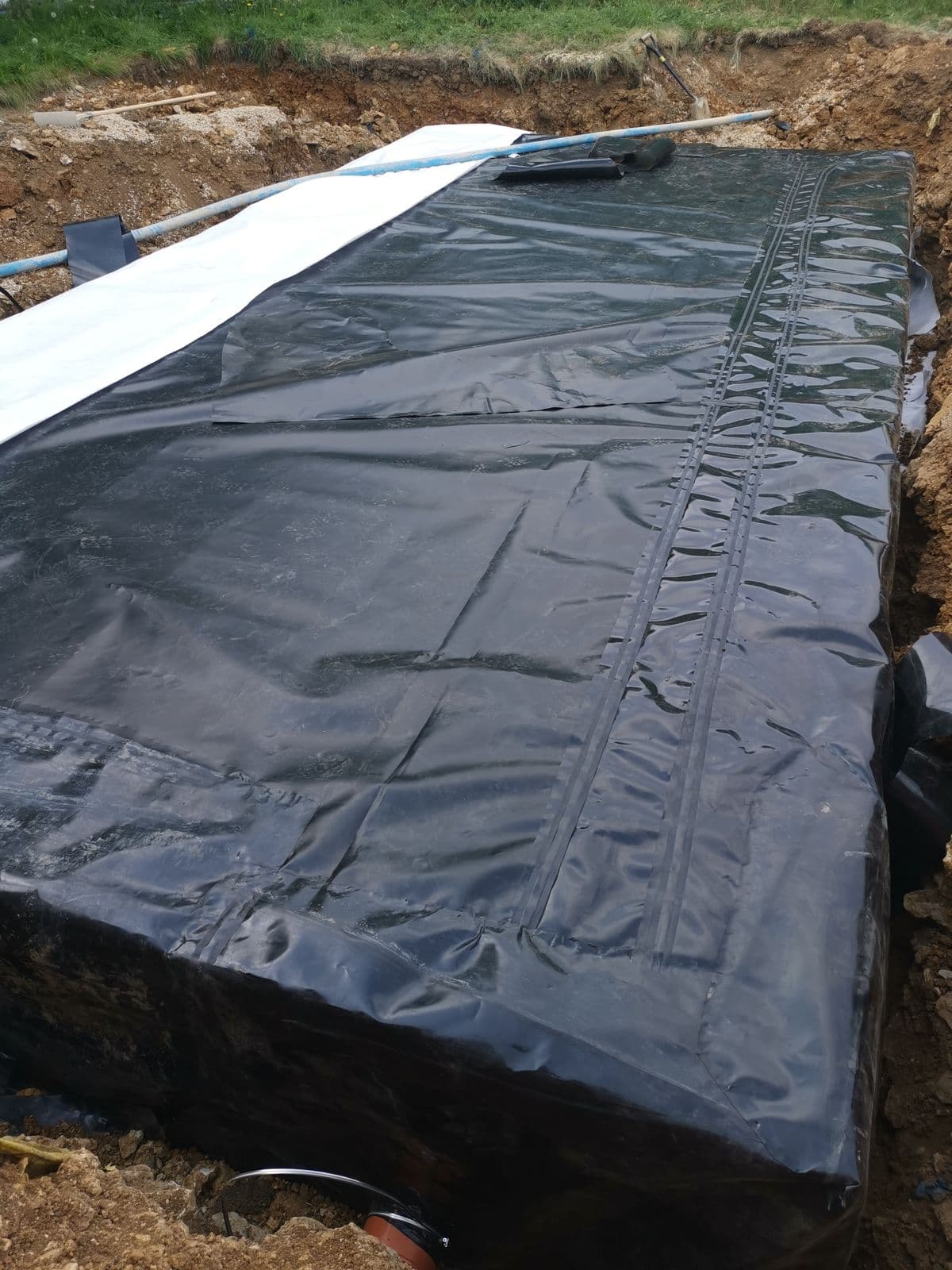
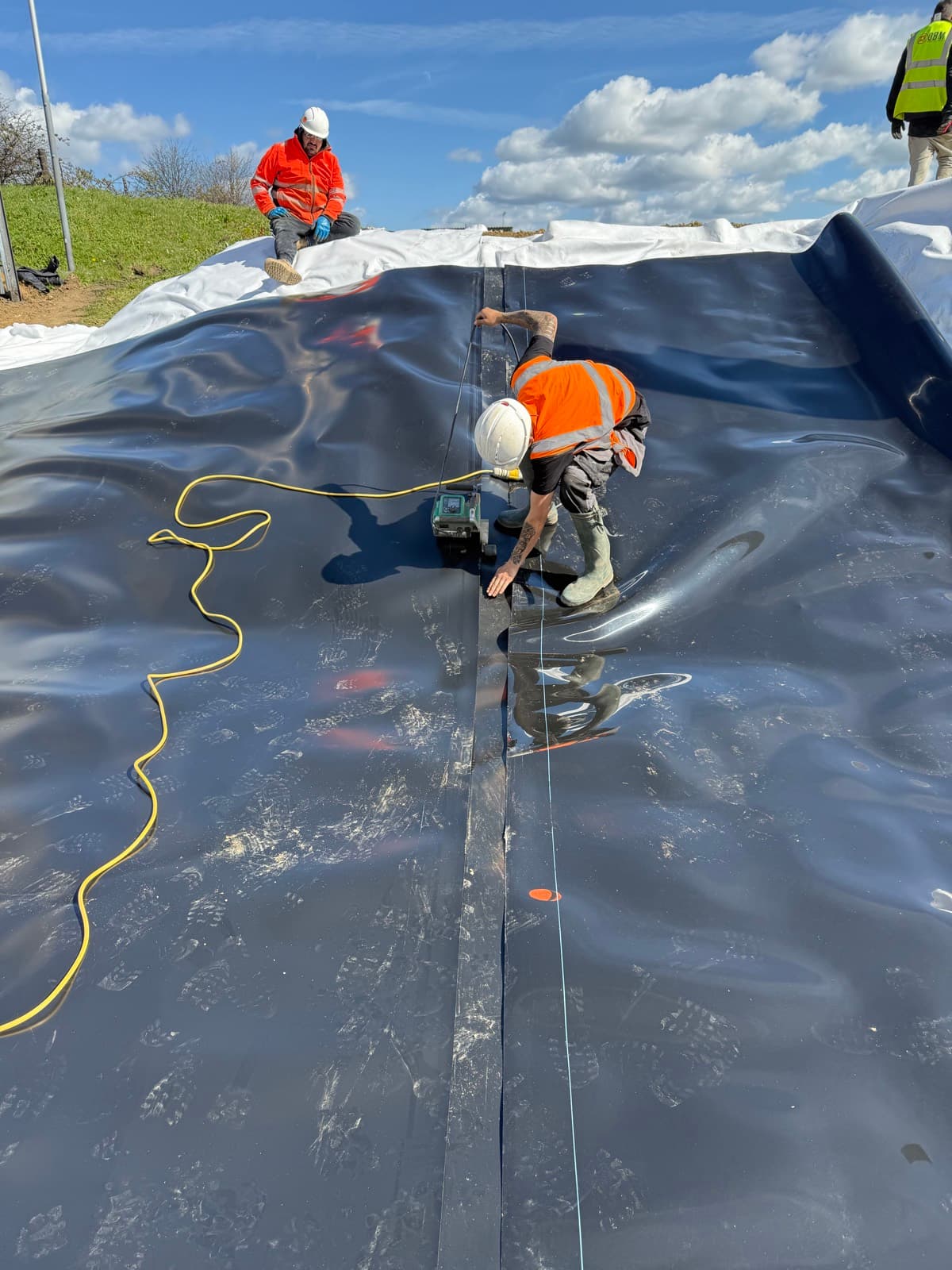
The basin is dug and trimmed by your contractor, smooth and compacted with no roots or stones left proud. With that surface signed off, the rolls go out side by side with a broad overlap at each join, and paste or granules of bentonite are worked into the lap. Edges and any pipes get the same treatment; nothing on a GCL is welded.

Every lap and detail goes on our record sheet, which also states how much cover the liner must have. Your contractor places the cover layer straight away, before the pond is filled, because clay that hydrates with nothing on top of it is ruined.

GCL Pond Lining New Forest

Frequently asked questions

Often, yes. Once covered, the bed behaves like a clay-puddled pond, which suits wildlife and planting. We check the slopes and water first.

Minor punctures are sealed by the bentonite swelling into them. It isn't a reason to track machinery across it, but it is forgiving of small damage.

Straight after we hand over. The clay has to be confined before it gets wet, so your contractor should be ready to cover each area as it is finished.

In the National Park, or close to protected habitat, it may. That is for the owner and the planning authority to settle before work starts. We lay the liner once the scheme is approved and the basin is ready.

Tell us about your project

Quote back within one working day