
Skip to content

Car Park Lining · South of England

Car park lining in Somerset

Across the Levels and the Vale of Taunton, clay and a high water table stop permeable paving soaking into the ground. We line the sub-base so a Somerset car park stores its own rainwater and lets it go at the agreed rate.

Where we install
  • Bridgwater
  • Taunton
  • Yeovil
  • Burnham-on-Sea
  • Highbridge
  • Wellington
  • Street
  • Frome

Base · Tamworth B78 2BP

Permeable paving on Somerset clay

Infiltration rarely works on Levels clay and peat, and with groundwater close to the surface, an unlined sub-base could fill from below. So the drainage designer specifies a lined system. Rain passes through the paving into the stone sub-base, which acts as storage, and a heat-welded membrane underneath keeps it there until the outlet releases it to the sewer or a rhyne at the controlled rate.

That approach fits the national SuDS standards introduced in 2025, which favour managing water at the surface, while respecting what Somerset ground can and cannot take.

Where the outfall is a rhyne or a drain managed for the moors, the permitted discharge is usually small, so the pavement may have to hold a lot of water for a long time. A sound welded liner matters more when the stone is full for hours after a storm.
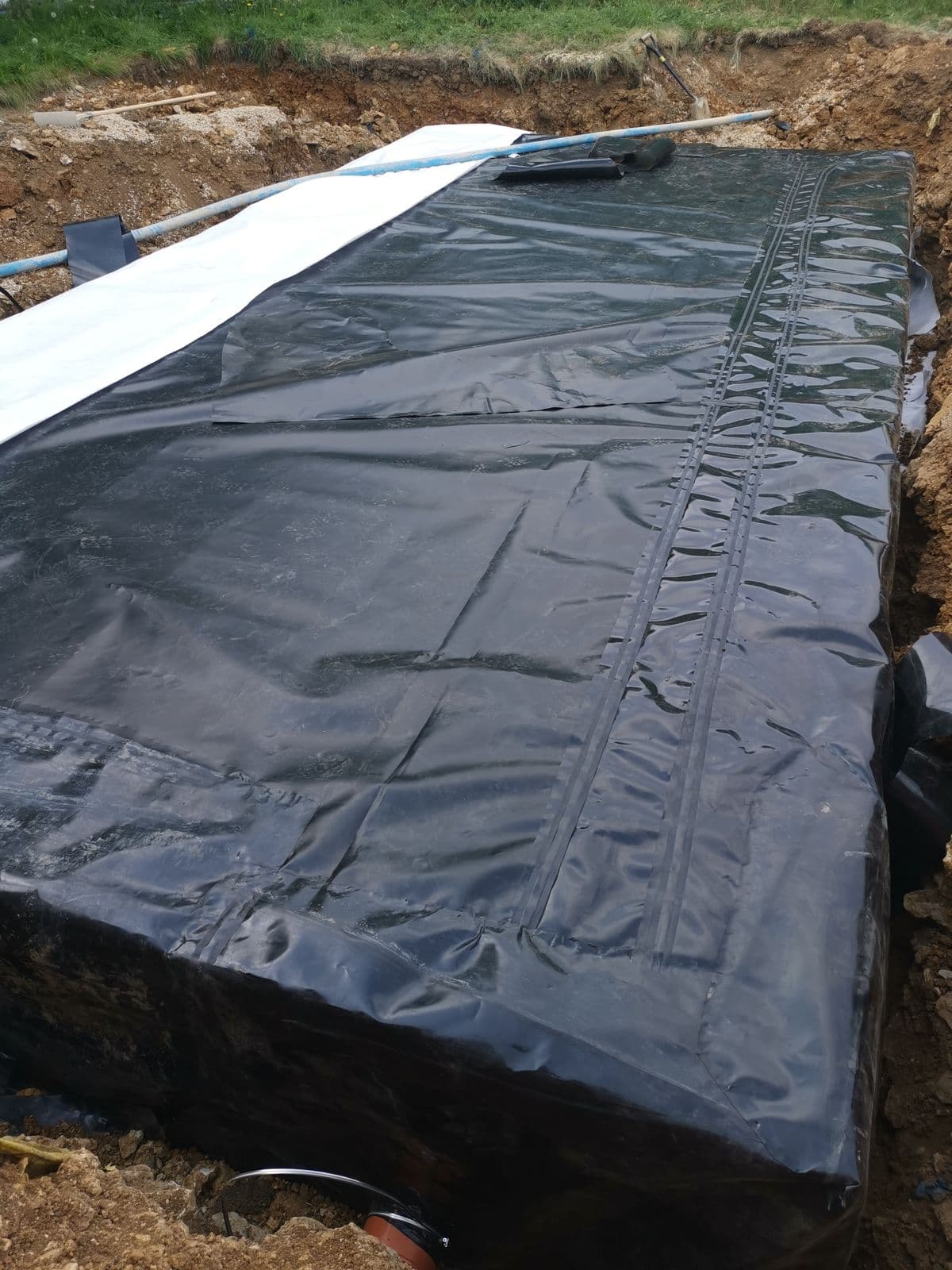
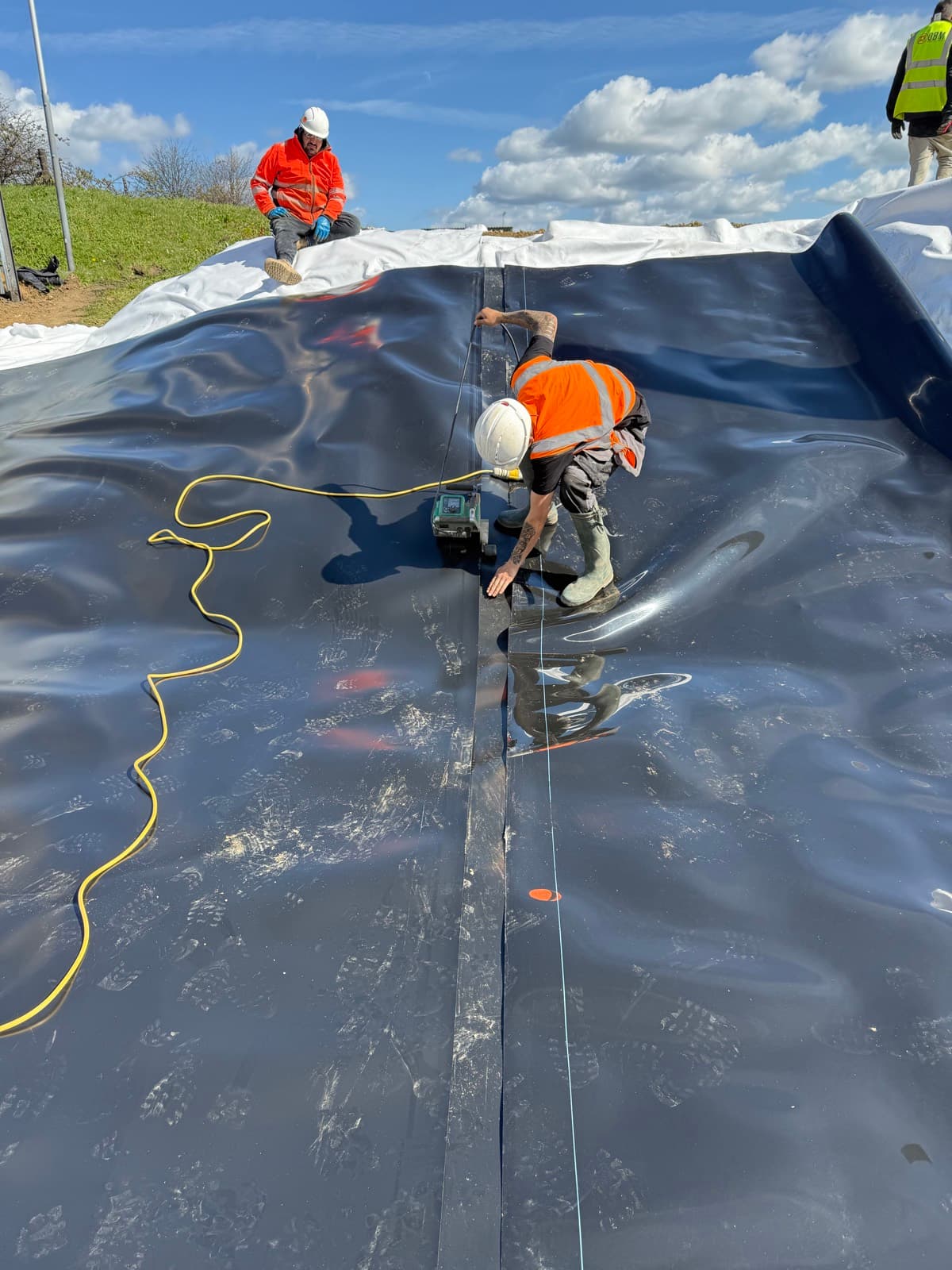
Sites along the M5 and in the towns

Distribution and industrial sites along the M5 corridor near Bridgwater and Taunton have large yards and staff car parks. Retail parks, supermarkets, schools and health centres in Yeovil, Taunton and the market towns add smaller jobs. If the stone layer can't store the whole design storm, attenuation crates go in beneath the paving, and we install both.

On the Mendip side of the county the problem is different. Limestone can take water, but on a tight town plot the car park may sit too close to buildings for infiltration to be allowed, or old fill under the site may rule it out. A lined pavement keeps the water away from both.

Lining large yards

A logistics car park can run to thousands of square metres, which means long runs of welded seam laid across a big open formation. We plan the panel layout so seams run with the falls, weld in sections that the groundworker can cover behind us, and keep each day's welding inside the area that can be protected before nightfall. Wind across open Levels ground can lift loose panels, so sheets are ballasted as they go down.

How the lining is built

The formation is dug and trimmed to falls by your groundworker; excavation isn't part of our work. We check the level, falls and surface first, and raise anything that isn't ready. On wet Levels sites the formation must be dewatered and firm before we lay.

  • Fleece beneath the membrane and up against the edges of the dig
  • Membrane joined panel to panel by heat welding, with the trial weld logged before the main run
  • Outlets, overflows and service ducts sealed through the membrane
  • Membrane edges finished at the level shown on the design, then a second fleece over the top
  • Weld records and handover documentation supplied

Car Park Lining Somerset

Frequently asked questions

On Somerset clay or peat with a high water table, the ground can't take the water and may even push water up into the sub-base. A lined pavement stores the runoff and releases it at a controlled rate.

Your contractor. We finish at the protected, lined formation and plan our visit so the stone can follow on quickly behind us.

Never. Each joint in the sheet is fused by heat on site, and a trial weld is logged, so the membrane forms one continuous layer under the paving.

Tell us about your project

Quote back within one working day