
Skip to content

GCL Pond Lining · South of England

GCL pond lining in Hampshire

A geosynthetic clay liner gives a Hampshire pond a natural clay bed that seals its own small punctures. We check that the site and its water suit a GCL, then lay it with bentonite-sealed overlaps ready for your cover layer.

Where we install
  • Winchester
  • Eastleigh
  • Whiteley
  • Fareham
  • Alton
  • Hook
  • Fleet
  • Romsey

Base · Tamworth B78 2BP

Clay beds in chalk country

Hampshire has a long habit of clay-lined ponds. The downland dewponds were puddled by hand, and plenty of village and farm ponds were sealed the same way. A GCL does that job in a factory-made sheet: a core of sodium bentonite stitched between two fabric layers, which takes up water and closes into a very tight barrier.

That suits the kind of schemes the county asks for. Wildlife ponds and wetland features in new housing, ponds restored on estates and nature land, and planted basins where a visible black membrane would look wrong all benefit from a bed that behaves like natural clay once it is covered.
Chalk water and the suitability check

Water from the chalk is hard. Calcium in the water that hydrates a sodium bentonite liner is one of the things that can change how the clay performs over the years, so our first step on a Hampshire job is to ask what will fill the pond: rain, a borehole, a chalk stream feed or runoff from roofs and roads.

A GCL also needs confinement to seal, which means a soil or stone cover over it, and it prefers gentle side slopes. If the water, the profile or the use don't suit it, we say so and recommend a welded membrane instead, which we also install.

  • What water will fill and top up the pond
  • Side slopes gentle enough to hold a cover layer
  • A formation free of sharp flints and debris
  • A contractor ready to place cover promptly after we hand over

Laying it

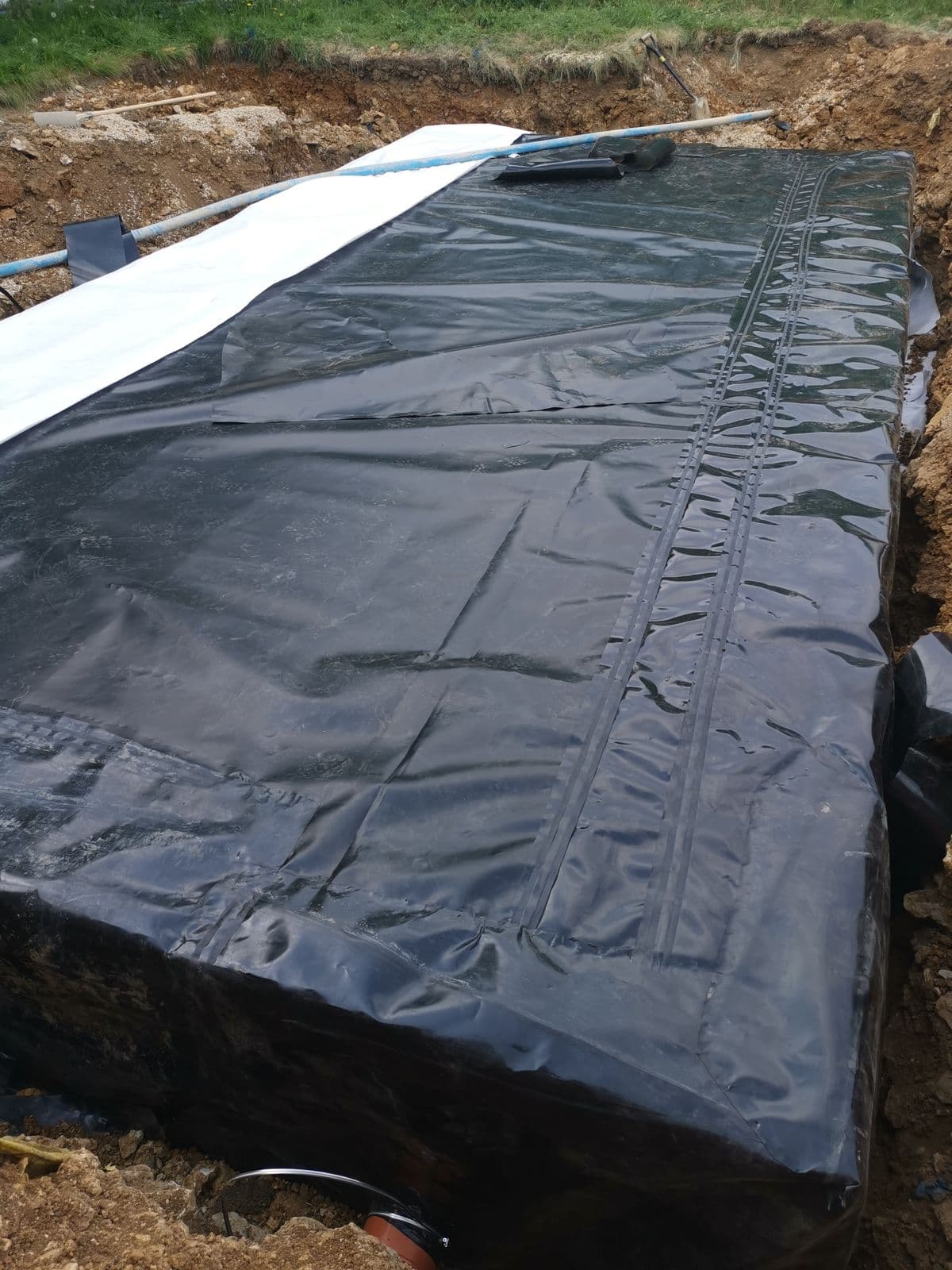
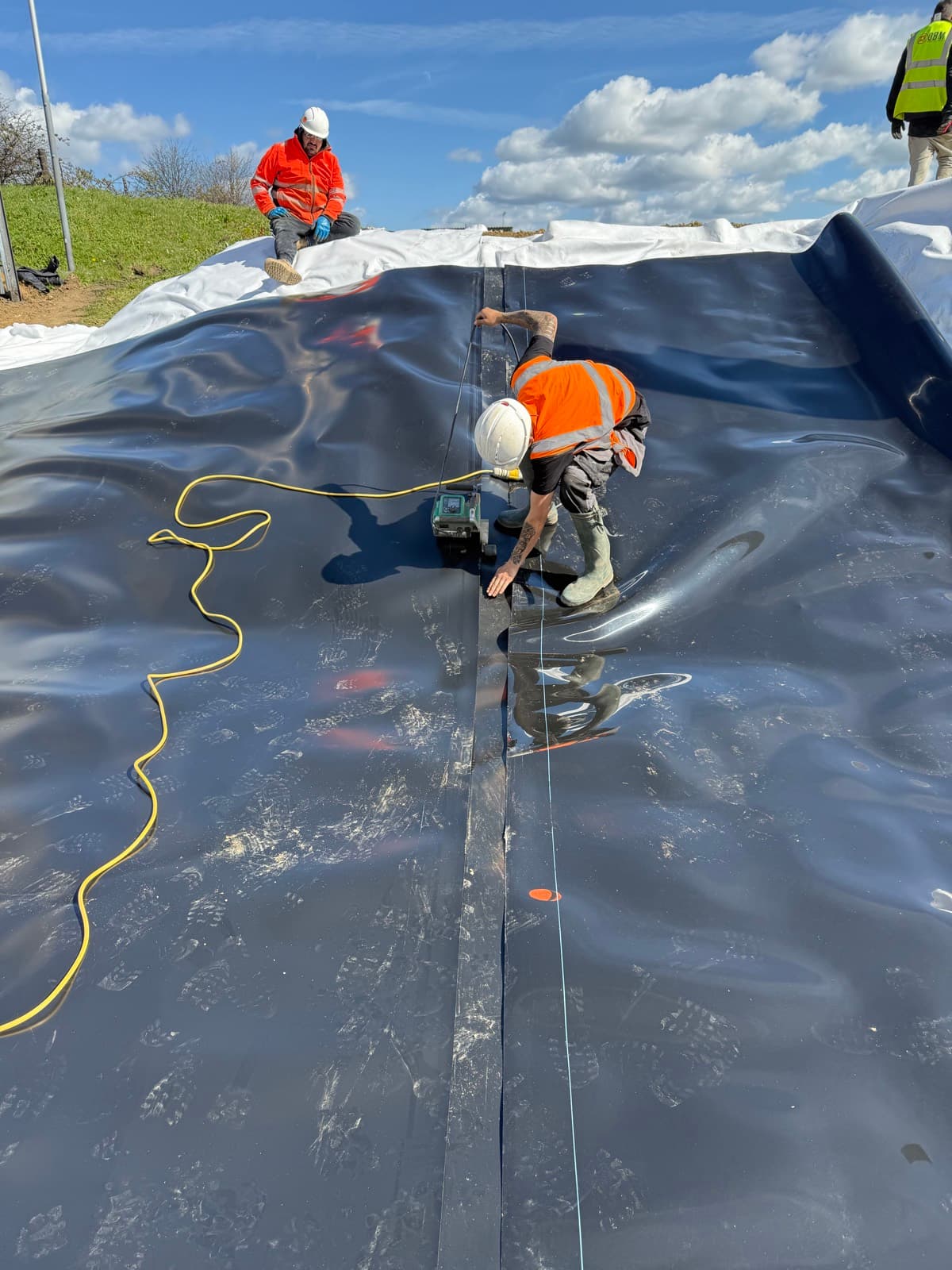
Your groundworker prepares the formation, and on chalk that means picking out the flints and getting a smooth, compacted surface. No roll is opened until we have walked that surface and signed it off. Each panel then overlaps its neighbour by a wide margin, and each of those laps is dressed with bentonite, as paste or granules. There are no welds in a GCL; the overlaps and the clay do the work.

Pipes, inlets, edges and any structure in the pond get the same paste or granules, and every detail is ticked off on the QA record as it is finished. When we leave, the records state how deep the cover over the GCL must be; your contractor spreads that layer and only then lets the pond fill.

GCL Pond Lining Hampshire

Frequently asked questions

It might, but hard groundwater is the main thing we check before recommending one. If the chemistry is against it, a welded HDPE or EPDM liner is the safer choice and we will say so.

Your contractor, after we hand over. The liner must be confined before it is hydrated, so the cover should follow straight away. We confirm the depth it needs in the handover records.

Yes, as long as the banks are shallow and the liner never ends up exposed. Ecologists often favour it on those schemes since, once covered, nobody can tell it from a clay-bottomed pond.

NAUE, CETCO, Solmax, Geosyn and Wrekin all make GCLs we lay. If your designer has named one, we use it; if not, we suggest one that fits the pond.

Tell us about your project

Quote back within one working day