
Skip to content

Gas & Hydrocarbon Membranes · South of England

Gas membrane installation in Somerset

From the old coalfield around Radstock to the peat of the Levels and brownfield land in Bridgwater and Yeovil, Somerset has several sources of ground gas. We install the gas and hydrocarbon membranes your risk assessment specifies.

Where we install
  • Radstock
  • Midsomer Norton
  • Bridgwater
  • Yeovil
  • Taunton
  • Highbridge
  • Burnham-on-Sea
  • Frome
  • Street

Base · Tamworth B78 2BP

Three Somerset gas sources

The Somerset coalfield was worked for centuries around Radstock, Midsomer Norton and the villages between. Old shafts and workings can release methane and carbon dioxide, and coalfield sites commonly trigger a specified protection level. On the Levels, thick peat and organic alluvium can generate ground gas as they break down. In the towns, former factories, depots, filled ground and old landfill bring both gas and hydrocarbons.

The protection level is fixed by the site's own investigation and risk assessment, normally following BS 8485, which also names the membrane. Assessing that risk is not our role; installing what the design asks for is.
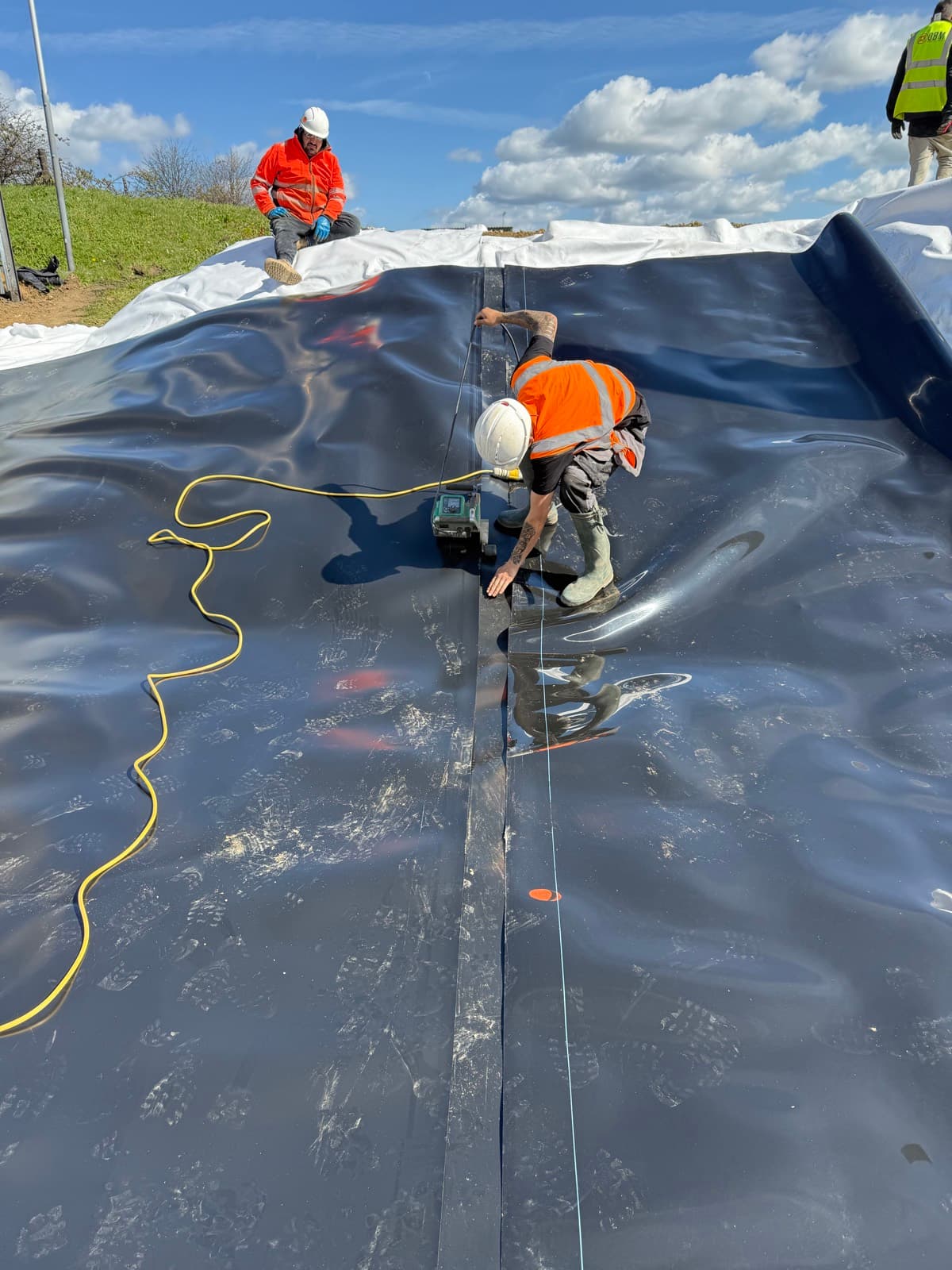
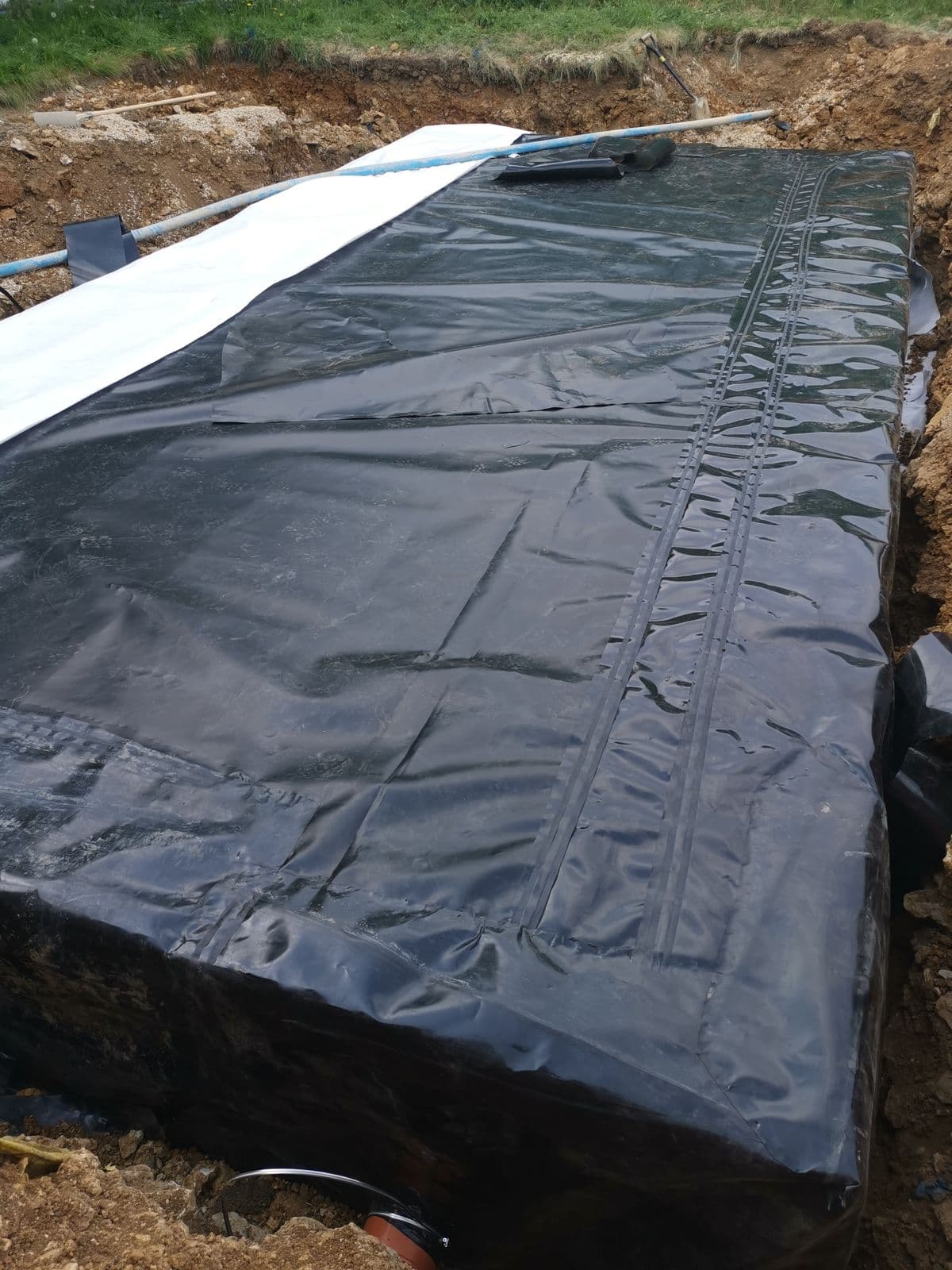
Preparing the surface

A membrane fails if it is punctured before the slab is poured. The blinding or slab gets checked before anything else, and if there are sharp stones, ridges or standing water, we tell you before we lay a metre of it. On wet Levels sites standing water on the formation is common, so we coordinate with your groundworker on dewatering.

Joints and penetrations

On the sheet itself, laps get welded or sealed to the specification, and only when the surface is dry and clean enough to take the joint. Then come the details. On piled sites over soft Levels ground, a slab can have a great many penetrations, and each one is a potential leak path, so every one is collared and sealed by hand.

  • Pile caps and ground beams
  • Gas, water, electric and telecoms entries
  • Drainage stacks and gullies
  • Structural steel and column bases

Housing on the old coalfield

New homes around Radstock and Midsomer Norton often sit near former pit sites, batches and filled ground. A housing slab may be simple in shape, but repeated across dozens of plots the small details add up: every soil stack, water entry and meter duct is a hole through the barrier. We work plot by plot with the groundworker, so each slab is lined, detailed and checked before the concrete gang moves on to it.

Validation and records

On coalfield and landfill sites, warranty providers increasingly ask for the membrane to be integrity tested and signed off by an independent third party. We can arrange that, and it protects the developer and us. The installation record we hand over is filed with the warranty, plot by plot on a housing site.

Somerset sites on peat or old mine ground can also see settlement after the slab is cast. That is a matter for the structural design, but it is one more reason to have the membrane and its details checked and certified before they disappear under concrete.

Gas Membrane Installation Somerset

Frequently asked questions

Not necessarily. Each site's own investigation and risk assessment decides. Coalfield land often does lead to a specified protection level, and where it does, we install it.

Organic soils such as peat can give off methane and carbon dioxide, which is why ground investigations there look for it. The risk assessment decides whether a membrane is needed.

Not where gas protection is required. Damp-proofing sheet is not designed to stop ground gas. Use the membrane class written into your designer's specification.

Tell us about your project

Quote back within one working day