
Skip to content

GCL Pond Lining · South of England

GCL pond lining in Somerset

In a county shaped by wetland, a pond with a natural clay bed fits the landscape. We install geosynthetic clay liners for wildlife, amenity and estate ponds across Somerset, closing every overlap with bentonite.

Where we install
  • Taunton
  • Langport
  • Somerton
  • Glastonbury
  • Street
  • Wellington
  • Crewkerne
  • Chard
  • Bridgwater

Base · Tamworth B78 2BP

The appeal of a clay bed

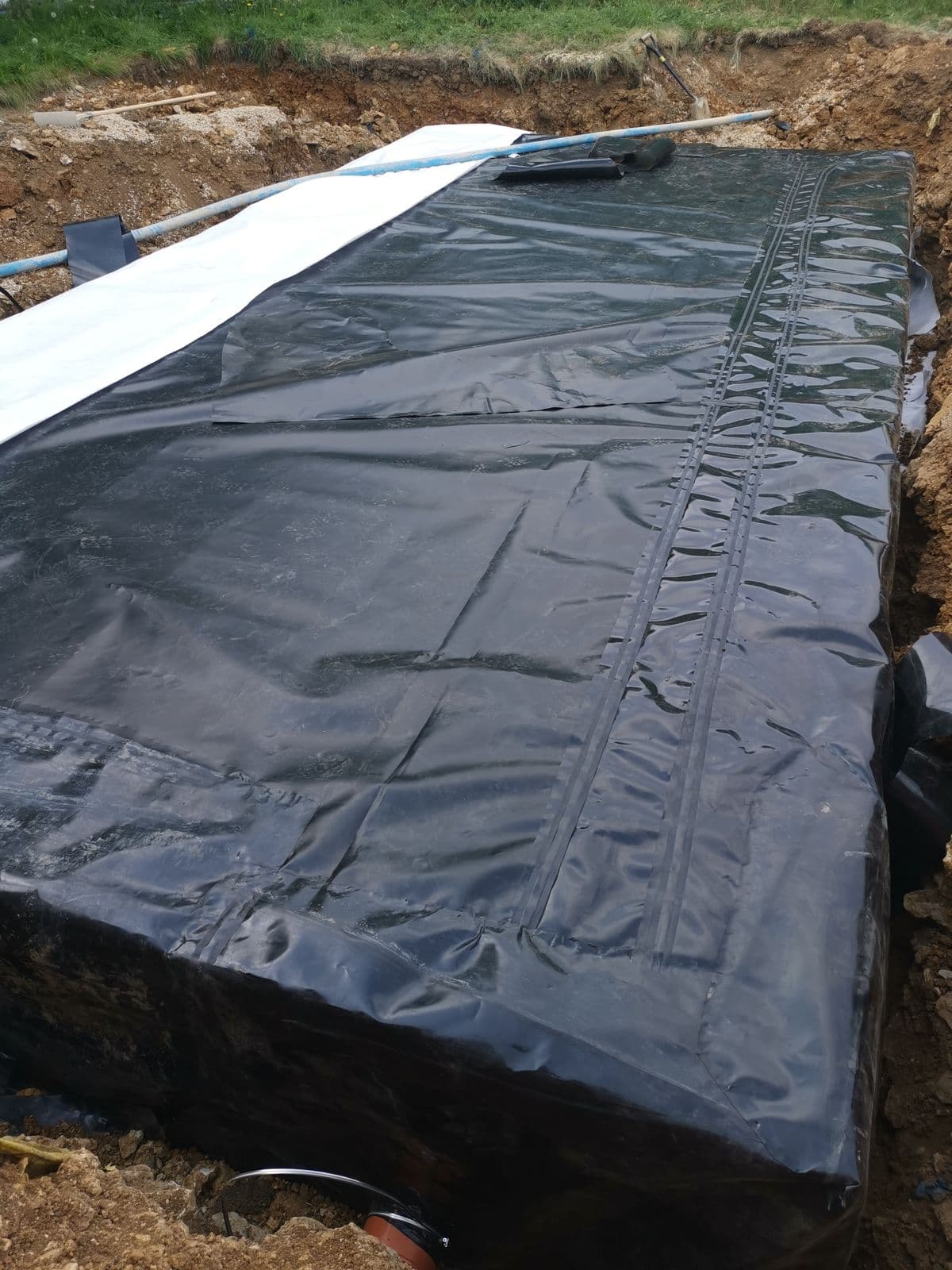
A GCL is a layer of sodium bentonite held between needle-punched geotextiles. Under its soil cover, water makes the bentonite swell and form a barrier with extremely low permeability. Once soil is over it, the pond has a clay floor that plants root into and wildlife uses, without a membrane edge in view. That makes it popular for nature ponds, scrapes and landscape schemes on the Levels and in the Vale of Taunton.

Small punctures self-seal, because wetted bentonite swells into the hole. Ponds close to orchards and hedgerows benefit, where roots probe the margins over the years.
Where it suits and where it doesn't

A clay liner is not the answer for every pond, and we say so during the suitability check. It needs confinement under soil, so it suits gentle slopes rather than steep or exposed banks. The source of the water counts as well. Springs and streams off the Mendip limestone carry hard, calcium-rich water, which can reduce how well sodium bentonite performs over time. If a pond would be fed that way, we look closely before recommending GCL over a welded membrane.

Ponds filled from rainfall or from streams draining the clay vales are usually a better match. So are ponds on the Quantock and Blackdown fringes, where the water is softer and the landscape setting suits a natural edge.

Our method

Manufacturers we install include CETCO, NAUE, Solmax, Wrekin and Geosyn. We can work to a product named in your specification or recommend one to suit the pond.

  • Your groundworker forms the pond; we inspect the formation and sign it off as smooth, compact and free of sharp stones
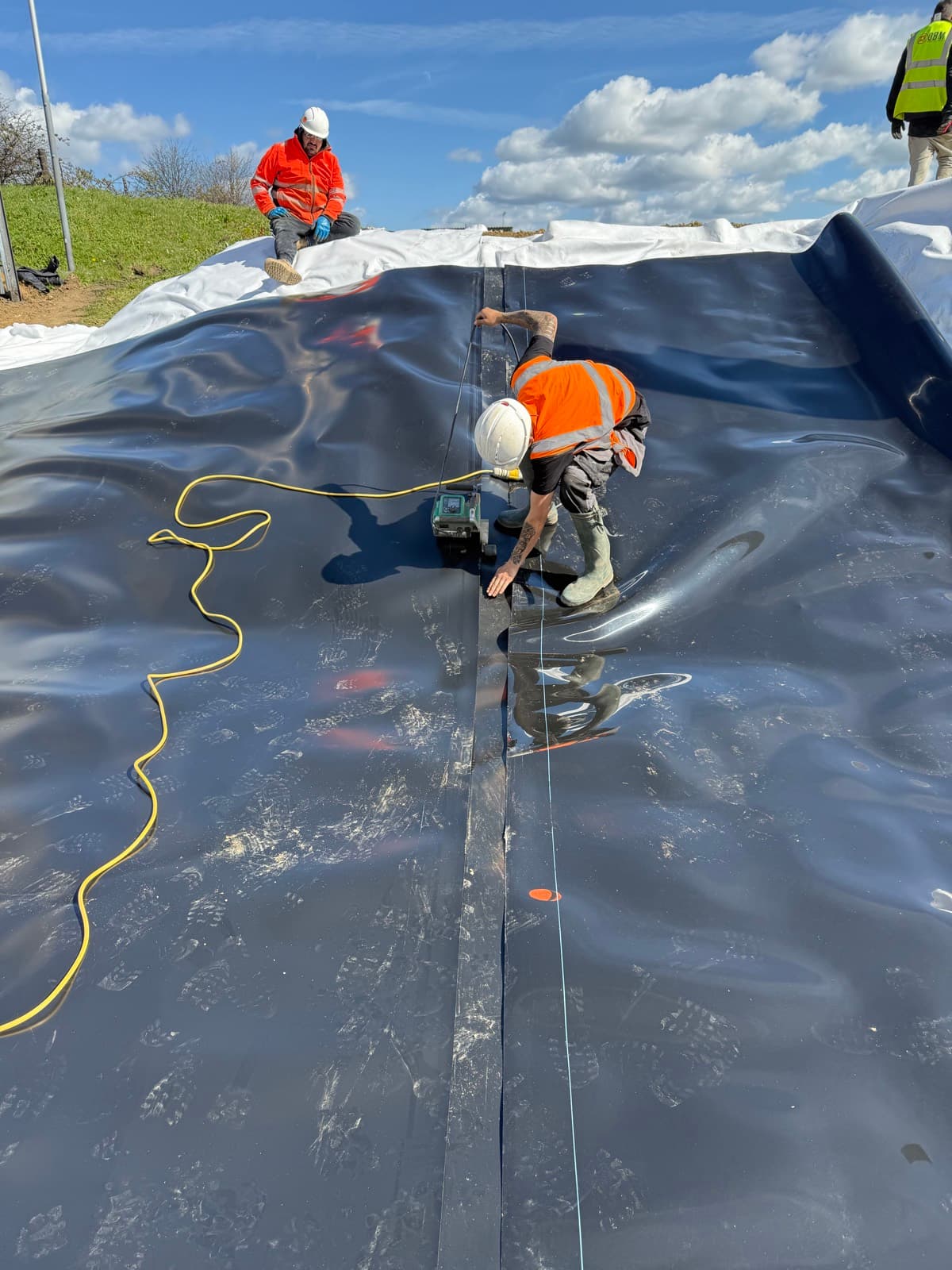
  • Rolls run out with a generous lap, and bentonite paste or loose granules pressed into the join
  • Pipes, headwalls and edges detailed with bentonite, never welded
  • A written log of the laps and details, kept up through the day
  • Handover with the QA file and a note of the soil depth the GCL must have over it

Cover and hydration

After handover, it is your contractor who spreads the soil cover and wets the liner. Timing matters: a GCL that soaks before it is covered swells without restraint and loses its seal. On a wet Somerset site in winter, we agree the sequence with the cover crew so each section we lay is covered the same day.

Once the pond fills, the bed should be left to settle. Livestock and machinery need keeping off the margins until the cover has firmed up, because a GCL tolerates small punctures but not heavy rutting through a thin soil layer.

GCL Pond Lining Somerset

Frequently asked questions

It is a good fit, provided the slopes are gentle and the cover layer goes on promptly. Once settled, the bed is very like an old puddled-clay pond.

Possibly, but hard water is a concern for sodium bentonite. We look at the water source in our suitability check and will recommend a welded membrane if the chemistry counts against clay.

No. Placing and wetting the cover is for your contractor once we have finished laying. We give the depth needed and lay in sections so the GCL never waits long uncovered.

Tell us about your project

Quote back within one working day