
Skip to content

Slurry Lagoons · South of England

Slurry lagoon lining in Dorset

The Blackmore Vale and the vales of west Dorset are dairy country, and the herds there fill their stores through the months when slurry can't go on the land. Our crews weld membrane linings into new stores and old earth-banked ones, built to satisfy the inspector.

Where we install
  • Sturminster Newton
  • Gillingham
  • Sherborne
  • Shaftesbury
  • Beaminster
  • Bridport
  • Blandford Forum
  • Dorchester

Base · Tamworth B78 2BP

Why a Dorset store has to be tight

Much of the county drains to chalk. The Frome, the Piddle and their tributaries are chalk streams, fed by groundwater that moves through fissured rock. A leaking store on or near the chalk can reach that water quickly, and a leak on clay finds its way into ditches and on to the Stour. Either way, the store has to be sealed and you have to be able to show it.

Earth-banked lagoons on Blackmore Vale clay were once left unlined. When a store like that is enlarged or substantially altered, the regulations treat it as new, and the inspector will expect a properly lined, documented build.
Choosing the build-up

Capacity, freeboard and the lining specification come from your consultant's design and the permit. We confirm them against the drawings before anything is ordered.

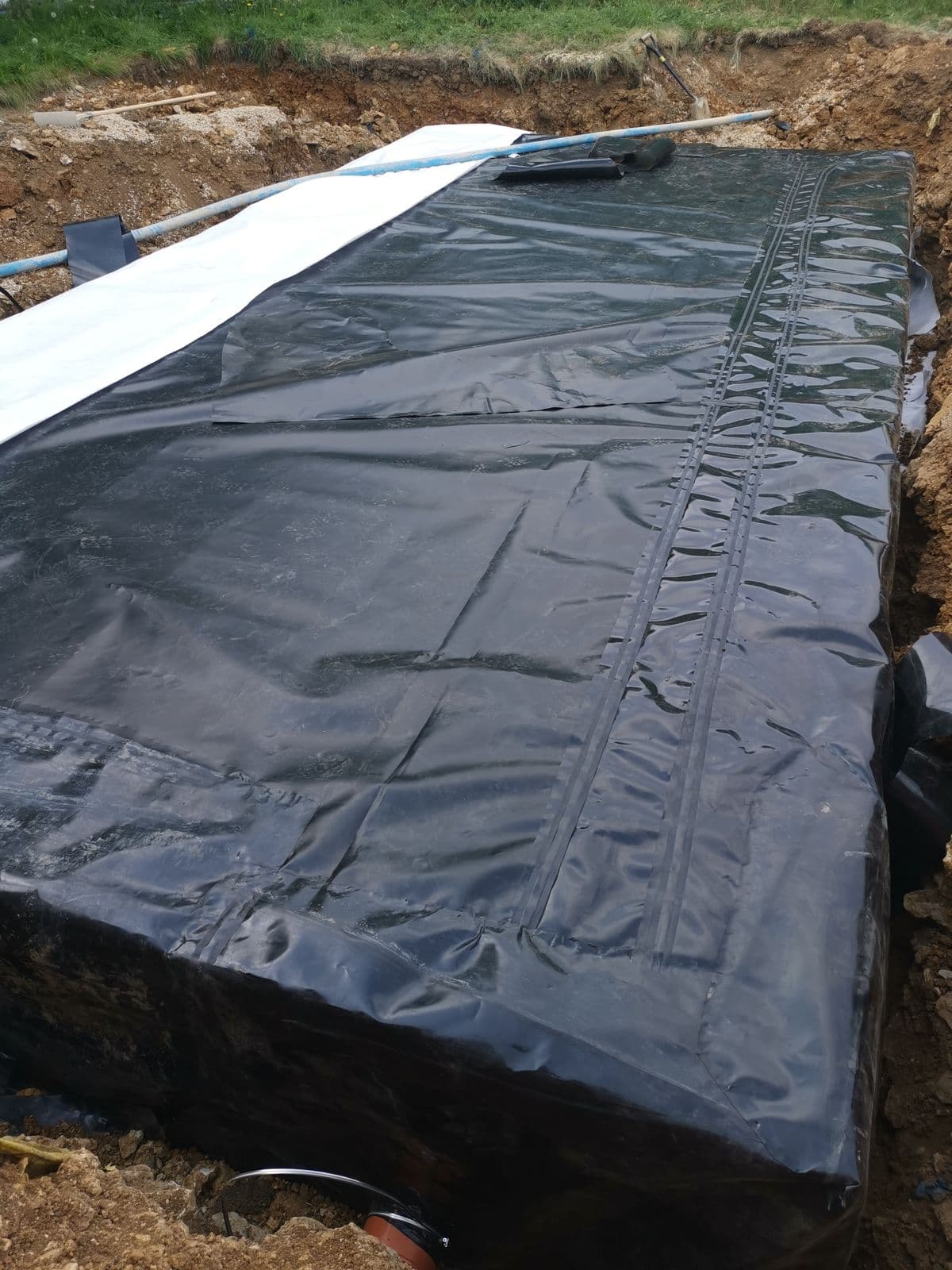
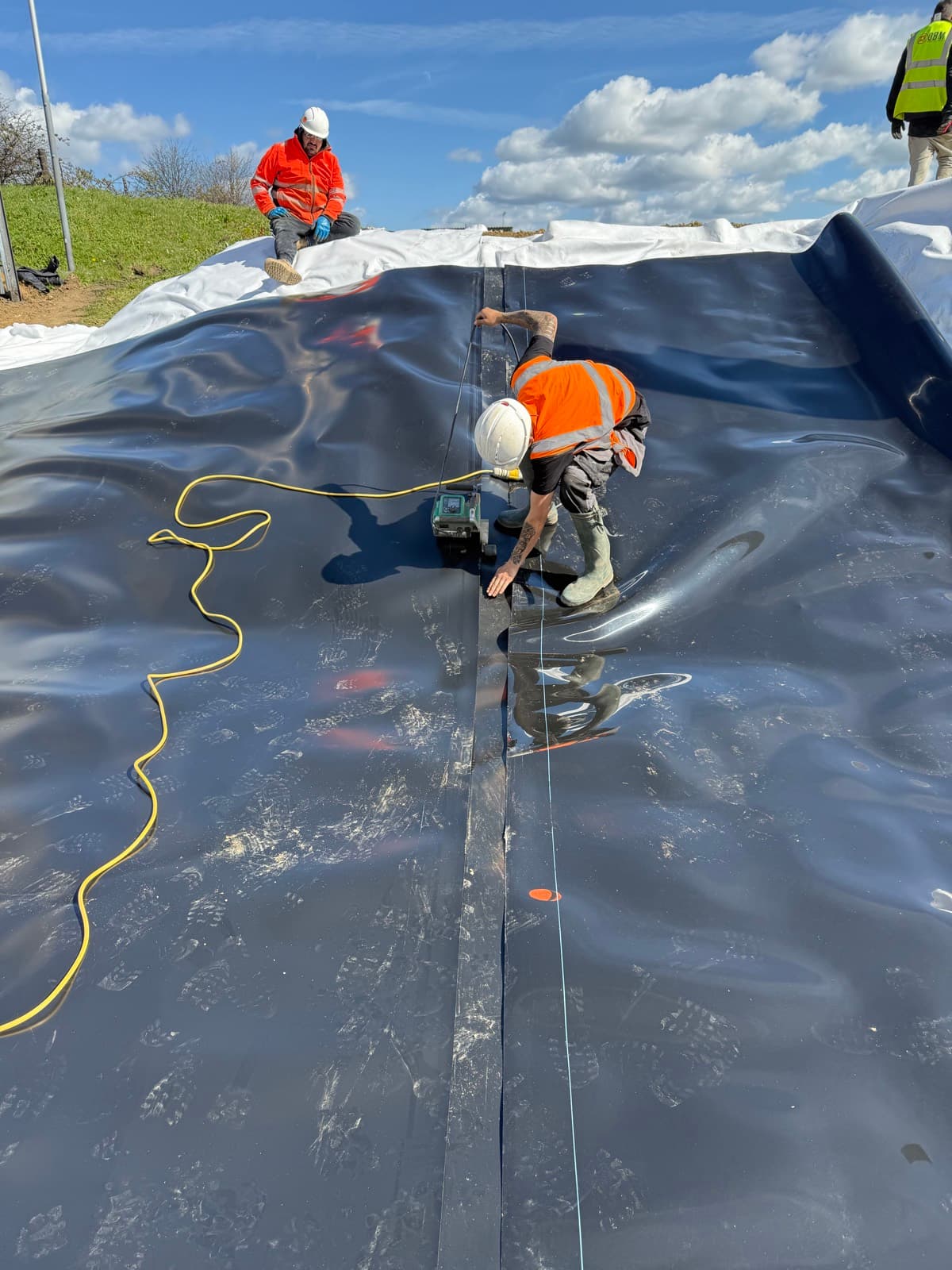
  • For a straightforward farm store, a 300gsm fleece under a single HDPE or LLDPE sheet, welded panel to panel
  • Two liners with a drainage medium sandwiched between them, so anything that gets past the upper sheet drains to a point you can check
  • A floating cover where it is specified, which also keeps rain out of the store and so out of the volume you have to spread
  • Filling pipes, the draw-off and the level gauge, each sealed into the membrane

Our part and the earthworks contractor's

We don't dig or shape the banks. On a Dorset farm the earthworks firm cuts the base, builds the banks and digs the anchor trenches; before the liner is delivered we walk the profile with the drawings in hand. The protection fleece is laid before any membrane, and the liner panels are welded together over it. Where the design has two liners, we then add the drainage medium and weld the primary sheet above it. Each lagoon gets a trial weld, tested and written up, ahead of the main welding.

The same detailing applies at AD plants. At an anaerobic digestion site near Bognor Regis, over in West Sussex, our crew laid fleece into a containment bund, took the membrane up its walls and sealed each penetration so that a spill would stay inside.

Planning around the farm year

A lagoon can only be lined when it is empty and the ground is workable. On a dairy farm that usually means late spring or summer, once the winter store has been spread and before the autumn rain softens the clay. Tell us early when your store will be empty and we will fit the job into that window, with the fleece and liner delivered to suit your earthworks programme.

Paperwork that stands up to inspection

When we finish you get the QA pack: materials certificates, weld records and as-built information. It is what the Environment Agency inspector, your insurer and anyone who later buys the holding will want to see, and it records exactly what is in the ground.

Slurry Lagoon Lining Dorset

Frequently asked questions

In many cases, yes. We inspect the store before quoting. Where cattle, weather or years of agitation have worn the sides away, the earthworks firm builds them back up, and we then put down fleece and weld in a liner anchored at the crest. Reusing the hole tends to cost less than digging a new lagoon.

Your permit and the consultant's design decide it. Some stores need only a single welded liner; others require a double-lined build-up with a detection layer. We install whichever is specified.

It keeps rainfall out of the stored slurry, so capacity goes on slurry rather than rainwater. It also reduces odour and emissions. If it is in the design, we fit it.

Tell us about your project

Quote back within one working day