A buried tank in Levels clay or peat has water pressing on it from outside and needs designing against uplift. A bolted steel tank stands on its base above all of that, holds a large volume, and can be inspected all the way round. When the farm or business changes, it can be dismantled and rebuilt.
That flexibility suits Somerset's mix of farms, cider orchards, growers and food businesses, where water storage needs change from year to year.
Peat and soft alluvium can settle under load, which is another reason to keep heavy storage out of the ground and on a properly designed base. Your engineer sizes that base for the ground, and the tank is then a straightforward build on top of it.
Tell us what the water is for and how it will be drawn off, and we will confirm the capacity and pipework before ordering.
Dairy units are the most common. A parlour and collecting yard use a lot of water for washing down, and roof water from the cubicle sheds can supply much of it. Storing that rainwater in a steel tank beside the parlour also keeps clean roof water out of the slurry store, which saves capacity there.
- Wash-down water for dairy parlours and yards
- Irrigation storage for orchards, nurseries and market gardens
- Rainwater collected from large agricultural and industrial roofs
- Process and recycled water at creameries and food factories
The tank stands on a slab or engineered pad that someone else designs and builds to take the weight of a full tank. On soft Levels ground that design needs particular care, and it belongs to your engineer. On arrival we survey the base and the setting out before a single panel is lifted.
We also look at where the tank sits in the yard. A delivery lorry and a telehandler need room alongside the base, and a dairy yard is rarely empty, so we agree a working area with you that keeps cows, tractors and milk collections moving while the tank goes up.
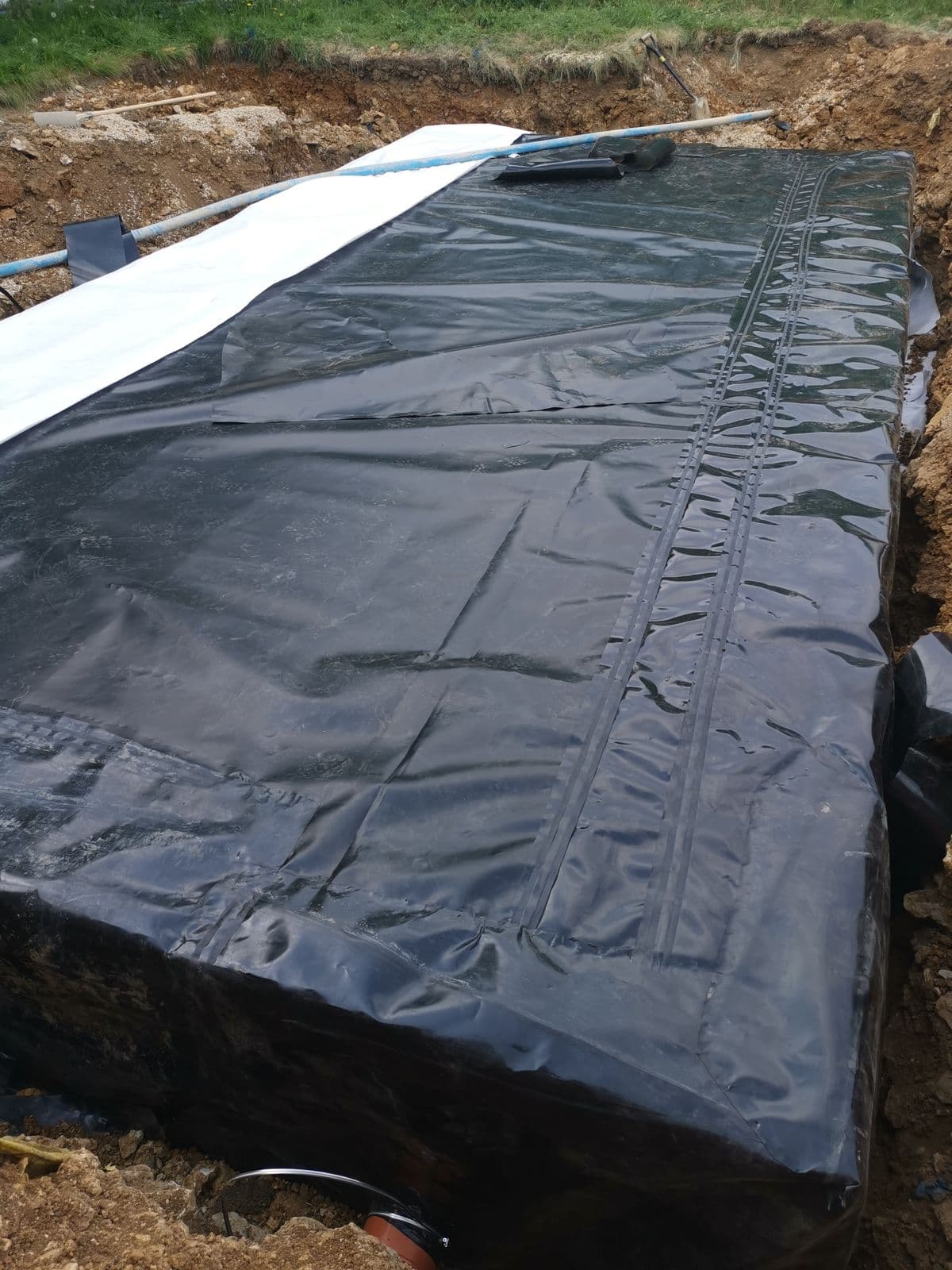
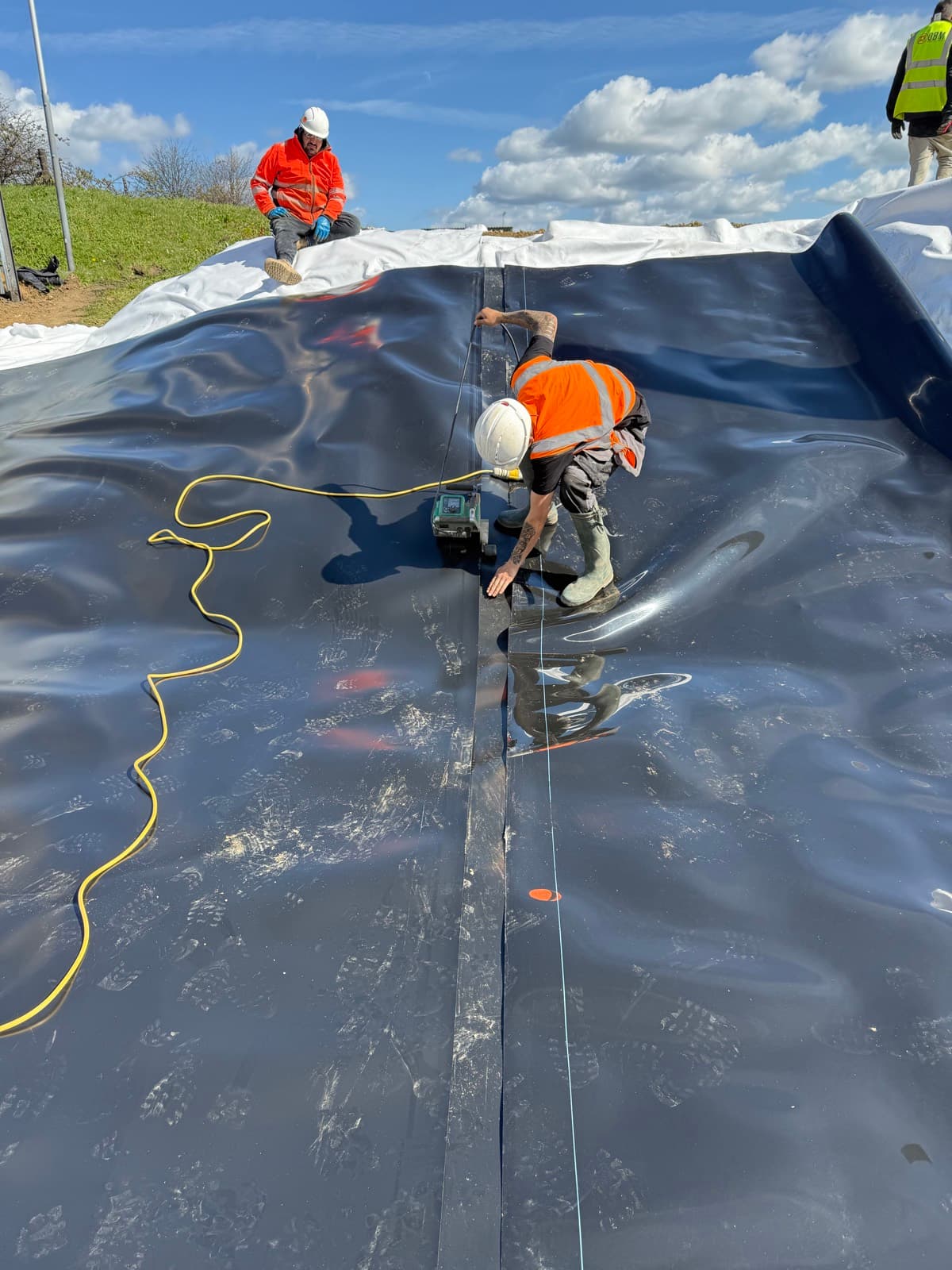
Panels go up one ring at a time, bolted through, until the tank reaches its design height, and then the internal liner is fitted. The liner keeps the water in, so the shell does the structural work and the bolts never act as a seal. Each pipe through the wall, whether feed, draw-off or overflow, is sealed at the liner, and a level indicator goes on last.
Filling happens in stages so every connection and the liner are checked under increasing load. Only then does the tank go into service. From a ready base, the whole build usually takes a matter of days.
If a tank may need to grow with the herd or the business, say so before the order is placed. Some designs take extra rings later, and the base can be sized for the larger tank from the start.