
Skip to content

GCL Pond Lining · North West

GCL pond lining in Preston

A geosynthetic clay liner suits the kind of pond Lancashire has always had: a soft clay bed, gentle banks and wildlife moving in. We install GCL around Preston with bentonite-sealed overlaps and hand it over ready for the cover soil.

Where we install
  • Fulwood
  • Grimsargh
  • Goosnargh
  • Longridge
  • Ribchester
  • Garstang
  • Catterall
  • Bilsborrow
  • Woodplumpton

Base · Tamworth B78 2BP

Why a clay liner fits the Preston countryside

The traditional Lancashire field pond was a hole in clay that held water because the clay did. A GCL repeats that trick under control. Sodium bentonite sits between two geotextiles, swells as it takes on water, and forms a barrier far tighter than the till it replaces. Once it is covered, the pond looks and behaves like a natural one.

That makes it a frequent choice for wildlife ponds on housing schemes along the northern edge of the city, conservation work in the Ribble and Wyre catchments, and farm or estate ponds where the owner wants a soft margin that plants can colonise.
When we'd steer you to a membrane instead

A clay liner needs weight on top and the right water. It must be confined, under soil or under the water itself, and it prefers slopes gentle enough for the cover to stay put. Steep or exposed banks, ponds that will be drained and left empty, and contents that attack bentonite all point back towards a welded membrane.

So we check the application before recommending a GCL. If the pond would be better served by a membrane, we install that and explain why.

Rolling out the panels

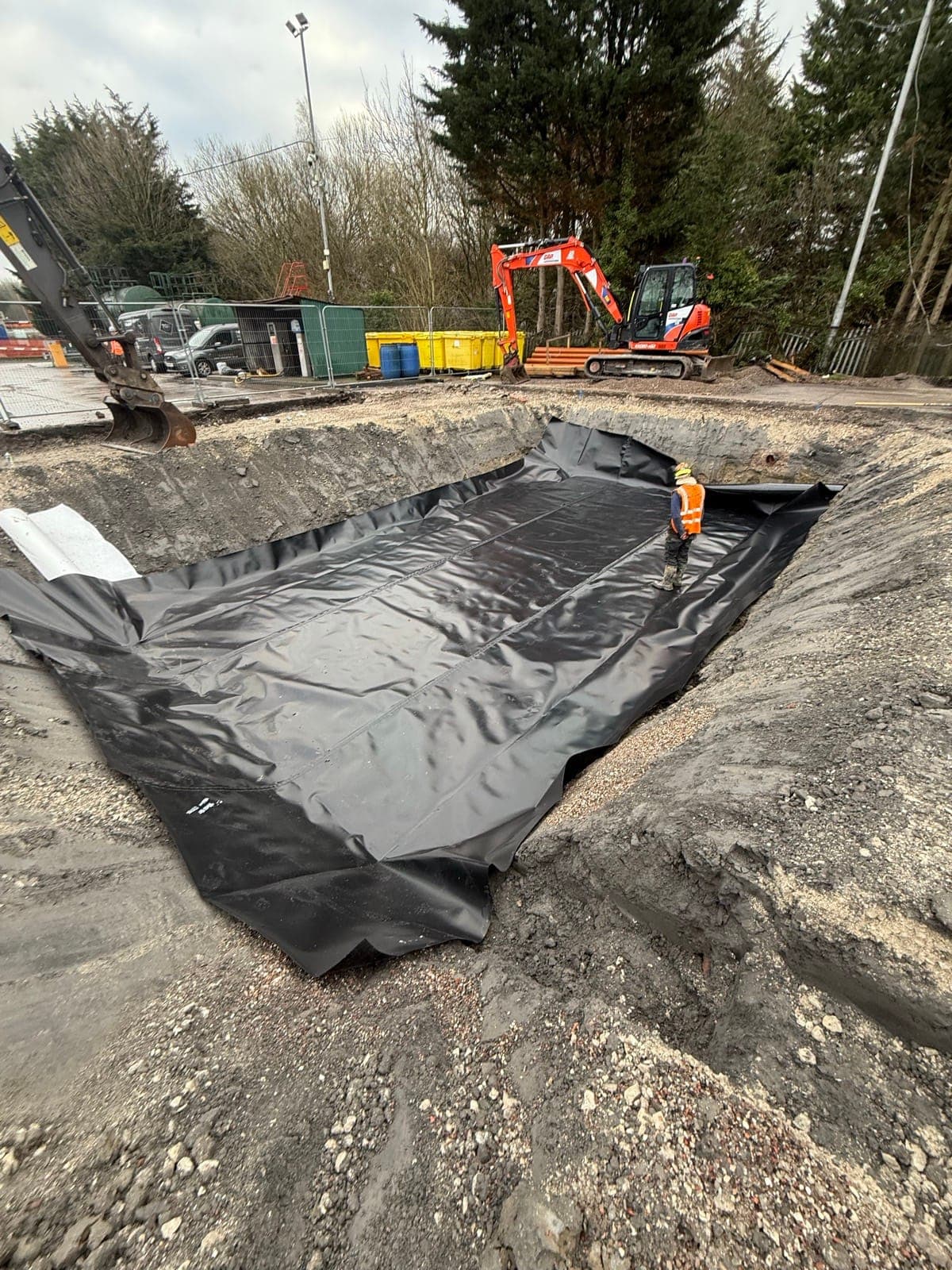
Your contractor prepares the formation: smooth, compacted and free of stones and roots. Before the first roll comes off the delivery we walk that surface and approve it in writing, because the liner can only perform as well as what lies under it.

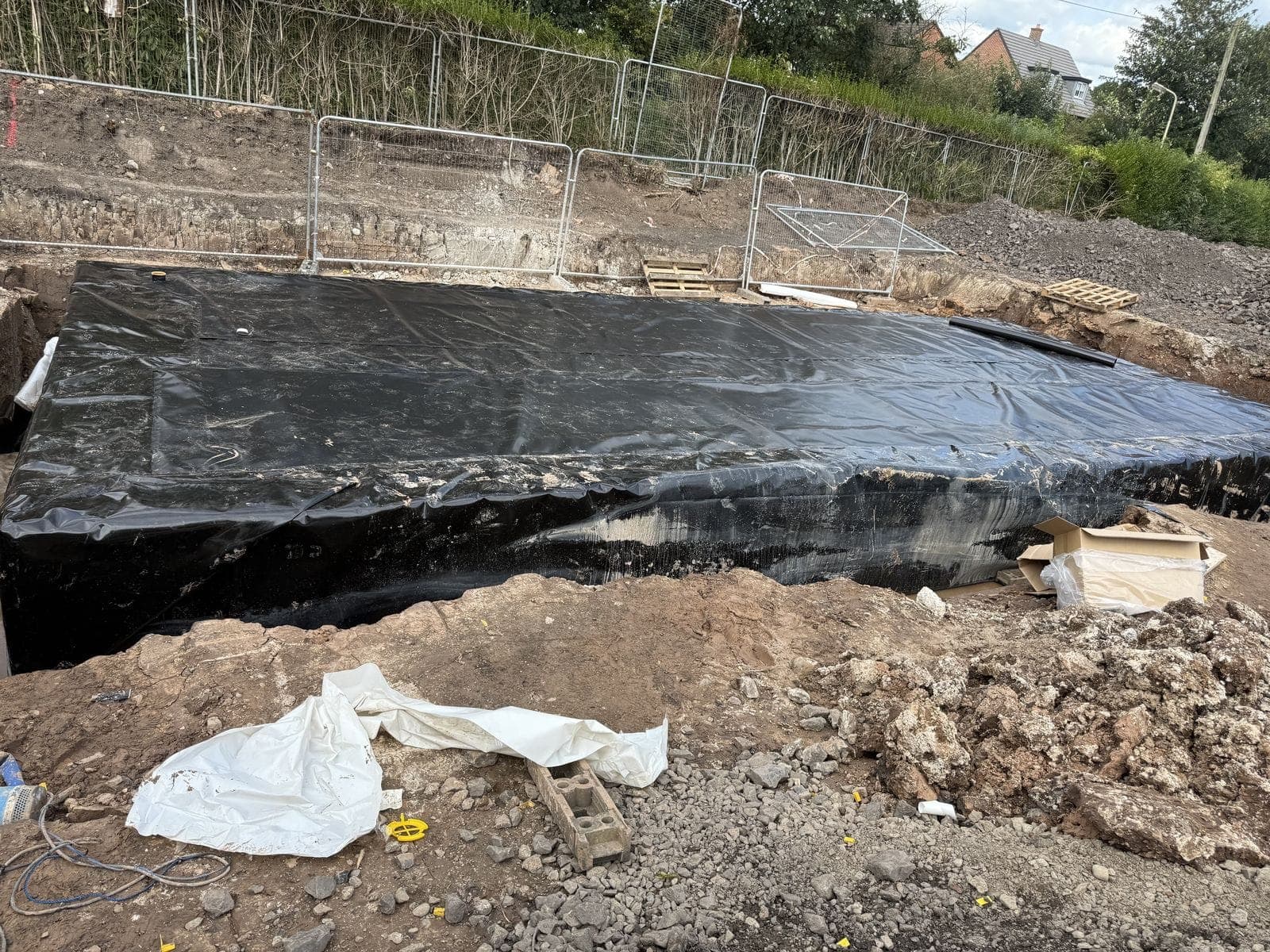
Panels are unrolled with wide overlaps, and every overlap gets a bead of bentonite paste or a scattering of granules. Nothing is welded on a GCL; the seal at every lap is the clay itself. Pipes, outfalls and edges against any structure are dressed with extra bentonite, and each lap and detail goes into the QA record on the day it is made.

Cover soil follows quickly

If the clay takes on water while it is still uncovered, it puffs up unevenly and can wash off the slope. Lancashire weather does not wait for a programme, so the cover layer has to follow promptly once we hand over.

We give your contractor the cover depth the liner needs along with the QA records. They then place the soil and hydrate the GCL, which needs both the confinement and the water before it will seal. On a larger pond we can hand over in sections, so cover goes onto the first area while we are still laying the next.

GCL Pond Lining Preston

Frequently asked questions

Wetting before cover is the risk. A passing shower during laying is manageable if the cover follows quickly, but a liner left out in prolonged rain may need replacing. We sequence the laying so each area can be covered soon after.

Yes. Once covered, the soil over the liner can be planted, and marginal plants root into the cover. If a root does reach the liner, the hydrated clay swells into the small hole it makes.

Most of the leading rolls: Bentofix from NAUE, Bentomat from CETCO, and liners from Solmax, Geosyn and Wrekin. The specification usually names one; if the choice is still open, we can suggest a product for the pond.

Tell us about your project

Quote back within one working day