
Skip to content

Soakaway Tanks · North West

Soakaway installation in Liverpool

Liverpool stands on red sandstone, and where the clay above it is thin a crate soakaway can work well. We supply and install the structure, or install crates you have bought, once the percolation results and the design are settled.

Where we install
  • Woolton
  • Allerton
  • Crosby
  • Formby
  • Maghull
  • West Kirby
  • Heswall
  • Prescot
  • Halewood

Base · Tamworth B78 2BP

Sandstone, till and the coast

The rock under the city is the same red sandstone its cathedral was built from. On much of Merseyside it is buried under glacial clay, which drains poorly, but on the higher ground and the Wirral ridges the clay is thinner and infiltration rates can be good. North of the city, the blown sand behind the Sefton coast drains freely too.

Good drainage is only half the test. The sandstone is an important aquifer, and in the dunes and near the estuary the groundwater may lie only a short way down. Your engineer has to show enough depth between the base of the soakaway and the groundwater, and decide what treatment the runoff needs before it goes into the ground.
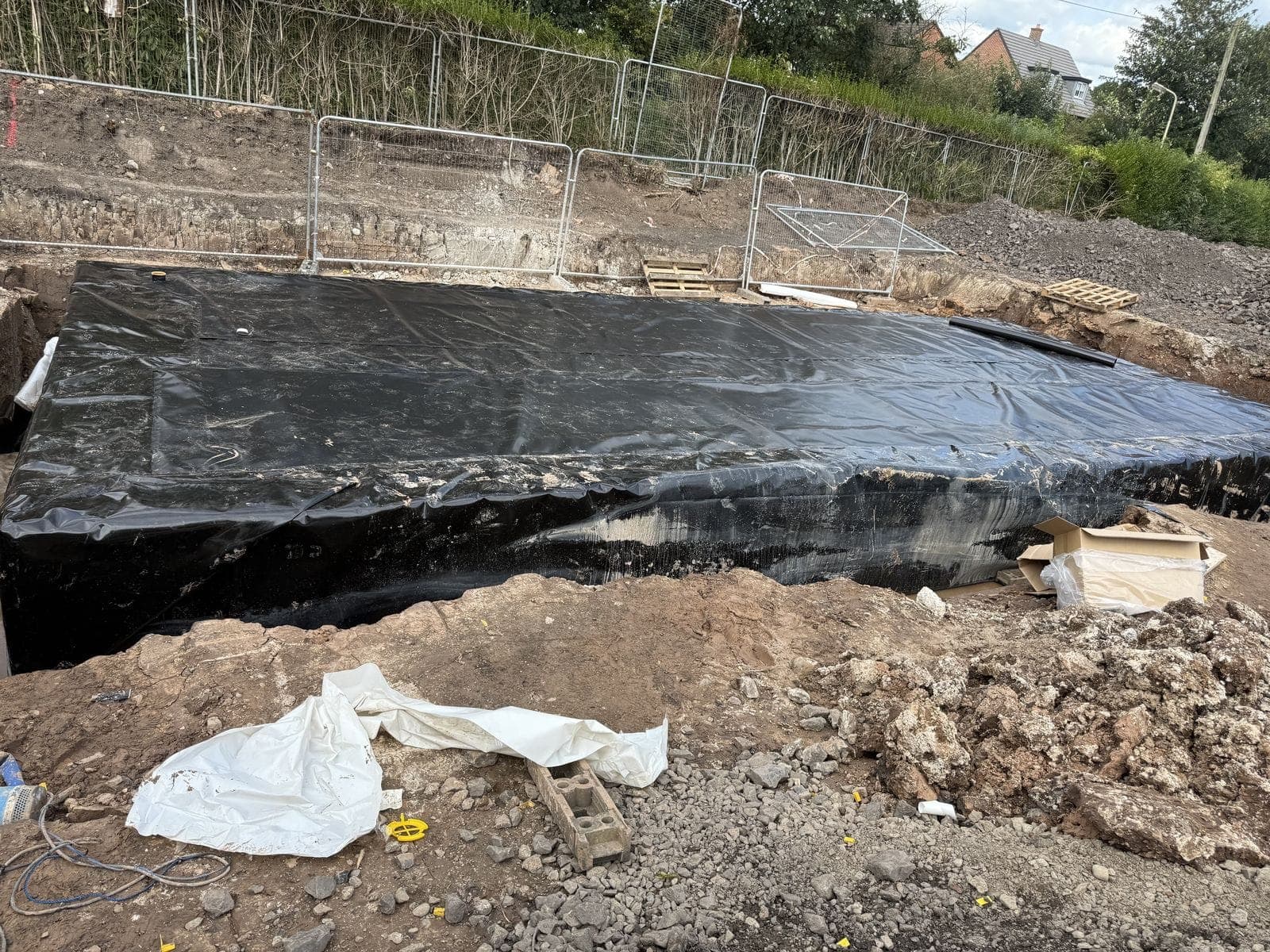
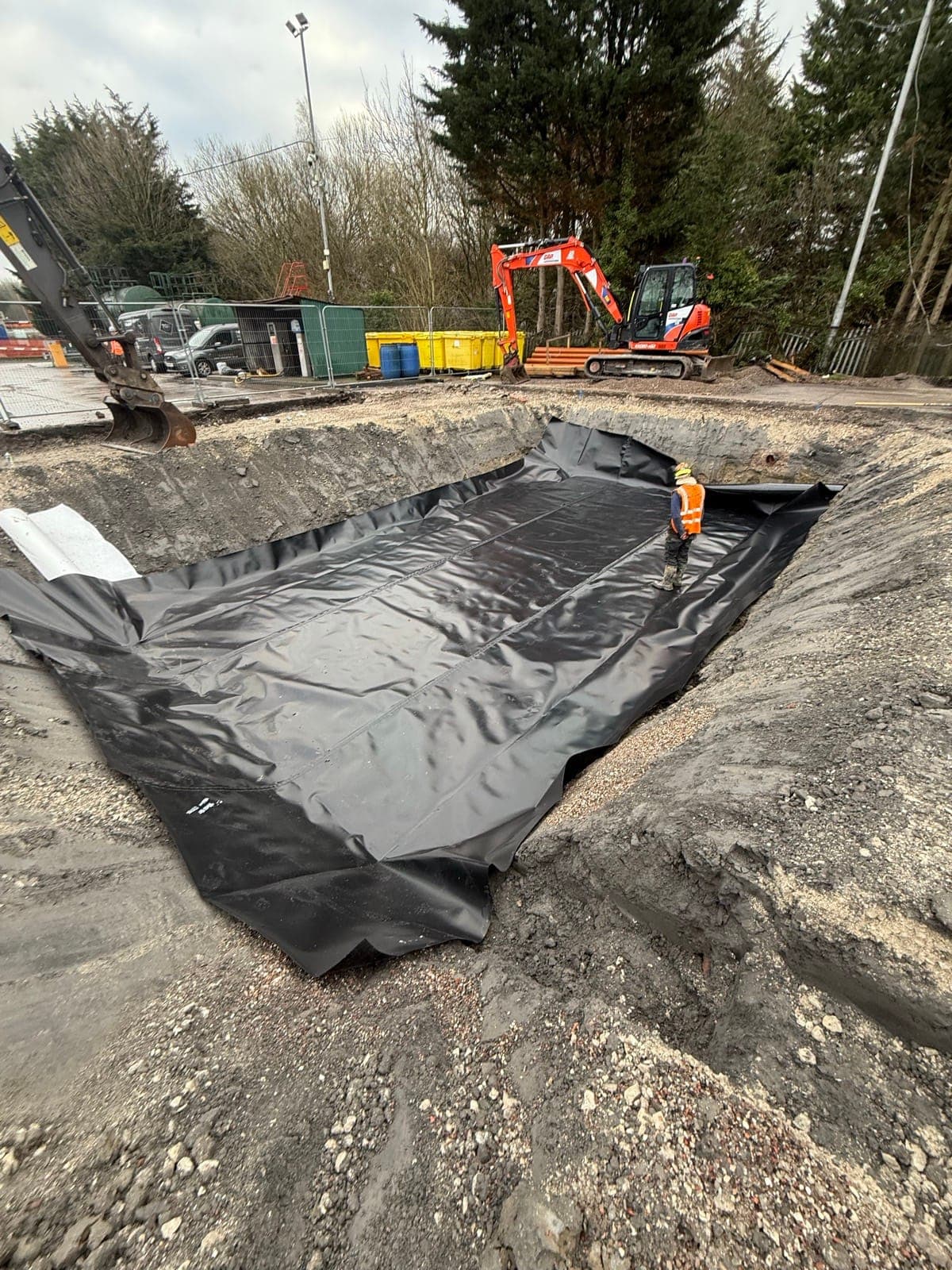
Where soakaways get built

Most of the Liverpool soakaways we see are on residential and light commercial schemes in the suburbs and the Wirral: small housing developments, school buildings and single units with space for the clearances from foundations. On the waterfront and in the docks the ground is too wet or too contaminated, and the drainage goes to a sealed tank.

Woolton and the ridge running through Childwall and Allerton are good examples of where the test results can come back strong. Low-lying ground toward the Alt and Ditton Brook is usually less promising.

Keeping the silt out

A soakaway in sand or sandstone works for as long as its faces stay clean. Fines carried in with the runoff gradually clog the surrounding ground, so the design puts a catchpit or filter upstream. We make those silt management connections as part of the install.

  • Formation checked first
  • Wrap that passes water, not fines
  • Crates to the design volume
  • Inlets and silt traps connected
  • Wrap closed for backfill

Who does what

Your engineer arranges the percolation testing and designs the system. The hole belongs to your groundworks contractor, at both ends of our visit: they open it before we arrive and fill it once we've gone. In between, we build the wrapped crate structure, inspect it and leave you the records building control will want under Approved Document H.

The Wirral side

Across the river, the Wirral has the same sandstone under much of it, showing at the surface on ridges like Bidston Hill and Thurstaston. Development around Heswall, West Kirby and Greasby is mostly housing on generous plots, which leaves room for the separation a soakaway needs. Closer to the Dee and the north Wirral coast, the ground is lower and the groundwater nearer the surface, and results there are more mixed.

We cover both banks of the Mersey from the same team, so a soakaway in Birkenhead gets the same checks and records as one in Woolton.

Soakaway Installation Liverpool

Frequently asked questions

Often, if the clay above is thin and the groundwater is deep enough. The percolation results and your engineer's design decide it; we build to them.

The sand drains well, but the water table in the dunes can be shallow. Your engineer checks the separation before designing a soakaway.

The crates themselves don't. The catchpits and filters upstream should be checked and emptied regularly so silt never reaches the structure.

That is set by your engineer and Approved Document H, not by us. We build it where the approved drawing puts it and will raise it if a foundation or service on site looks closer than the drawing suggests.

Tell us about your project

Quote back within one working day