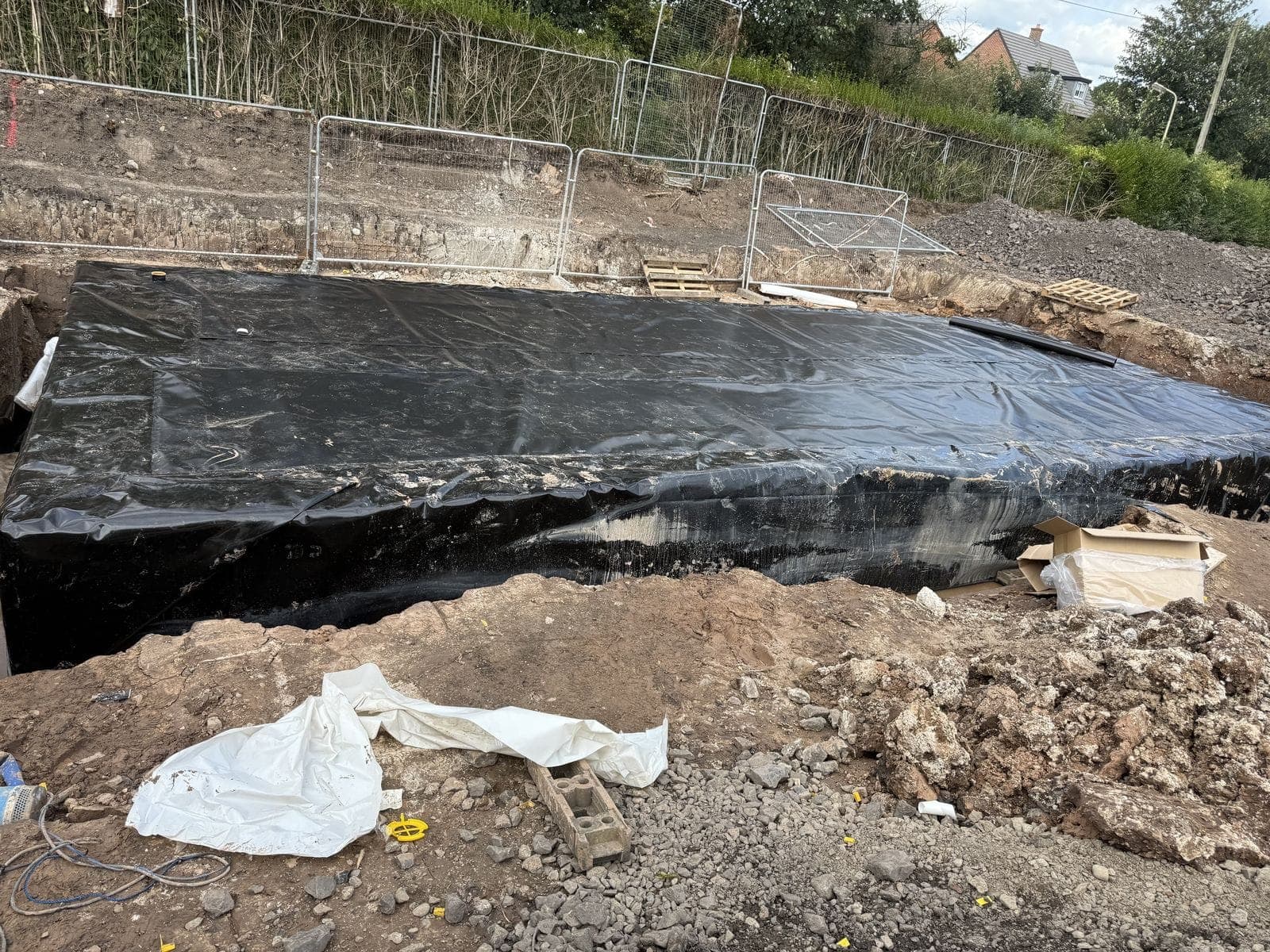
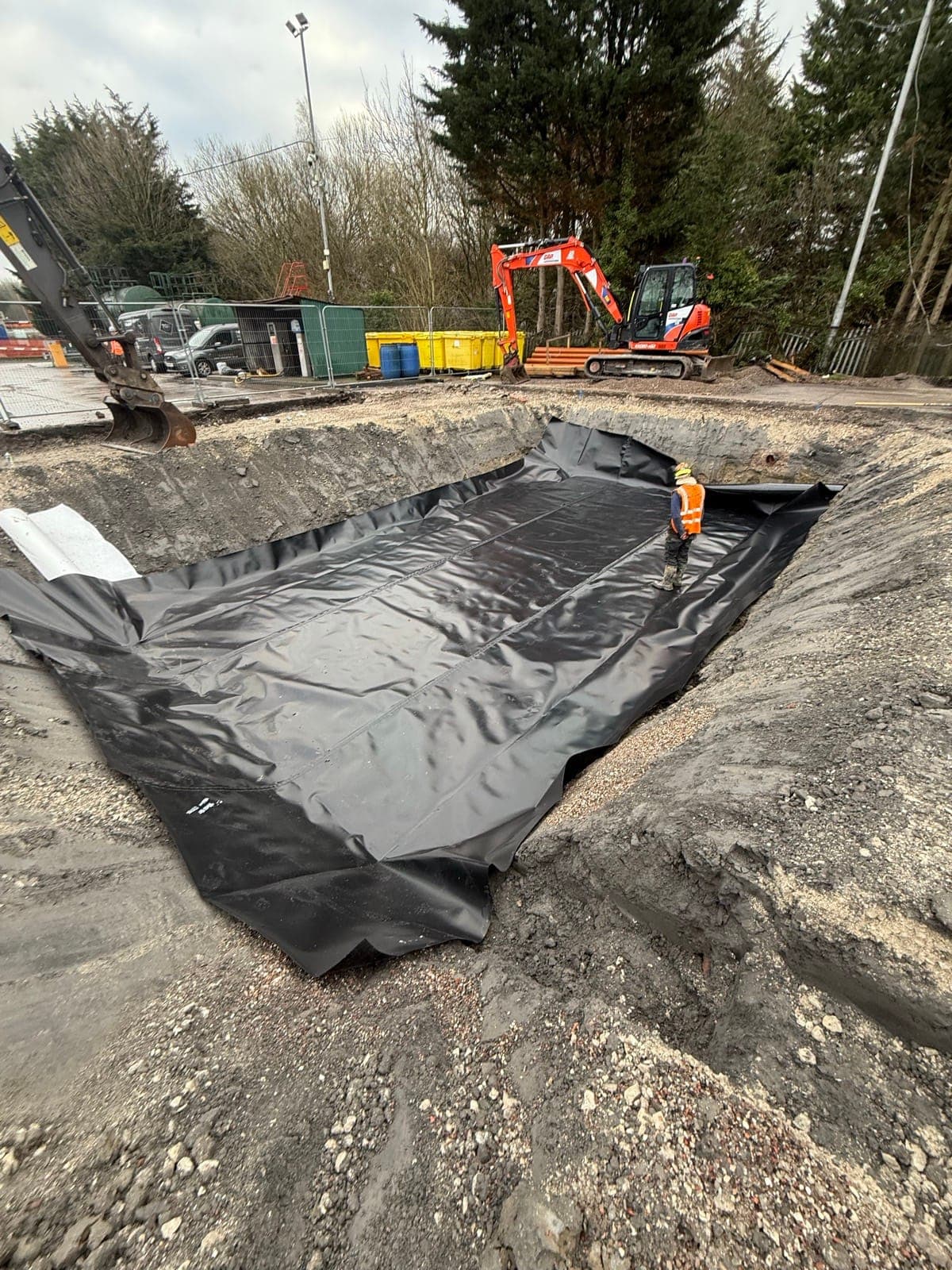
South of the airport the Cheshire plain begins, and its dairy herds produce the bulk of the slurry within reach of Manchester. To the east and north the ground rises into the Pennine edge around Saddleworth, Littleborough and the West Pennine Moors, where livestock farms sit on wet, heavy land. Anaerobic digestion adds digestate to the picture, which needs the same secure storage as slurry.
That is the work we cover from the Manchester side: farm stores and digestate lagoons a short run out from the motorways, rather than anything inside the ring road.
Slurry from a dairy herd, digestate from a plant and dirty yard water can each lead to a different build-up, and the permit may add its own demands. Before ordering anything we agree capacity, freeboard and the lining specification with whoever designed the store.
- 300gsm protection fleece underneath
- Simple stores: one welded liner
- Or two liners with leak detection
- Fill and draw-off fittings sealed in
- Floating cover where specified
Shaping the lagoon is your earthworks contractor's job, trenches included. When they've finished, we compare the slopes and trench positions with the lining drawings, because a soft or stony bank will work against the sheet for decades.
Pennine weather shapes the programme. Wind lifts big panels and rain spoils welds, so we deploy only what can be welded and ballasted the same day, and keep calibrated kit dry. Each panel is heat-welded to the next, and the test weld for the job is logged before we leave.
Many older stores on the clay farms south of Manchester were dug in the clay and relied on it alone. After inspection, an existing lagoon can often be re-profiled by your contractor and lined, which is usually cheaper than building new storage.
Either way you come away with a QA pack: what was laid, how each seam was welded and tested, and where everything sits. That is the evidence a farm inspection or an insurance renewal will want.
Hill farms above Rochdale and Saddleworth are often reached by narrow lanes and steep, unmade tracks. Liner rolls are heavy and long, so before we book delivery we ask how the lorry gets in, where it can turn and whether there is a telehandler on the farm to lift the rolls off. Sorting that early saves a wasted morning with a wagon stuck at the gate.
Livestock and milking routines carry on around us. We agree with the farmer where our vans can park and keep gates, yards and the parlour route clear while we work.