
Skip to content

GCL Pond Lining · North West

GCL pond lining in Liverpool

On Merseyside's sandy ground, a GCL gives the pond a natural clay bed that seals itself against small punctures. Near the estuary and the coast, though, the water has to be checked before a GCL is the right choice.

Where we install
  • Knowsley
  • St Helens
  • Prescot
  • Huyton
  • Kirkby
  • Maghull
  • Halewood
  • Ellesmere Port

Base · Tamworth B78 2BP

Salt water and bentonite

A GCL works because sodium bentonite swells when it takes up fresh water. Salty or brackish water, or water heavy in calcium, can stop the clay swelling properly and leave the barrier more permeable than intended. Around the Mersey estuary, the Dee and the Sefton coast, that is a real consideration.

So the suitability check comes first. We look at what water will fill the pond and what the cover soil contains before recommending a clay liner. If the chemistry is wrong, we will say so and point you to a welded membrane, which we install too.
Where clay liners work well

Inland and fed by rain or a freshwater brook, a GCL is a good fit for wildlife ponds on new housing at Knowsley and St Helens, scrapes and wetland features in country parks, and amenity ponds where a planted margin should run straight into the water.

  • Wildlife ponds and scrapes
  • SuDS wetlands on estates
  • Park water with a soft edge
  • Basins kept under soil or water

Installation on sandy ground

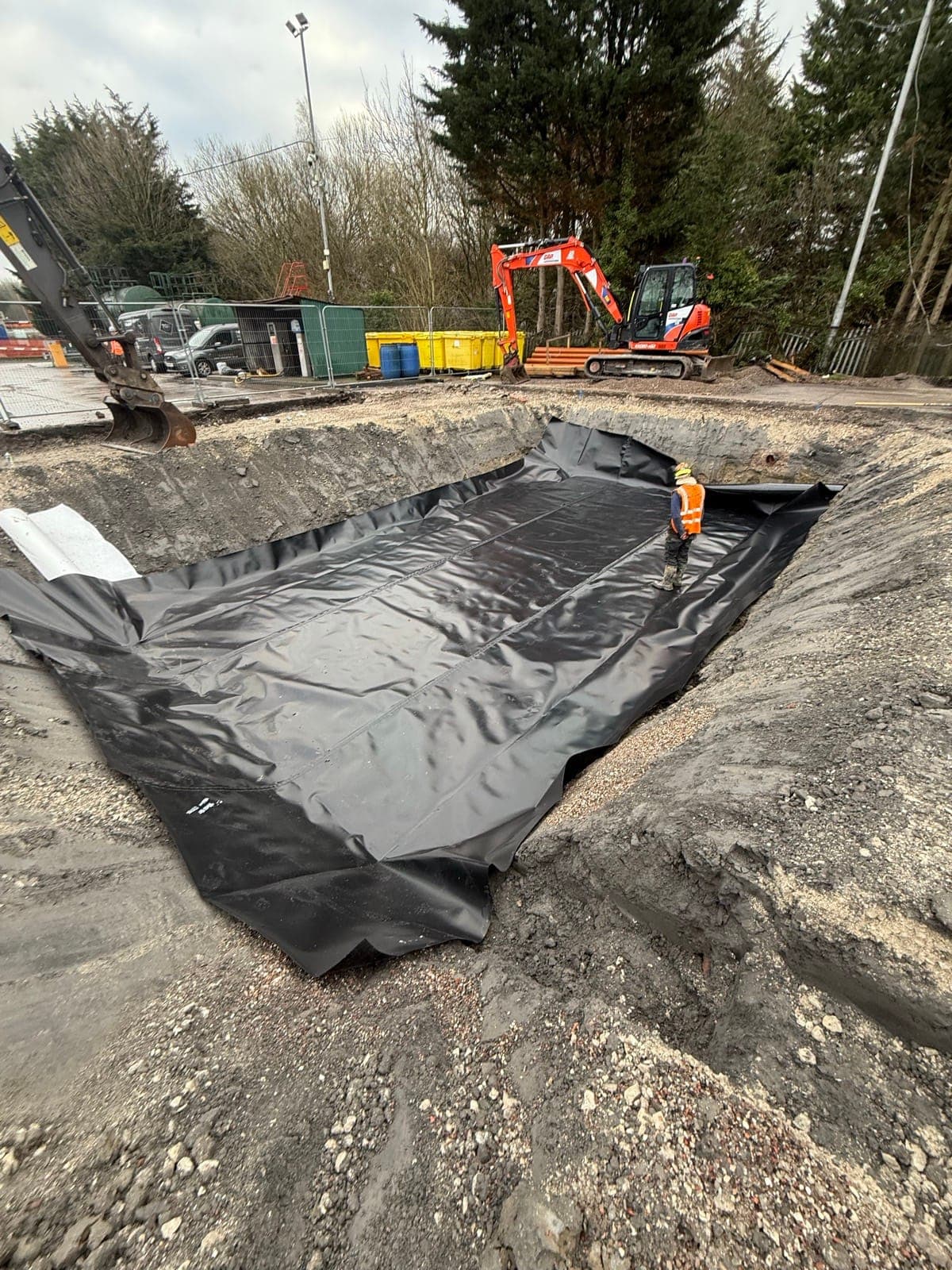
Sand is easy to trim smooth, which suits a GCL, but it can be loose. Your contractor compacts the formation, and we walk it and approve it only once it is firm underfoot and free of rubble.

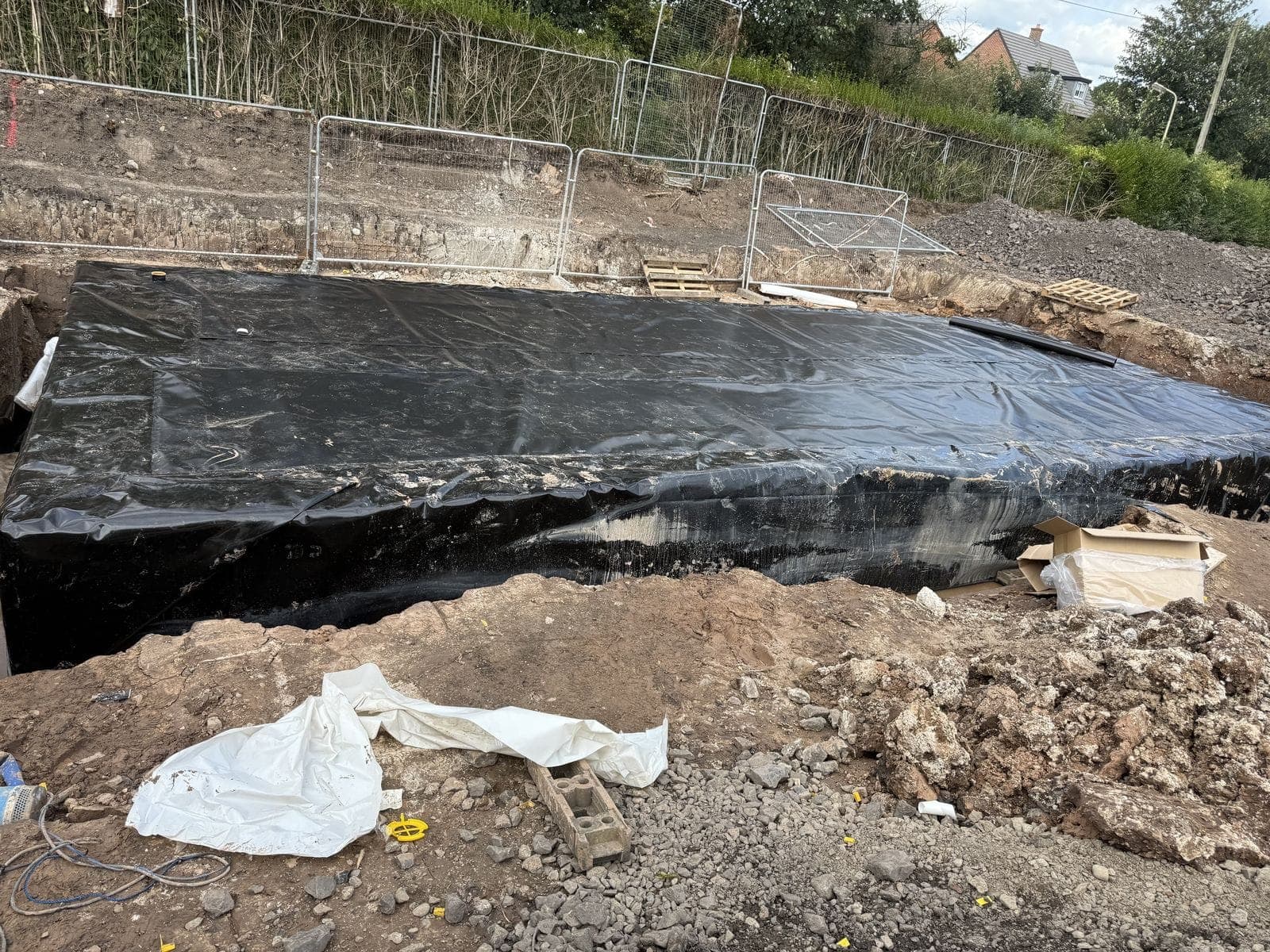
Panels are unrolled downslope with broad overlaps. Each overlap is dressed with bentonite paste or granules, as are the junctions at pipes, edges and headwalls, and we note every one on our QA record before moving on. A GCL has no welds; the bentonite at those laps is what makes it continuous.

Handing over for cover

Our handover names the soil depth that will confine this particular product and attaches the lap-by-lap record. Spreading that soil and wetting the liner falls to your contractor, and it has to happen quickly: a clay liner that takes on rain before it is weighted down can swell out of shape and lose its seal.

On sandy sites the cover soil itself matters. Clean, stone-free material that will hold its place on the slopes protects the liner far better than loose dune sand.

Ponds for wildlife

Conservation groups around Merseyside dig ponds for amphibians, dragonflies and wading birds, often shallow scrapes with long, gentle margins. Those suit a GCL well. The clay bed lets plants establish naturally, there is no plastic edge to hide, and the bentonite closes up small holes made by roots or animals. We work to the ecologist's profile and talk through access so the work does least harm to the habitat around it.

GCL Pond Lining Liverpool

Frequently asked questions

Maybe. If the pond will hold brackish or estuarine water, a GCL may not seal as it should. We check the water before recommending one.

Small punctures, yes. Hydrated bentonite swells into minor holes from roots or stones. It won't survive plant tracking across it.

Your contractor puts the soil on, to the depth our handover gives, then wets it. You keep our record of each lap and detail.

We can, but the weather matters more than for a membrane. Cover has to follow straight away, so we plan the job around a dry spell and a cover crew who are ready to start.

Tell us about your project

Quote back within one working day