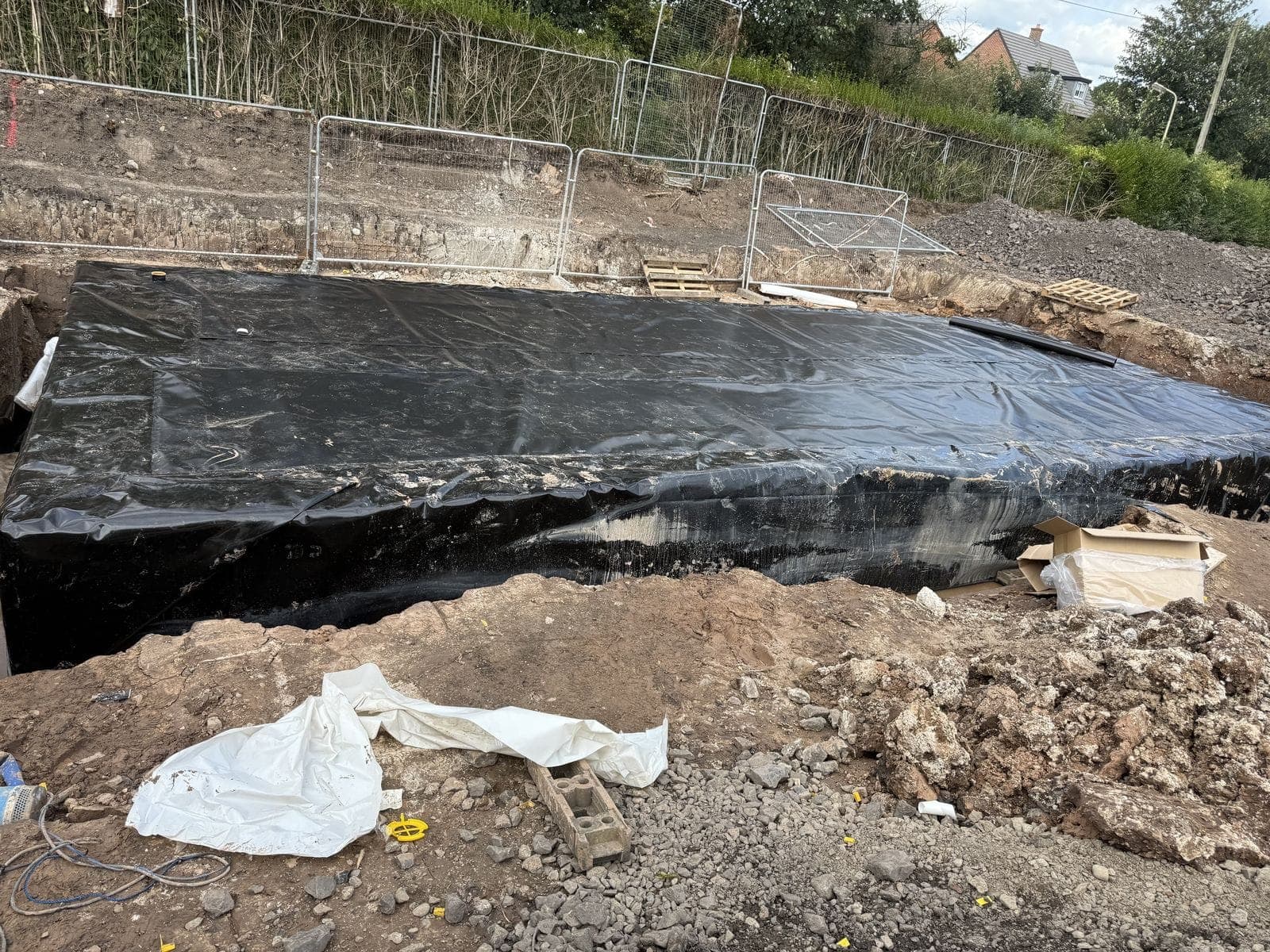
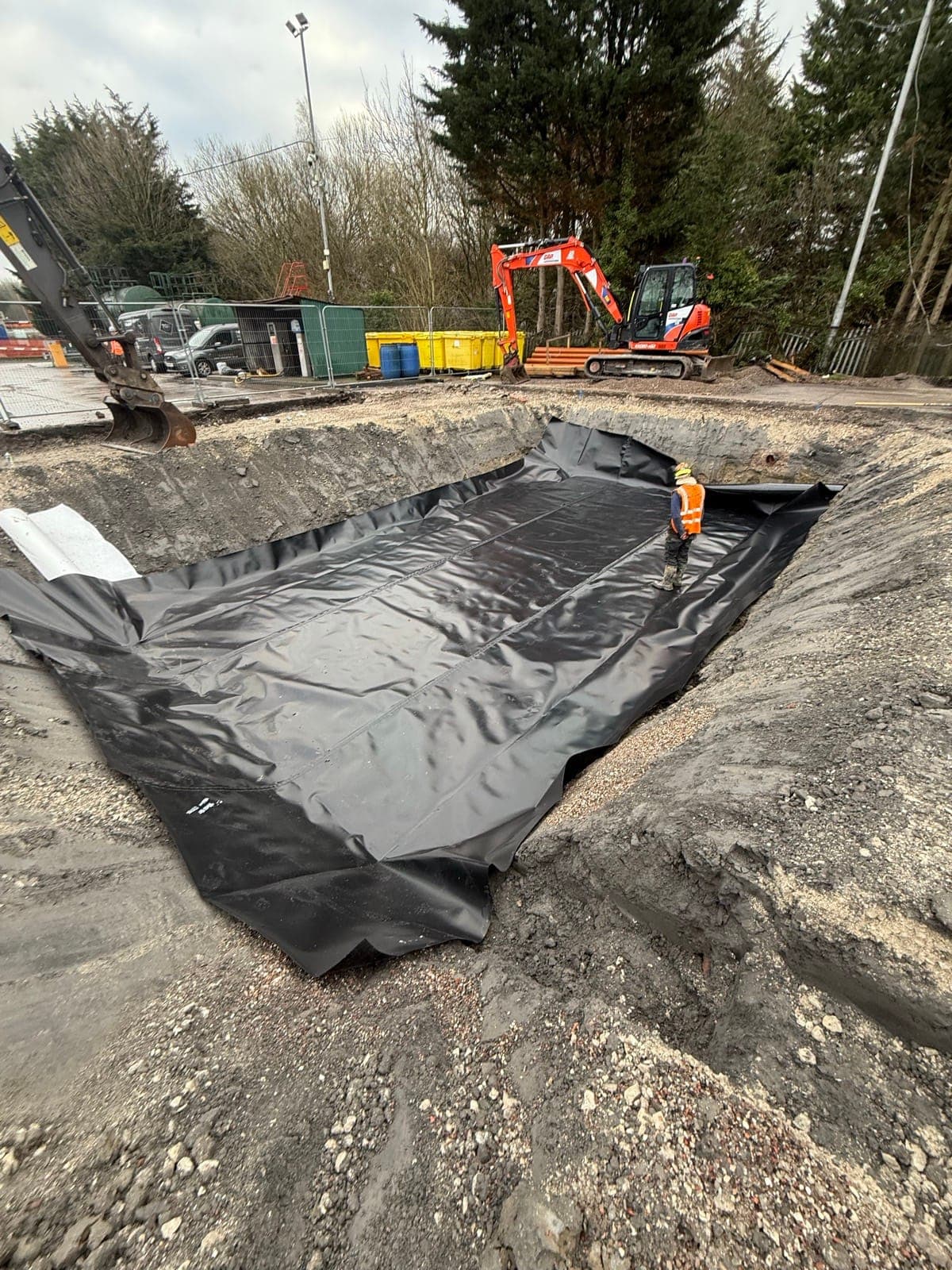
Clay over sandstone: why results vary so much
There is sandstone deep under Preston, but across most of the city and its suburbs it is buried beneath a thick blanket of glacial till. That clay takes water slowly, and a trial pit dug into it will often fill and simply sit there. Two plots a mile apart can give very different percolation figures, depending on whether the dig reaches a sand lens, a gravel bed or nothing but clay.
The better ground tends to follow the water. The Ribble has left terraces of sand and gravel along its valley, and behind the dunes at Lytham St Annes there is wind-blown sand. Sites on those deposits can infiltrate. Sites on the till around Fulwood, Cottam or Leyland frequently can't.