
Skip to content

Pond Lining · North West

Pond lining in Preston

Lancashire's lowland is dotted with old marl pits, fishing lakes and farm reservoirs, and plenty of them leak. We line new ponds and reline tired ones around Preston, welding the liner on site and locking its edge into an anchor trench.

Where we install
  • Goosnargh
  • Inglewhite
  • Broughton
  • Barton
  • Kirkham
  • Wesham
  • Longton
  • Hesketh Bank
  • Garstang
  • Ribchester

Base · Tamworth B78 2BP

A county full of field ponds

For centuries Lancashire farmers dug clay marl out of their fields to spread on the land, and the pits left behind filled with water. Drive across the Fylde or the farmland north of Preston and you pass dozens of them. Some still hold on their natural clay. Others have dried out, cracked or been opened up by roots, and an owner who wants open water back needs a liner.

Newer water sits alongside them: coarse fishing lakes, irrigation reservoirs for the growers on the Fylde mosses, ponds on golf courses and country estates, and landscaped water on the edges of new housing.
Matching the membrane to the pond

The use and the shape decide the material, so we recommend one after seeing the pond and hearing what it is for.

  • EPDM suits a small garden or wildlife pond with tight curves and planting shelves.
  • LLDPE where the panels need welding but the profile still asks for some give.
  • PP for awkward outlines and plenty of detailing around inlets and structures.
  • HDPE for big irrigation reservoirs and lakes with long, exposed banks.
  • GCL, a bentonite clay liner, where a natural bed under soil cover suits the site.

Underlay, welds and the anchor trench

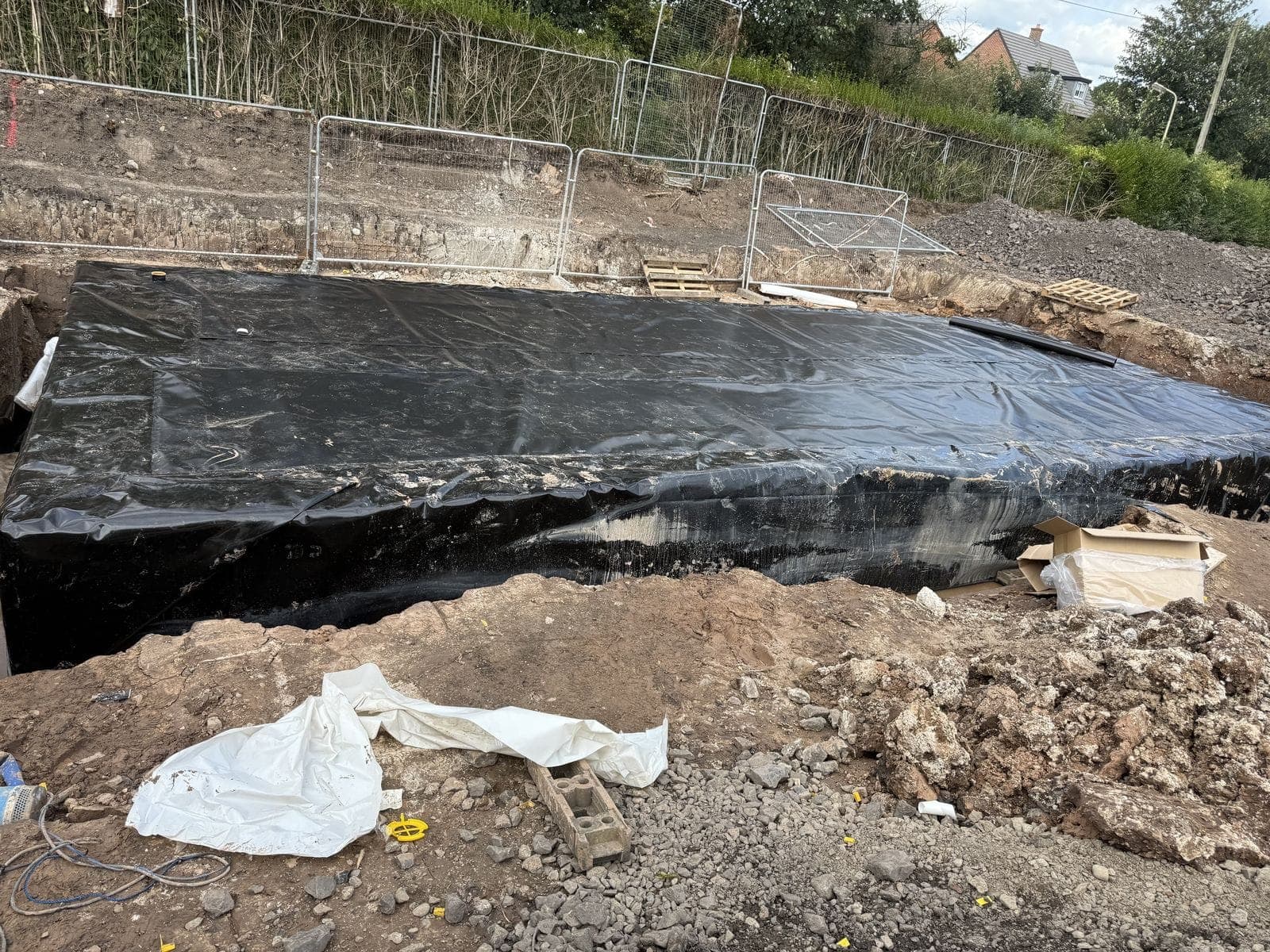
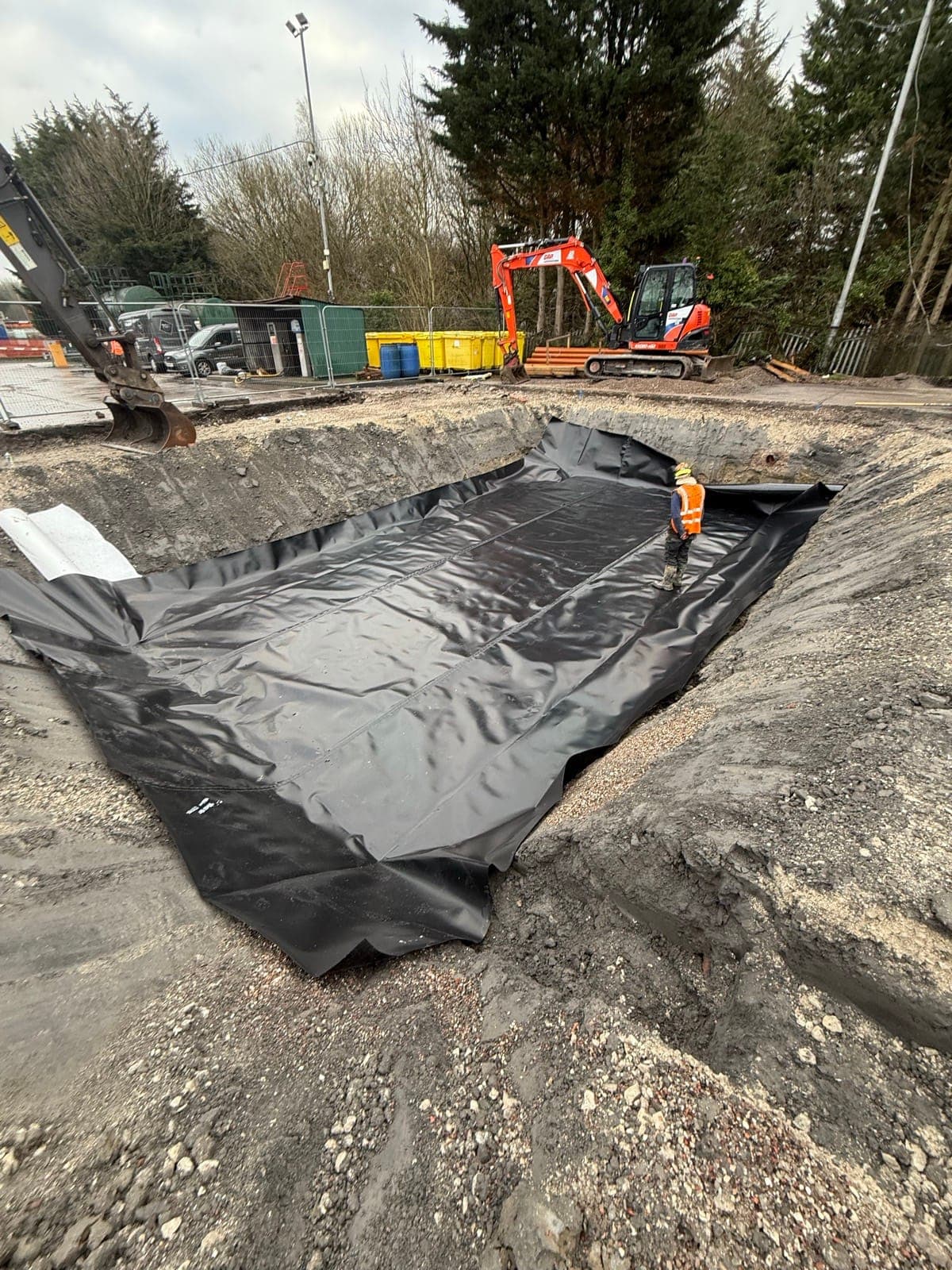
Your contractor shapes and trims the hole and clears out stones and roots. On that cleaned formation we lay a protective geotextile underlay, then deploy the liner panels and join them with wedge or extrusion welds. Before the production seams we run a trial weld, test it and log the result, on every pond regardless of size.

Openings for inlets, overflows and pumps are formed and sealed, and the liner's outer edge goes down into a perimeter anchor trench so wind and water can't drag it down the bank. Open shoulders on a flat Fylde site catch a lot of wind, so the anchorage gets proper attention there.

On the low mossland west of the city winter groundwater often lies just below the topsoil, and groundwater pushing up under a drained or half-empty liner can lift it. That is worth raising with your designer before the hole is dug.

Relining water that keeps dropping

Many enquiries around Preston are about a pond that already exists but won't stay full. We look at the existing bed or liner, work out where the water is going, and put a new lining system in over fresh protection.

Sheets joined with tape, or laid straight onto stony ground, are behind a lot of the failures we're shown. That is why our seams are welded and why every liner we fit sits on underlay.

Pond Lining Preston & Lancashire

Frequently asked questions

Often, yes. It normally needs draining, clearing of silt and vegetation, and reshaping by your contractor first. We then lay underlay and a welded liner and anchor the edges.

No. Once in place the membranes are inert, and fisheries all over the country use them. Let us know what is stocked and how anglers use the banks, and we'll specify to suit.

No. Excavation and shaping are your contractor's. We check the formation, then lay, weld, detail and anchor the liner and hand over the weld test records.

Tell us about your project

Quote back within one working day