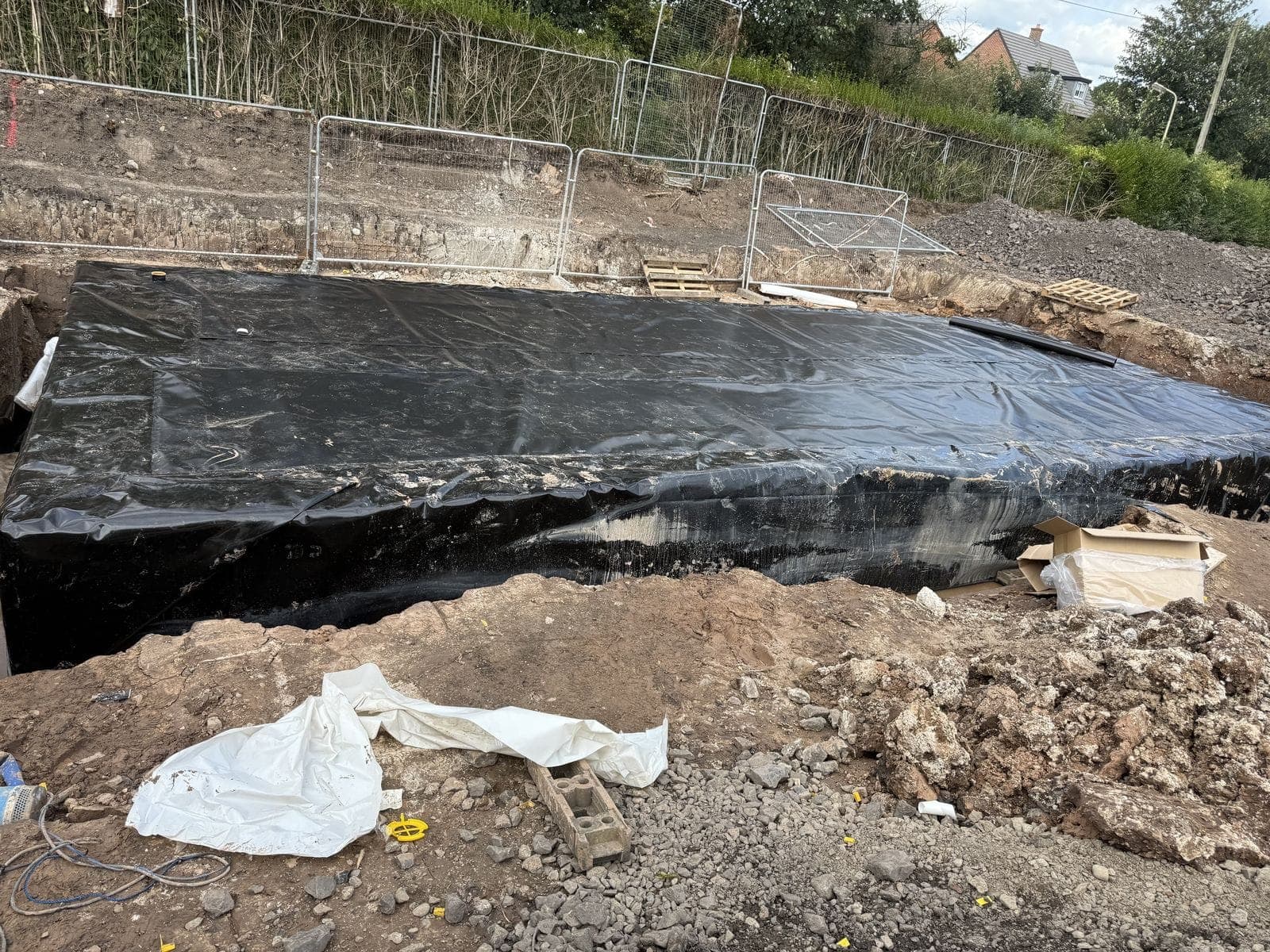
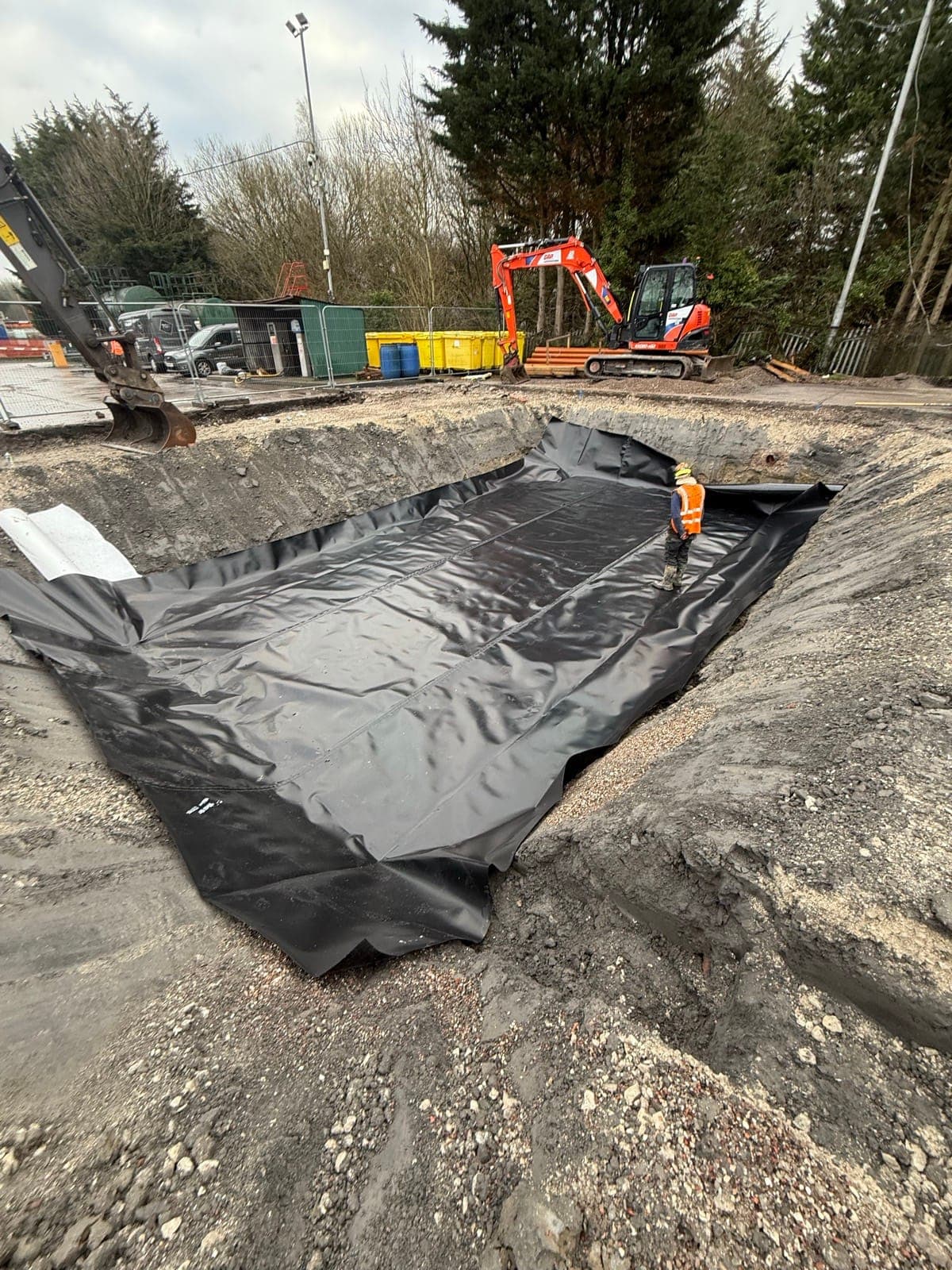
Between the Sefton dunes, the mosslands of West Lancashire and the sandstone under the city, much of the ground around Liverpool lets water through. That suits drainage but works against anyone trying to keep a pond full. A welded membrane or a clay liner is what makes the difference.
Where the ground is clay, ponds can still leak through roots, burrows and old drainage, so lining is worth considering there too. On the mosslands, peat can shrink as it dries, so the bed under a liner needs to be firm and well prepared.
The growers of West Lancashire depend on irrigation reservoirs to water vegetable and salad crops through dry spells, and those reservoirs are among the largest ponds we see in the area. Closer to the city, the work is wildlife and amenity ponds on housing schemes, ponds on golf courses along the coast, landscape water in business parks, and older ornamental water that has started to lose its level.
- Farm irrigation reservoirs
- Ponds on new developments
- Golf course water
- Leaking ornamental lakes
Large reservoirs with long exposed banks generally get HDPE, which stands up to sunlight. LLDPE and PP are flexible and weldable for shaped ponds and fiddly outlets, and EPDM suits smaller wildlife ponds. Where a clay bed is better for the site, we install GCL.
Your contractor leaves us a trimmed bed, and our geotextile underlay covers it before any liner is unrolled. Wedge welders join the long straight seams; an extrusion welder handles the patches and corners. Each job has a test weld that we log. Where pipes pass through, we make a sealed boot for each, and the top edge goes into a crest trench so wind off the Irish Sea can't lift the edge.
We walk every seam, detail and length of trench before leaving, and fill in the weld records there and then. Handover documentation goes with them, giving the owner a record of what was installed and how it was tested.
For a grower, that record matters at the next dry spring: you know the reservoir holds what it was built to hold, and you can show it.
Liverpool's great Victorian parks were laid out with lakes as their centrepieces, and old ornamental water across the city has the same problems: puddled clay that has cracked, roots through the bed, and silt that hides where the water is going. Relining one starts with a survey to find the cause, then a drained, cleaned bed, fresh underlay and a new welded sheet.