
Skip to content

Slurry Lagoons · North West

Slurry lagoon lining around Preston

Preston is a city, but its edges run straight into some of Lancashire's busiest dairy country. Our work here is lining stores for slurry, digestate and dirty water on farms around Goosnargh, Longridge and Garstang and out across the Fylde.

Where we install
  • Goosnargh
  • Inglewhite
  • Longridge
  • Chipping
  • Garstang
  • Pilling
  • Great Eccleston
  • Elswick
  • Kirkham
  • Much Hoole

Base · Tamworth B78 2BP

Dairy farms on the city's doorstep

Head north or east out of Preston and you are among grazing land within minutes. The lowland between the Ribble and the Wyre, the Bowland fringe and the Fylde plain carry a lot of dairy herds, and each one needs somewhere to keep slurry through the months when it can't go on the land. Inside the urban area there are no lagoons to speak of; the work is on the farms that ring it.

Western Lancashire is wet. Rain falling on an open store adds to what has to be held, and dirty water from yards and parlours adds more, so lagoons here fill faster than the size of the herd alone would suggest.

Much of the Fylde is low and flat, criss-crossed by field drains and ditches running out to the Wyre, the Ribble and the coast. A store that weeps has a short path to a watercourse, so on these farms a lining gets one chance to be done properly.
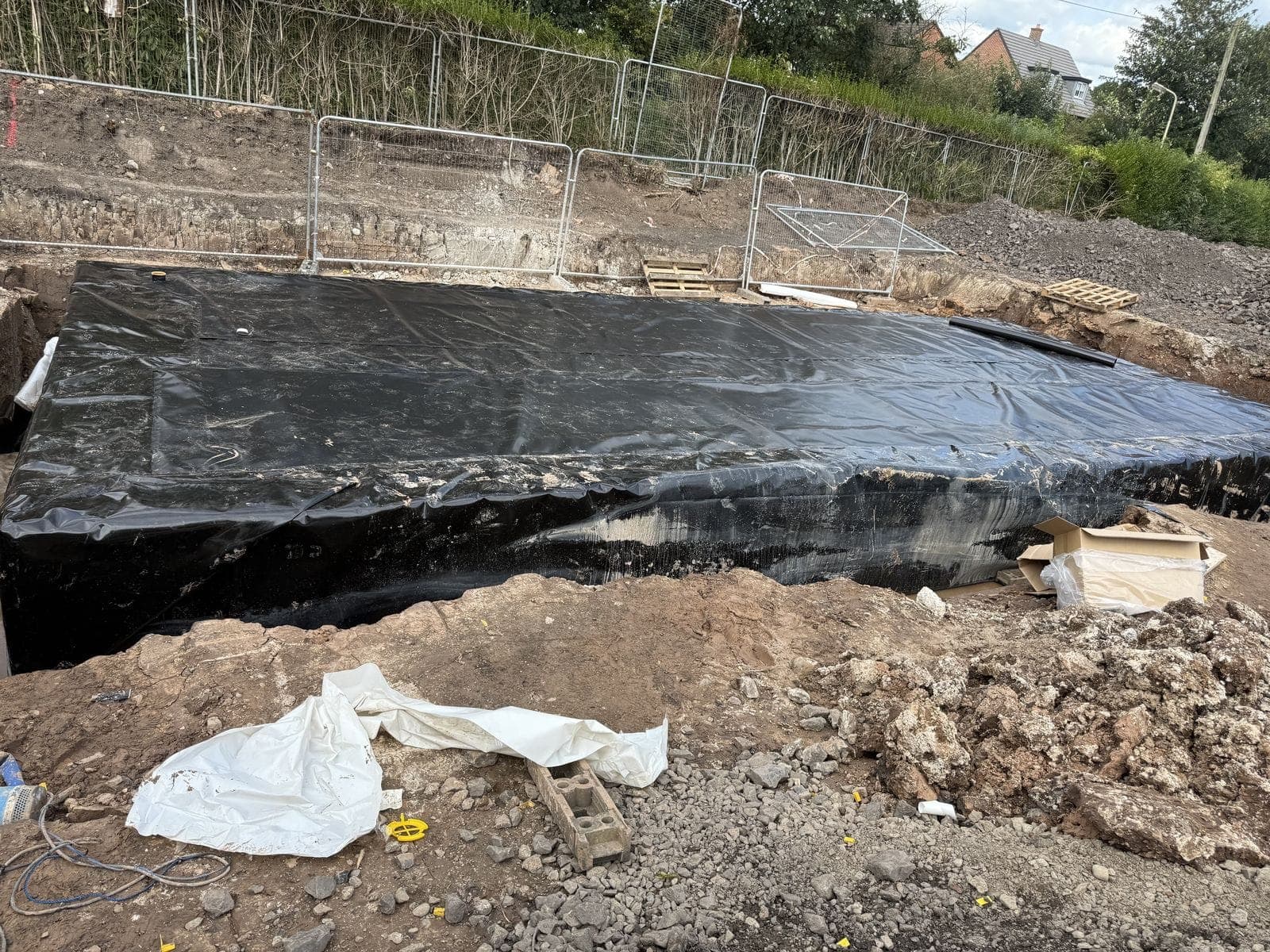
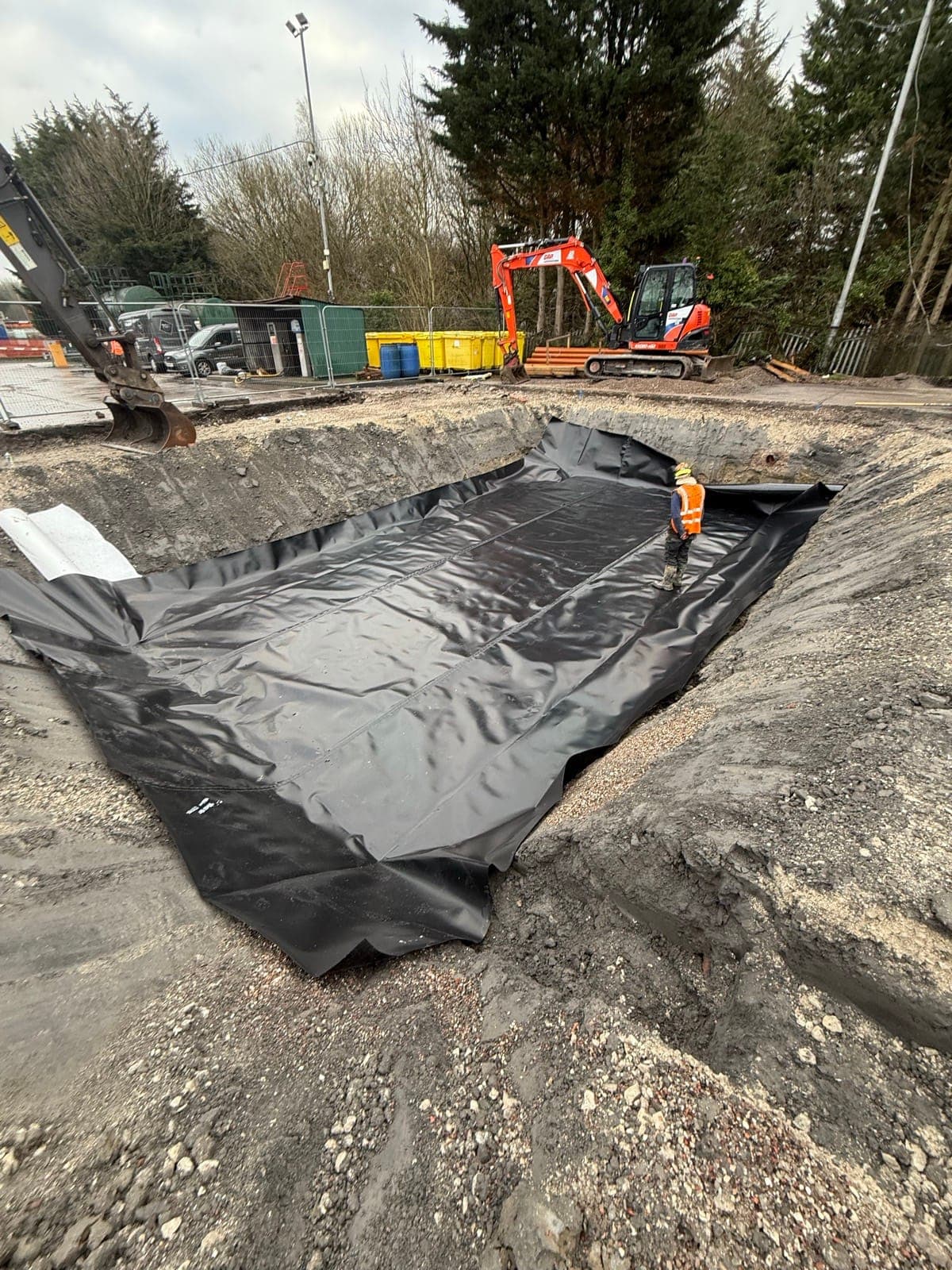
The build-up, from formation to cover

How much the store must hold, the freeboard it keeps and which lining it gets are settled against the design before we order. Banks, floor and the anchor trenches are cut and shaped by your earthworks contractor; before any material is delivered we walk that profile against the lining drawing.

  • A 300gsm protection fleece first, so nothing in the Lancashire clay can puncture what lies over it.
  • HDPE or LLDPE sheet laid over the fleece, with every panel joined by heat welding.
  • Where the permit asks for two liners, a seepage layer sandwiched between them that drains to an inspection point.
  • Inlet and draw-off pipes, plus the level gauge, sealed where they pass through the liner.
  • A floating cover if one is specified; in this climate it also stops a lot of rain getting into the store.

Tired earth-banked stores

Plenty of Lancashire farms still rely on earth-banked lagoons dug decades ago into the local clay. Some are sound. Many are overgrown, slumped or no longer up to current requirements.

Lining an existing store after an inspection is often cheaper than building new storage. Where the banks need re-profiling, your contractor does that first, then the fleece and welded liner go in with proper anchorage at the crest.

Evidence for the inspector

New and substantially altered stores have to meet the storage regulations, and your agricultural consultant will tell you which rules bite on your holding. Our part is a lining that won't leak and the evidence to show it.

Before the main seams, a trial weld is run and its result logged. The QA file we leave covers the materials delivered, every weld record and the as-built drawing, and that is what an inspector or an insurer will ask to see.

Slurry Lagoon Lining Preston

Frequently asked questions

Digestate stores take the same welded build-up as slurry, with one liner or two according to the permit, and a floating cover where one is specified.

In a wet area it stops a lot of rainfall ending up in the store, and it contains smell. Whether one is required is set by the design or permit; we fit it where specified.

No. Earthworks are your contractor's. We check the profile and the anchor trenches, then line, weld, test and document the store.

Tell us about your project

Quote back within one working day