
Skip to content

Gas & Hydrocarbon Membranes · Yorkshire

Gas membrane installation in Sheffield

Two centuries of steel, coal and engineering have left Sheffield with a lot of ground that needs a barrier beneath the building. We lay gas and hydrocarbon barriers to whatever level your designer's specification sets, and give each penetration its own sealed detail.

Where we install
  • Attercliffe
  • Darnall
  • Tinsley
  • Neepsend
  • Kelham Island
  • Brightside
  • Heeley
  • Woodseats
  • Rotherham

Base · Tamworth B78 2BP

What lies under the Steel City

The Lower Don Valley, Attercliffe, Darnall, Tinsley, Neepsend and Kelham Island were built over with furnaces, forges, rolling mills and coking plant. What came down left slag, ash, foundry sand and buried tanks behind. Under the east and south of the city, old shallow coal workings in the Coal Measures can give off methane and carbon dioxide. Kelham Island and Neepsend, now full of flats and workshops, show how much of that land is being reused.

So a ground investigation in Sheffield often ends in a gas risk assessment, and that sets a protection level. BS 8485 is the usual basis. The specification that comes out of it tells us the membrane class and the detailing; we don't choose either.
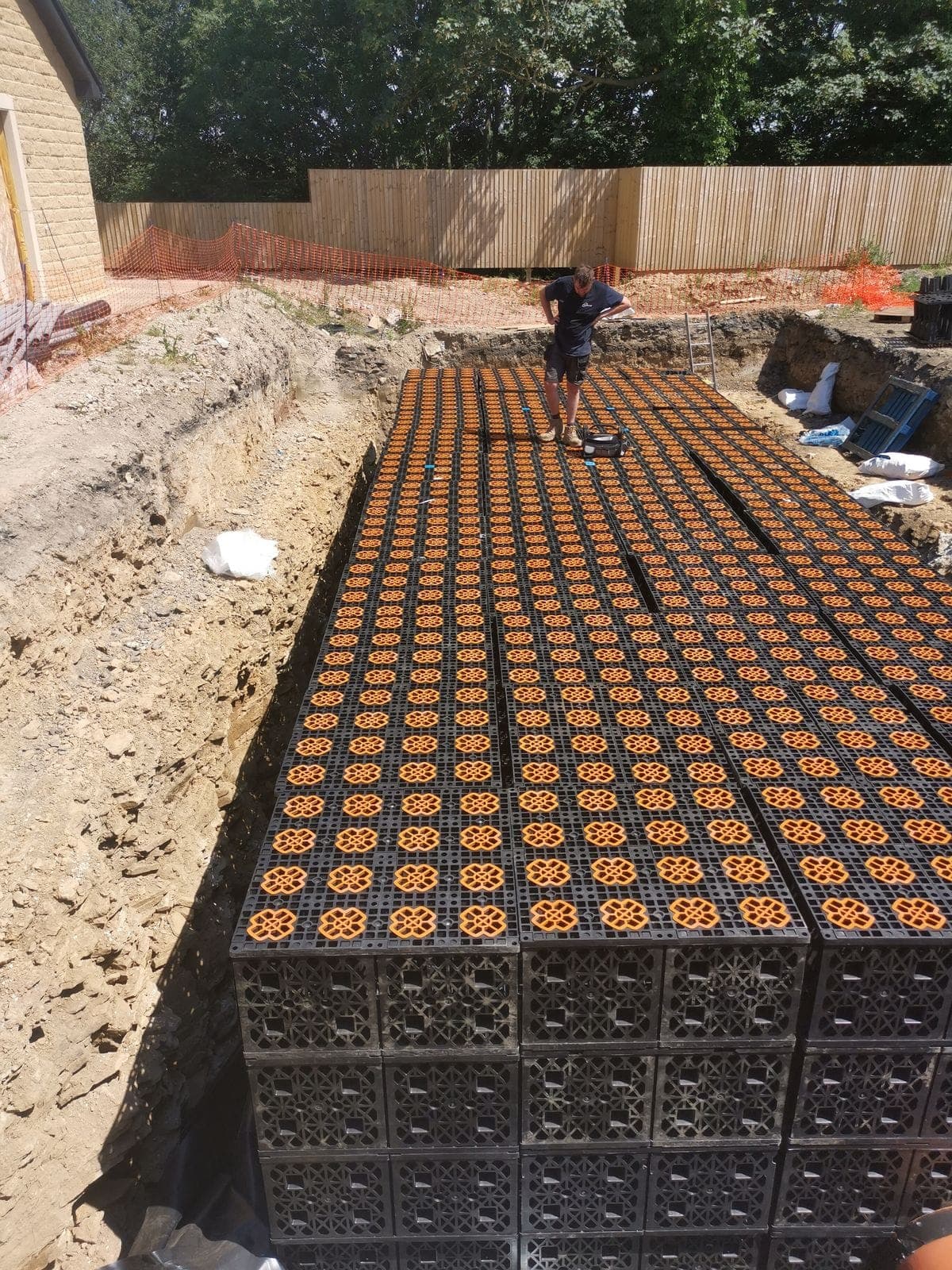
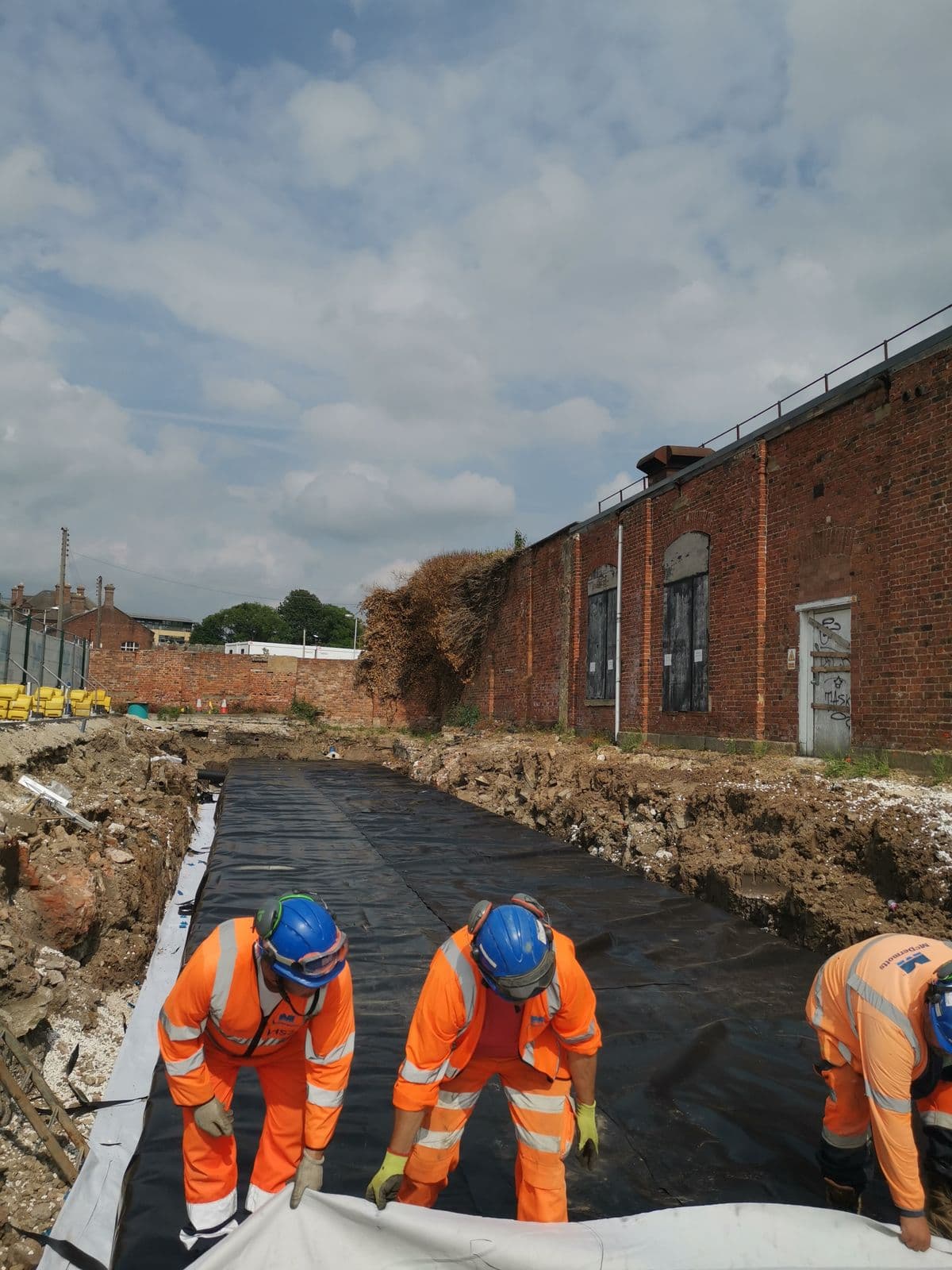
From blinding to finished barrier

Before laying, we look at the slab or blinding for anything that could puncture the sheet: protruding aggregate, tie wire, nibs of concrete. Anything like that gets raised with the site manager before the first roll is opened. Then the sheet goes down, and each overlap is welded or sealed by the method the product's maker sets out, without improvising.

Hydrocarbon-resistant products are heavier and stiffer than a plain gas barrier, and on old fuel-store or works ground the specification often calls for them. They take more care to dress around corners and upstands.

Piles, ducts and drainage runs

Apartment blocks on the former works land north of the centre usually sit on piles, and a piled slab is full of penetrations. Each pile cap, service duct, drainage pipe and column base gets its own collar, sealed and checked. Gas protection fails at those details far more often than across open sheet.

  • Top-hat collars at every service and pipe entry
  • Pile caps and ground beams wrapped to the detail drawings
  • Overlaps welded or sealed the way the product literature requires
  • Damage repaired and logged before the next trade covers it

Validation and the warranty file

Many warranty providers now want an independent inspector to check the barrier on higher-risk Sheffield sites, with integrity testing alongside, and we can arrange both. Either way, you get installation records that the warranty provider and building control can follow, area by area.

Programme matters as much as product. A barrier left open for days on a busy site collects boot traffic, barrow wheels and dropped rebar, so we aim to finish an area and see it inspected before the next trade arrives.

Gas Membrane Installation Sheffield

Frequently asked questions

Whichever ones the ground investigation flags. Former steelworks, made ground, old fuel stores and land over shallow coal workings are the common triggers here, and the risk assessment sets the protection level.

No. Your designer specifies the membrane and the detailing from the gas risk assessment. We install to that specification and record it.

Yes. On a piled slab most of the hours go into the collars, one per cap or duct, each finished and checked individually.

Yes. We can bring in a third-party inspector and integrity testing, and their findings join the handover records.

Usually, since most gas-rated sheets resist moisture too. The reverse is where people get caught out: a sheet sold only for damp gives no protection from ground gas.

Tell us about your project

Quote back within one working day