
Skip to content

Pond Lining · Yorkshire

Pond lining in Leeds

From fishing lakes in the Aire valley to farm reservoirs up Wharfedale, we line ponds and reservoirs around Leeds with welded membranes on geotextile underlay, anchored at the edge and tested on every job.

Where we install
  • Rothwell
  • Methley
  • Swillington
  • Kippax
  • Allerton Bywater
  • Otley
  • Pool-in-Wharfedale
  • Wetherby
  • Harewood

Base · Tamworth B78 2BP

Water in a mining valley

The lower Aire, east of the city towards Castleford, holds a lot of water left by coal and gravel working: subsidence flashes, restored opencast ground and old pits, many now nature reserves and fisheries. New ponds in that landscape often go onto ground that has been dug, filled or moved before, so the formation needs care and the liner has to cope with it.

Elsewhere the work is more ordinary and just as common: balancing and amenity ponds on business parks and housing, lakes on golf courses, and wildlife ponds on larger private grounds.
Reservoirs for farms and nurseries

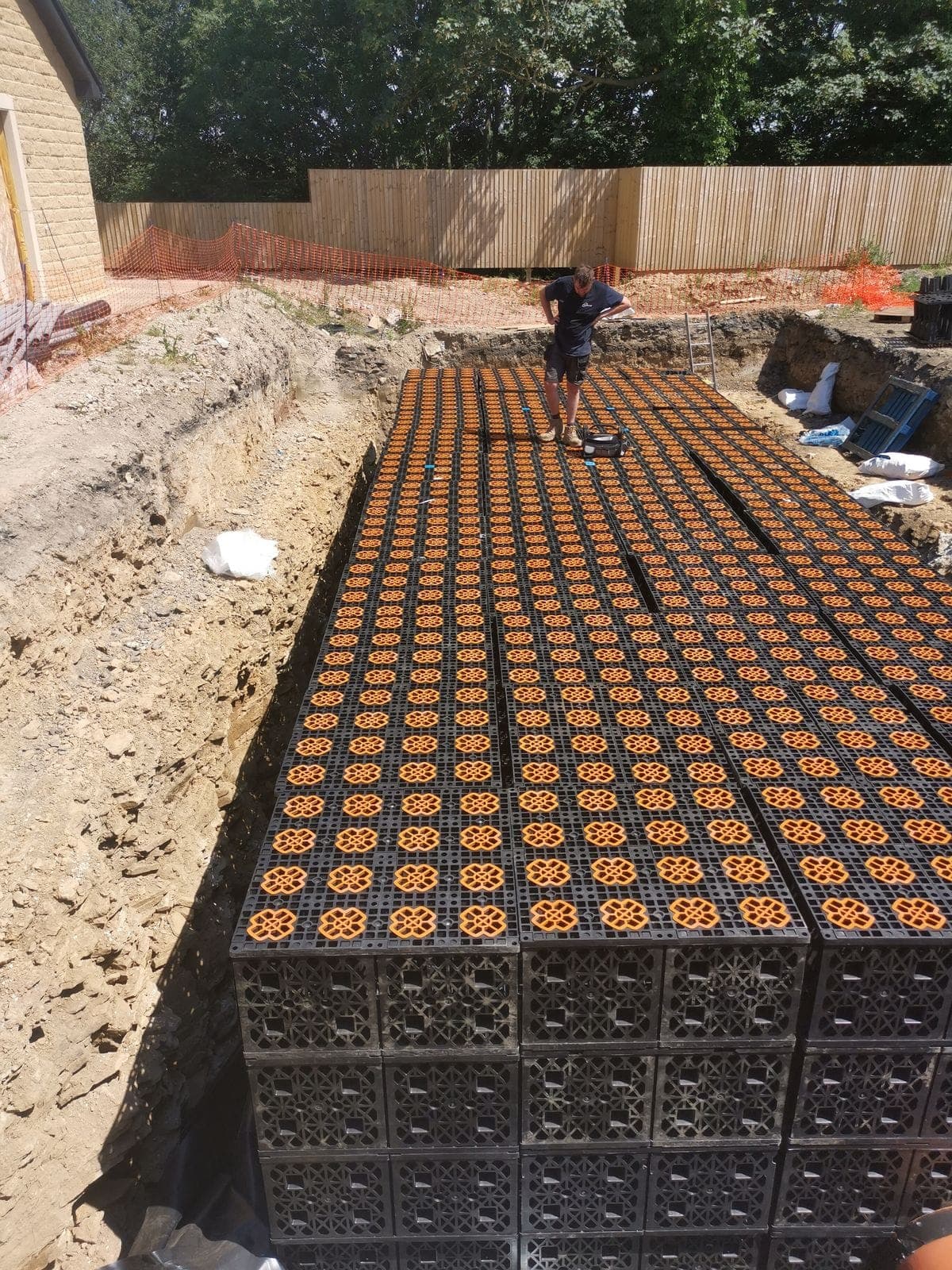
Up Wharfedale and on the arable land east of the city, a lined reservoir lets a farm or nursery catch winter water and use it in summer. These tend to be the larger jobs, with long banks open to the weather, which is where a thicker HDPE sheet earns its place. Getting rolls of that size down a narrow dale lane takes planning too, so we look at access and the laydown area before the delivery is booked.

Which membrane, and why

The recommendation comes after we've seen the hole, the ground around it and how the water will be used.

  • HDPE for big reservoirs and lakes with exposed banks.
  • LLDPE where a weldable sheet needs to follow uneven or settling ground.
  • EPDM for small ponds with tight curves.
  • PP where there is a lot of detailing at pipes, steps and structures.
  • GCL where a clay bed under soil cover is the better fit.

Fitting the liner

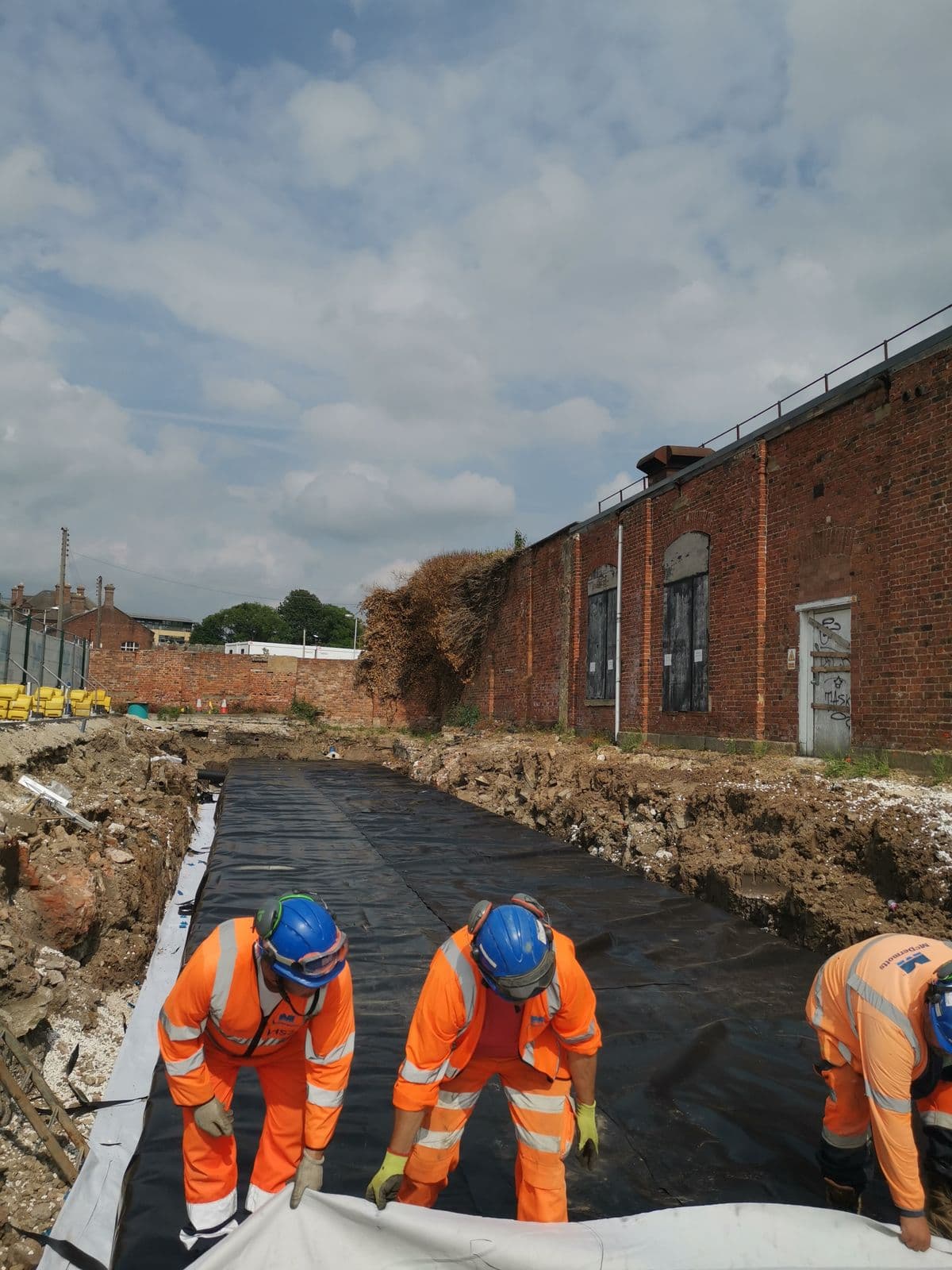
Your contractor excavates and trims the pond and leaves us a clean formation. A protective geotextile underlay goes down first so that stones and roots below can't work through. Seams are run with a wedge welder, with extrusion welding at the awkward details; before the first production seam a trial piece is welded, tested and logged.

Inlets, outfalls and pump pipes are sealed through the membrane, and the liner's edge is locked into the anchor trench round the crest so it stays put as the level rises and falls with the seasons.

Older ponds around Leeds leak for familiar reasons: a clay bed that has dried and cracked, ground movement, tree roots, or an old liner that was taped rather than welded. We establish the cause first, then reline over new protection so the same fault doesn't come back.

Pond Lining Leeds

Frequently asked questions

A flexible, weldable membrane such as LLDPE tolerates some movement better than a stiff sheet. How much settlement to allow for comes from the ground investigation; we pick a liner that suits the answer, and say so if we think a stiffer sheet is the wrong call.

Yes, when the drainage strategy specifies a liner. The engineer sets the size and levels, the groundworker shapes the basin, and we line it to the drawing.

Decades, provided it sits on underlay and stays covered by water or soil, out of the sun. Welded seams don't depend on any adhesive holding.

Tell us about your project

Quote back within one working day