Leeds has a large green belt. North of the ring road the land falls to the Wharfe through grazing country around Harewood, Bramhope and Pool, and to the east it opens into mixed farming towards Wetherby and the Vale of York. Livestock farms there produce slurry and dirty water like any other, and many of them drain to becks that feed the Wharfe, so a leaking store has a direct route to the river.
Inside the built-up city there is no lagoon work, and we wouldn't pretend otherwise. This page is for the farms and digestion plants around it, and further out across West and North Yorkshire.
Before ordering, we go through the design with you: how much the store must hold, how much freeboard it keeps, whether it has one liner or two, and whether there's a leak-detection layer or a cover.
Shaping the bowl is your earthworks contractor's job, trenches for the anchorage included. We compare their work with the lining drawing before the lorry with the liner is booked, so any problem with the slopes comes to light in time.
Further up the dale, farms sit on sloping ground, where a lagoon is cut into the hillside and the downhill bank is built up. That bank is where the anchorage and the welding deserve the closest attention.
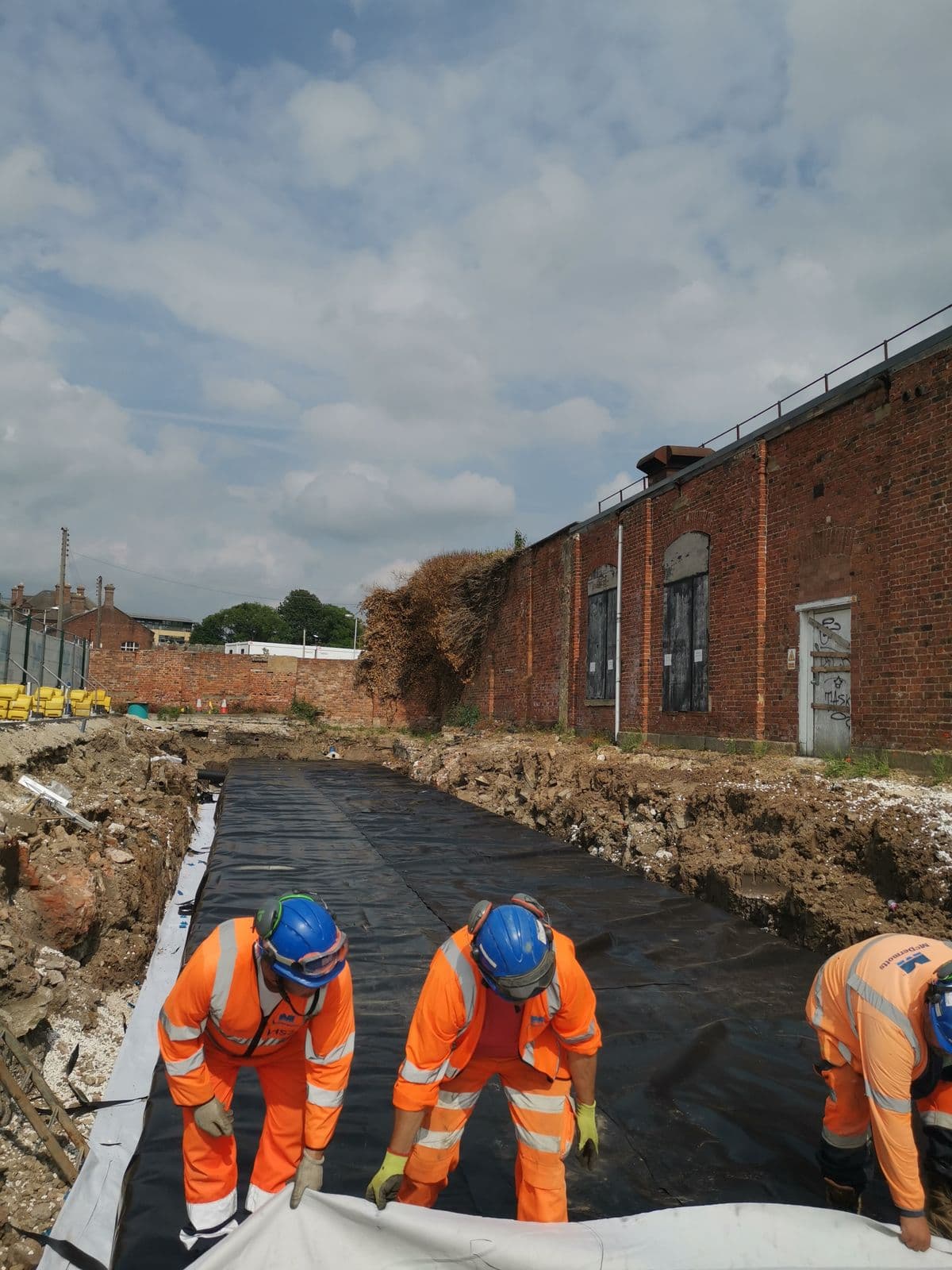
Fleece comes first, laid straight onto the shaped clay or shale. The lower sheet follows, welded seam by seam. If the store is double-lined, that lower sheet is the secondary; over it goes a drainage medium that leads any leakage to an inspection point, and the primary sheet is welded above that.
Pipes for filling and emptying the store, and the level gauge, are sealed where they pass through the sheet. A trial weld is logged before the main seams, and a floating cover, if specified, is the final layer.
Older earth-banked stores on Yorkshire farms can often be lined rather than replaced, once inspected and re-profiled where necessary. It is usually the cheaper route to sound storage. We look at the existing banks, the inlet arrangements and how the store is emptied before saying whether a liner will work, and if the answer is no we tell you plainly.
Your file at the end lists what was delivered and fitted, holds every weld record and includes an as-built plan. That is what the regulator's inspector and your insurer ask to see.