
Skip to content

Soakaway Tanks · Yorkshire

Soakaway installation in Sheffield

Some Sheffield plots will take roof and yard water into the ground and some won't, often within a few streets of each other. Where your engineer's percolation results say a site drains, we supply and build the crate soakaway, or build one from crates you already hold.

Where we install
  • Fulwood
  • Crosspool
  • Totley
  • Stannington
  • Bradfield
  • Oughtibridge
  • Dore
  • Beighton
  • Mosborough

Base · Tamworth B78 2BP

Sandstone bands, mudstone and fill

The city stands on the Coal Measures, a layer cake of sandstones that can pass water and mudstones and shales that hardly pass any. A trial pit that lands in a sandstone band can give a good result; one that lands in shale a short walk away can fail outright. That is why a Sheffield soakaway is sized from tests on that plot, never from what worked next door.

Along the Don and through the old works districts the top few metres are often fill: slag, ash, brick and the footings of demolished sheds. Engineers rarely send water into ground like that, so those sites usually end up with a sealed tank and a controlled outfall instead. Infiltration tends to belong to the suburbs, on natural ground.
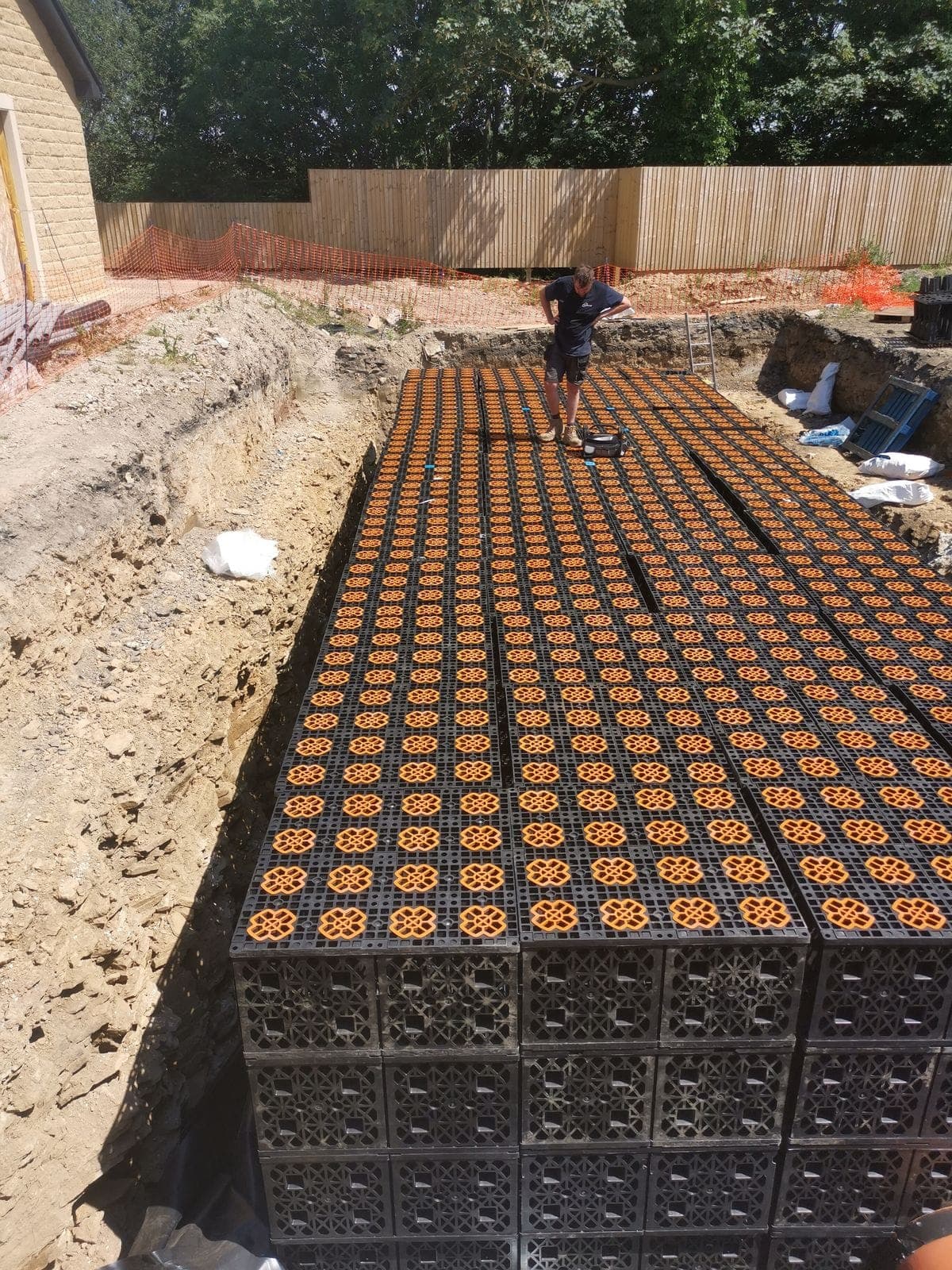
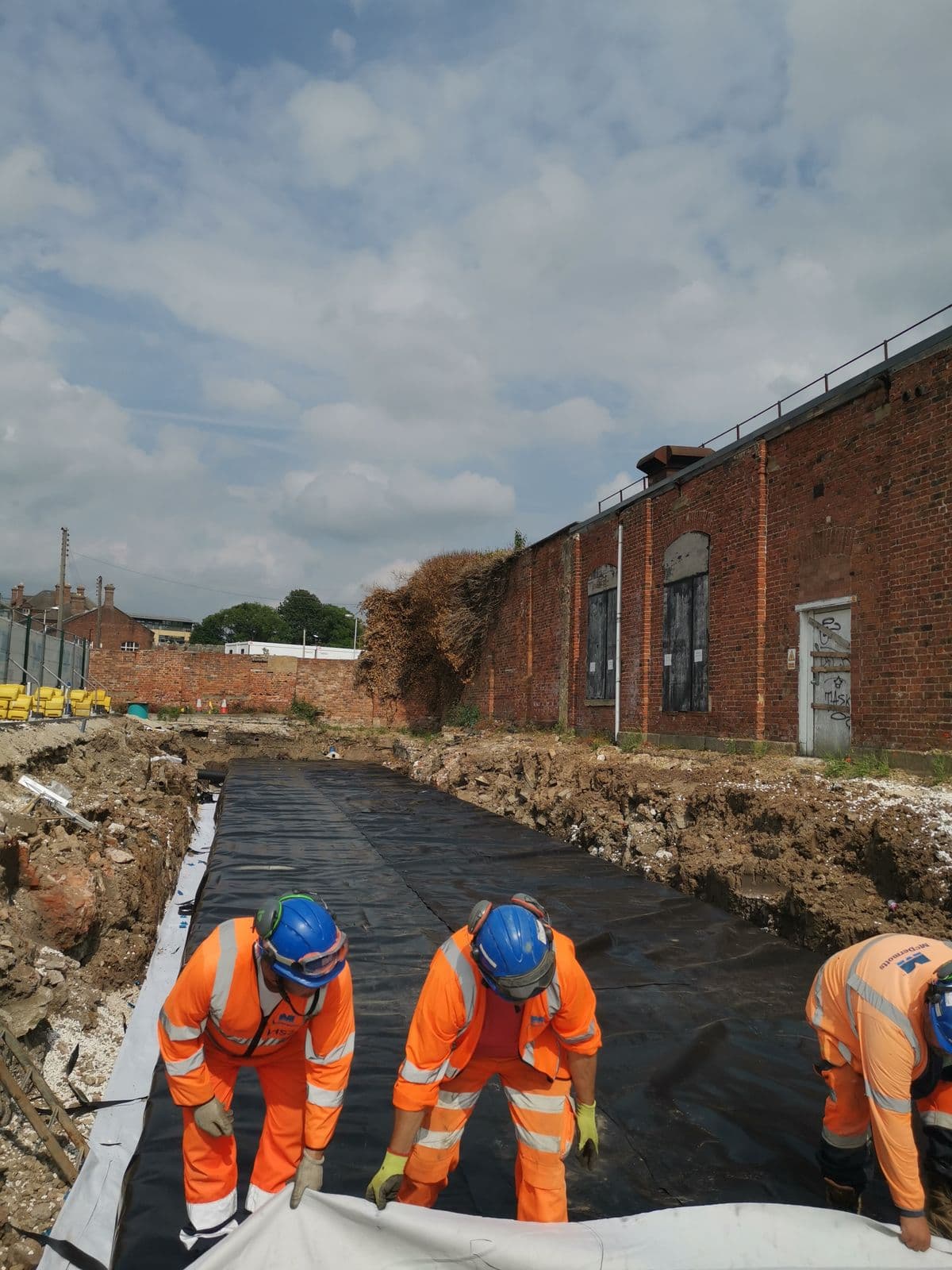
A soakaway on a hillside

Western Sheffield climbs steeply, and water put into the ground near the top of a slope can travel along a hard layer and surface again lower down, in a garden, against a retaining wall or in a cellar. Your designer weighs that when setting the position, depth and distance from buildings and boundaries.

Our part is to build the structure where they have put it. The groundworker benches the dig so the base is flat even when the land around it falls away, and we confirm that before a single crate goes down.

Our work between the dig and the backfill

We don't excavate and we don't backfill. Between those two operations, a Sheffield soakaway gets:

  • A look at the pit floor for level, loose spoil and anything sharp
  • A permeable geotextile spread out to stop fine soil migrating into the crates
  • Crates assembled inside that fabric up to the volume on the drawing
  • Inlet pipework and the designed catchpit or filter connected
  • The fabric folded over the top and closed, then an inspection note for building control

Typical Sheffield soakaway work

Most of the soakaways we are asked about here serve new houses, extensions and small infill schemes in places such as Fulwood, Totley, Stannington and Bradfield, where a natural ground profile and some garden space give infiltration a chance. Bigger schemes sometimes split the drainage, sending roof water to a soakaway and road runoff to storage.

Silt is what kills a soakaway early. Road grit and leaf litter from tree-lined suburban streets will clog the fabric if nothing catches them first, so the catchpit or filter upstream deserves as much thought as the crates. Someone has to empty it now and then; the crates themselves need nothing.

If the tests come back poor, building a soakaway anyway helps nobody. A sealed attenuation tank releasing at a controlled rate is the usual fallback, and we install those as well, so changing system doesn't mean changing installer.

Soakaway Installation Sheffield

Frequently asked questions

It varies plot by plot. Sandstone bands in the Coal Measures can drain well, while shale, mudstone and made ground usually don't. The percolation test on your site decides it, and your engineer arranges that.

Often it can, if the designer is satisfied the water won't reappear downhill. The groundworker cuts a level bench into the slope and we build the crate structure on it to the designed depth.

No. Digging, spoil and backfill sit with your groundworker. We arrive once the pit is formed, build and wrap the soakaway, and leave it closed and ready to be covered.

Tell us about your project

Quote back within one working day