Skip to content

GCL Pond Lining · West Midlands

Geosynthetic clay liners for Warwickshire ponds

In the Arden country and the Feldon, a pond that looks like it has always been there usually wants a clay bed, not a black sheet at the edge. A geosynthetic clay liner gives that, and we install GCLs on farms, estates and wildlife schemes across the county.

Where we install
  • Henley-in-Arden
  • Kenilworth
  • Kineton
  • Shipston-on-Stour
  • Wellesbourne
  • Studley
  • Coleshill
  • Southam

Base · Tamworth B78 2BP

Ponds that should look natural

Many Warwickshire pond projects are about landscape and habitat: restoring a field pond that dried out, creating new ponds for great crested newt mitigation on a development, or adding water to a country house garden. The finished bed of a GCL pond is covered in soil, so it plants up and weathers like a puddled-clay pond, and the bentonite core seals small punctures from roots or burrowing by swelling into them.

That suits gentle profiles and confined liners. Where the brief calls for steep banks or exposed edges, we would recommend a welded membrane instead.

Estates across the county also have older ornamental pools and moats, some once puddled with clay by hand, that have stopped holding water. A GCL can restore that kind of pond without changing how it looks, provided the bed can be cleared, reshaped by others and covered again.
Hard water and the suitability check

Sodium bentonite is sensitive to what it is wetted with. In parts of south Warwickshire the water comes off limestone, and the source feeding a pond can be a spring, a field ditch or roof runoff. We check the water source, the slopes and the cover the design allows for before recommending a clay liner, so the choice is right for that pond.

If the answer is no, we say so and suggest a membrane. Better to change the liner on paper than to find a pond dropping in its second summer.

Installation, lap by lap

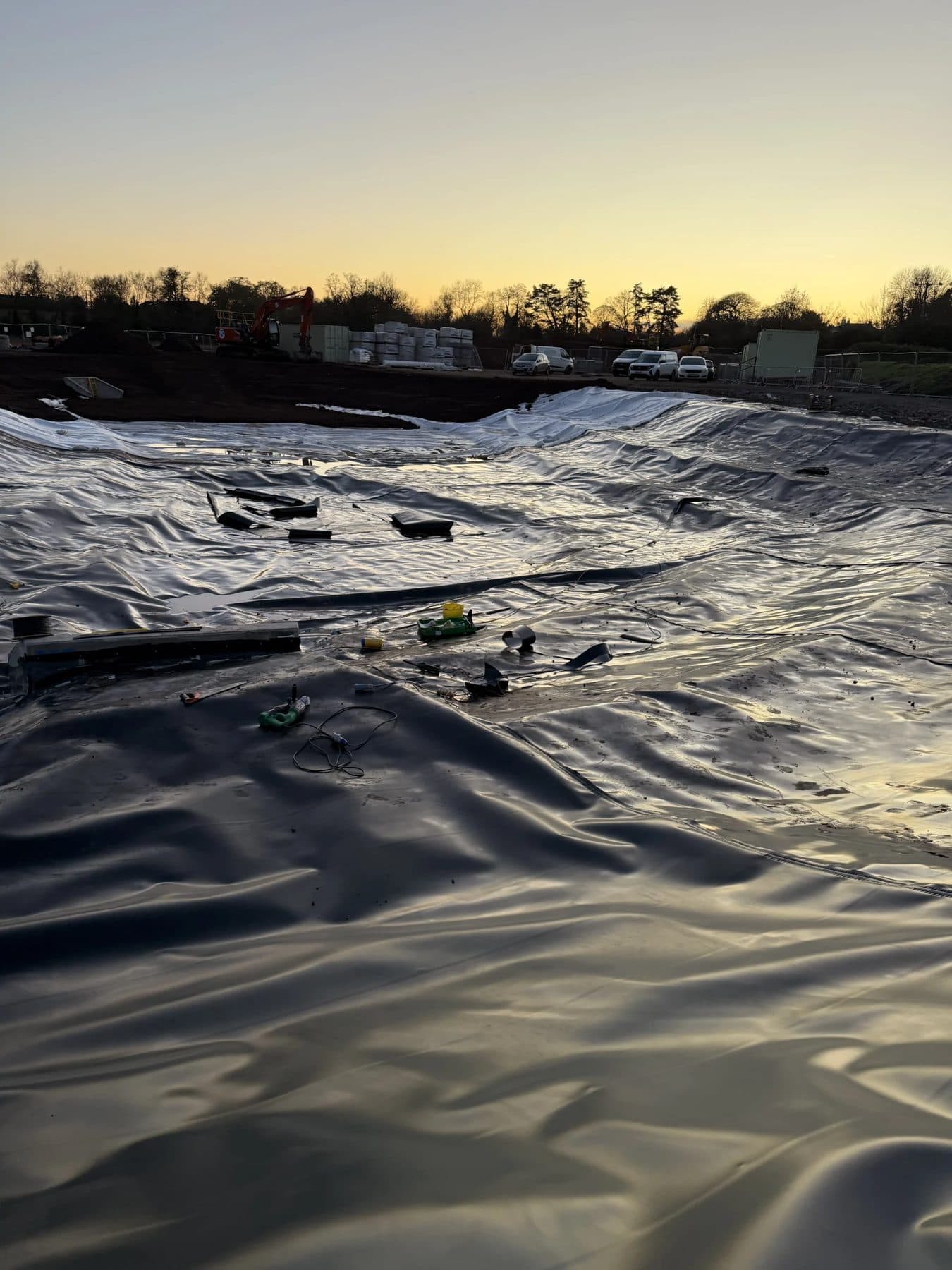
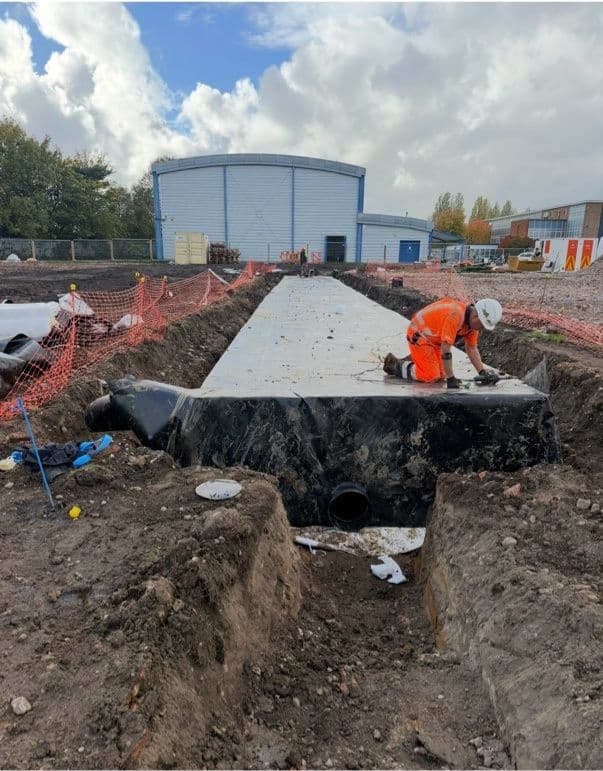
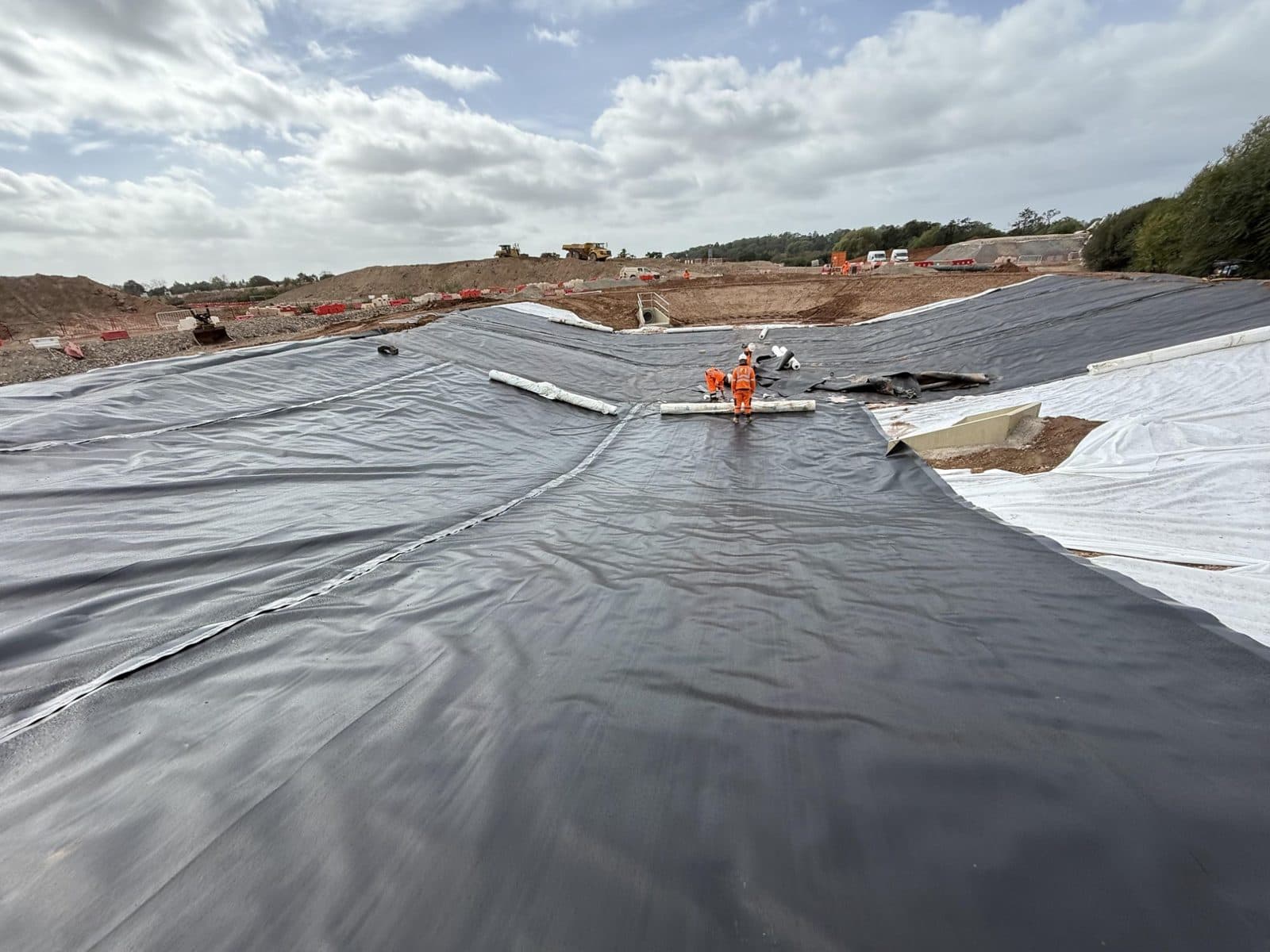
The formation is prepared by others: smooth, compacted, with no flints or rubble standing proud. We look it over and approve it before any clay liner comes off the roll. Each roll is pulled out to overlap its neighbour well beyond the minimum, and the lap gets paste or a scatter of granules before it is closed; a clay liner has no welds at all. Pipes, overflows and the bank top each get a paste surround, and we note every one on the record as it is done.

On a farm pond fed by a field drain, the inlet pipe is usually the trickiest detail, and we spend the time there that it needs.

  • Wildlife and newt ponds on development sites
  • Field pond restoration on farms
  • Landscape and garden lakes on estates
  • Planted SuDS features on new housing

Soil first, then water

Our paperwork tells whoever places the soil how deep it has to be. With that cover on, the pond can be filled. Speed matters: a clay liner soaked before it is weighed down loses its seal, so on remote farm sites we lay in stretches the covering team can keep up with.

GCL Pond Lining Warwickshire

Frequently asked questions

Often, yes. The soil-covered bentonite bed suits planting and wildlife. The ecologist's specification for the pond shape and depth decides whether the profile suits a clay liner.

The bentonite swells without confinement and the liner is damaged. That is why cover follows straight after laying.

No. The laps are dressed with bentonite paste or granules, and swelling clay shuts the joint once soil and water are on it.

Tell us about your project

Quote back within one working day