Skip to content

GCL Pond Lining · West Midlands

GCL pond lining in the West Midlands

The region's canals were made watertight with clay worked by hand. A geosynthetic clay liner puts the same idea into a factory-made roll, and we lay it for ponds and wetlands from Shropshire to Warwickshire where a natural clay bed is wanted.

Where we install
  • Bromsgrove
  • Kidderminster
  • Bridgnorth
  • Shrewsbury
  • Worcester
  • Leamington Spa
  • Rugby
  • Stafford
  • Hereford

Base · Tamworth B78 2BP

Why clay suits so many of the region's ponds

Housing schemes across the region now carry SuDS ponds, wetland benches and biodiversity features that are meant to look and behave like natural water. With a GCL, marginal plants grow straight into a clay floor, without the dark sheet showing at the margins when levels drop.

The bentonite core swells once it is wetted and confined, sealing to a very low permeability and closing small punctures by itself. That forgiveness matters on ponds that will be planted, dredged by hand or visited by livestock and wildlife.
Ground that needs the help

On the Triassic sandstones around Bromsgrove, Kidderminster and Bridgnorth, an unlined pond drains away into the rock. On the Mercia Mudstone of Warwickshire and Worcestershire the clay looks promising, but it can shrink and crack in a dry summer and open leaks along the banks. A GCL gives both a reliable seal at a known thickness.

  • Balancing and wetland ponds on new housing
  • Wildlife and amenity ponds on estates in Shropshire, Herefordshire and Worcestershire
  • Ecological mitigation ponds on infrastructure and development land
  • Relining a farm pond that has started to lose water

When membrane is the better answer

We install welded membranes as well as GCLs, so we can be straight about the limits. A GCL needs a soil cover to push against, which rules out steep banks and exposed edges. The water that fills the pond also needs checking, because some chemistry weakens bentonite over time. Where either is a problem we will recommend a membrane instead.

Ponds that double as part of a drainage scheme deserve a second look too. If the design expects levels to swing hard after every storm, leaving the upper banks dry for long spells, the engineer may prefer a sheet that copes with exposure.

From formation to cover

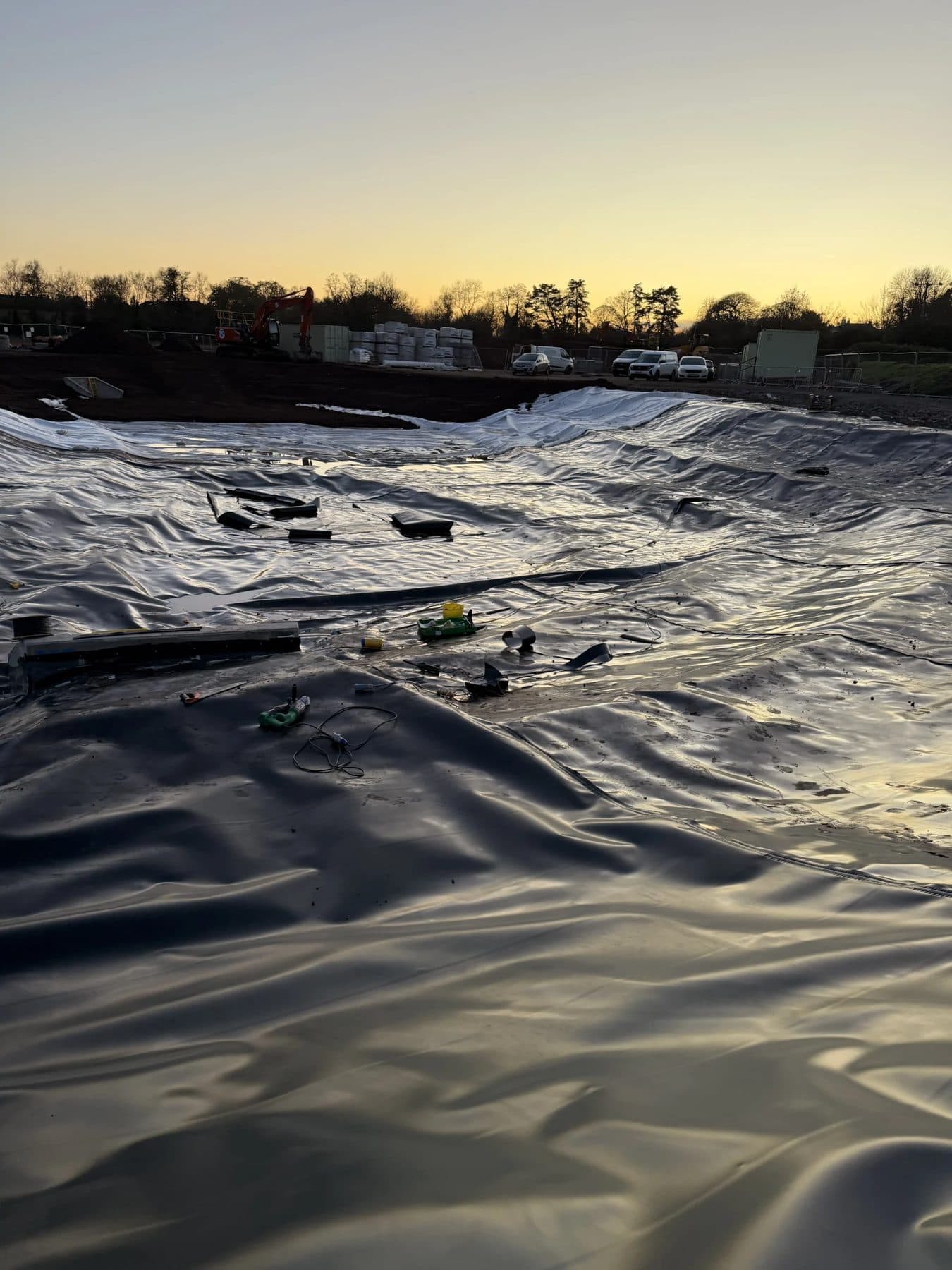
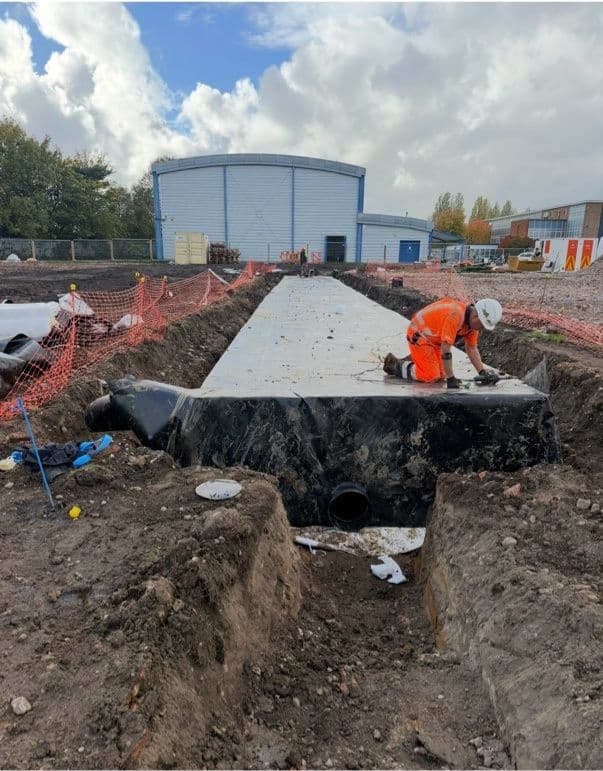
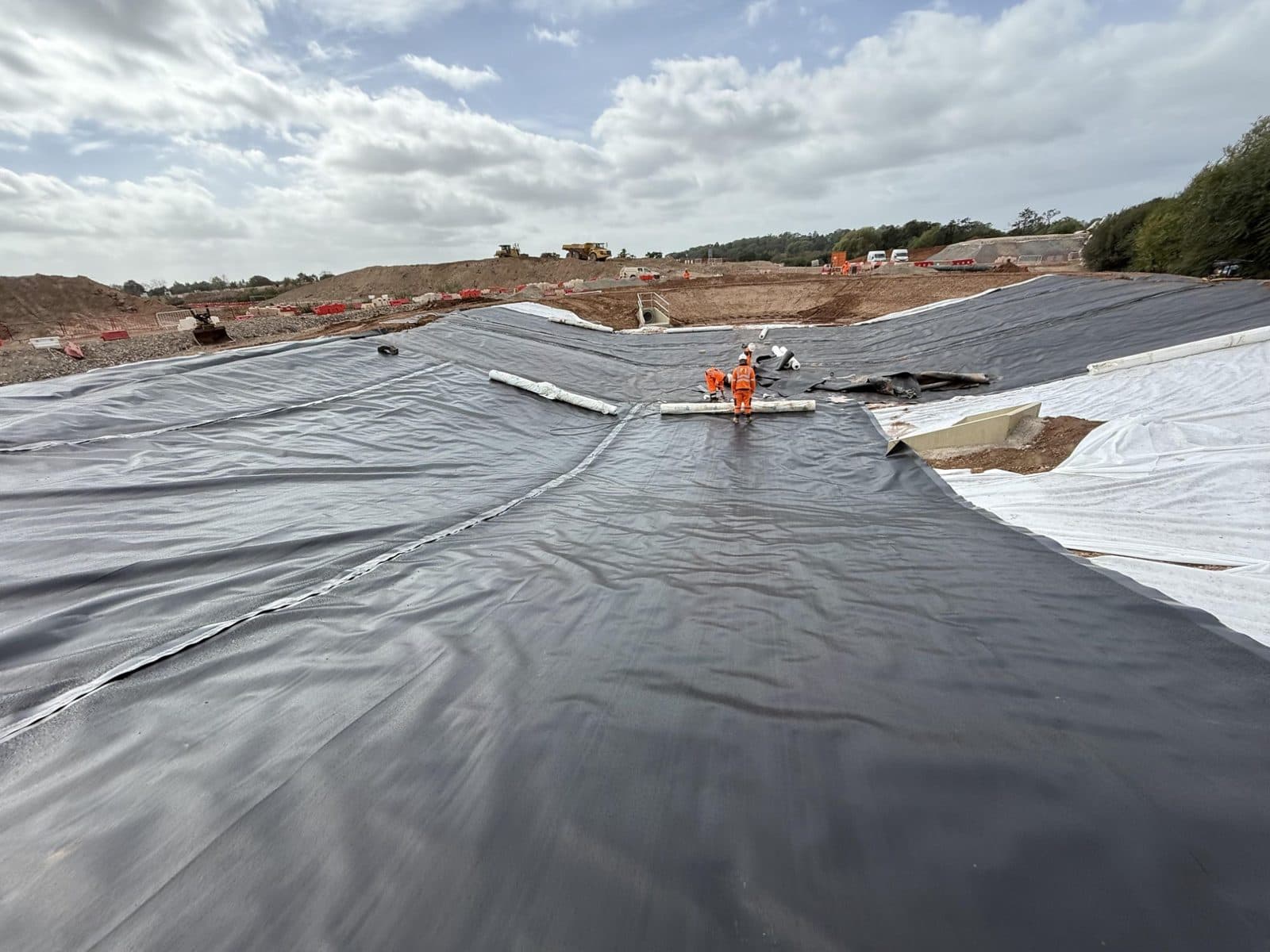
Before laying, we go over the shaped basin your contractor leaves us and approve it in writing. The rolls are then run out so each one laps well onto the last, and every lap, pipe, headwall and edge detail is sealed with bentonite paste or granules and logged on the record sheet.

When we leave, you hold the QA sheets and the minimum soil thickness in writing. Your contractor then covers and hydrates the clay without delay, since a GCL soaked before it is confined will not seal.

On a large housing basin the work is usually phased, so that a section of liner is covered the same day it goes down. That keeps the bentonite dry until it is meant to hydrate, and stops site traffic straying onto unprotected clay.

GCL Pond Lining West Midlands

Frequently asked questions

Often, where the banks are gentle and the design allows a cover layer. The drainage engineer and ecologist set the pond; we lay the liner to their scheme.

No. The joints are overlaps sealed with bentonite paste or granules. Welding applies to our membrane linings, not to clay liners.

Your contractor, after placing the cover soil. We confirm the soil thickness the liner needs before we leave.

Yes. Every county in the region is within reach of our Tamworth base.

Tell us about your project

Quote back within one working day