Skip to content

GCL Pond Lining · West Midlands

GCL pond lining in Wolverhampton

On the sandstone side of Wolverhampton a new pond needs a liner, and for wildlife and parkland ponds a geosynthetic clay liner is often the best fit. It puts back the clay bed the ground lacks, and seals itself if it is nicked.

Where we install
  • Tettenhall
  • Compton
  • Aldersley
  • Pendeford
  • Codsall
  • Perton
  • Penn
  • Wombourne

Base · Tamworth B78 2BP

Making a clay pond on sand

Old pools in sandy country were often puddled: lined by hand with worked clay. A GCL replaces that hand work with a factory-made roll. Sodium bentonite sits between two geotextiles, and once covered and wetted it swells until very little water can pass.

Because the finished pond has a soil bed rather than a visible sheet, GCLs are popular for nature areas, school ponds and the green corridors along the Smestow valley and the canals. Reeds root into the cover, and a small puncture from a root or a tool is closed by the swelling clay.
Before we recommend one

We check that the pond suits a clay liner. It needs gentle side slopes, enough soil cover to confine it, and water it can live with. Ordinary rain and stream water is fine. On former industrial land east of the centre, runoff that has passed through contaminated ground may carry salts or chemicals that weaken the bentonite, and a membrane can be the safer choice there.

A pond with steep or exposed banks, or one that will be drawn right down and left dry, is also better in membrane. We install both, so the advice is about the pond.

School and community ponds

Schools and community groups around the city often want a pond children can learn from: shallow, planted, and safe to stand beside. A GCL suits that well. The margins can be gently graded, the soil cover takes marginal plants straight away, and there is no shiny sheet showing at the edge to be picked at or tripped over. Sites like these usually have narrow access and a short window in the holidays, so deliveries are kept small and the work is fitted into the break.

On site

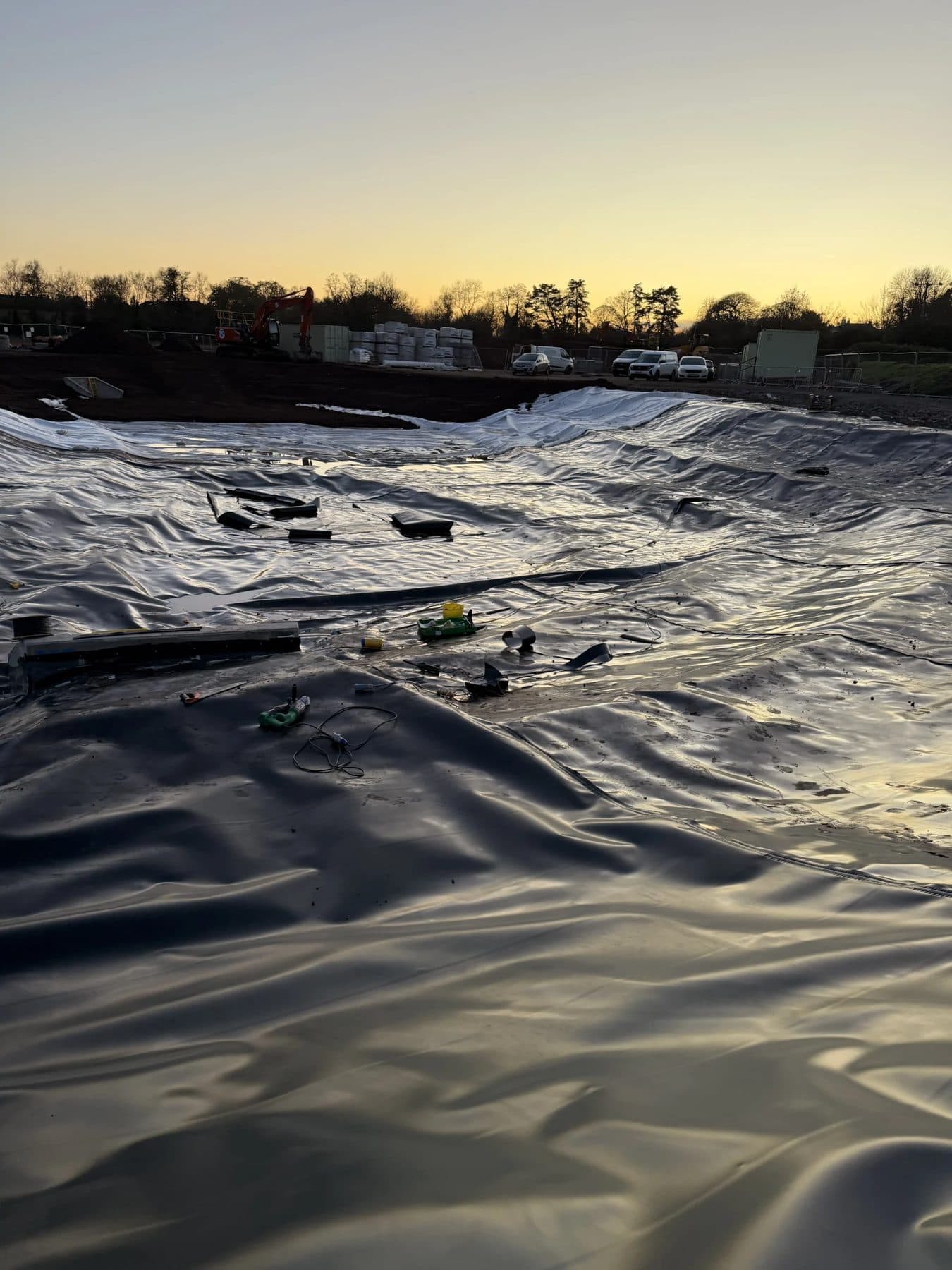
The formation is prepared by your groundworker. We inspect it, looking for stones, roots and soft spots, and approve it before laying, since bentonite cannot make up for a bad surface beneath it.

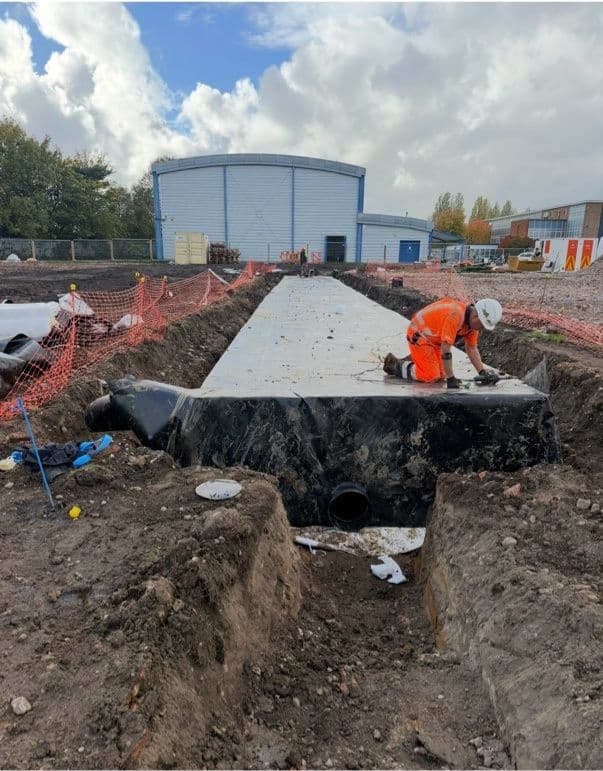
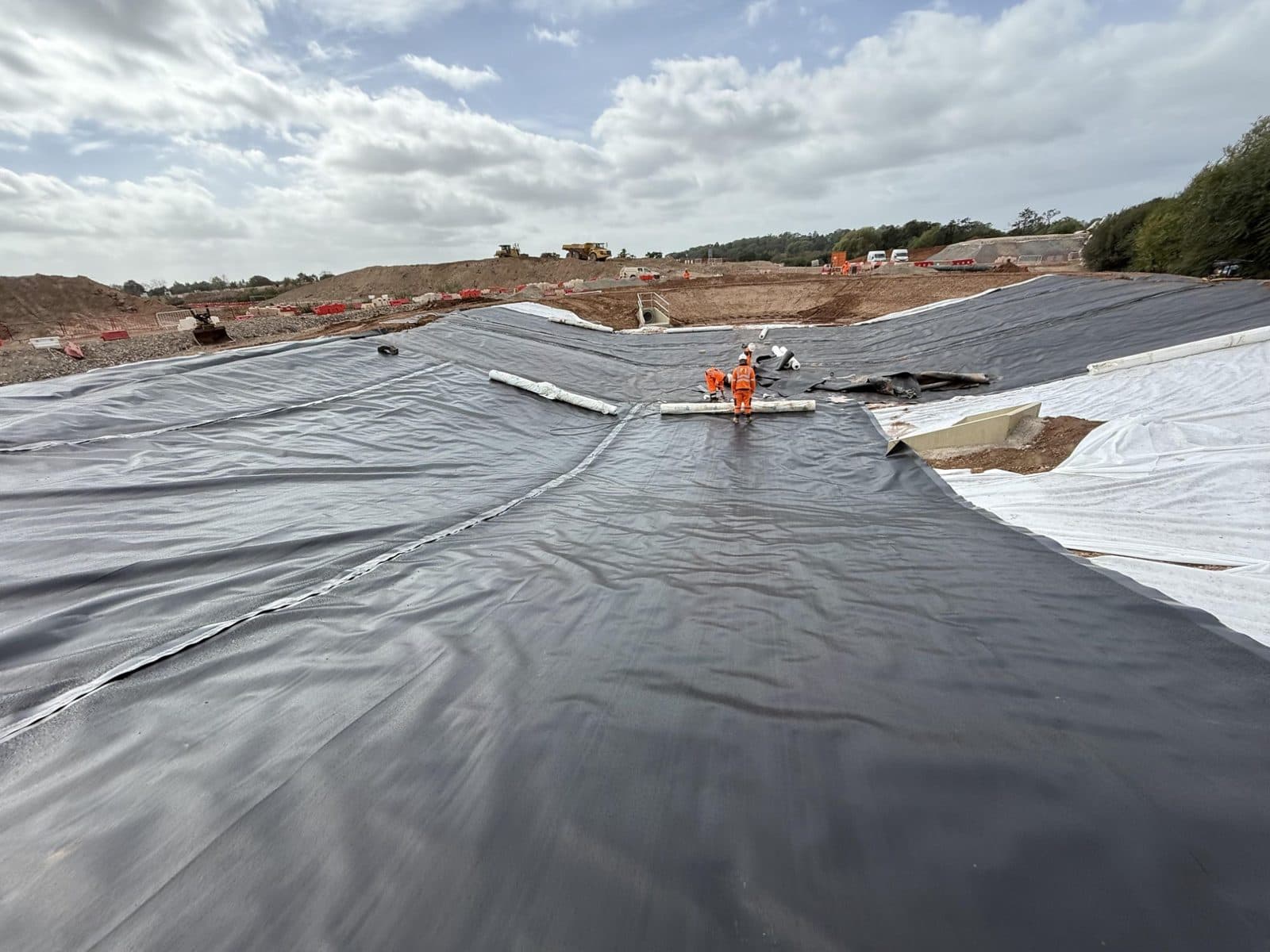
Panels go down with wide overlaps sealed with bentonite paste or granules. Every pipe, outlet and edge is detailed with paste, and we log each lap and detail while we work.

  • Suitability check, including the water feeding the pond
  • Formation inspection and sign-off
  • Overlaps and details sealed with bentonite
  • QA records and the required cover depth at handover

Cover and hydration

Cover soil and hydration are your contractor's, after handover, and ideally the soil goes on the same day. Bentonite that gets wet without confinement swells loose and is lost. We plan our finish so the cover crew can follow straight behind.

GCL Pond Lining Wolverhampton

Frequently asked questions

Yes, once it is confined under its soil cover and hydrated. The bentonite forms the barrier; the sandstone underneath doesn't need to hold anything.

Sometimes. If the water feeding the pond could carry contaminants that affect bentonite, we may recommend a welded membrane instead.

No. Your contractor places the cover and hydrates it after handover. We give the cover depth the product needs and agree the sequence beforehand.

Tell us about your project

Quote back within one working day