Skip to content

Soakaway Tanks · West Midlands

Soakaway crates installed across Warwickshire

Warwickshire is mostly slow-draining mudstone and clay, but not all of it. The gravels on Dunsmore around Rugby, the river terraces of the Avon and the limestone fringe in the far south can take water, and that is where we build crate soakaways to your engineer's design.

Where we install
  • Rugby
  • Dunchurch
  • Kenilworth
  • Stratford-upon-Avon
  • Shipston-on-Stour
  • Long Compton
  • Southam
  • Wellesbourne
  • Alcester

Base · Tamworth B78 2BP

Reading the county's ground

Mercia Mudstone covers much of the north and centre of the county, and the Lias clays take over in the south-east around Southam and the Feldon. Neither drains well, and on most of that ground a percolation test points to attenuation instead. The exceptions are the useful part. Glacial sands and gravels on the Dunsmore plateau, gravel terraces beside the Avon and the Leam, and the oolitic limestone towards the Cotswold edge near Long Compton can all give results good enough for infiltration.

Even within one village the answer can change, so the test results for your plot matter more than the map. Your engineer sizes the soakaway from them, and we install exactly that.
Village plots, barn conversions and estates

Much of our Warwickshire soakaway work is rural and small: a converted barn, a new house in a village, a farm office or workshop. These sites often have the space a soakaway needs to stay clear of buildings and boundaries, as Approved Document H requires, which a town plot may not.

On larger schemes at the edges of Rugby, Kenilworth or Stratford, a crate soakaway may sit under open space or a road, built to the loading class the drawing gives.

  • Single-house and barn conversion soakaways
  • Farm buildings and rural business units
  • Estate soakaways under open space or roads
  • Supply and install, or install only

On site

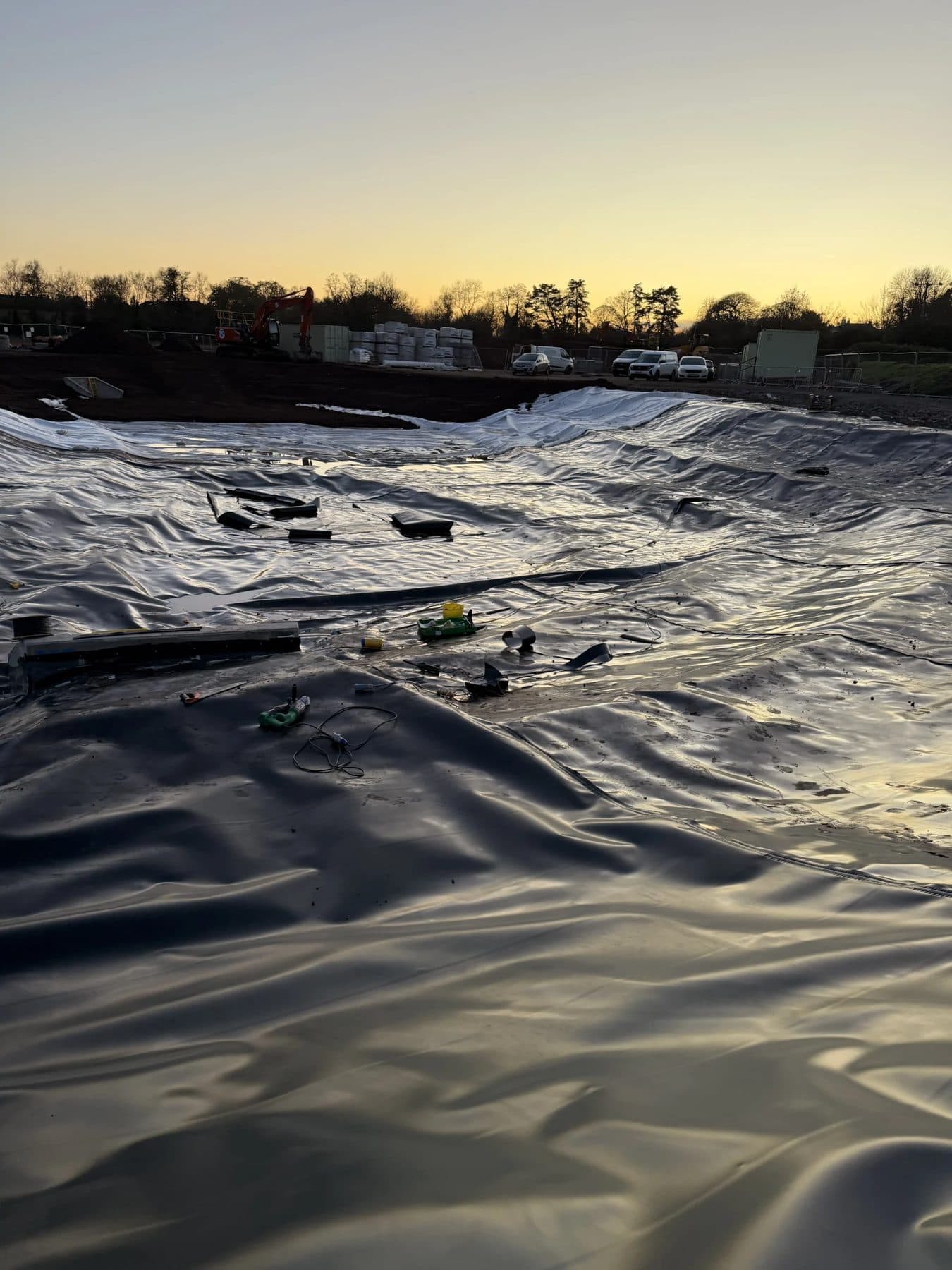
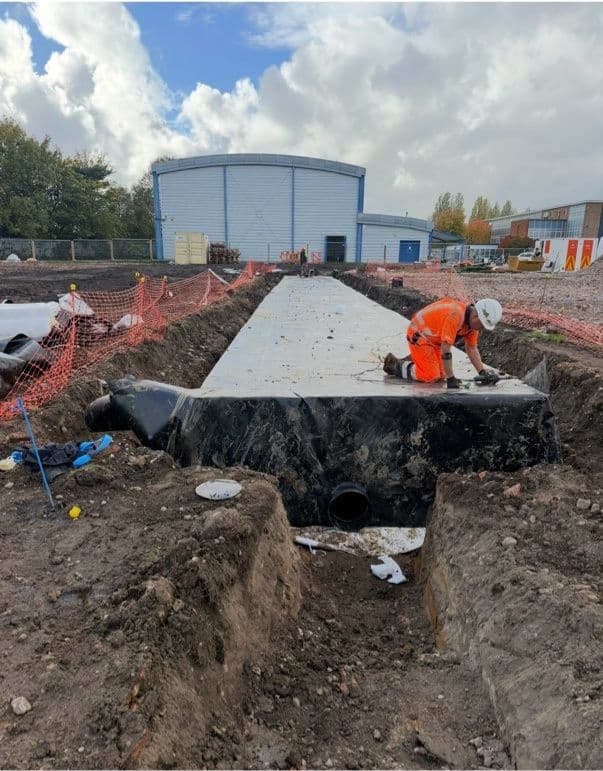
Digging the pit is for your groundworker. When we arrive, we check the floor of it, spread a permeable geotextile across it and up the walls, and build the crate structure inside until it matches the volume drawn. Then the inlet pipe, the catchpit and any filter go on, and the cloth is folded closed over the whole block. Water leaves through the wrap; fines stay out.

A walk round and a written inspection follow, and the pit is handed back for your contractor to fill.

Getting materials down a lane

Crates are light but bulky, and a rural Warwickshire site can sit at the end of a single-track lane. We agree the vehicle and the drop point with you beforehand, so the load arrives where it can be moved by hand or with site plant to the pit.

Farmyards bring their own constraints: livestock moving through, a grain store that needs lorry access, a muddy track after rain. We fit around those and keep our footprint small for the day or two the build takes.

Soakaway Installation Warwickshire

Frequently asked questions

Only a percolation test can say. On the county's mudstone and Lias clay it often won't; on gravel or limestone it often will. Your engineer arranges the test and we build to the result.

No. A soakaway is wrapped in permeable geotextile so water can leave the crates and soak away. Membrane is for sealed attenuation tanks.

The crates need no maintenance. The catchpit or filter upstream does: empty it periodically so silt never reaches the soakaway.

Yes. We plan access and timing around the farm, and the build itself is usually short once the pit is ready.

Tell us about your project

Quote back within one working day