Skip to content

GCL Pond Lining · West Midlands

GCL pond lining in Staffordshire

On Staffordshire's habitat and amenity schemes, a bentonite clay mat lets a pond keep an earthy bed that closes small holes by itself. We confirm it suits the site, lay it with bentonite-sealed laps and hand over for your cover soil.

Where we install
  • Cannock
  • Rugeley
  • Hednesford
  • Stafford
  • Lichfield
  • Burton upon Trent
  • Alrewas
  • Leek

Base · Tamworth B78 2BP

Sandy heath and restored gravel

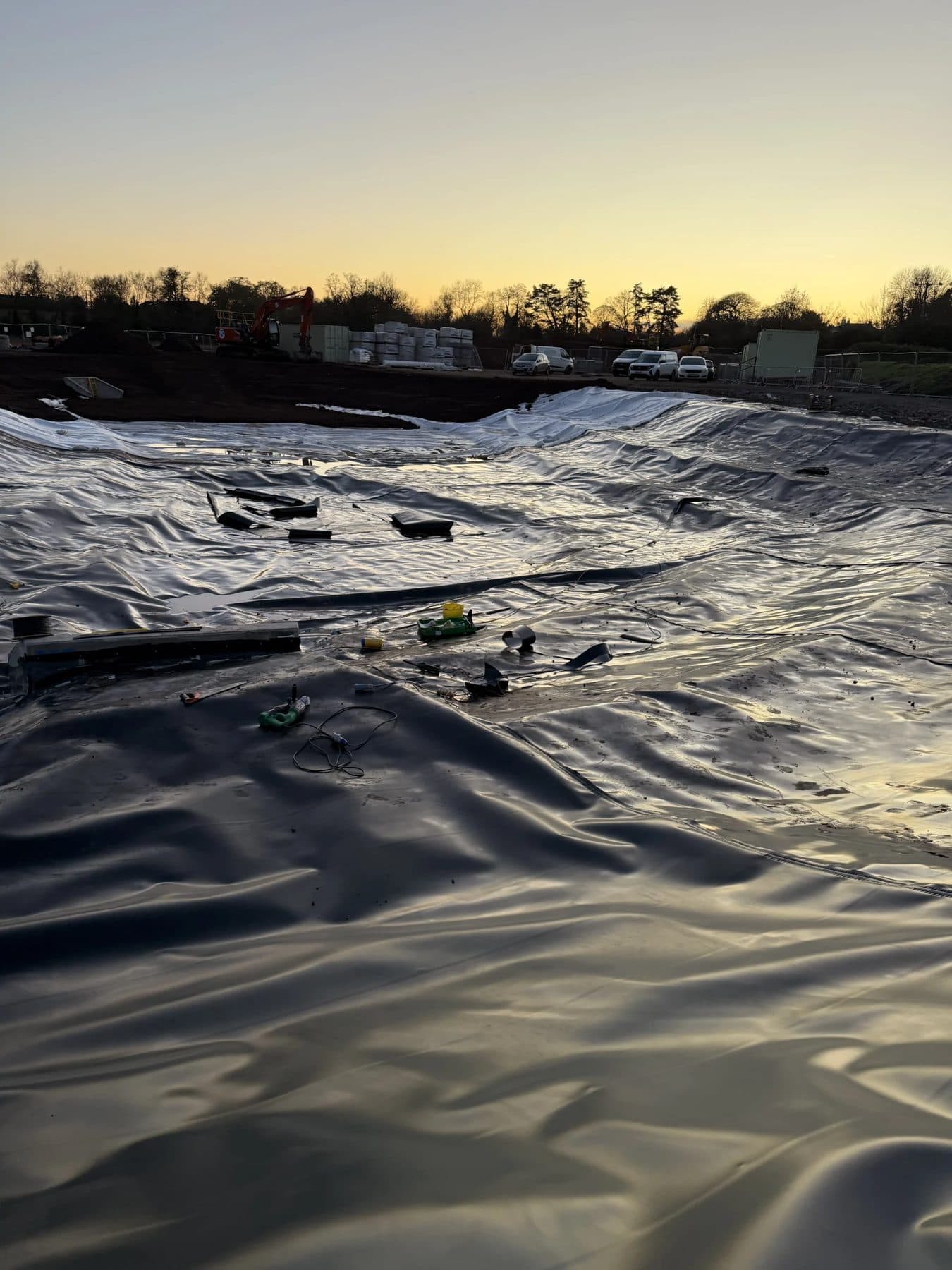
Water won't sit for long on the sands and pebble beds around Cannock Chase, and the restored gravel workings of the Trent valley drain just as freely. Habitat schemes in both places often want open water with a natural margin, and a GCL gives that: a layer of sodium bentonite between geotextiles that swells, once covered and wetted, into a barrier of very low permeability.

On new housing around Stafford, Lichfield and Burton, landscape-led SuDS ponds suit a GCL too, where the design has soft slopes and a planted edge rather than exposed sheet.

Wetland creation on worked-out quarry land in the Trent valley often happens in stages as extraction finishes, and we can come back as each new pond or scrape is shaped.
Is clay right for this pond?

We check suitability before recommending a GCL. It needs confinement under soil or water, so steep or exposed banks favour membrane. Water chemistry matters as well: ponds fed from the limestone of the Moorlands, or taking runoff from roads and yards, get a closer look at what the water carries. If clay is the wrong answer, we install a welded membrane instead.

Use matters as well. Cattle drinking at the edge, or anglers and walkers on the margin, can scuff the cover layer, and the cover depth in the design has to allow for that.

Our installation sequence

The liner depends on a smooth, compacted surface without sharp protrusions, so we sign the formation off before anything is laid on it.

  • Walk and approve the trimmed bed before any roll is opened
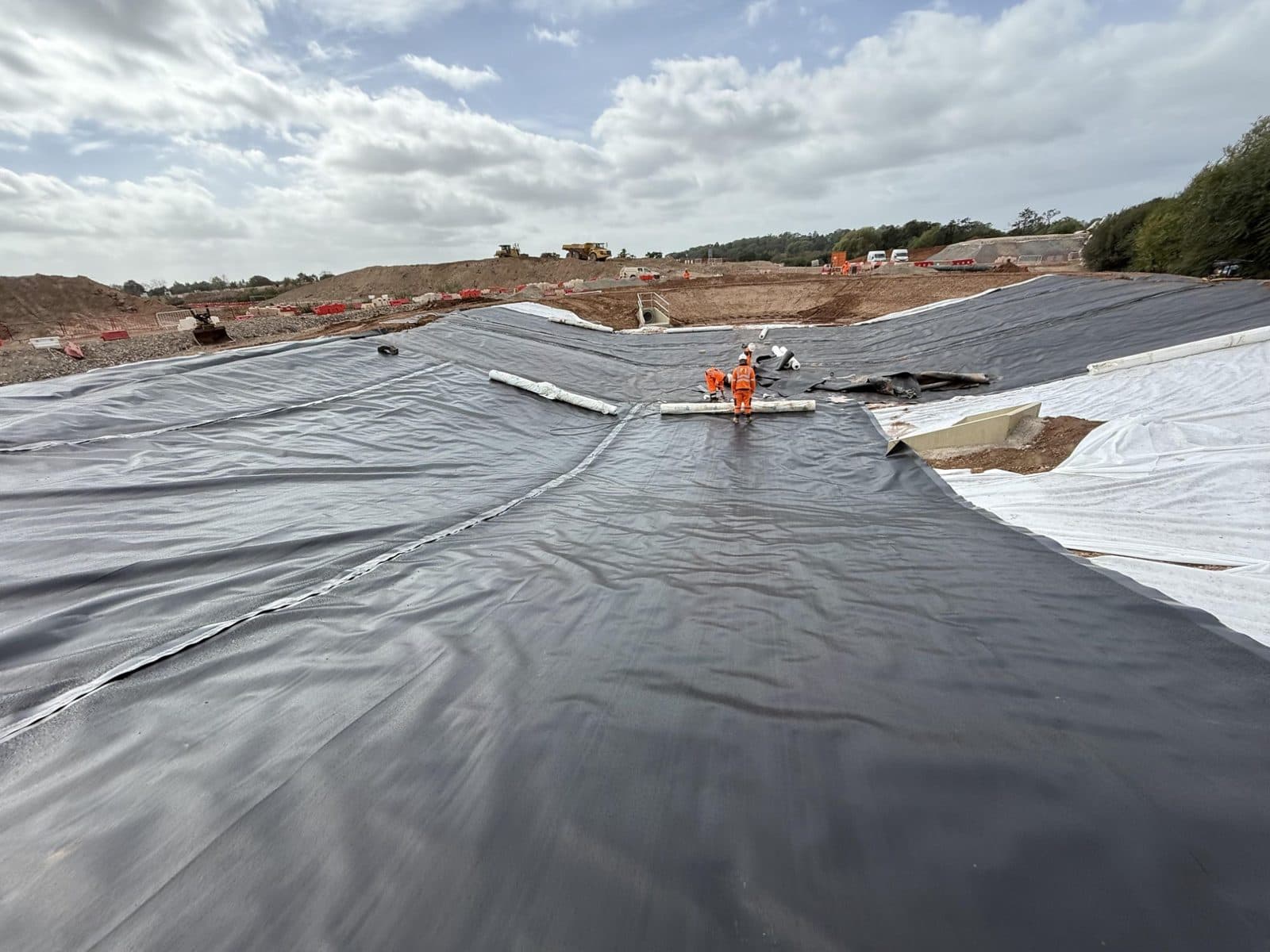
  • Deploy rolls with generous laps
  • Seal every lap with bentonite paste or granules
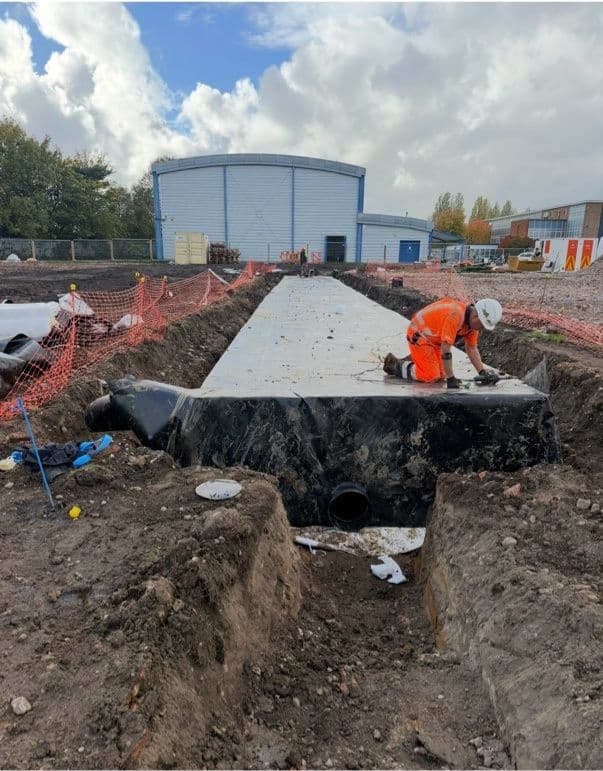
  • Detail pipes, edges and structures in bentonite
  • Record each lap and detail as we go
  • Hand over with the QA records and required cover depth

After handover

Your contractor places the confinement layer and hydrates the liner, and that needs to happen quickly. Rain on bare bentonite lets it swell with nothing to push against, and a mat spoilt that way has to come out. We plan our finish date with you so cover material and plant are ready when we step off.

Small punctures later on, from roots or burrowing animals on a heathland site, are closed by the swelling clay. It is a safeguard, not permission to track plant over the liner.

GCL Pond Lining Staffordshire

Frequently asked questions

Often, if the profile is gentle and the liner can be covered. The sandy ground won't hold water by itself, and the clay bed gives the pond a natural finish.

Yes, on a properly prepared formation. Gravel can be coarse and sharp, so the surface has to be trimmed and checked before the rolls go down.

No. Our part ends with the mats down and the records signed; the soil layer, and wetting it, belong to your contractor.

The main ones: NAUE's Bentofix, CETCO's Bentomat and Solmax liners, along with GCLs made by Geosyn and Wrekin. We follow whichever product the specification names.

Tell us about your project

Quote back within one working day