Skip to content

Pond Lining · West Midlands

Pond and reservoir lining in Warwickshire

Warwickshire's ponds range from irrigation reservoirs on arable farms to lakes on country estates and balancing basins on the new estates round Rugby, Nuneaton and Stratford. We advise on the sheet, weld it on site and leave you with the test records.

Where we install
  • Rugby
  • Nuneaton
  • Stratford-upon-Avon
  • Warwick
  • Kineton
  • Henley-in-Arden
  • Atherstone
  • Polesworth
  • Bidford-on-Avon

Base · Tamworth B78 2BP

Why a Warwickshire pond needs a liner at all

A lot of the county is clay, and people reasonably ask why a pond dug into clay needs lining. The answer is that natural clay is seldom uniform. Sand lenses, old field drains, root channels and the cracks that open in a dry summer all let water out, and a pond that held in its first winter can drop badly by August. Where the ground is gravel or limestone, as it is in parts of the Avon valley and the south, there is nothing to hold the water at all.

Lay a welded sheet over a cushioning underlay and the ground stops being the thing that decides whether the pond holds.
The ponds we line here

On farms, reservoirs filled in winter from licensed abstraction or roof runoff store water for summer irrigation. On estates and country houses, ornamental lakes and fishing pools need relining after decades of leaks. On housing at the edges of the market towns, the drainage design often includes an open basin as well as a tank, and a lined basin keeps its designed volume and its permanent water level.

  • Farm irrigation reservoirs
  • Estate lakes and fishing pools
  • Balancing basins and SuDS ponds on new housing
  • Wildlife ponds for biodiversity schemes

Membrane choices

For a large reservoir with long exposed banks, HDPE is usually the answer: tough, UV-resistant and welded with wedge machines. LLDPE follows an uneven profile better, EPDM suits small wildlife and ornamental ponds, and PP is good where there is a lot of detailing. A GCL may suit a confined, gently sloped pond.

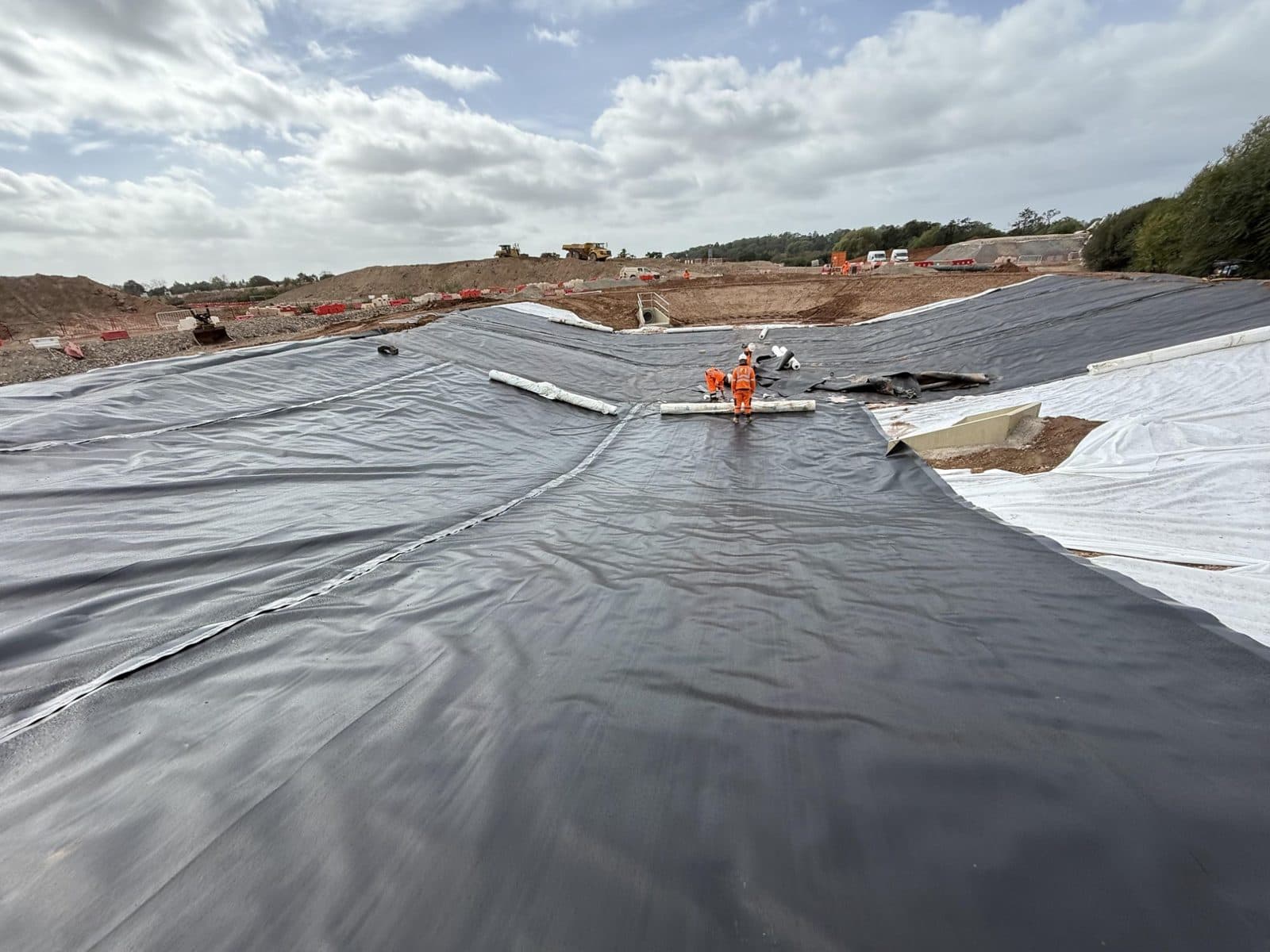
Two regional jobs show the scale. Over the border in Worcestershire we lined a large attenuation basin for a new housing scheme in 1mm HDPE, and the HS2 pond we lined near Coventry used the same grade, welded and tested seam by seam.

How the work runs

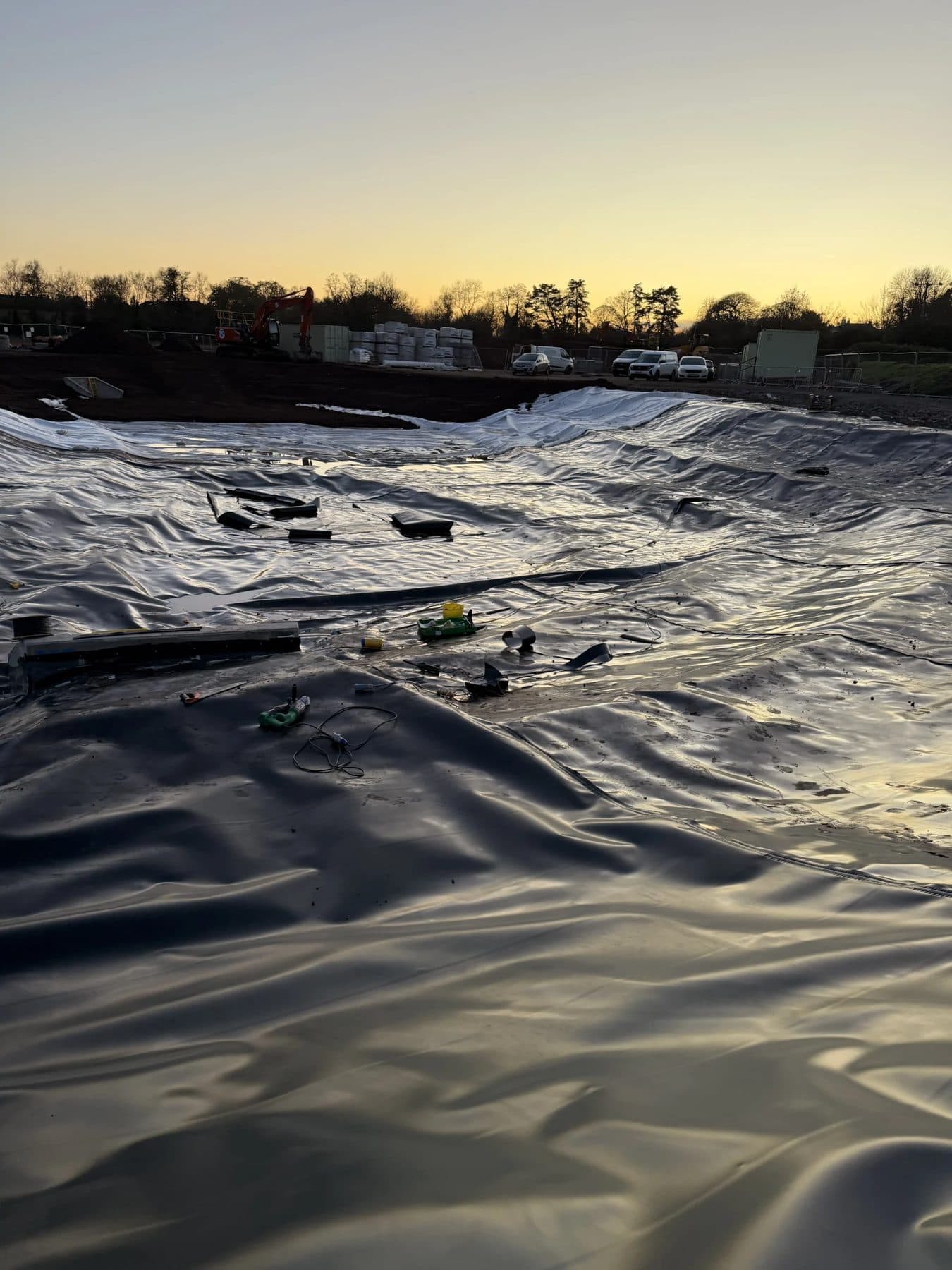
Your earthworks contractor forms the pond and the anchor trench. We go over that formation, unroll the geotextile cushion, then the liner panels, which are fused together with a hot wedge and, at corners and pipes, an extrusion gun. Edges drop into the trench at the crest.

Before the welders start properly, a sample seam is made and peeled to prove the settings, and its result goes on the record sheet. Every joint and detail is walked and checked before we leave, and the sheet goes to you with the rest of the paperwork.

Pond Lining Warwickshire

Frequently asked questions

In most cases. After the lake is emptied we examine the old bed to find where the water goes, and once the formation has been repaired by others, a fresh underlay and a welded membrane go in.

Most often HDPE, for its toughness and UV resistance on exposed banks. The size, slopes and use settle it, and we recommend at survey.

Yes. Once laid, these sheets don't leach into the water, and anglers and conservation groups use them in stocked and wildlife ponds.

No. Your earthworks contractor excavates and shapes it and cuts the anchor trench. We check it, then line and weld.

Tell us about your project

Quote back within one working day