Skip to content

Slurry Lagoons · West Midlands

Slurry lagoon lining in Warwickshire

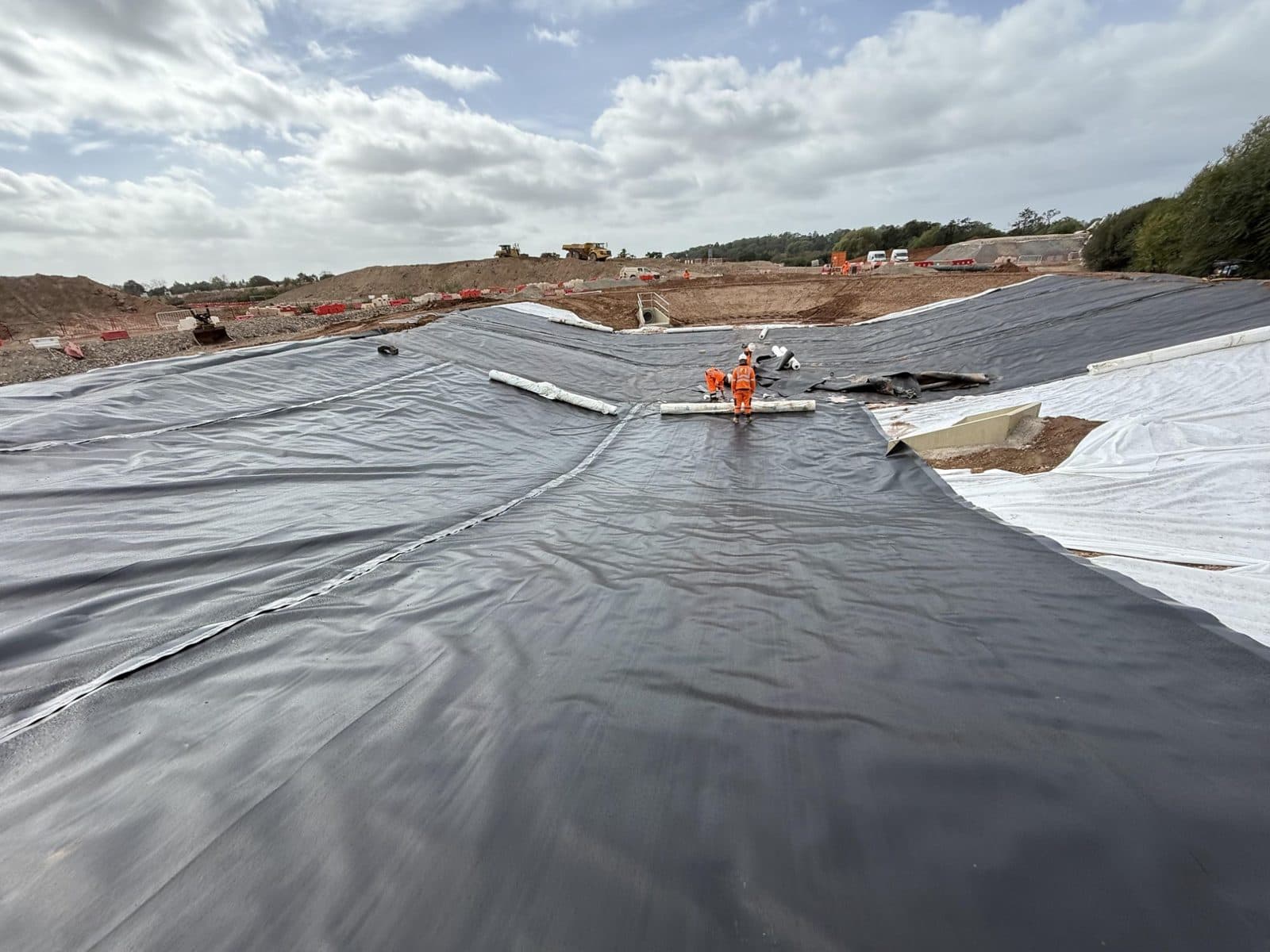
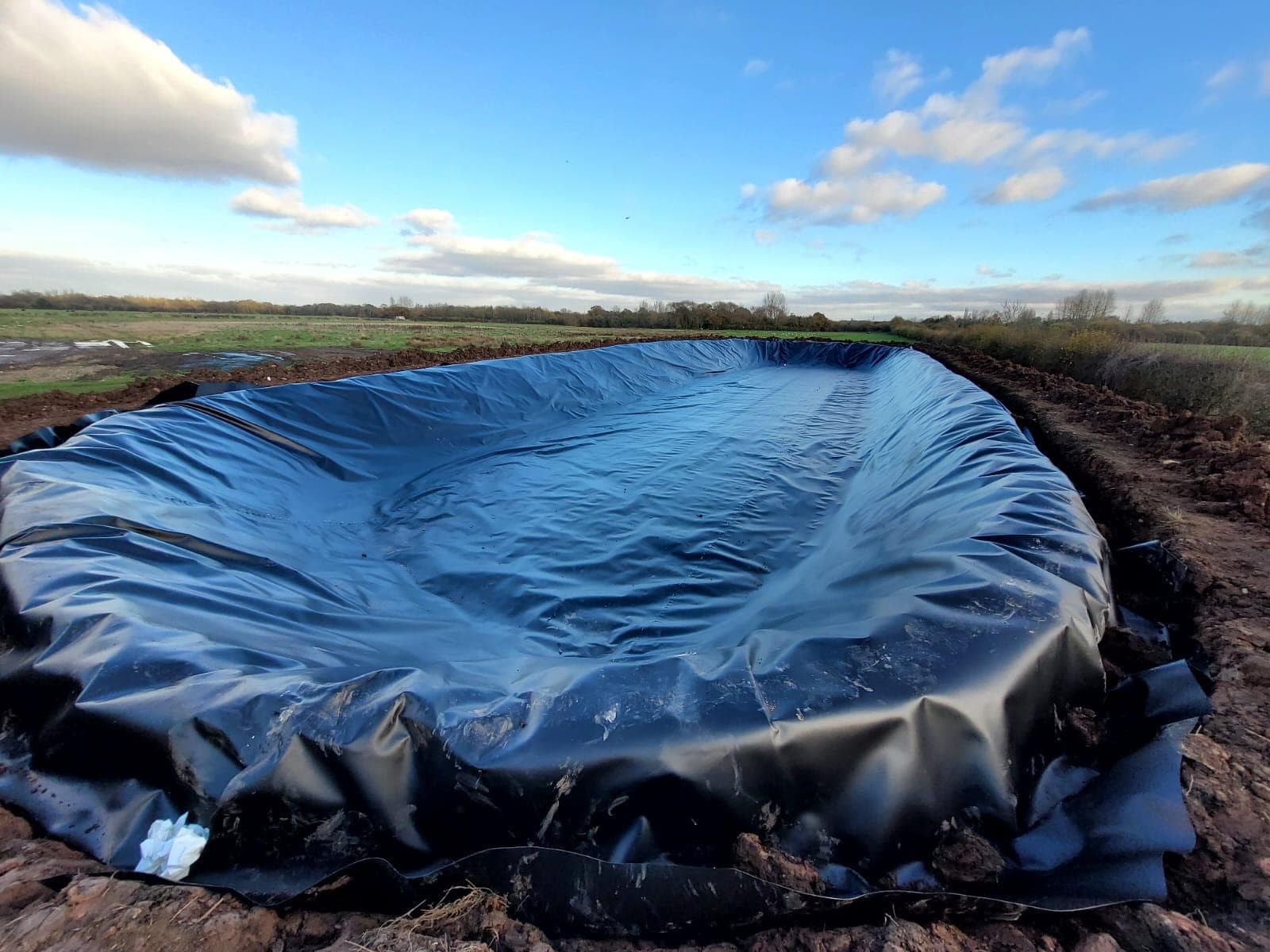
One of our most recent lagoons is in Warwickshire: a 2,000m² farm store at Bodymoor Heath in the Tame valley, lined in welded LLDPE between two layers of fleece. Across the county we line stores for slurry, digestate and dirty yard water.

Where we install
  • Bodymoor Heath
  • Kingsbury
  • Atherstone
  • Coleshill
  • Henley-in-Arden
  • Kineton
  • Shipston-on-Stour
  • Southam
  • Brinklow

Base · Tamworth B78 2BP

Bodymoor Heath

The farmer needed a lot of slurry storage and chose a lined lagoon because it cost less to put in than a tank holding the same. A 300g/m² protection fleece went over the prepared formation, the LLDPE membrane was deployed and welded into one sealed sheet, and a second fleece covered it to guard against stones and cattle.

Wet weather arrived mid-job. Rather than weld in the rain, we resequenced the work, kept to the programme, and made final checks across the whole lining before handover. The lagoon is now in use.
Livestock farms and AD across the county

Dairy and beef units in the Arden country and the grassland of the south still need slurry storage, and older earth-banked stores are coming up for relining. Anaerobic digestion has added digestate lagoons, which often call for a heavier build-up. The river network matters here too: the Avon, the Leam, the Stour and the Tame all collect drainage from farmland, so a lagoon that leaks is a pollution risk as well as lost storage.

Ground conditions vary from farm to farm. Lagoons cut into Mercia Mudstone or Lias clay have fine-grained banks that take a liner well once trimmed; those dug into the Tame and Avon gravels have stony faces, which is why a heavy fleece under the membrane matters so much there.

  • New slurry lagoons on dairy and beef units
  • Relining existing earth-banked stores
  • Digestate lagoons for AD plants
  • Dirty-water lagoons for yard runoff

The build-up, layer by layer

The layers are agreed on paper before a roll is ordered. A plain store for cattle slurry might be fleece and one sheet, as at Bodymoor Heath. A digestate lagoon or a high-risk site can go to two sheets: the lower one welded first, a drainage net over it leading to an inspection sump, the upper one welded over that, and sometimes a cover floating on the contents.

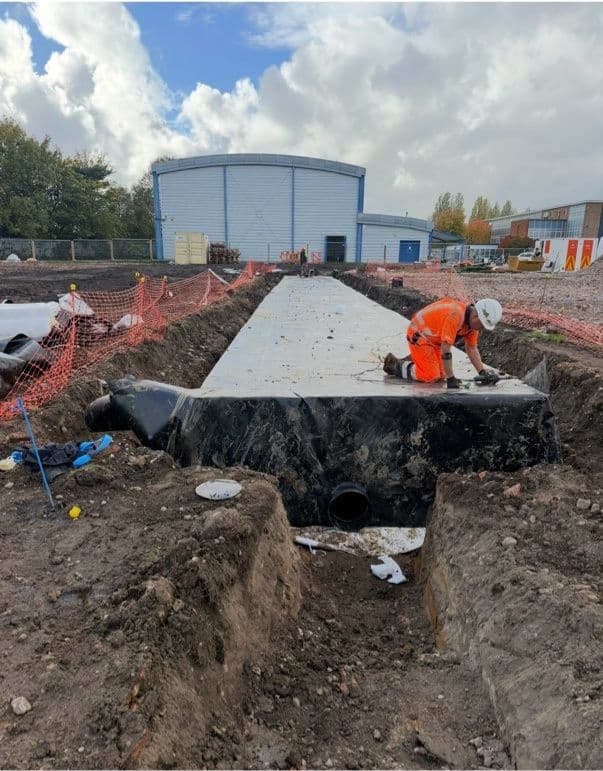
Every pipe that passes through the liner, from the reception pit inlet to the agitator point and the depth board, is booted and welded, and a sample weld is peel-tested and written up on the first morning.

Earthworks by you, lining by us

Shaping the banks and floor, and digging the trenches the liner edge drops into, are jobs for your earthworks contractor. Before our delivery, we survey the crest line and the trench against the liner drawings, because a prefabricated sheet has to fit the hole. When we finish, you are given the compliance file: products used, weld results and an as-built plan, which is what an inspector checks under SSAFO and the storage rules your consultant works to.

Slurry Lagoon Lining Warwickshire

Frequently asked questions

Welded HDPE and LLDPE systems are built for decades in contact with slurry. The liner generally outlasts the pumps and fittings around it.

Some permits insist on one, digestate stores in particular, and your consultant will confirm. When the design includes it, the drainage net goes between the lower and upper sheets.

At Bodymoor Heath the upper fleece protects the membrane from stones and livestock. Whether a lagoon needs one depends on its use and the design.

Tell us about your project

Quote back within one working day