Skip to content

Soakaway Tanks · West Midlands

Soakaway installation in Worcestershire

In the north of Worcestershire, the sandstone under Bromsgrove, Kidderminster and Stourport often drains well enough for a crate soakaway; across the mudstone vales it rarely does. If your plot's percolation figures come back favourable, we build the crates and wrap to the engineer's layout.

Where we install
  • Bromsgrove
  • Kidderminster
  • Stourport-on-Severn
  • Bewdley
  • Hagley
  • Hartlebury
  • Droitwich Spa
  • Tenbury Wells
  • Wythall

Base · Tamworth B78 2BP

Sandstone in the north, clay in the vales

Worcestershire's ground divides more sharply than most counties. A band of Triassic sandstone runs from the Lickey Hills down through Bromsgrove and out towards Kidderminster, Hartlebury and Stourport, and roof water on that ground can often be returned to the rock a few metres from the downpipe. South and east of Worcester, the red Mercia Mudstone and the Lias clays of the Vale of Evesham keep water at the surface, and a soakaway dug into them tends to fill and stay full.

The river terraces of the Severn and the Avon make a third case: gravels that drain freely but sit over groundwater that can rise near the surface in a wet winter. Which of these a plot is on, and whether crates suit it, is settled by percolation results and your engineer's design rather than by us. We build what those numbers support.
Where crate soakaways get built here

Approved Document H puts infiltration first where the ground allows it, so most of our soakaway work in the county comes from plots on the better-draining ground or with no sewer close by. That means single houses and barn conversions, small village schemes, farm buildings, and extensions to industrial units around Kidderminster and Bromsgrove.

  • Self-build and barn conversion plots on the sandstone
  • Small housing schemes on the edge of Bromsgrove, Hagley and Bewdley
  • Roof and yard drainage for farm buildings in the Wyre Forest district
  • Trafficked soakaways under parking at business units

Our part of the job

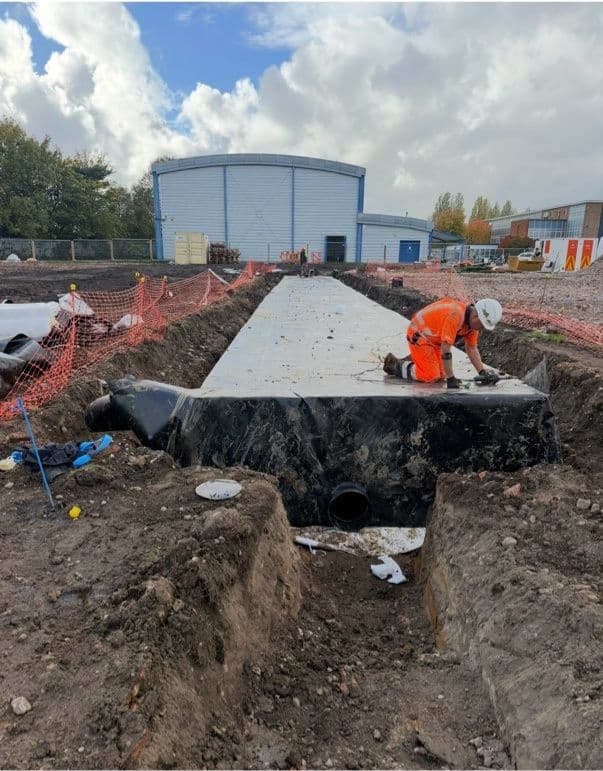
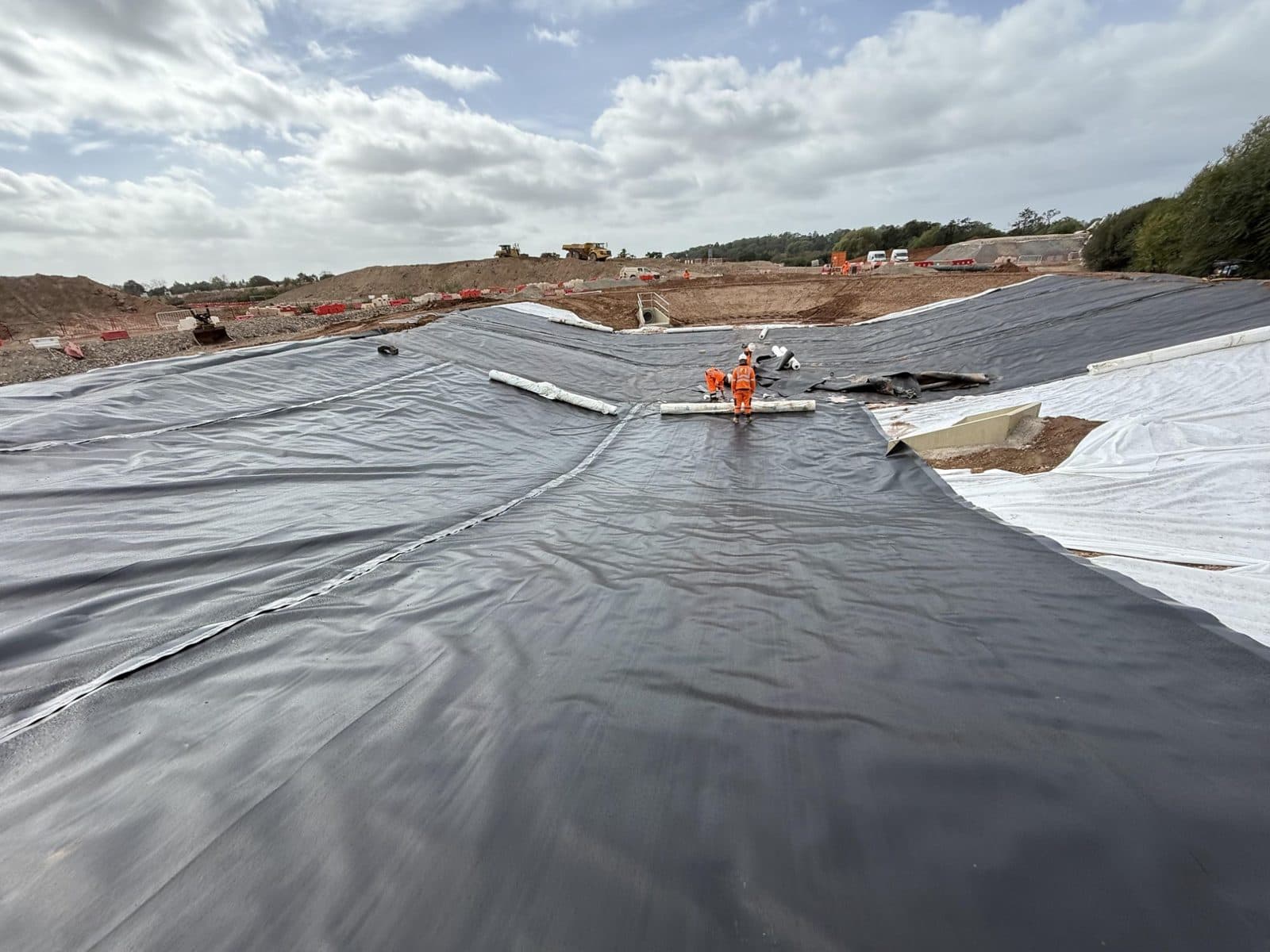
Your groundworker excavates the pit and trims it level; we don't dig. On arrival we check that formation, then wrap the pit in a permeable geotextile: water passes outwards through it, but the red sand around it stays out of the crates. The crates are assembled inside the wrap to the volume on the drawing.

We make the inlet and silt management connections the design calls for, whether catchpits or filters, and fold the geotextile closed over the top. Your contractor then gets a closed, wrapped structure to backfill, and you get our signed inspection sheets and handover file to pass on to building control.

Keeping a sandstone soakaway working

Sandy ground that drains well also sheds fine sand into anything left open to it. So on these plots the catchpit ahead of the soakaway earns its keep, catching grit off roofs and drives before it can reach the void. Lift its cover and empty it every so often; the crate structure underneath asks for nothing.

Soakaway Installation Worcestershire

Frequently asked questions

On the mudstone and Lias clays common around both, infiltration is often too slow, and your engineer will usually turn to attenuation with a controlled outfall. Only percolation results from the plot can settle it, and we build whichever system they point to.

Not automatically. The sandstone holds an important aquifer, so the engineer has to weigh groundwater levels, distances from foundations and any protection rules for the water underneath. If the design confirms a soakaway, we install it.

No. Your engineer or designer organises the testing and works out the size from it. Our starting point is the drawing that comes out of that.

All of it, from Hagley and Wythall in the north to Broadway and Tenbury Wells. It is an easy run down the motorway from Tamworth.

Tell us about your project

Quote back within one working day