Ground conditions change sharply across the region. The Triassic sandstones under parts of Birmingham, Bromsgrove, Kidderminster and Stourbridge often drain well. The Mercia Mudstone that covers much of Warwickshire, Worcestershire and the eastern side of Birmingham, and the Coal Measures clays of the Black Country, often don't. Two plots a few miles apart can need different systems.
Infiltration sits near the top of the drainage hierarchy in Building Regulations Approved Document H and in the 2025 national SuDS standards, so where the ground allows it, a soakaway is usually the first thing the engineer tests for.
A soakaway sized without a percolation test is a guess. Your engineer arranges the test, or it is done within the site investigation, and the design follows from it: the volume, the depth, and the separation from buildings, boundaries and groundwater. We build to those results.
If the figures look marginal, we say so before your groundworker digs. Installing a soakaway that can't drain helps nobody, and on poor ground the engineer will usually move to attenuation with a controlled discharge instead.
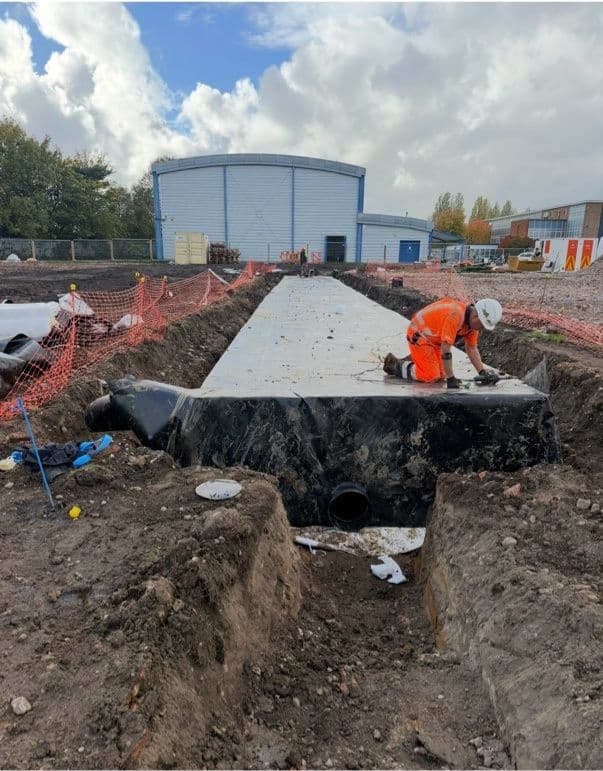
Digging isn't part of our job. The pit is excavated to the design by your groundworker, and your contractor backfills after handover. Between those two points the soakaway is ours:
- Design, depth and sizing confirmed with you before the excavation starts.
- Formation checked so the crate structure sits true.
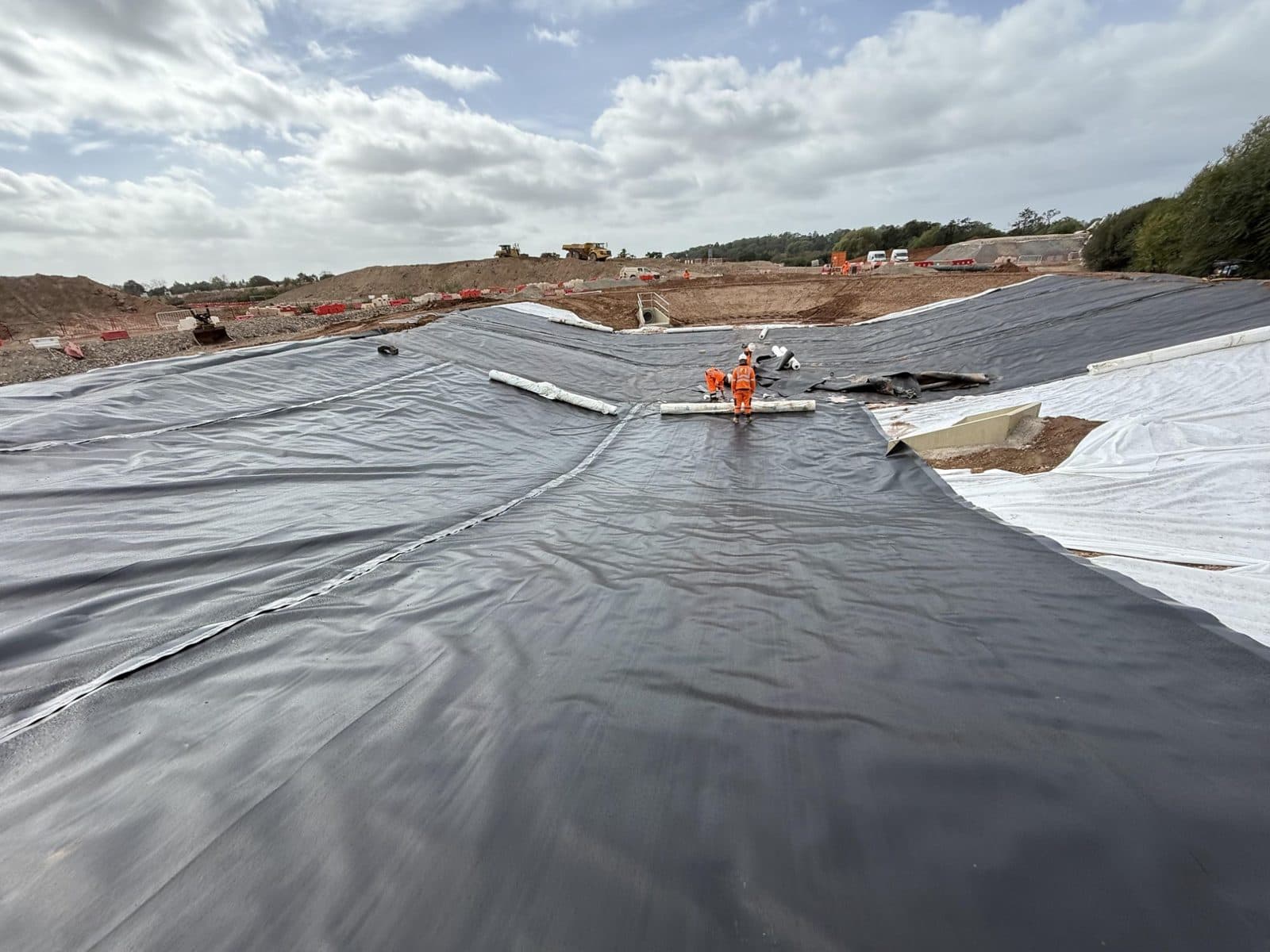
- A permeable geotextile wrap laid out to keep fines out while letting water through.
- Crates assembled inside the wrap to the designed volume and loading.
- Inlets and silt management, catchpits or filters as designed, connected.
- The wrap closed over the structure and the soakaway inspected and documented.
A rubble-filled soakaway stores water only in the gaps between the stones, so it needs a much bigger hole for the same storage, and it can't be inspected once it silts up. A crate structure is almost all void, which keeps the dig smaller, and the crates themselves need no maintenance as long as the silt management upstream is looked after.
On house plots that usually means a compact soakaway taking roof and driveway water. On commercial yards and car parks it means larger, trafficked crate structures sited to suit the access routes.
Silt is what shortens a soakaway's life. Catchpits and filters upstream of the crates should be inspected and emptied periodically so fines never reach the structure. We connect them as the design shows and hand over the details, so whoever looks after the site knows where they are and what they do.
The crates and geotextile can come from us to the design, or we fit what you have bought through your own merchant. Either way, the soakaway is built in step with your groundworks: we agree the formation date with your groundworker, build and close the structure, and leave the pit ready for backfill the same visit wherever the size allows.