Skip to content

Pond Lining · West Midlands

Pond liner installation in the West Midlands

We line irrigation reservoirs, wildlife and amenity ponds and balancing ponds across the West Midlands. The liner is chosen for the pond, and every seam is welded and tested on site.

Where we install
  • Worcester
  • Evesham
  • Pershore
  • Hereford
  • Ludlow
  • Shrewsbury
  • Stratford-upon-Avon
  • Kenilworth
  • Coventry

Base · Tamworth B78 2BP

Ponds we line across the region

The West Midlands asks for a wide range of ponds. Growers in the Vale of Evesham and across Worcestershire and Herefordshire need irrigation reservoirs that hold water through a dry summer. Estates and farms in Shropshire, Staffordshire and Warwickshire want wildlife and amenity ponds. Housing sites need balancing ponds that form part of their drainage.

The ground rarely does the job on its own. On the region's sandstones an unlined pond drains away, and clay banks can crack in a dry spell and start to leak. Laying a welded liner on a protective underlay removes the ground from the equation.
Choosing the pond liner

Size, shape, substrate and use decide the membrane, and we look at all four on the survey. A shallow wildlife scrape with gentle margins asks for something very different from a steep-sided reservoir that is drawn down every summer and leaves its banks exposed to sunlight.

We install five lining systems, so the recommendation follows the pond. As a rule of thumb:

  • EPDM for smaller ornamental and wildlife ponds where flexibility matters.
  • LLDPE where you want weldable panels that conform well to the shape.
  • PP for awkward shapes and detailing that need a flexible, weldable sheet.
  • HDPE for large reservoirs and the toughest UV and chemical exposure.
  • GCL, a bentonite clay liner, for confined basins where a natural clay bed suits the pond.

How we line a pond

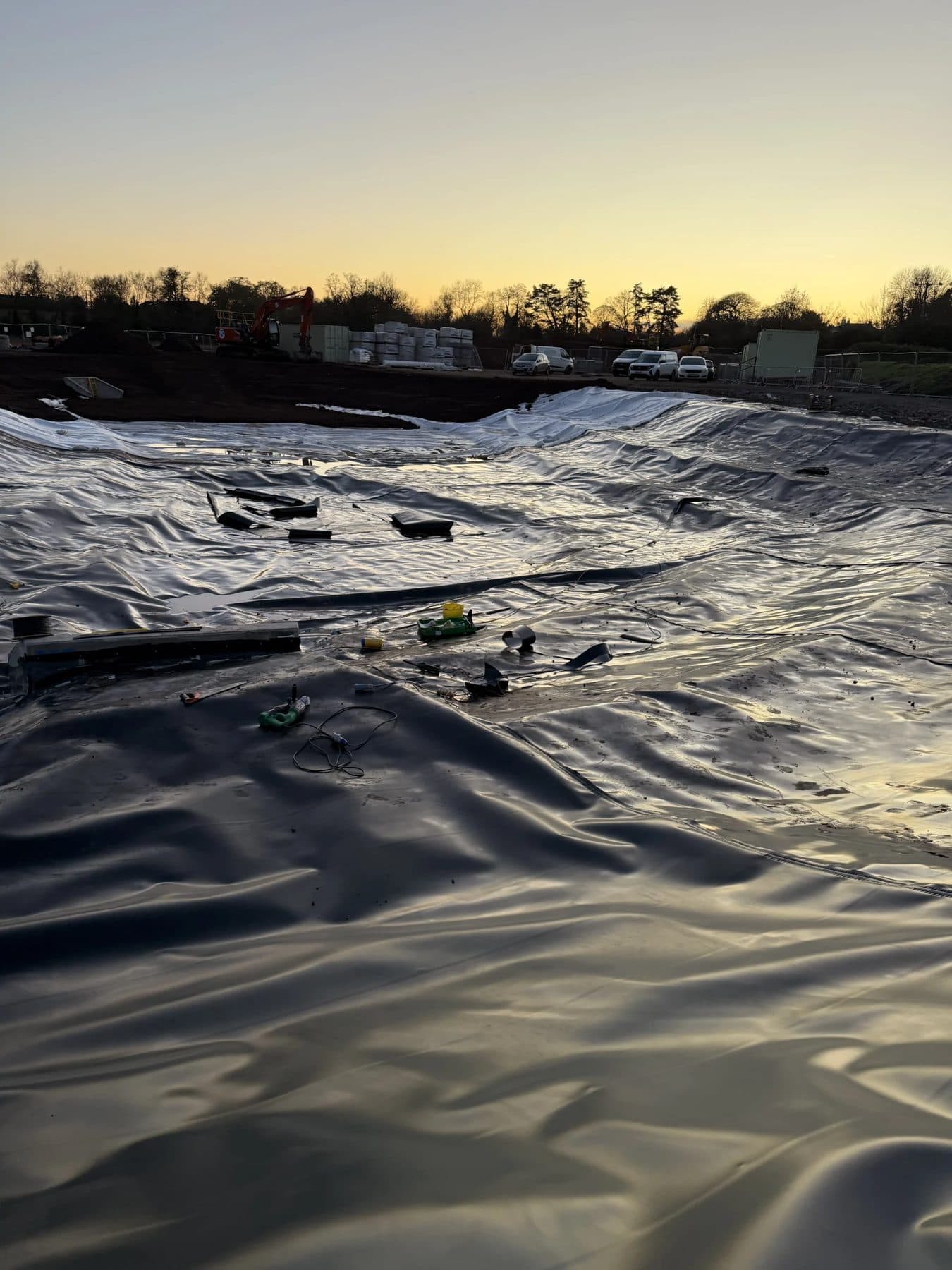
Shaping and digging the pond are not our job; we start on a clean, trimmed formation. Onto it goes a protective geotextile underlay, so stones and roots can't work against the liner. Panels are deployed and seam-welded with wedge and extrusion equipment, and every job has its own recorded test weld.

Outlets, pipe penetrations and headwalls are detailed one by one, the liner edge is buried and held in an anchor trench, and the seams, details and anchorage are inspected before we leave, with the weld records and handover documentation to match.

A lined pond on HS2 near Coventry

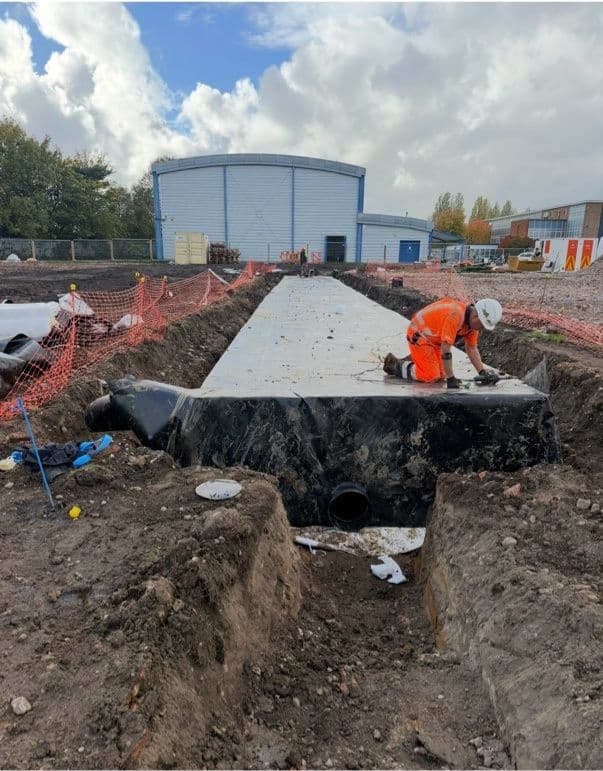
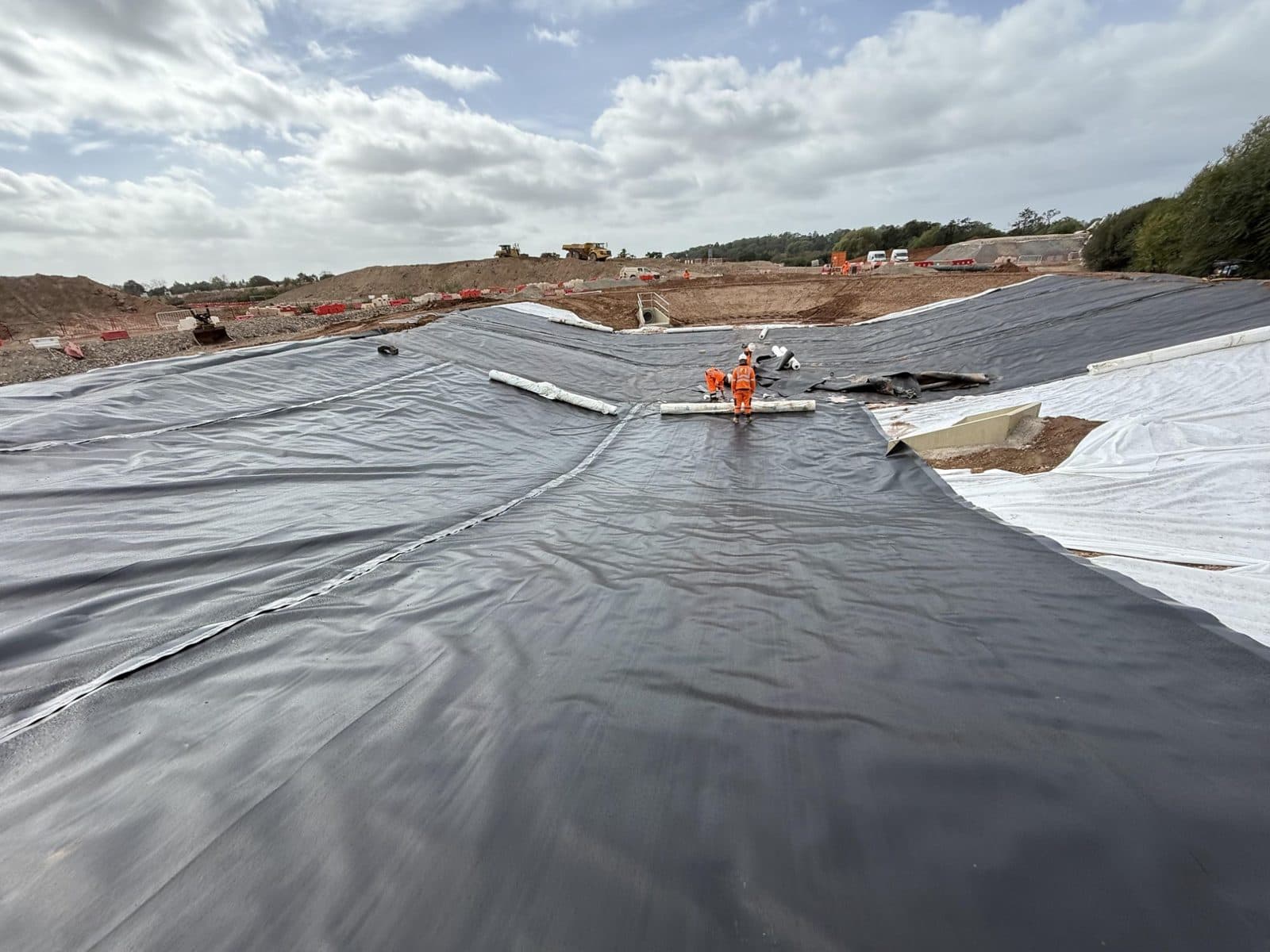
On the HS2 route near Coventry we lined a pond with three rolls of 1mm Atarfil HDPE, laid over geotextile and welded panel to panel up the banks. Headwalls are where pond liners leak, so each of the two concrete headwalls was detailed separately to seal the liner to the concrete. Every weld was pressure-tested, numbered and marked as passed on the membrane.

The same approach applies to a farm reservoir in Herefordshire or a garden-scale wildlife pond in Warwickshire: the details get as much attention as the open sheet, because that is where water finds its way out.

Pond Liner Installer West Midlands

Frequently asked questions

Usually HDPE or LLDPE. A reservoir holds a large volume, often with exposed banks, so UV resistance and welded panel seams matter. The survey settles the material and thickness, typically between 1mm and 2mm.

No. Your contractor excavates and shapes the pond and trims the formation. We check it before we start, then lay the underlay, weld the liner, detail the outlets and form the anchor trench.

Usually. We look over the old liner, work out why it is leaking, then lay a new lining system on a fresh protection layer. Most failures we are called to are taped or unprotected liners.

Yes. The membranes we install are inert once in place and widely used in wildlife and stocked ponds. Tell us what the pond is for at survey and the specification will reflect it.

Tell us about your project

Quote back within one working day