Skip to content

Pond Lining · West Midlands

Pond lining in Coventry

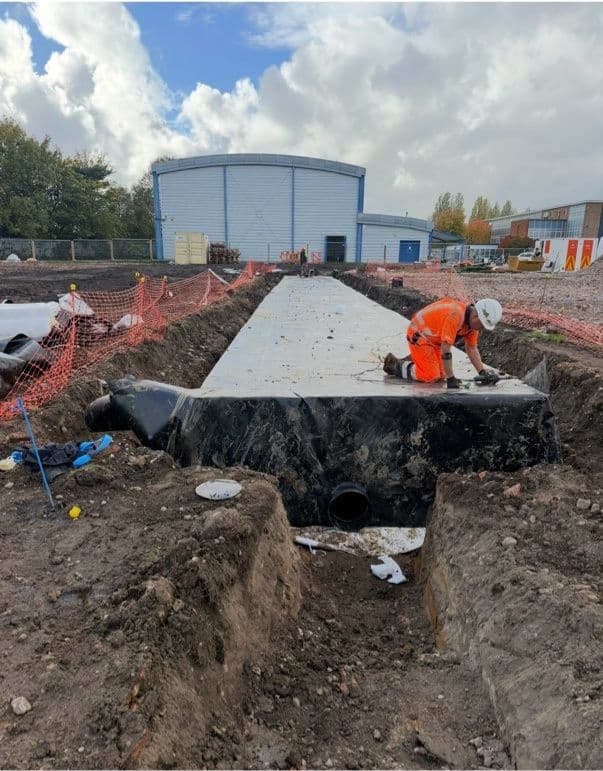
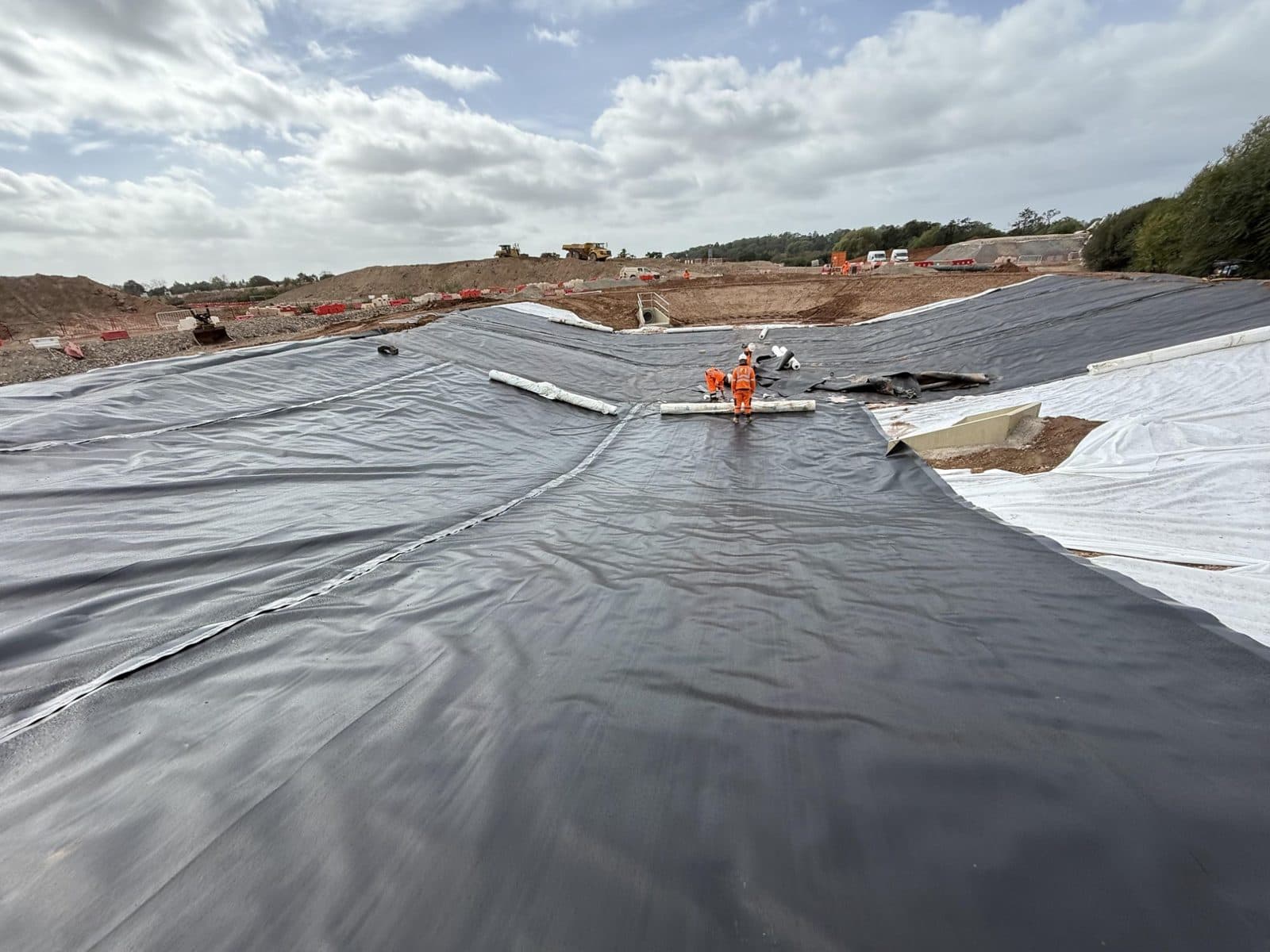
Our nearest showcase for pond lining is on the HS2 route just outside Coventry, where we welded three rolls of 1mm HDPE across a new pond and sealed it to two headwalls. Every balancing, wildlife or amenity pond we line across Coventry is built to that standard.

Where we install
  • Allesley
  • Keresley
  • Coundon
  • Walsgrave
  • Binley
  • Tile Hill
  • Canley
  • Whitley
  • Ansty

Base · Tamworth B78 2BP

The HS2 pond near Coventry

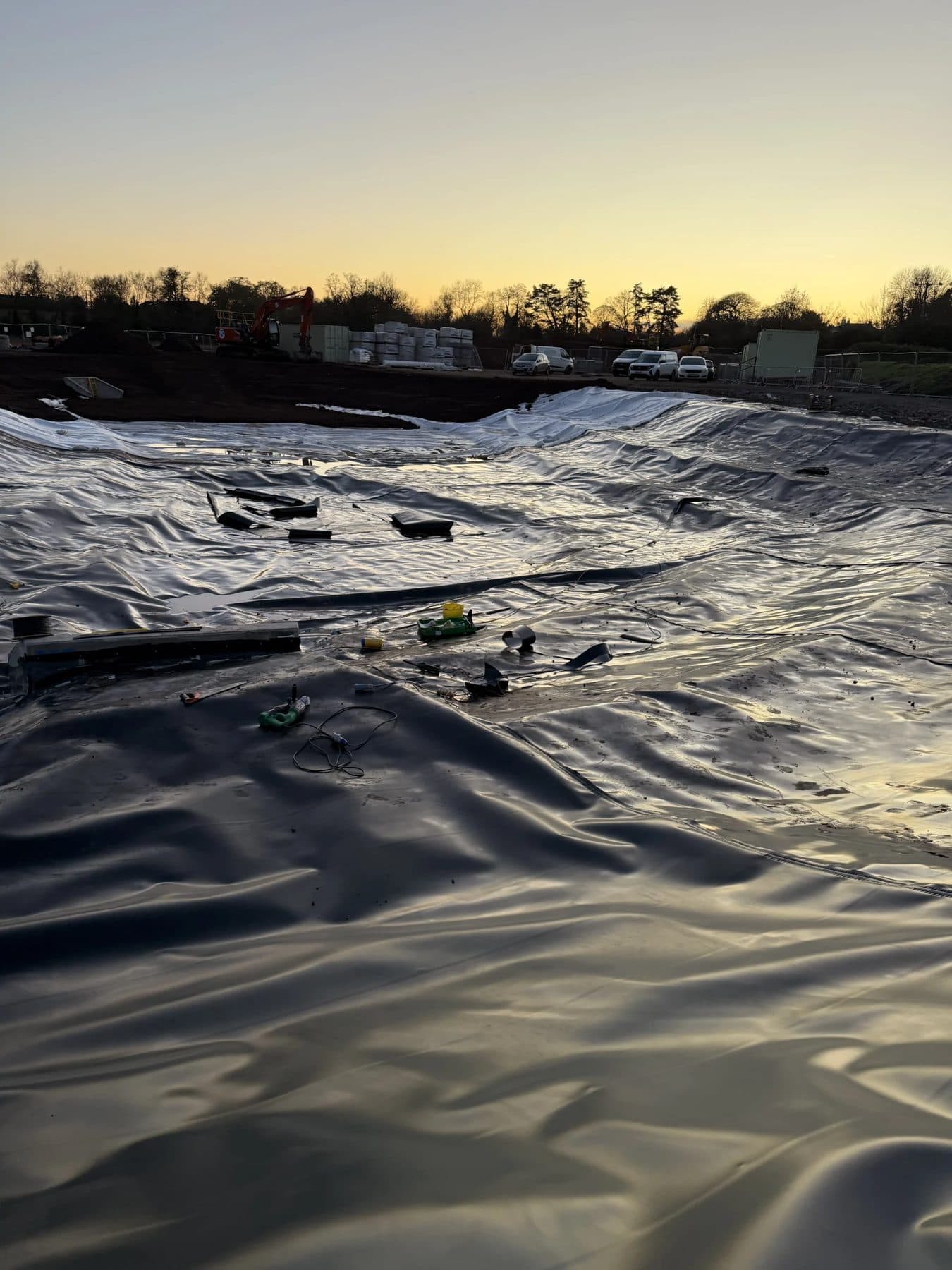
The client supplied NW100 geotextile for the underlay, and we deployed three rolls of Atarfil HDPE over it, across the base and up the banks. The panels were welded on site. The two concrete headwalls were handled one at a time as separate pieces of work, because the junction between liner and concrete is where pond leaks usually start.

We pressure-tested every weld, gave each a number and wrote the pass on the sheet beside it, and the records were complete before the team drove away. That is the level of evidence an infrastructure client audits, and it is what we hand over on any Coventry pond, large or small.
What gets lined around the city

Most of Coventry's new ponds are on the edges, where housing and employment land meet the green belt. A balancing pond on an estate holds the storm and lets it go slowly to the Sowe or the Sherbourne, and on slow-draining clay a liner stops the permanent water level from wandering. Country parks, school grounds and business parks add smaller amenity and wildlife ponds.

Older ponds are a steady source of work too. Ornamental pools in the city's parks and gardens, and estate ponds built a generation ago with cheaper sheet or puddled clay, lose water through tears, root damage and failed joints, and a relining brings them back into use.

  • Balancing and attenuation ponds on new estates
  • Ponds and basins on infrastructure schemes
  • Wildlife and amenity ponds in parks and school grounds
  • Relining older ponds that no longer hold water

Choosing the liner

HDPE suits large ponds, steep banks and long UV exposure. LLDPE is more forgiving on an uneven profile, EPDM is the choice for small ornamental and wildlife ponds, and PP handles awkward shapes and detailing. Where the pond will be confined under soil and the water chemistry suits it, a geosynthetic clay liner may be better, and we install those as well.

Whatever the sheet, it sits on a protective geotextile so stones in the formation can't work against it. Seams are made with wedge and extrusion welders, never tape. On the first day a sample weld is made and its result written down, and the sheet's outer edge is held down in a trench dug along the crest.

Who does which part

The pond's size, shape and levels come from your designer. The earthworks contractor digs it, trims the formation and cuts the anchor trench. We check that formation before laying anything, then line, weld, detail the inlets and outlets, test and document. Backfilling the anchor trench and any cover soil stays with the earthworks team.

Pond Lining Coventry

Frequently asked questions

Our projects page has the case study, with photos of the welded HDPE, the headwall details and a test weld marked as passed.

Usually. Once it has been drained, we look over the old lining to work out why it failed, and the earthworks contractor makes the formation good. A new welded sheet then goes in over fresh protection.

Each headwall is a detail in its own right. The liner is fixed and sealed to the concrete so there is no gap for water to track behind it, then inspected and recorded with the seams.

Tell us about your project

Quote back within one working day