Skip to content

Car Park Lining · West Midlands

Car park lining in Coventry

Permeable paving is a natural fit for Coventry's retail parks, campuses and redeveloped works sites, but the city's clay and its old industrial ground often mean the water can't be let into the soil. Then the sub-base needs a lining, and that is what we install.

Where we install
  • Walsgrave
  • Binley
  • Canley
  • Cheylesmore
  • Earlsdon
  • Holbrooks
  • Tile Hill
  • Wyken
  • Whitley

Base · Tamworth B78 2BP

Two reasons to line a Coventry car park

The first is clay. Where the formation drains slowly, an unlined permeable car park would just fill up and stay wet, so the design stores the storm in the stone sub-base and meters it into the public drain or a brook no faster than the consent permits. The second is contamination. On former works and depot land, letting rainwater soak through made ground can carry pollution down, and the engineer will want the water kept apart from it.

Either way, the stone layer becomes a thin storage tank spread beneath the bays, and the sheet below it decides where that water can and can't go.
The sites

Retail and leisure parks around the ring road and the outer estates, university and hospital car parks, and the parking on new office and employment schemes all use lined permeable paving. Designers are steered towards surfaces that deal with rain where it lands by the NPPF and by the 2025 national SuDS standards, so Coventry is seeing more of this kind of car park.

The city centre has been rebuilt more than once, and plots there tend to sit on old cellars, foundations and fill. Out on the edge-of-town retail and business parks the ground is more often natural clay. Both give an engineer a reason to keep the stored water in a sealed layer rather than letting it go down.

Fleece, membrane, fleece

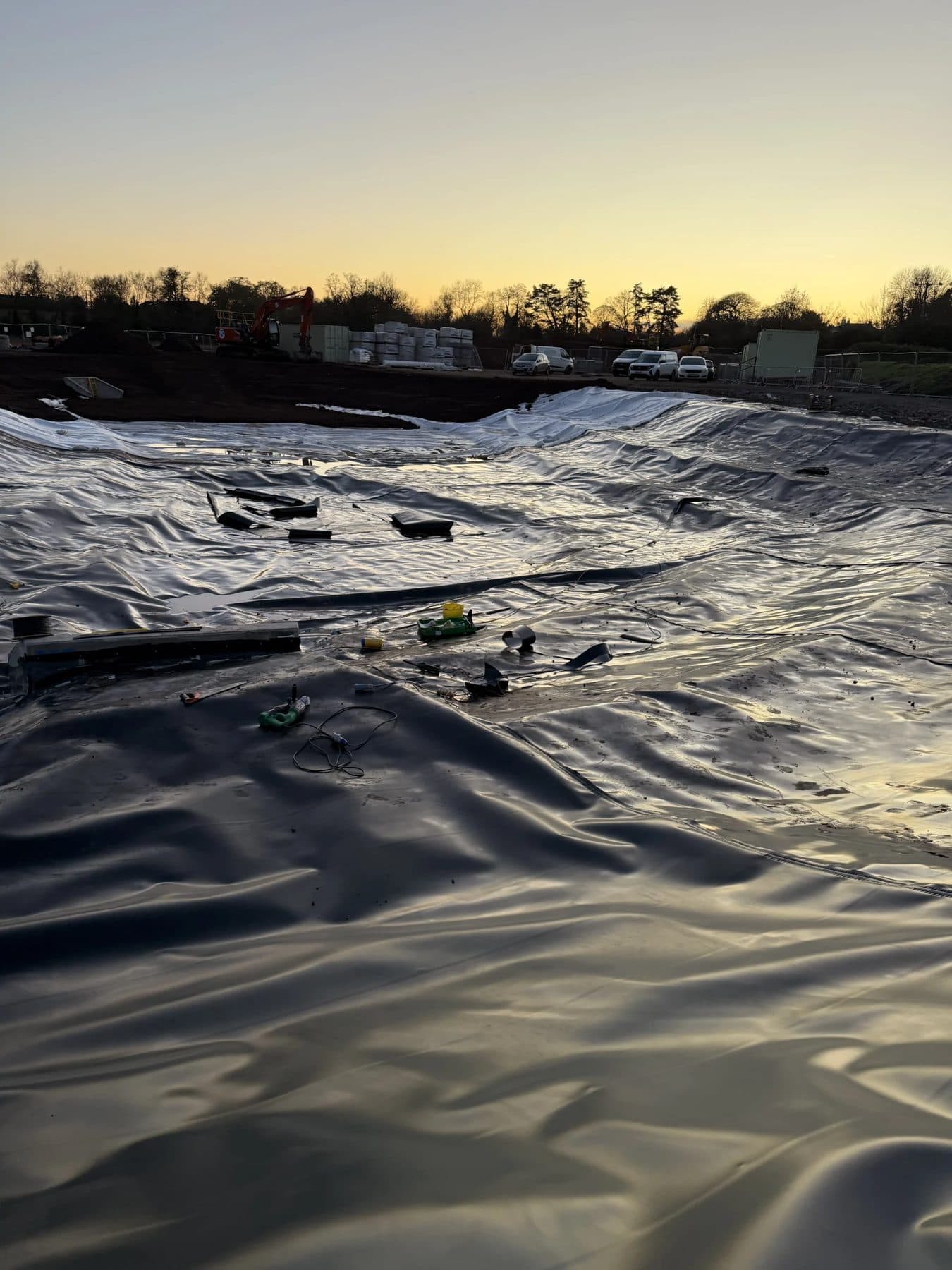
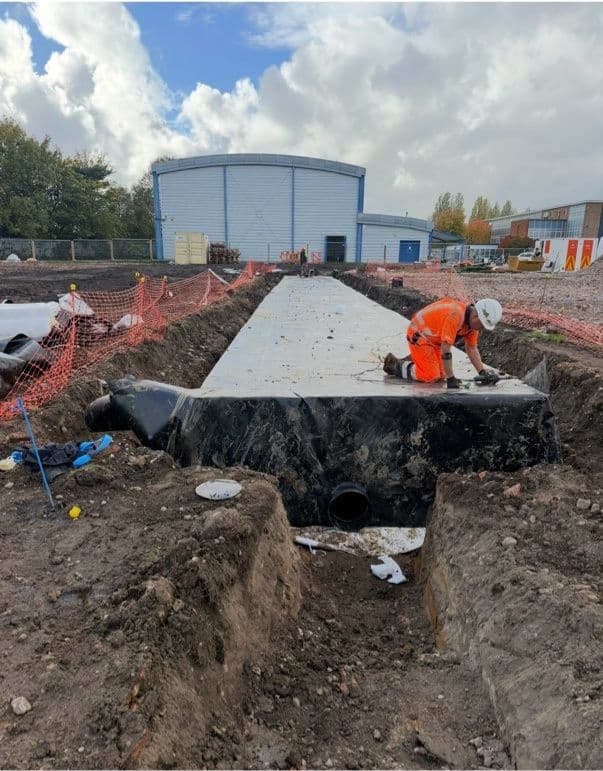
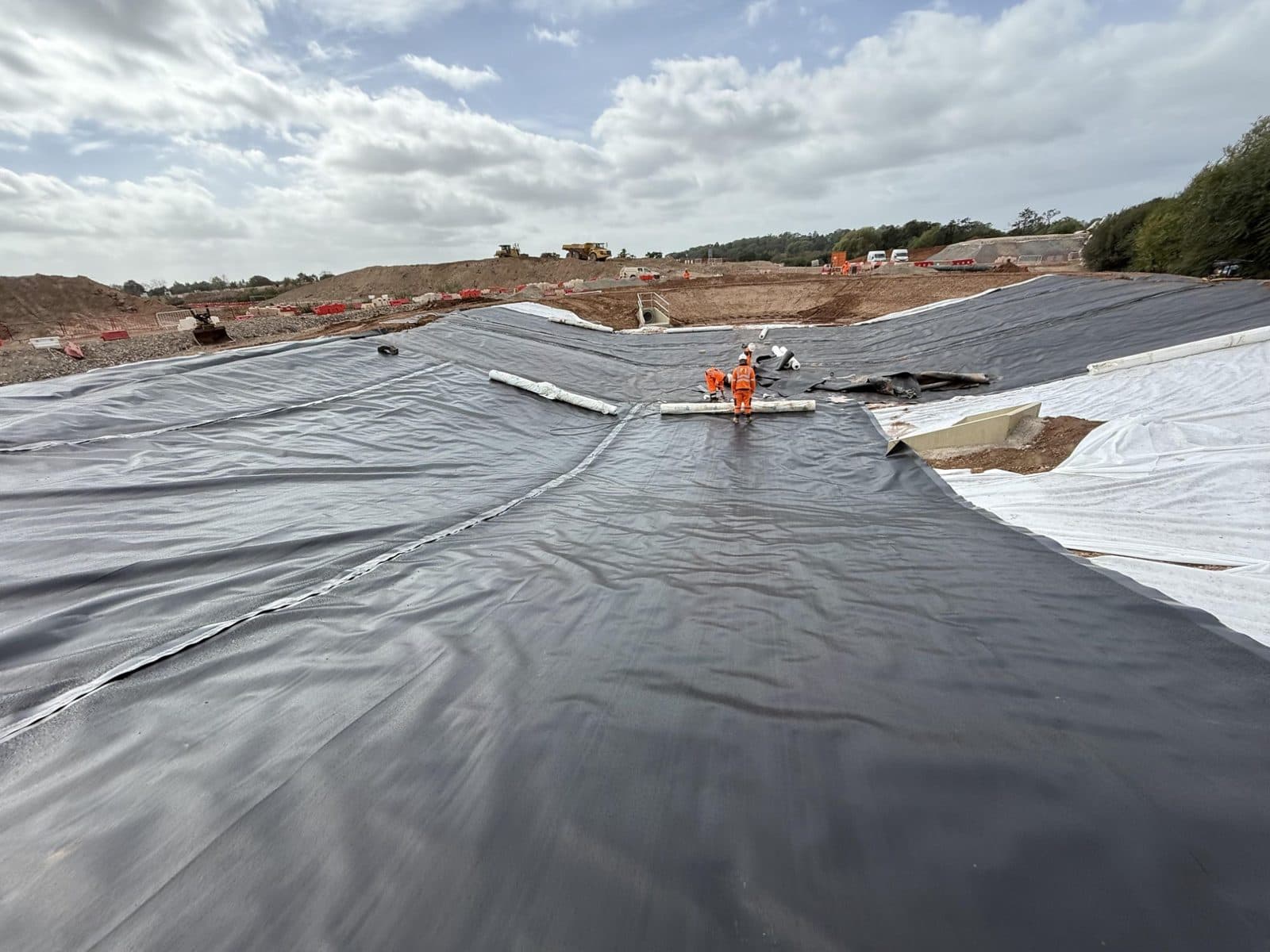
Shaping the dig to the falls on the drawing is your groundworker's job. Before unrolling anything, we walk it looking for standing water, sharp hardcore and any area that doesn't drain towards an outlet. A layer of non-woven fleece covers the floor and climbs the edges; over it, panel after panel of impermeable sheet is laid and fused by a hot-wedge machine, and our first weld of the day is cut out and tested before production welding begins.

Each outlet, overflow and cable or pipe crossing gets a welded boot, the sheet is turned up at the perimeter to the height the engineer gives, and a second fleece is laid on top as a cushion against the stone.

  • LLDPE, HDPE or PP membrane to the specification
  • Protection geotextile below and above
  • Every joint heat-welded, test weld recorded
  • Outlets sealed to the drainage design

Handing over for the sub-base

When a section is finished, the weld log comes with it and the stone can go straight on. Busy Coventry sites rarely free up the whole car park at once, so we often come back two or three times as bays are released. Where the drainage design adds crates below the paving for extra volume, we build those as well, and the two go into one record.

Car Park Lining Coventry

Frequently asked questions

Your groundworker. Our part ends with the welded liner and its top fleece in place; the sub-base and blocks follow to the design.

Yes, that is one of the main reasons to line one. The membrane keeps rainwater stored in the sub-base away from the made ground below.

Taped laps depend on glue staying stuck under parked cars for decades. Hot-wedge welding melts the two sheets together, and the logged trial seam proves the machine settings were right on the day.

Tell us about your project

Quote back within one working day