Skip to content

Galvanised Steel Tanks · West Midlands

Galvanised steel tanks in Staffordshire

Staffordshire's dairy farms need wash-down water, its quarries need process water, and its warehouse roofs shed more rain than they can use. A lined galvanised tank holds any of it above ground, bolted together on a base built by others.

Where we install
  • Leek
  • Uttoxeter
  • Stone
  • Cheadle
  • Burton upon Trent
  • Stafford
  • Lichfield
  • Cannock

Base · Tamworth B78 2BP

Where steel tanks earn their place

On dairy farms around Leek, Uttoxeter and Stone, parlour and yard wash-down uses a lot of water, and a tank filled from the roofs cuts the draw on the mains. Sand and gravel workings in the Trent valley, and limestone quarries towards the Peak, use stored water for washing aggregate and damping down. Along the A38 and A50, large distribution roofs make rainwater harvesting worth doing at scale.

  • Wash-down and yard water on dairy and livestock farms
  • Process and wheel-wash water at quarries
  • Harvested roof water at warehouses and factories
  • Irrigation for growers and sports grounds
Why above ground

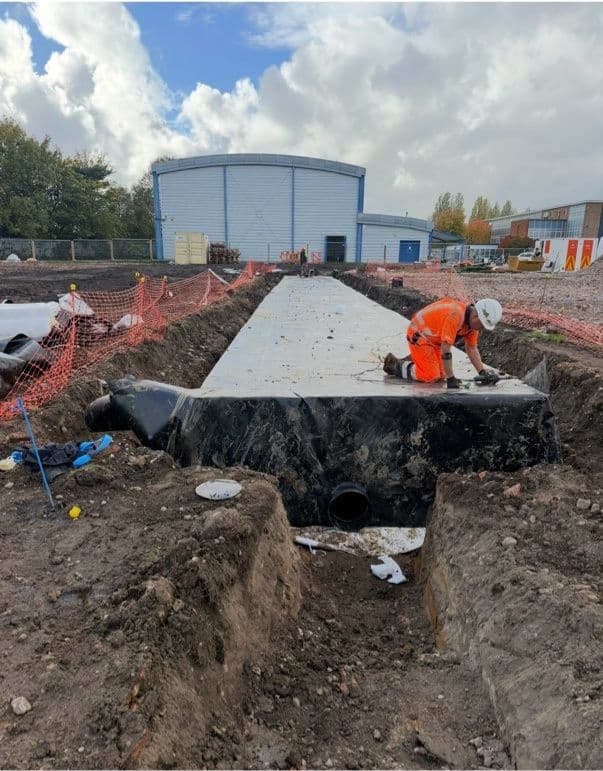
A bolted tank needs no excavation, which matters on coalfield land or a high water table in the Trent floodplain, and it keeps the stored water clear of any contamination in the ground below. It stays accessible for inspection, it is in service within days of the base being ready, and it can be dismantled and moved if the farm or site changes. Quarries in the Trent valley move on as each gravel area is worked out, and a bolted store can be unbolted and carried along to the next one.

Assembly and commissioning

Others pour or build the foundation, sized for the tank brim-full. We survey it, mark the circle, and bolt up the galvanised sheets course after course until the shell reaches its height.

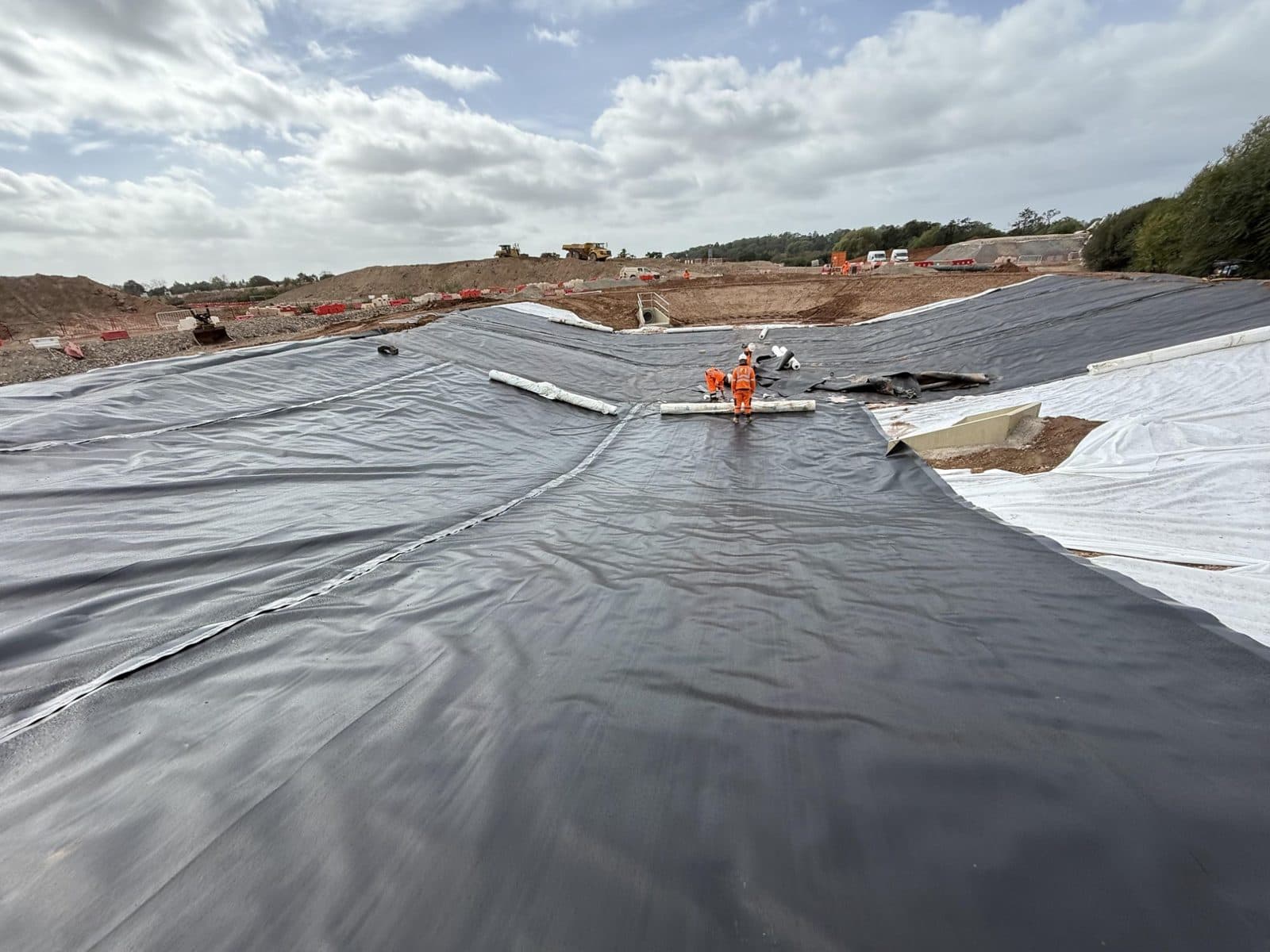
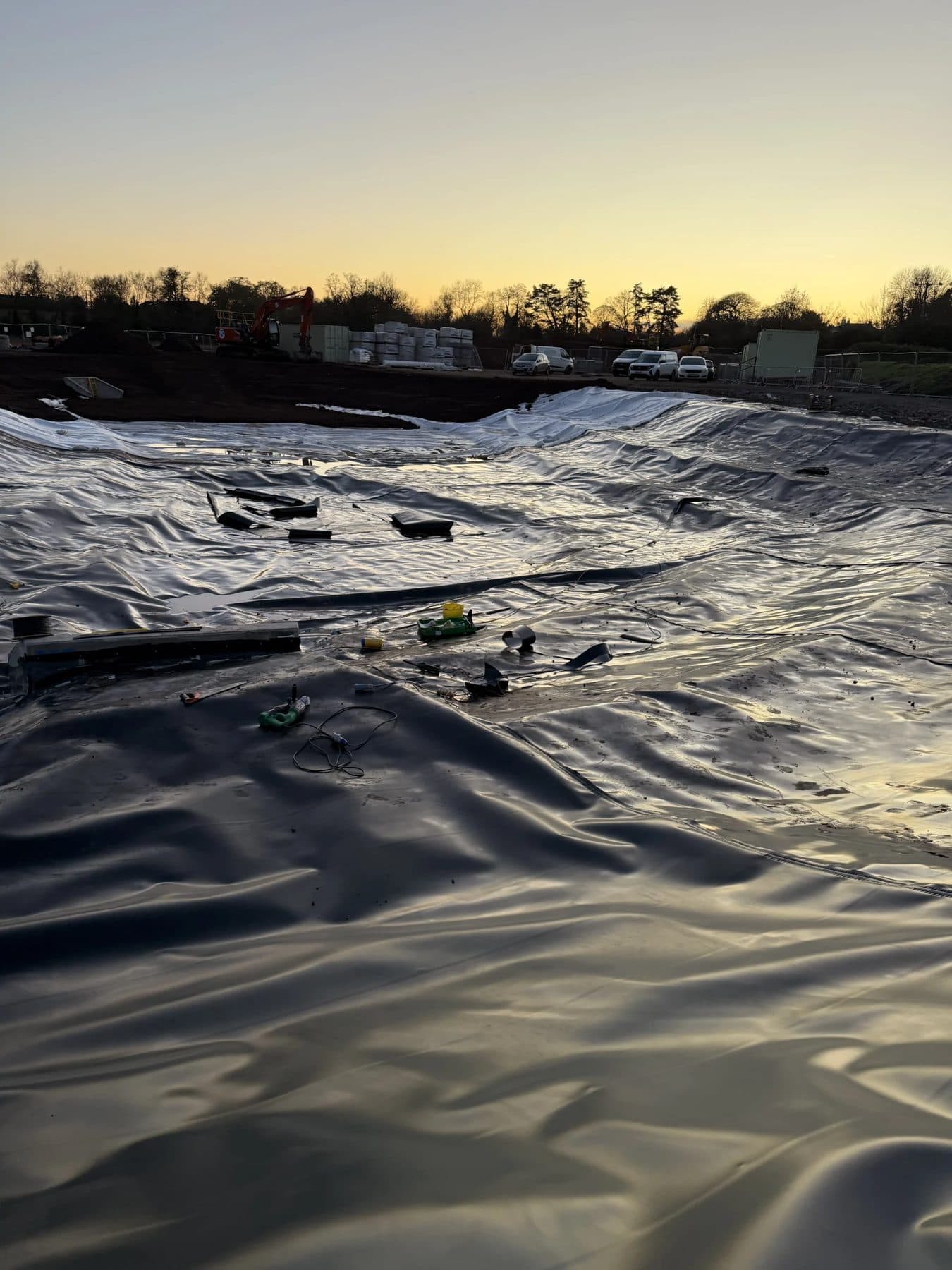
Inside hangs a made-to-measure liner that holds the water by itself, keeping it off the bolt lines. Pipework, the overflow and a depth gauge are sealed through, and the tank is filled a section at a time so any problem shows before the farm relies on it.

Sizing and siting

The right size depends on what you draw from the tank and how often it refills. A dairy using roof water for wash-down needs enough to bridge a dry spell; a quarry topping up a wash plant may need far more, filled from a borehole or a settlement lagoon. Once we know the demand, the source and the space, we give capacity and siting guidance, and your contractor builds the base to suit.

Panels arrive flat-packed on a lorry, which suits Moorlands farms on narrow lanes. We need clear working room round the base, and the base must be cured and level before we start.

Galvanised Steel Tanks Staffordshire

Frequently asked questions

Yes. Parlour and cubicle-shed roofs are a common source, and the pipe into the tank is positioned to suit the existing downpipes.

It can be, because it avoids digging. The base still has to be designed for the ground and the filled weight; your engineer or contractor handles that, and we build on it.

Typically days from a finished base to commissioning, depending on capacity. We confirm the programme once the size is fixed, and on a working dairy we plan assembly around milking times and yard traffic so the farm keeps running while the ring goes up.

Some designs allow extra rings or panels. Tell us at the start if expansion is likely and we will specify for it.

Tell us about your project

Quote back within one working day