
Skip to content

Slurry Lagoons · East of England

Lagoon lining for slurry and digestate in Cambridgeshire

Cambridgeshire is arable country, and only a minority of its farms keep animals. Most lagoons we would line here hold digestate from anaerobic digestion or dirty water from farm yards, and all of them need a welded liner that keeps the contents out of the ground.

Where we install
  • March
  • Chatteris
  • Wisbech
  • Whittlesey
  • Ramsey
  • Ely
  • Soham
  • Huntingdon

Base · Tamworth B78 2BP

What gets stored on fen and clay farms

AD plants on arable land turn crops, crop residues and manure into energy, and leave digestate that has to be stored until it can be spread at the right time of year. There are also pig and cattle units scattered through the county, and yards and pads where rainwater picks up muck and becomes dirty water.

Each of these needs a store that will not leak, with the capacity and freeboard the storage rules ask for. SSAFO applies to new and substantially altered slurry stores, and your consultant confirms the specifics for your site.
High water tables make leak detection worth having

On the fen, groundwater can sit close to the surface and drains run between every field. A store that seeped would reach water quickly. That is one reason many fenland designs are double-lined, with a void between the two sheets that drains to a sump, so anything getting past the upper liner shows up where it can be seen and dealt with.

Soft peat and silt also mean the formation needs careful preparation by your earthworks contractor, and a close check by us before the fleece goes down.

Our sequence on a lagoon

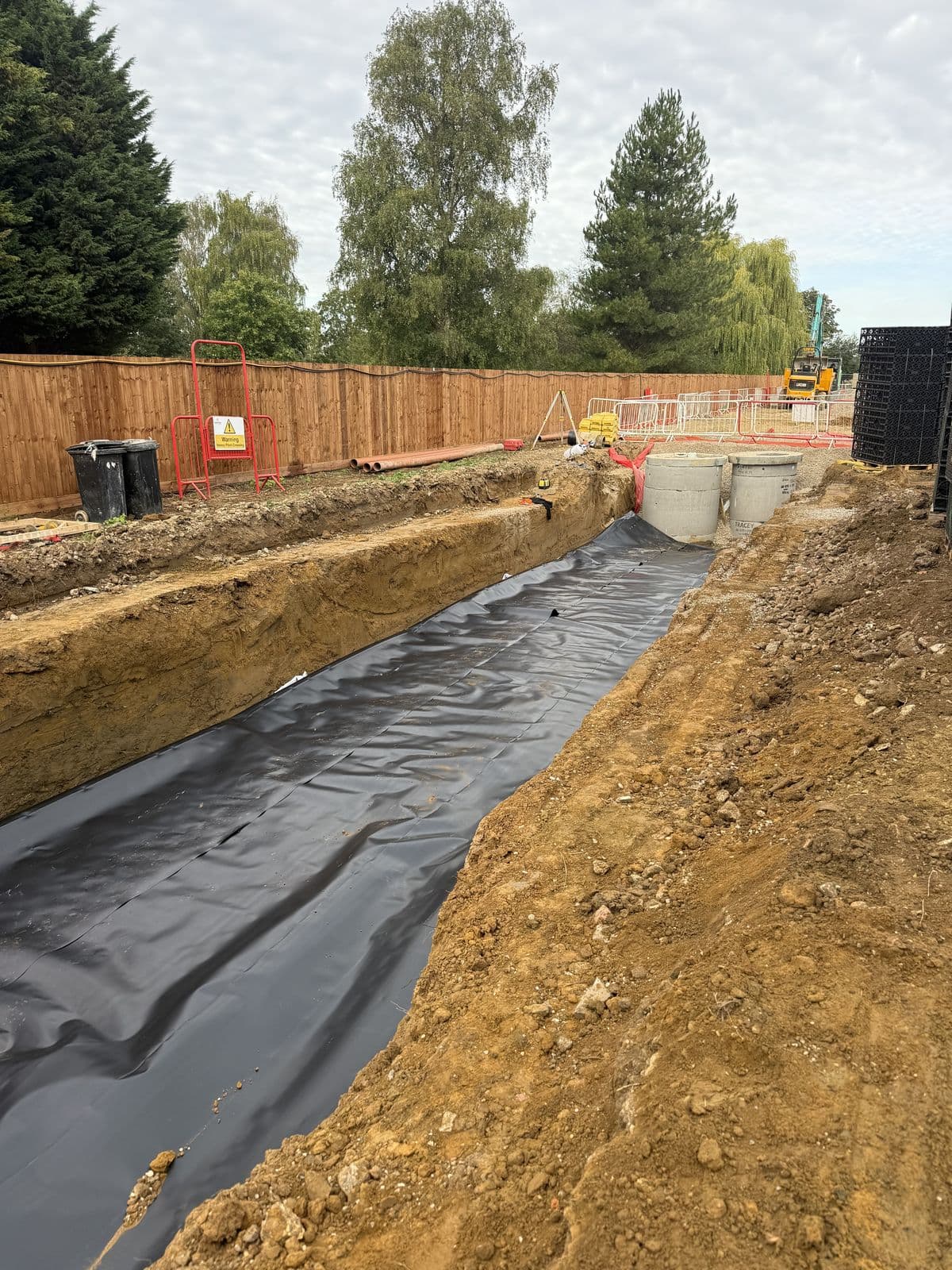
First we read the lining specification for your Cambridgeshire store and agree the layers with you, then inspect the banks, base and anchor trenches your contractor has formed. A 300gsm non-woven fleece goes on first. The first liner is welded panel to panel over it. Where the store is double-lined, a drainage net comes next and the primary sheet is welded on top of that.

Fill points, draw-offs and level indicators are formed and sealed, a test weld is recorded, and a floating cover is fitted where the design calls for one. The paperwork you keep lists every product used, each weld test and the as-built layout, ready for an inspector or insurer to read.

  • Single welded liner on protection fleece
  • Twin liners with a monitored gap between them
  • Floating cover option

Timing the work

Lining is best done in a dry spell, when the formation is firm and the fleece and liner can be welded without water standing on the base. On fen ground that often means late spring or summer. Talk to us early and we will plan around your spreading calendar so the store is ready before it is needed, rather than racing the first autumn rain.

Slurry Lagoon Lining Cambridgeshire

Frequently asked questions

Yes. In Cambridgeshire digestate stores are the more common job, and they are built the same way: welded sheets, a leak-detection layer where specified and a cover if the design wants one.

Often. It needs inspection first, and the banks may need reprofiling. Peat can settle, so the formation work done before relining matters a great deal.

A cover keeps rain out, which preserves storage capacity, and holds in odour and emissions. Some permits and designs require one; we fit it where specified.

Tell us about your project

Quote back within one working day