The north of the borough, around Chelmsley Wood, Kingshurst, Castle Bromwich and Marston Green, sits close to the airport, the rail lines and the old industrial edge of east Birmingham. Redevelopment there often lands on made ground of uncertain origin.
Across the rest of Solihull the triggers are more local: a former filling station on a main road, a vehicle workshop behind a parade of shops, a transport depot, or an old pit that was filled before anyone kept records. Hydrocarbons from fuel and oils, and gas from buried organic fill, both turn up.
Our starting point is your consultant's BS 8485 risk assessment and the site investigation behind it. The protection level they set decides the membrane, the jointing method and the detailing. We install to it; we don't assess the risk or pick the level.
Before we lay, we inspect the blinding or slab. Gas protection needs a surface that won't puncture the sheet, so sharp aggregate, protruding tie wire or a broken edge is put right first.
The buildings vary: a block of flats on an old garage forecourt in Shirley, a school extension, a hotel near the NEC, a new unit on a business park. The membrane and its jointing change with the specification, but our order of work on site stays the same: check the substrate, lay, detail, record. A small residential slab can often be finished in a day, while a large commercial floor is phased with the frame and the services.
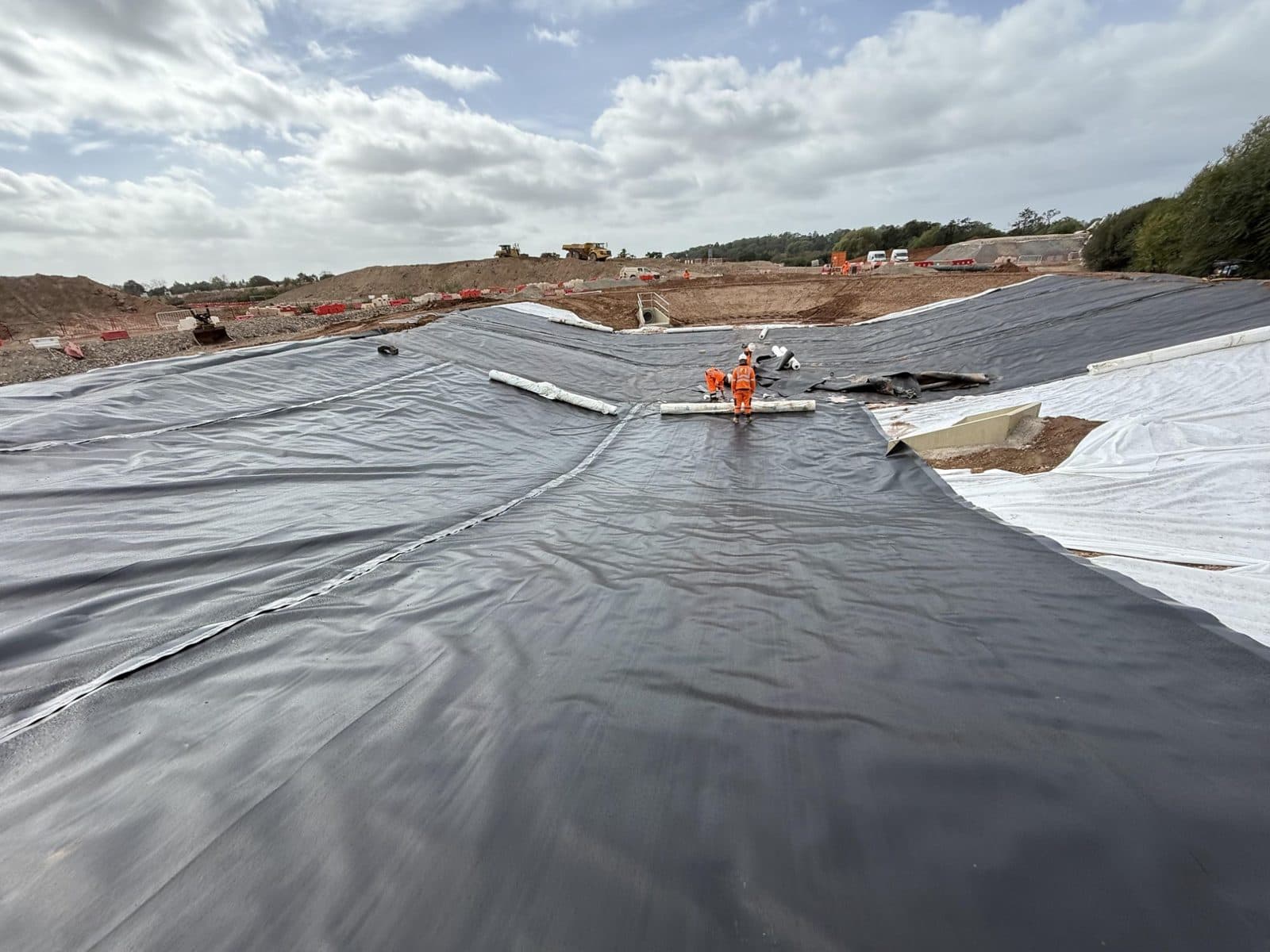
Every lap is jointed by welding or sealing, as the product's manufacturer sets out, and laps are never rushed in rain or frost. The open sheet seldom lets gas through; the weak points are where something passes through it.
- Pile caps and ground beams, each collared individually
- Service entries for water, gas, power and drainage
- Steel columns and structural upstands
- Junctions with external walls and cavity trays
- Lift pits and any step in the slab level
Warranty providers and building control increasingly want evidence, not assurance. We can arrange integrity testing, or a visit from an independent validation inspector, and we keep installation records as we go: photographs, lap and detail checks, and the product data. Those go into the warranty file at handover.
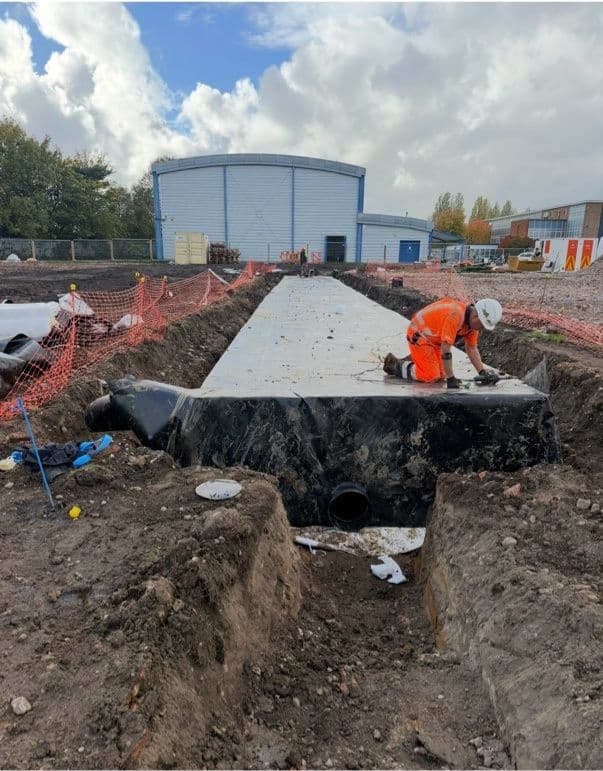
If the same site needs a soakaway or an attenuation tank as well, we can install both, so one team answers for the drainage and the gas protection.