
Skip to content

GCL Pond Lining · East Midlands

GCL pond lining in Derbyshire

Farmers on the White Peak once sealed their dew ponds with clay because the limestone beneath let everything through. A GCL brings that old idea into a roll: sodium bentonite held between two geotextiles, laid with sealed overlaps for a pond that keeps a natural clay bed.

Where we install
  • Matlock
  • Bakewell
  • Derby
  • Ashbourne
  • Belper
  • Willington
  • Hathersage
  • Melbourne
  • Wirksworth

Base · Tamworth B78 2BP

A clay seal for porous ground

Once wetted and confined, the bentonite in a GCL swells into a barrier of very low permeability, and it presses into small punctures from roots or stones. On fissured limestone, open gravel or sandy river terrace, that gives a pond a bed that behaves like puddled clay without importing tonnes of it.

The finish suits places where a visible black sheet would jar: estate lakes in the Derwent valley, wildlife ponds on farmland, and wetland features around restored sand and gravel workings along the Trent.
Checks before we recommend it

We turn GCL down for some Derbyshire ponds, and we tell you why before anything is ordered. The clay needs a soil cover to swell against, so banks have to be gentle enough to hold that layer. Steep sides, exposed margins and aggressive contents point to a welded membrane instead.

Water chemistry counts too. Water off the limestone is hard and calcium-rich, and calcium can take the place of sodium in the bentonite over time and reduce its swelling. The suitability check looks at what will fill the pond, and the product is chosen with that in mind.

Laying in Derbyshire weather

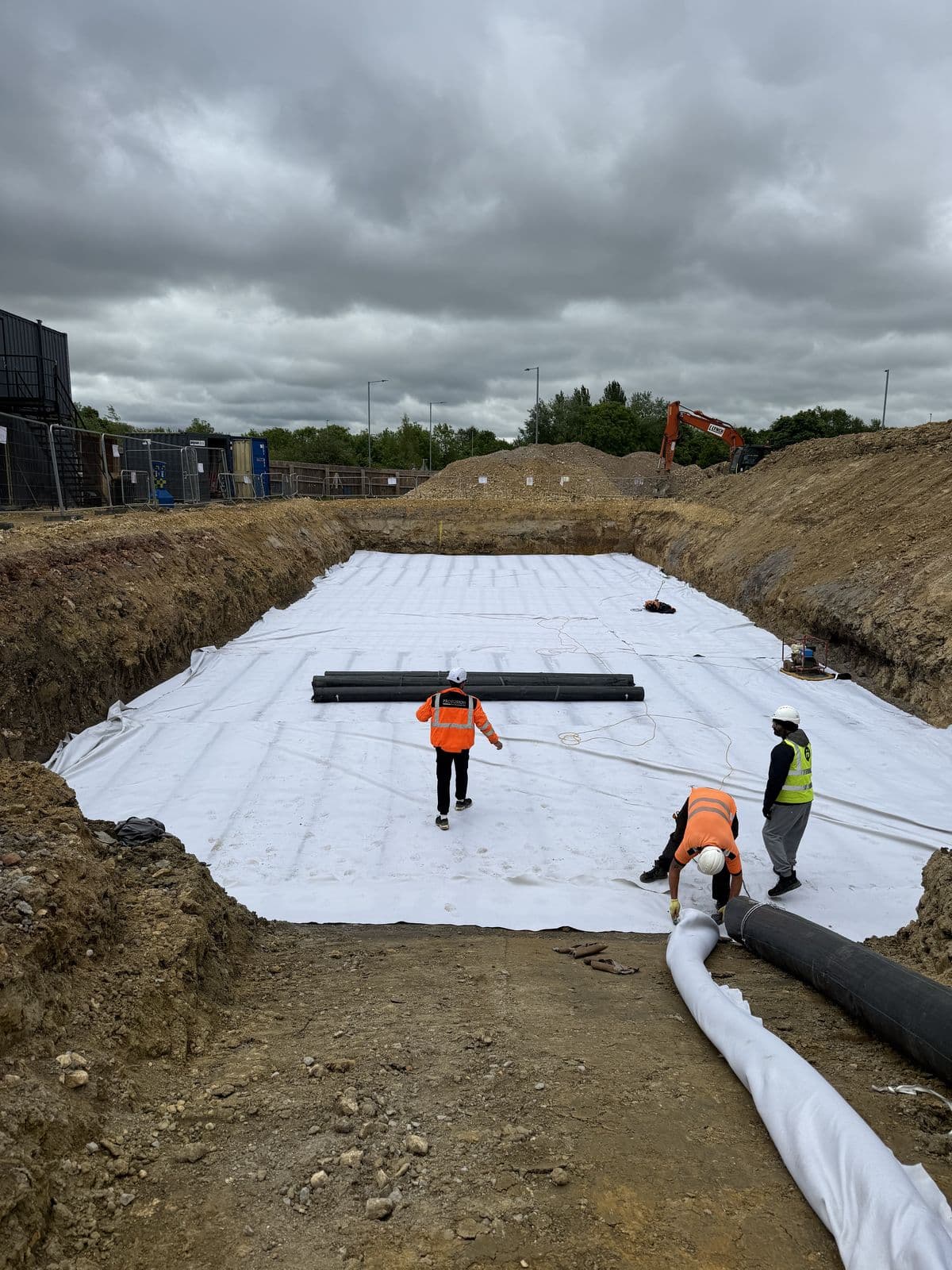
The liner must not hydrate before it is confined. In a wet spell, which on the Peak fringe can mean most weeks, we only deploy as much as your contractor can cover the same day, and we keep the rest of the rolls wrapped and off the ground.

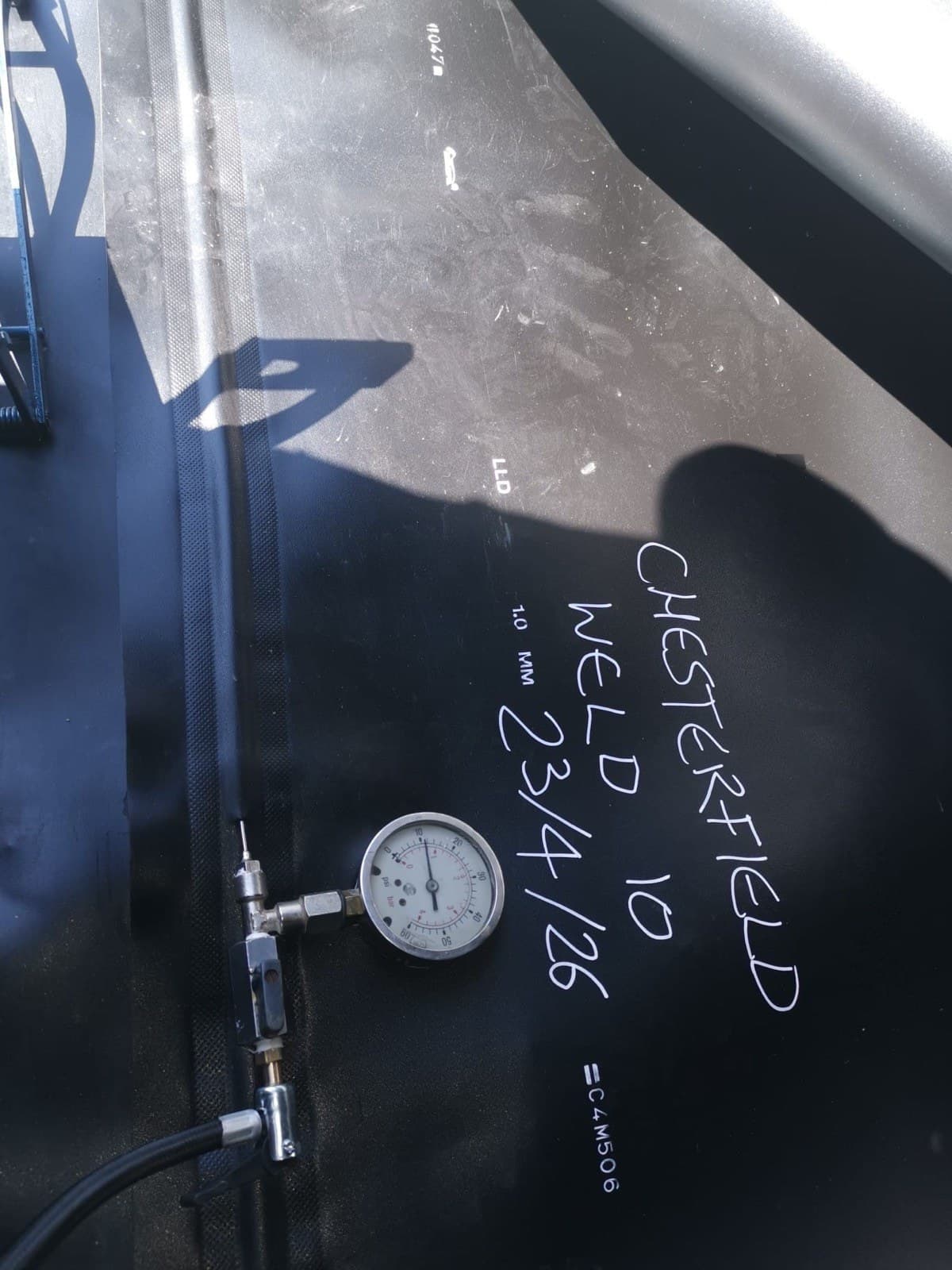
Each panel lands with a wide lap over its neighbour, dressed with bentonite paste or granules along the full length. Inlets, outlets and the edges against any structure are detailed by hand in the same material, and each lap and detail is written into the record as we go.

Wind matters on open Peak sites as well. A dry GCL panel is heavy but still catches a gust along an exposed edge, so we hold the leading edge down with sandbags until the cover soil arrives.

  • Formation walked and approved before a single roll is opened
  • Laps sealed with bentonite, never welded or taped
  • End-of-day sheet listing every lap, detail and the cover thickness needed
  • Soil cover spread and wetted by your contractor straight after

GCL Pond Lining Derbyshire

Frequently asked questions

Often, yes, provided the profile is shallow enough to hold a cover layer and the water chemistry is checked. It keeps the clay character such a pond was built with.

Your contractor, promptly after we hand over. We tell you how thick that soil needs to be; a GCL left wet and uncovered loses its seal.

It is a common choice for mitigation ponds, because the finished bed is natural clay. Your ecologist and engineer set the design; we lay the liner to it.

We lay NAUE's Bentofix, CETCO's Bentomat, Solmax products and UK-made GCLs from Geosyn and Wrekin. If your designer has named one, we lay that; if not, we suggest a product for the water and the profile.

Tell us about your project

Quote back within one working day