
Skip to content

Car Park Lining · East Midlands

Car park lining in Derbyshire

Permeable paving needs somewhere for the rain to go, and on Derbyshire's clays and former colliery land that usually means a lined sub-base storing the water and releasing it at a set rate. We lay the fleece and welded membrane beneath it.

Where we install
  • Derby
  • Chesterfield
  • Ilkeston
  • Long Eaton
  • Ripley
  • Swadlincote
  • Glossop
  • Matlock
  • Dronfield

Base · Tamworth B78 2BP

Reasons a Derbyshire car park gets lined

On Mercia Mudstone around Derby and the Coal Measures around Chesterfield, water simply can't soak away fast enough. On redeveloped industrial land, letting rain percolate through made ground can carry contamination down with it. And on the limestone, an engineer may prefer to keep car park runoff out of the rock altogether, given how quickly water travels through it.

In each case the paving still lets rain through at the surface. The difference is what lies under the aggregate: a sealed membrane that turns the sub-base into a shallow storage tank.
Where the work comes from

Most Derbyshire jobs are retail and food stores on the edges of Derby, Chesterfield and the market towns, staff car parks at business parks built on former pit sites, and parking for schools and health buildings. Visitor car parks in the Peak are less common, but where a permeable surface suits the setting the same lining applies. In Glossop and the High Peak towns, tight sites hemmed in by mills and hillside often have no room for a separate tank, which makes a storing sub-base attractive. Old colliery land around Bolsover and Shirebrook now carries warehouses and business parks, and their staff car parks are among the larger areas we line in the county.

Lining the formation

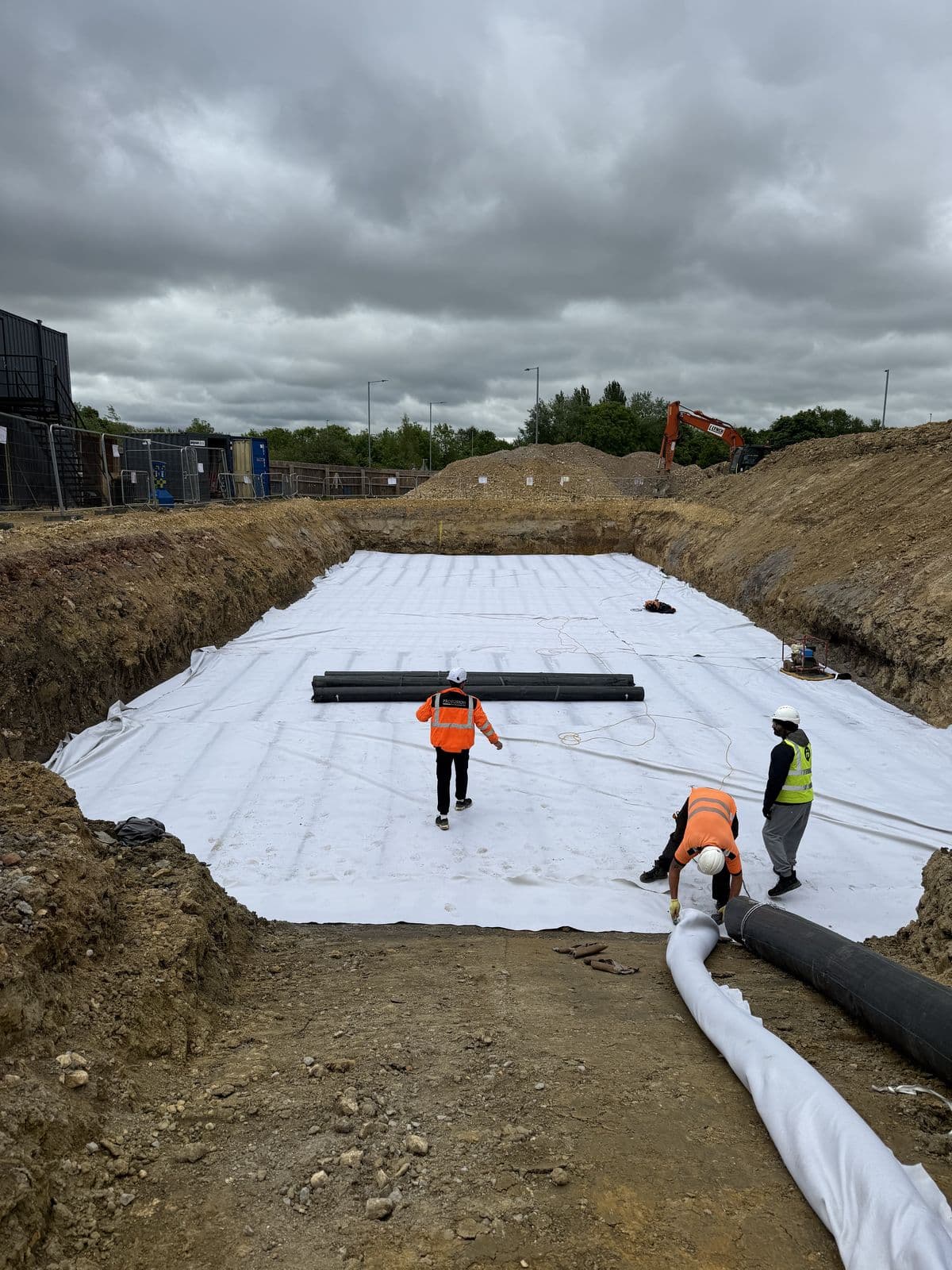
Your groundworker cuts the formation to the gradients the engineer has drawn. We walk it before starting and look for sharp stone, soft spots and any fall running the wrong way towards an outlet. A car park liner covers a large flat area, so a small hollow can hold water against the membrane for years; we would rather point it out than bury it.

  • Non-woven fleece rolled out first, carried up to the kerb lines
  • The liner laid in wide panels and fused at every joint with hot-wedge kit
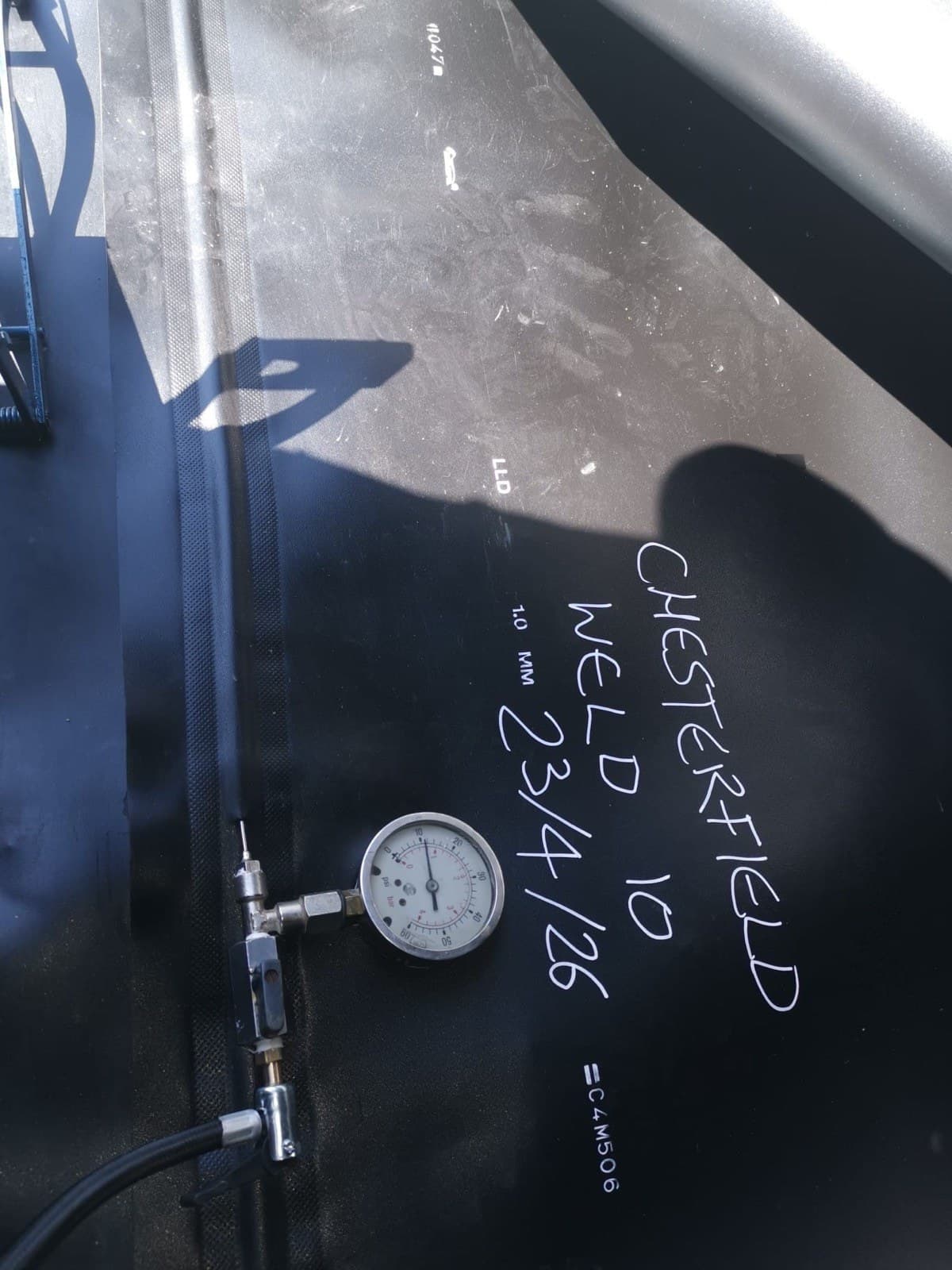
  • One trial weld per day, tested and logged
  • Each gully outlet, overflow pipe and duct booted and sealed
  • A second fleece over the top before any stone arrives

When the sub-base isn't enough

Some designs need more storage than a sub-base can give, and add crates beneath the parking area. We build both parts, so the lining and the tank leave site as one system with one set of weld records. Our 970m³ tank at Chesterfield is one example of storage built beneath a future car park.

When our part is signed off, the stone layers and blocks follow from the groundworks team. We plan around their programme so the membrane is not left uncovered longer than needed.

Car Park Lining Derbyshire

Frequently asked questions

No. Where the ground can safely take the water, an unlined infiltration design may be used. Your engineer decides from the site investigation.

No. Our job ends at the protected liner and its weld log, checked and signed; the aggregate and the blocks are laid by your groundworker.

LLDPE, HDPE or PP, whichever the design specifies, with protection fleece on both faces.

Yes, and a lining is often the reason the design works there, since it keeps stored rainwater out of the made ground below.

Tell us about your project

Quote back within one working day