
Skip to content

Pond Lining · East Midlands

Pond lining contractor in Derbyshire

We line farm reservoirs, wildlife ponds, estate lakes and containment basins across Derbyshire, from the Peak District down to the Trent valley. Seams are welded and tested on site, and every job is handed over with its records.

Where we install
  • Derby
  • Chesterfield
  • Matlock
  • Bakewell
  • Buxton
  • Glossop
  • Belper
  • Ashbourne
  • Ilkeston
  • Swadlincote

Base · Tamworth B78 2BP

Why Derbyshire ponds need a liner

Derbyshire's ground changes quickly from north to south, and very little of it holds water reliably on its own. The White Peak is Carboniferous limestone: jointed, fissured rock that water drains straight down through. That's why the old dew ponds and meres on the limestone plateau were always puddled with clay. The Dark Peak to the north is gritstone and shale, with thin acid soils and springs that come and go with the seasons.

Further east, the coalfield around Chesterfield and the Erewash valley has mixed ground and old workings, and the Trent and Dove valleys carry sand and gravel terraces. Gravel drains freely, and clay that looks tight in a trial pit can crack open in a dry summer. On every one of those grounds the safe answer is the same: a membrane welded in place over a cushioning underlay.
Choosing the right liner

Size, shape, substrate and use decide the material. We look at the pond at survey and recommend one, or install to the specification if your engineer or ecologist has already chosen it.

  • HDPE: the tough choice for large farm reservoirs, irrigation storage and industrial containment, where chemical and UV resistance matter most.
  • LLDPE: more flexible, so it follows irregular banks and settling ground and dresses neatly around inlets and outlets.
  • EPDM: a rubber sheet supplied in large single panels, often with no site joint at all on a smaller ornamental or garden pond.
  • GCL: a geosynthetic clay liner with a bentonite core, for wildlife ponds where a natural clay bed suits the site and the water chemistry is right.

Working in the Peak District

A large part of north and west Derbyshire lies inside the Peak District National Park, where planning controls are tighter and the landscape is protected. Consent for a new pond, and any ecological work that goes with it, is for the landowner and their advisers to secure with the National Park Authority. We work to the approved scheme.

What we bring to a sensitive site is a tidy, contained installation. The liner ends up buried or under water, its edges are held down in an anchor trench round the rim, and nothing is left exposed that shouldn't be. On upland sites with steep or narrow access, tell us at survey so we can plan how the rolls and welding kit reach the pond.

How we install it

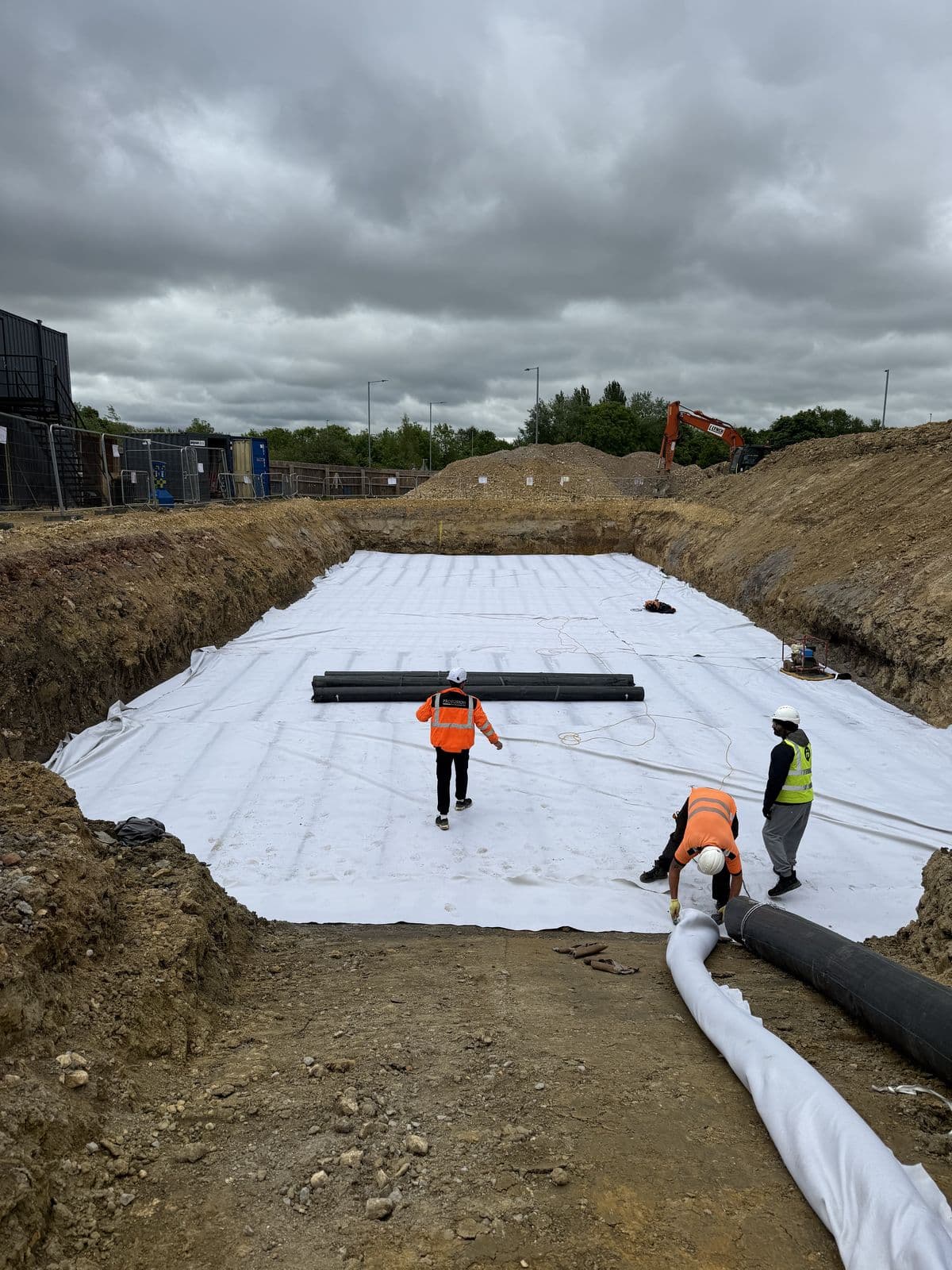
The pond reaches us already shaped, trimmed clean and picked free of stones and roots. We lay a geotextile underlay over it, deploy the liner panels and weld the seams with wedge and extrusion equipment. Pipe penetrations, outlets and edge details are formed and sealed by hand.

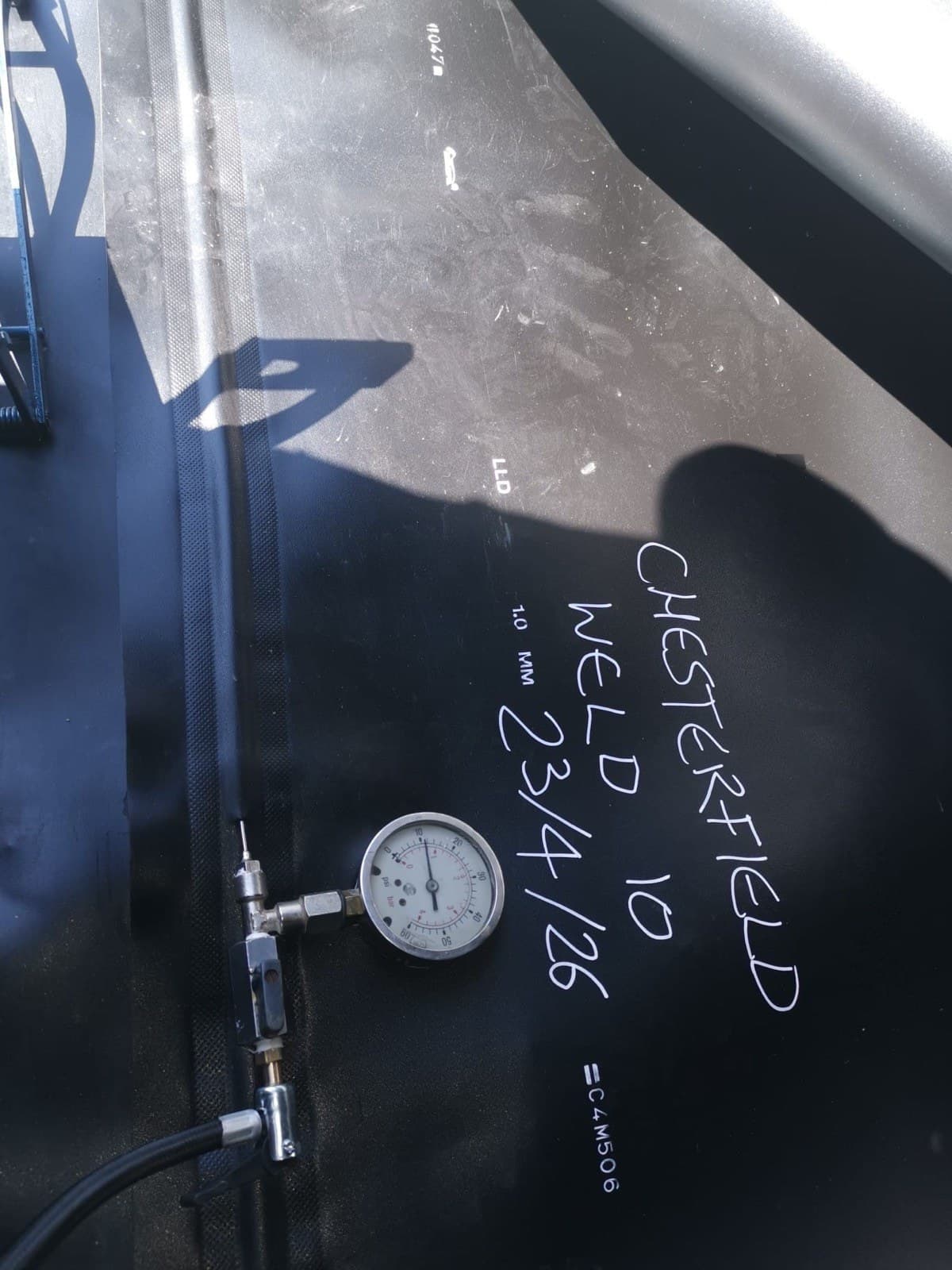
We weld rather than tape. A heat weld fuses two panels into a single piece of material, where tape relies on adhesive holding under water for decades. Before we leave site we make and log a test weld, look over every seam and detail, and pass you the weld test records and handover documentation. It's the same discipline we used on our attenuation tank at Chesterfield, where every seam was pressure-tested and logged before it was covered.

Pond Lining Contractor in Derbyshire

Frequently asked questions

Yes. Limestone is exactly the ground that needs a liner, because water escapes through the fissures. We put a protective underlay down first so sharp stone in the formation can't work against the membrane, then weld the liner over it.

No. Planning and any ecological consents are arranged by the landowner or their agent with the National Park Authority. Once the scheme is approved, we supply and install the liner to it and provide the handover records.

Usually, yes. We look at the old liner to see where and why it's losing water, then put in a new welded lining over a fresh protection layer. Taped joints and liners laid without underlay are the usual culprits.

The whole county. Derby, Ashbourne and Swadlincote are a short run from our Tamworth base, and we work north through Matlock and Bakewell to Buxton, Glossop and the High Peak.

Tell us about your project

Quote back within one working day