
Skip to content

Pond Lining · East Midlands

Pond lining installation in Nottingham

We supply and install pond liners in Nottingham and across Nottinghamshire, for farm reservoirs, wildlife and mitigation ponds, estate lakes and commercial lagoons. Welded seams, a recorded test weld and handover records come as standard.

Where we install
  • Nottingham
  • West Bridgford
  • Beeston
  • Hucknall
  • Mansfield
  • Worksop
  • Retford
  • Southwell
  • Newark-on-Trent

Base · Tamworth B78 2BP

Sandstone, gravel and clay

Nottingham is built on Sherwood Sandstone, the soft red rock the city's caves are cut into. It's permeable, so a pond dug into it drains away unless it's lined. The same sandstone runs north through Sherwood Forest towards Mansfield and Worksop, with light, sandy soils on top.

The Trent valley carries sand and gravel, which is why so many old gravel workings along the river are now lakes. East of the Trent, towards Newark and the Vale of Belvoir, the ground turns to mudstone and clay. Clay holds water better, but it shrinks and cracks as it dries, so a pond that's full in March can be leaking by August.
What we line in Nottinghamshire

The purpose of the pond sets the specification, so tell us at survey what it's for and what will go in it.

  • Farm reservoirs and irrigation storage on the arable land around Newark, Southwell and the north of the county
  • Wildlife and great crested newt mitigation ponds on development sites, built to the ecologist's specification
  • Ornamental lakes, estate ponds and golf course water features
  • Commercial and industrial lagoons and containment basins

Matching the liner to the pond

HDPE is the hard-wearing option for large reservoirs and anywhere the contents are aggressive. LLDPE is more flexible and follows irregular banks and settling ground. Both are thermoplastics, so the seams are heat-welded on site and can be tested.

EPDM rubber suits smaller ornamental and garden ponds and comes in large single panels, so there are few joints, if any, to make. GCL, a bentonite clay liner, gives a wildlife pond a natural clay bed and seals minor punctures itself, though it needs a soil cover and the right water chemistry. On sandstone and gravel, all of them go down over a protective geotextile underlay.

Our part and yours

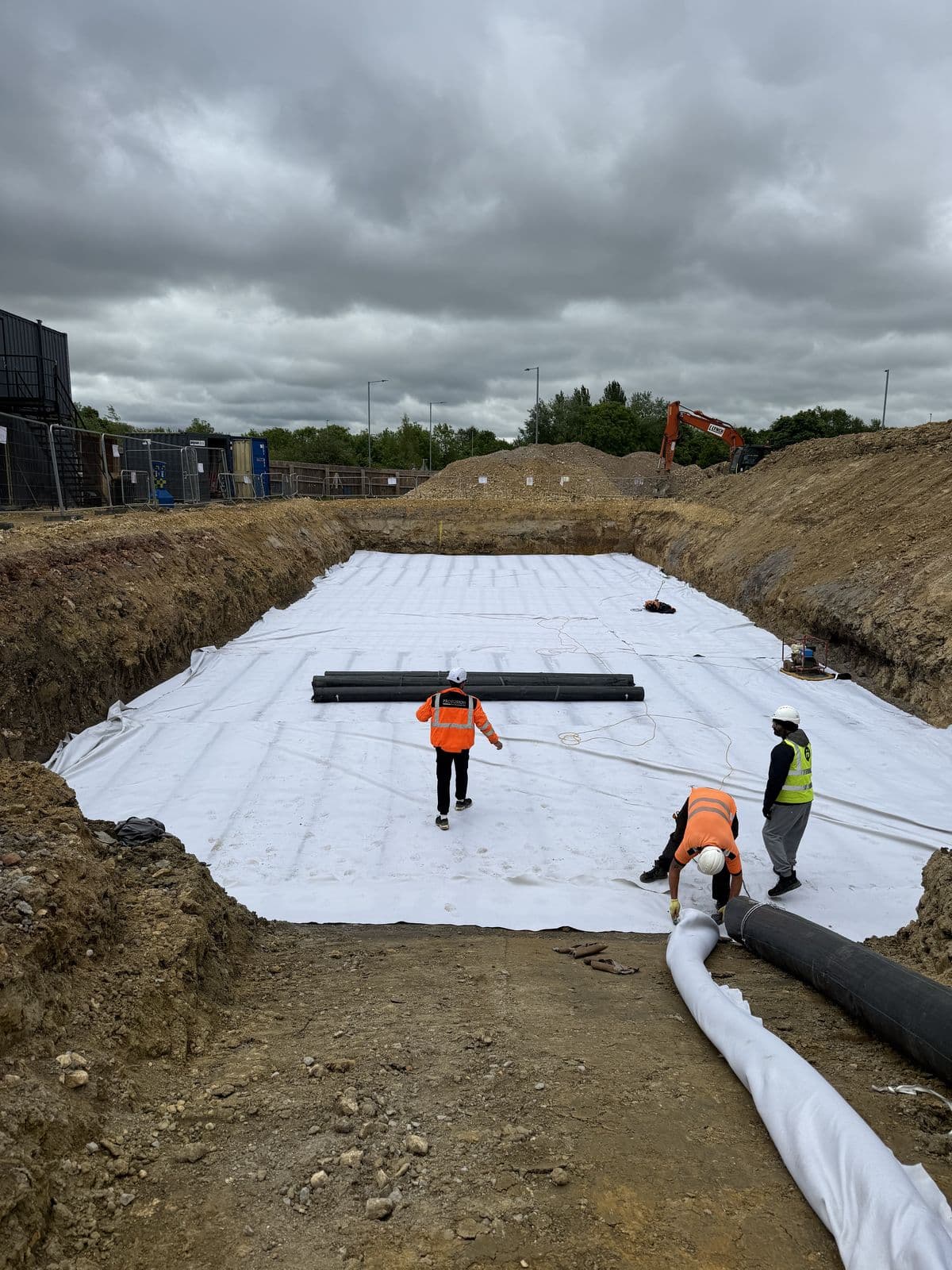
We don't dig. Your groundworker or farm contractor excavates the pond to shape and hands us a clean, trimmed formation. We check it, lay the underlay, deploy and weld the liner, detail the pipes and outlets, and lock the perimeter into an anchor trench. If the formation isn't ready, with loose stone, roots or soft spots, we tell you before the liner goes down.

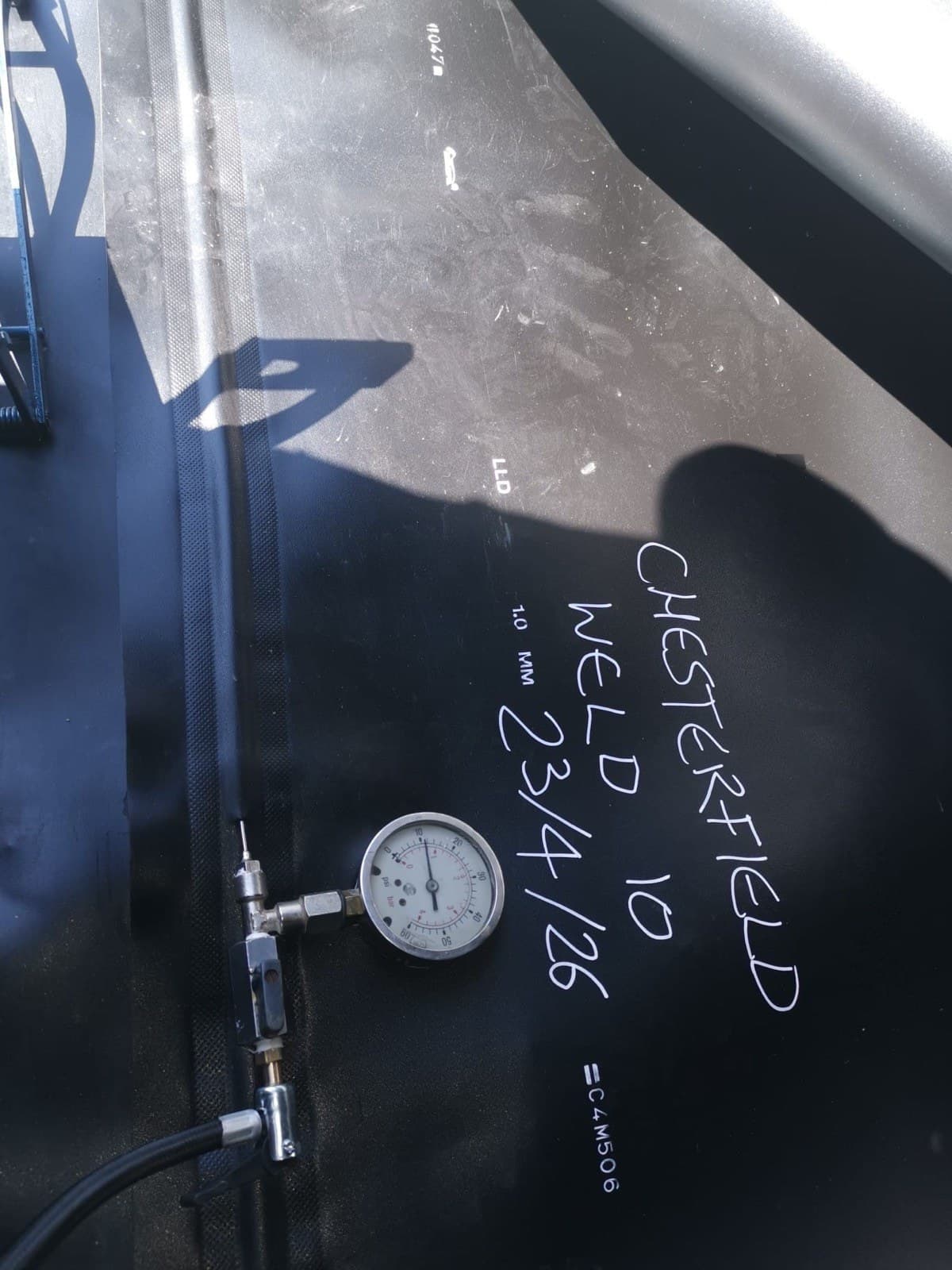
On a development, the pond's size and levels come from the engineer's or landscape architect's drawings, and we build to them. Each job ends with a logged test weld, and you're left with weld test records and handover documentation your client, ecologist or warranty provider can keep on file.

Pond Lining Installation in Nottingham

Frequently asked questions

In almost every case, yes. Sherwood Sandstone drains freely, so an unlined pond loses water into the rock. A welded membrane over a geotextile underlay holds it.

Yes. Mitigation ponds are normally specified by the project ecologist. We install the liner they've chosen, often LLDPE or GCL, to the shape on the drawings, and hand over the records for your file.

Yes. We work across the county, from West Bridgford and Beeston up to Mansfield, Worksop and Retford, and east to Newark. All of it is within easy reach of our Tamworth base.

Yes, but it needs thought before we arrive. Groundwater rising above the base of a pond can push up under the liner, so the designer may call for under-drainage or gas and water vents. Tell us the levels at survey and we'll flag anything that affects how the liner is laid and detailed.

Tell us about your project

Quote back within one working day