Gas protection
Why gas membranes matter: what happens when ground gas gets in
Ground gas is invisible, and most of the time it's harmless. When it isn't, the consequences are serious — which is why a gas membrane is only as good as its last sealed joint.
Methane and carbon dioxide are produced naturally in the ground — by old landfill, by peat and made ground, and by former coal workings. Radon rises out of certain rocks. Outdoors these gases disperse. The problem comes when a building traps them: gas finds its way through cracks, joints and service entries, and collects in the enclosed spaces above.
Methane can explode once it reaches a few per cent in air. Carbon dioxide is heavier than air, pools in low spaces and displaces oxygen. Radon is a long-term cancer risk. None of them can be seen, and the first sign of a problem can be the problem itself.
What it looks like when it goes wrong
The case that changed UK practice was Loscoe, in Derbyshire, in 1986. Methane from a nearby landfill migrated through the ground into a bungalow, and when the boiler fired, the house was destroyed and the three people inside were badly injured. It happened on a day of sharply falling air pressure, which let gas that had built up in the ground escape — a reminder that gas risk isn't constant, and that a site can monitor quietly for months and then behave very differently.
More recently, at Gorebridge in Midlothian, families on a council estate built over former coal workings began falling ill in 2013 with symptoms of carbon dioxide exposure. The gas was traced to the old mines beneath. The street was evacuated, and 64 homes were demolished and rebuilt — this time with gas protection membranes.
What a membrane actually does
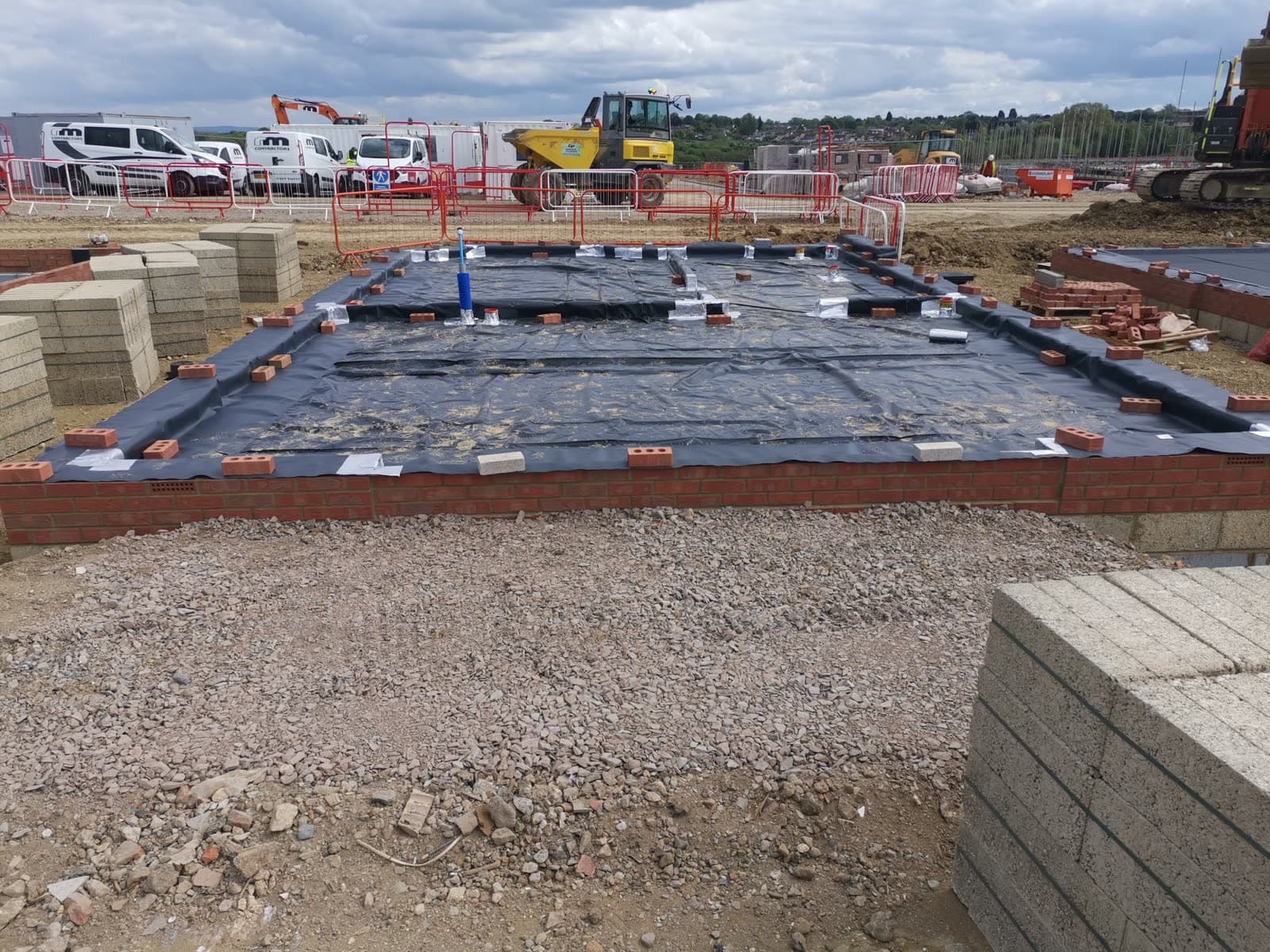
- It forms a continuous, gas-resistant barrier across the whole footprint of the building, beneath the slab.
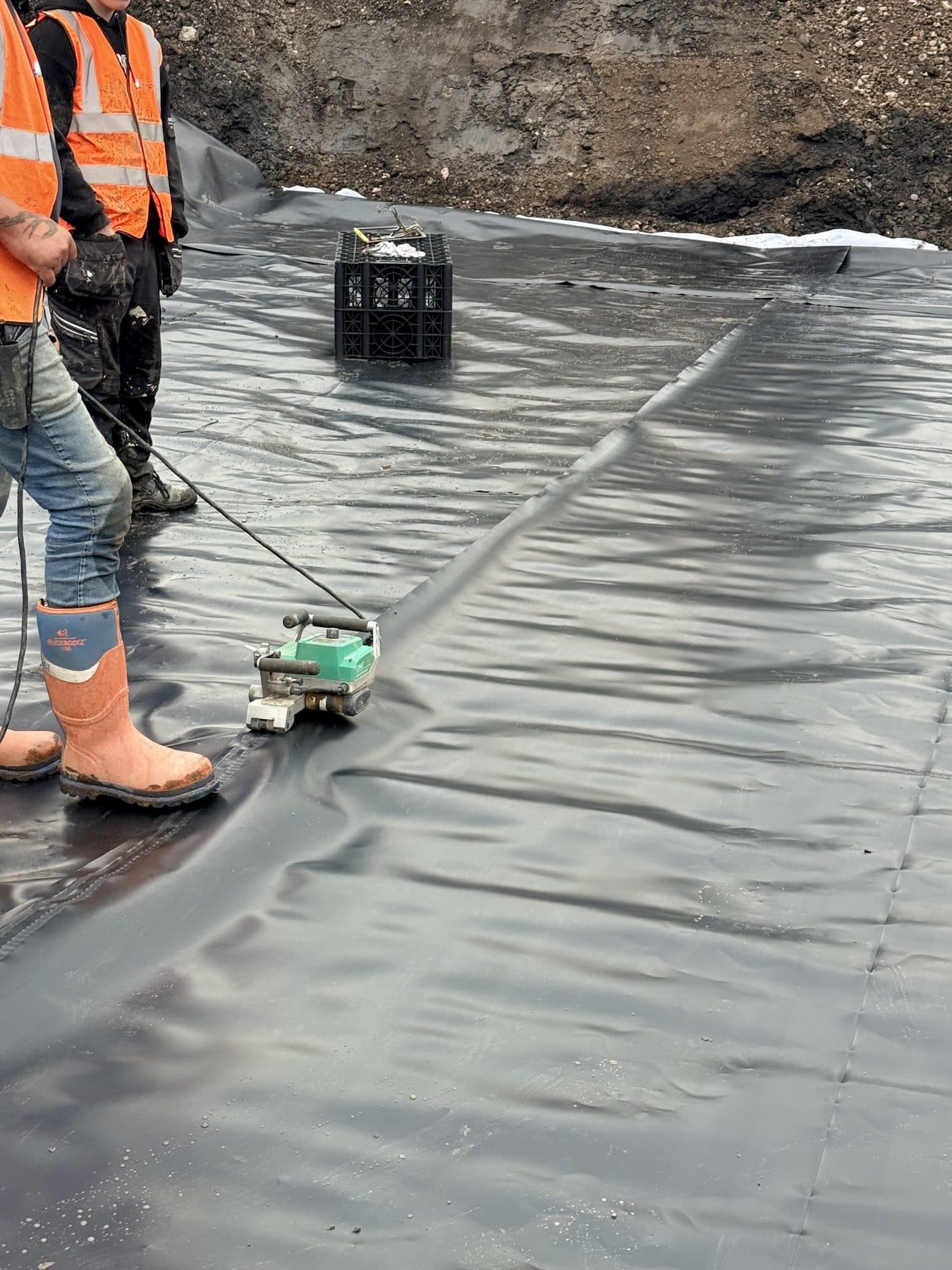
- It's sealed at every joint, so gas can't find a route through the laps.
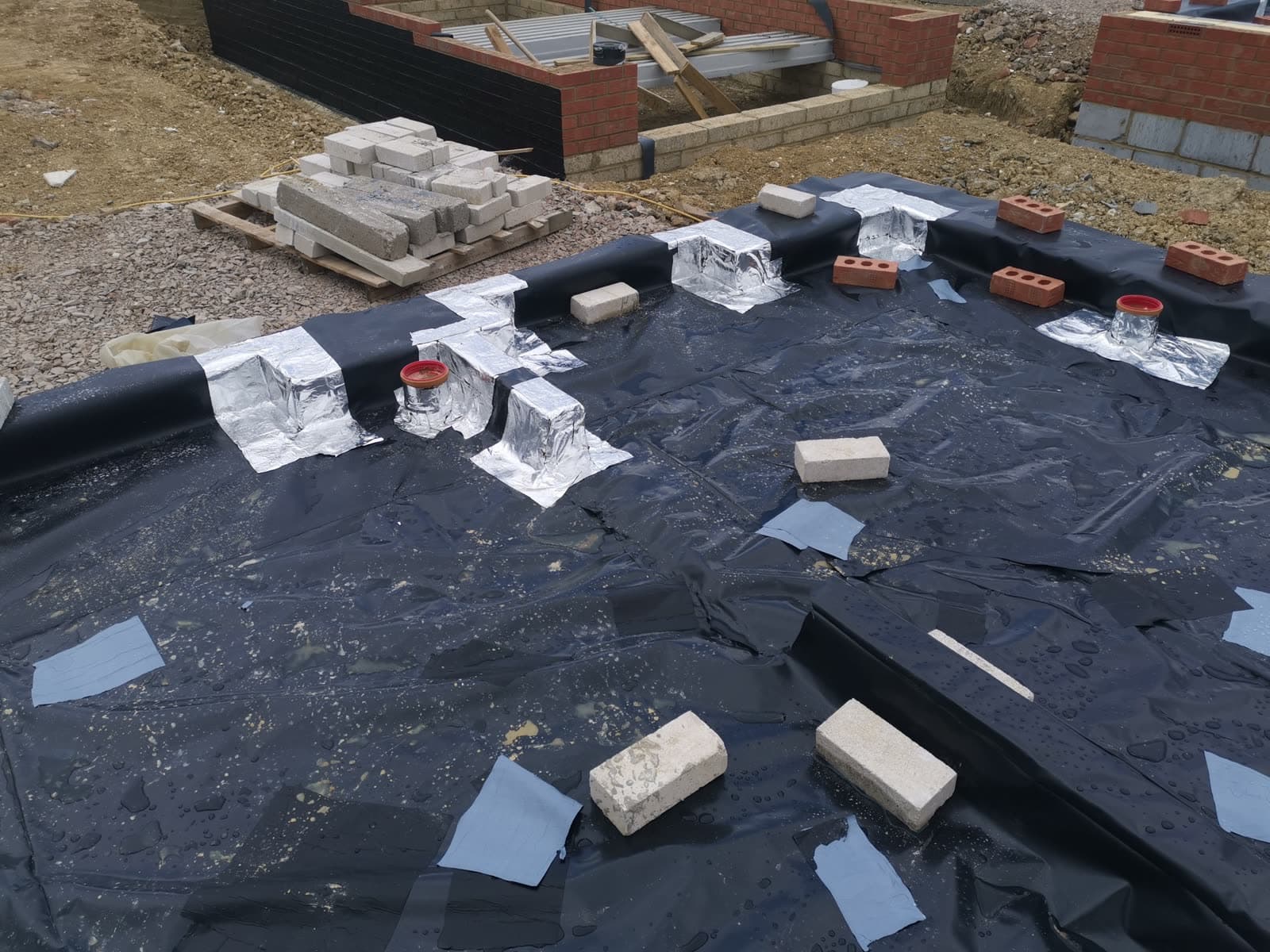
- It's detailed around every pipe, duct and cable that passes through it — the penetrations are where most failures start.
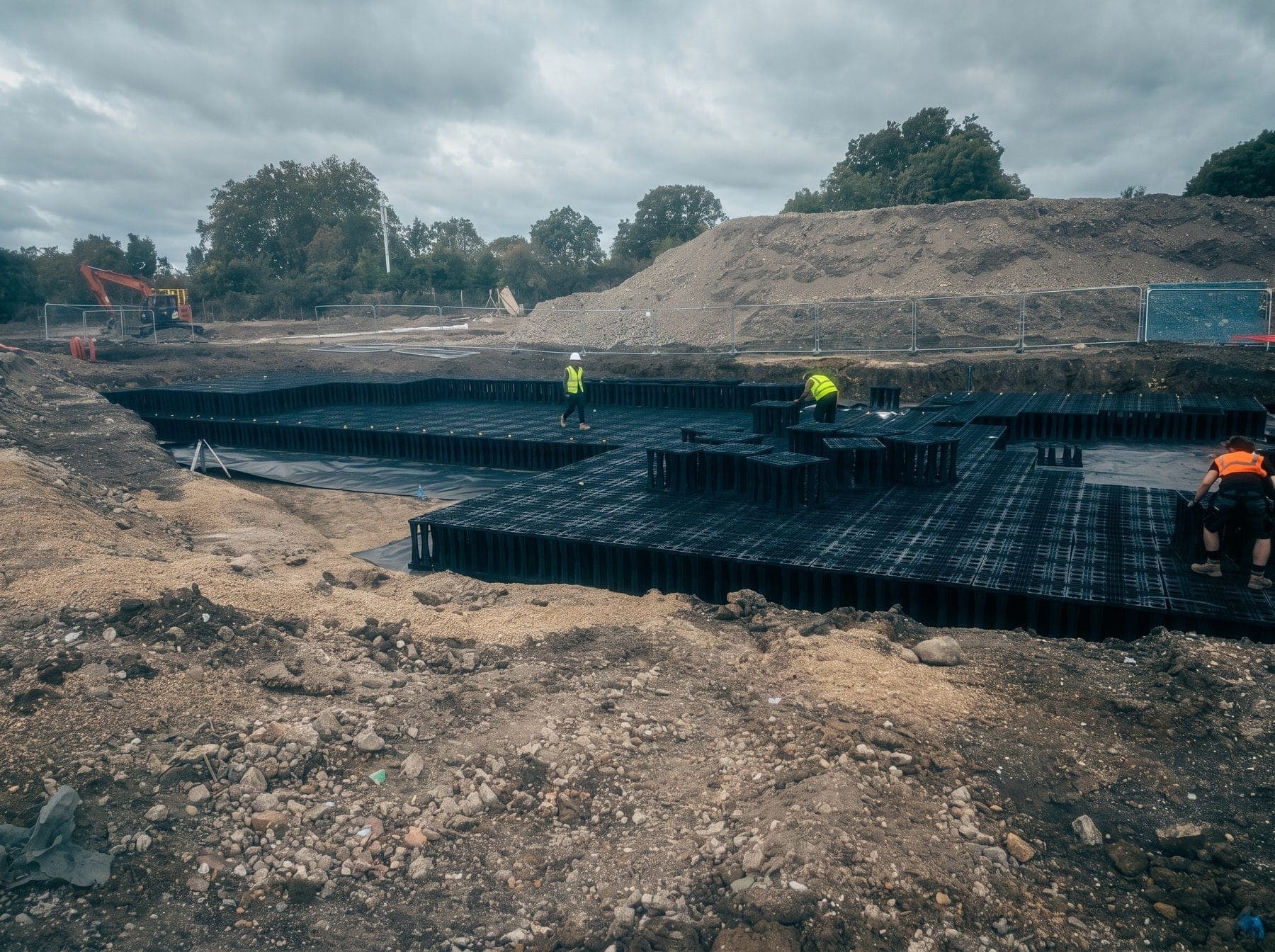
- It works with the rest of the design: ventilation beneath the slab carries gas away, and the membrane stops what's left getting in.
Why installation is the whole job
A gas membrane is only as good as its weakest seal. A single unsealed lap, a torn corner or a service pipe without a top-hat can leave a route straight into the building — and once the slab is poured, nobody will see it again. That's why the higher-risk sites have the installation independently verified before the concrete goes on.
We install gas and hydrocarbon membranes to the design's specification: jointed to the manufacturer's method, every penetration individually sealed, and recorded as we go, with independent validation available. Our guide to the CS1 to CS6 characteristic situations explains how the level of protection is decided in the first place.
Got a site that needs one of these?
Tell us the details and we'll come back with a quote within one working day.