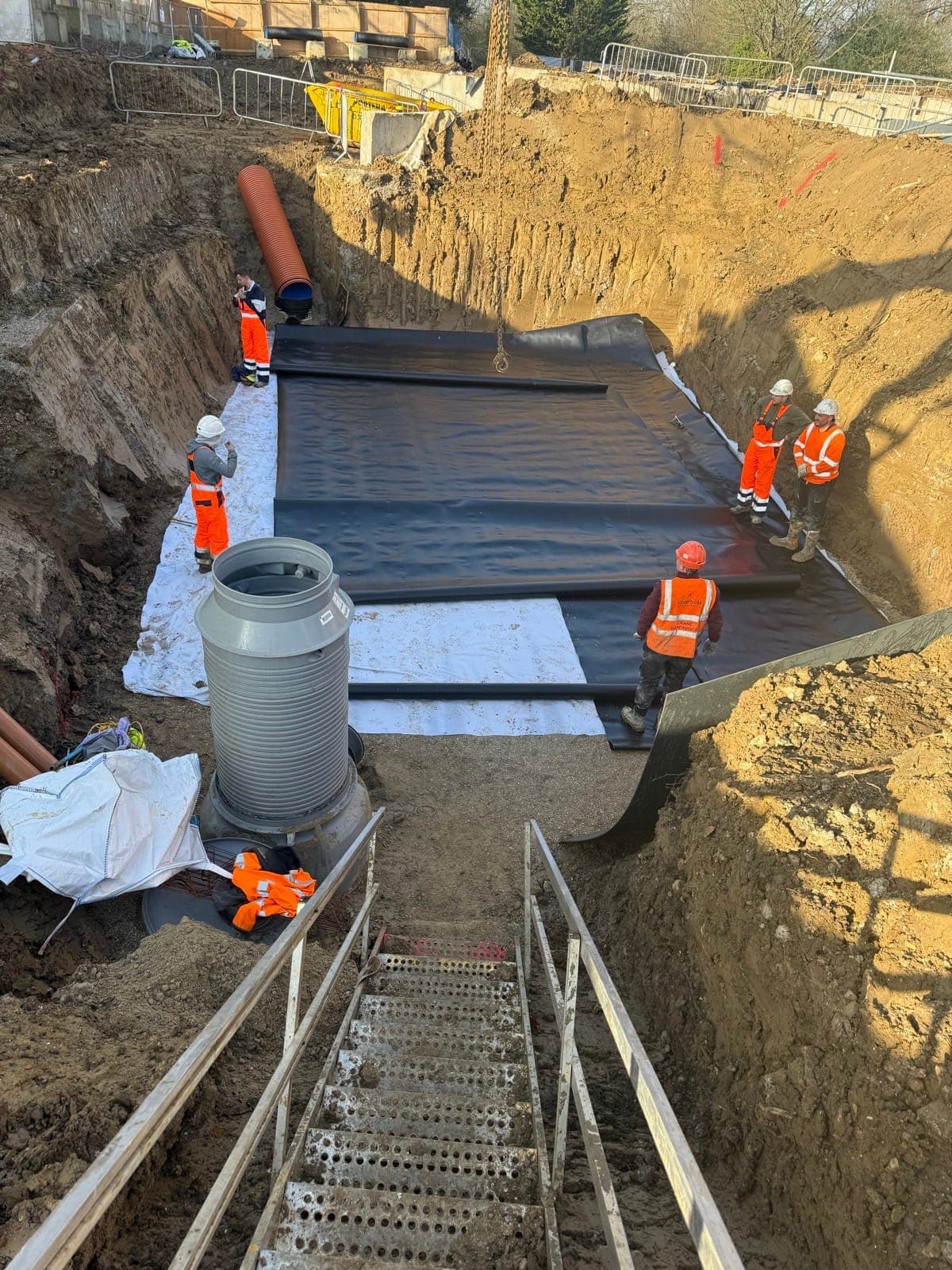
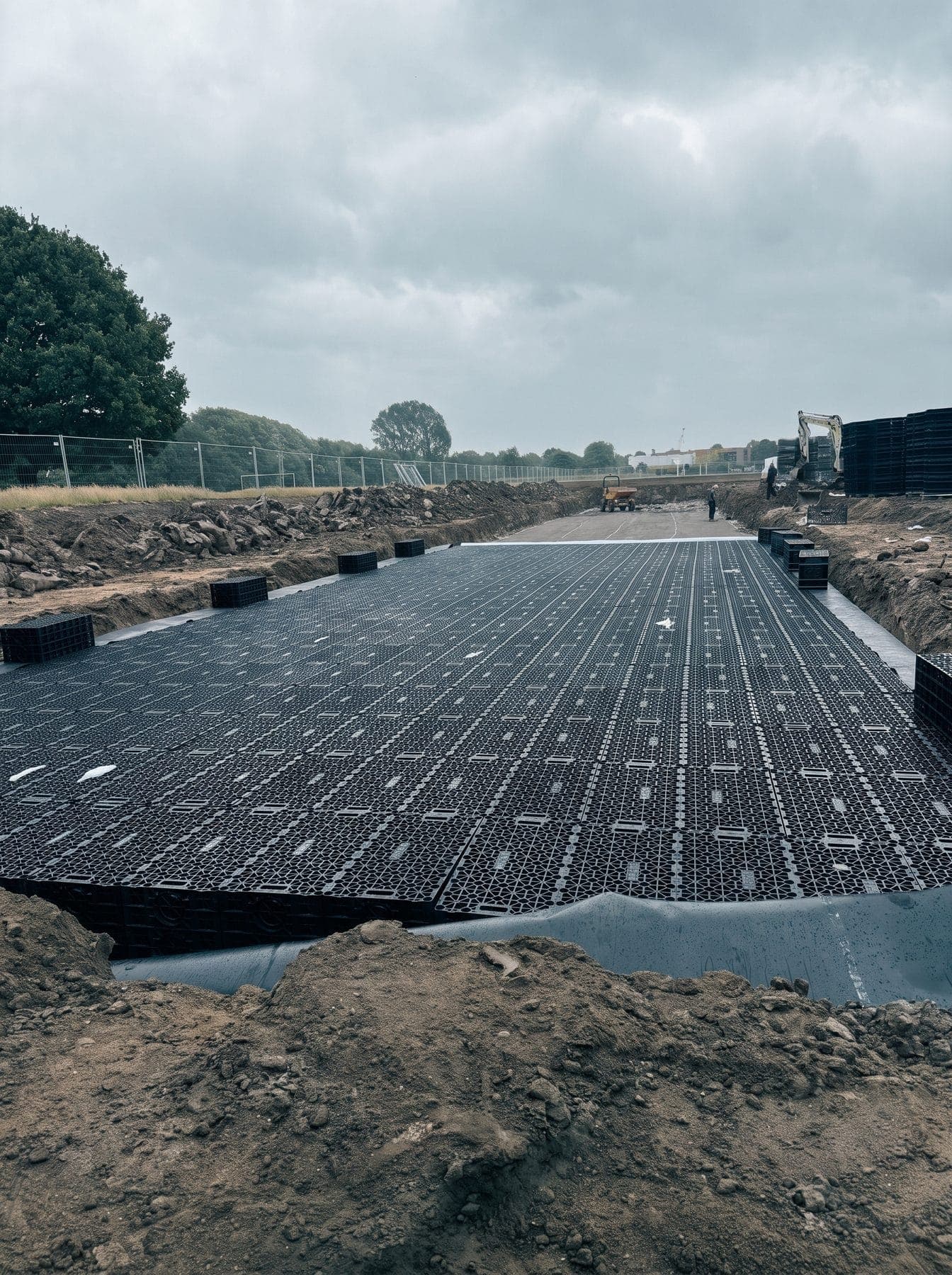
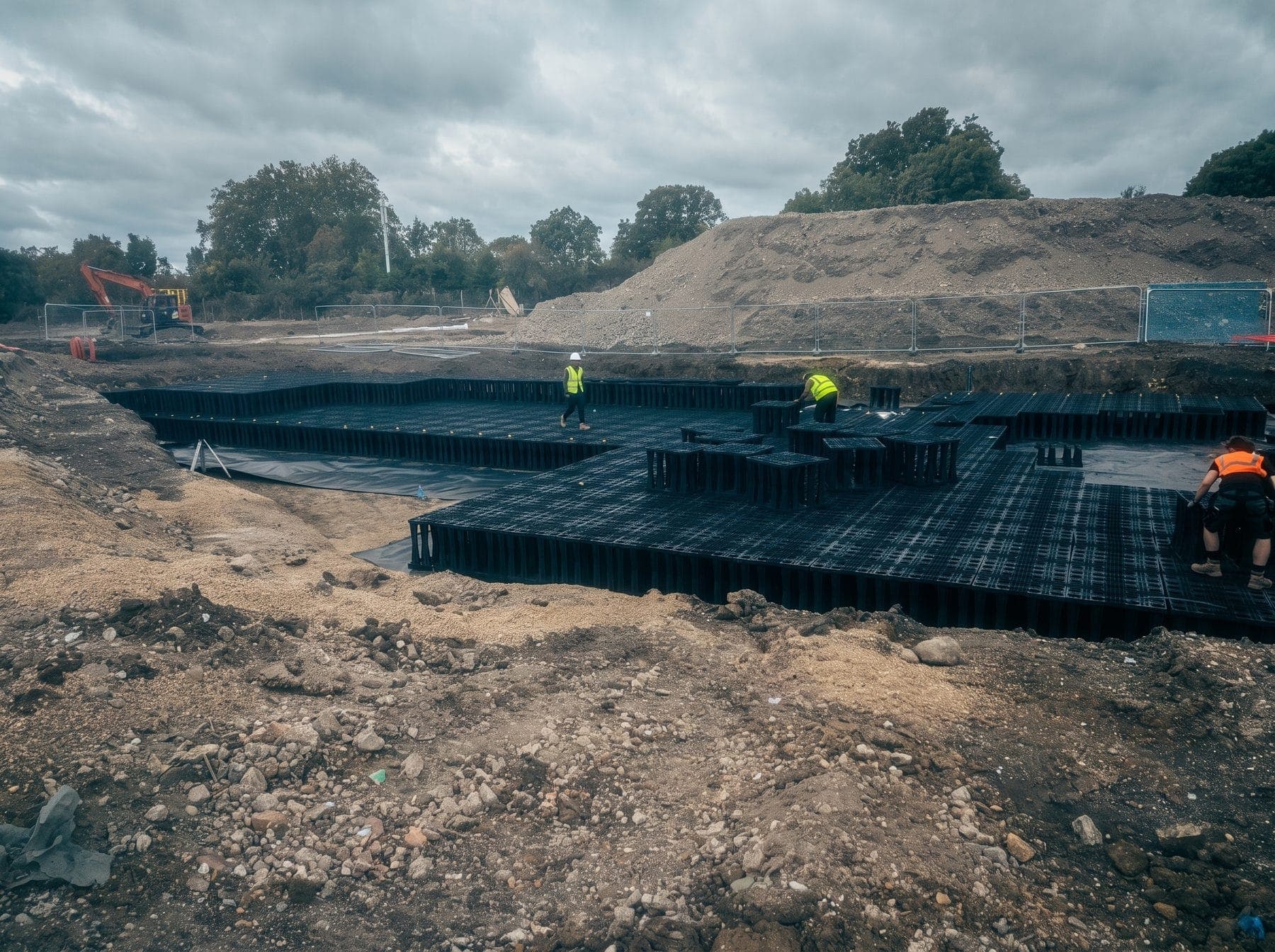
Lining
Welding vs taping liners: why welding wins every time
The joint is the weakest point of any lined system. Tape asks an adhesive to hold underground for decades; a weld fuses the membrane into one piece. There's no contest.
Every lined tank, pond or lagoon is only as good as its seams. Two panels of membrane meet, and how you join them decides whether the system holds water in five, fifteen or fifty years. There are two approaches — taping and welding — and we only do one of them.
What taping asks of the joint
Taping bonds panels with an adhesive tape. It's quick and needs no specialist kit, which is exactly why it turns up on cut-price jobs. The problem is what you're relying on: an adhesive, buried, under water pressure, through temperature cycles, for the life of the asset. Adhesives creep and peel. Most of the failed liners we're called to fix were taped.
What welding does instead
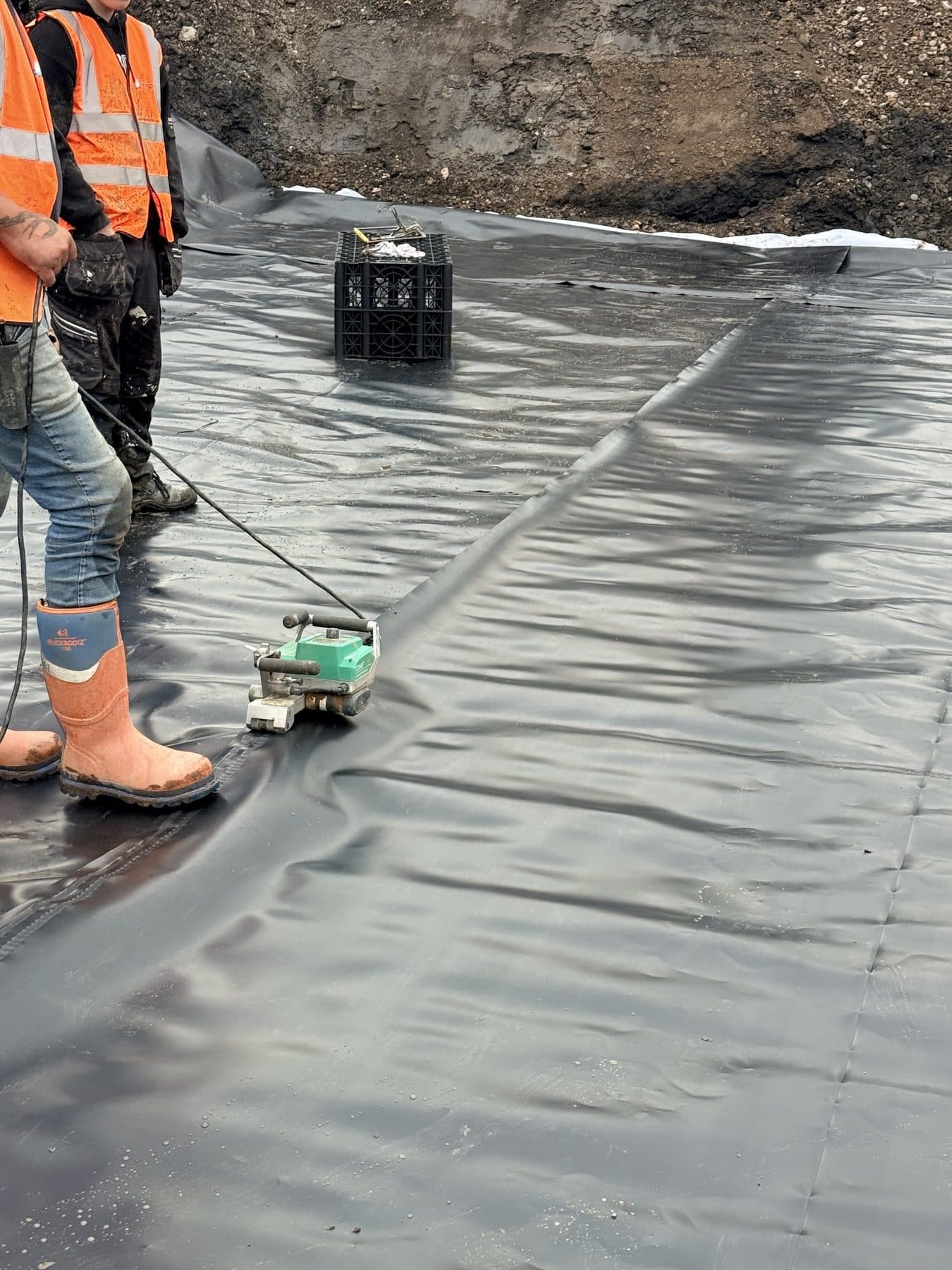
Heat welding fuses the two membrane panels together so the joint becomes a continuous piece of the same material — there's no separate substance to fail. We use calibrated wedge and extrusion welding equipment, and every job has a recorded test weld before anything is backfilled. If a weld doesn't hold the test, it doesn't get covered up.
The bottom line
On anything that has to stay watertight underground for decades — attenuation tanks, ponds, slurry lagoons, containment bunds — welding is the only method we'll stand behind.
Got a site that needs one of these?
Tell us the details and we'll come back with a quote within one working day.